
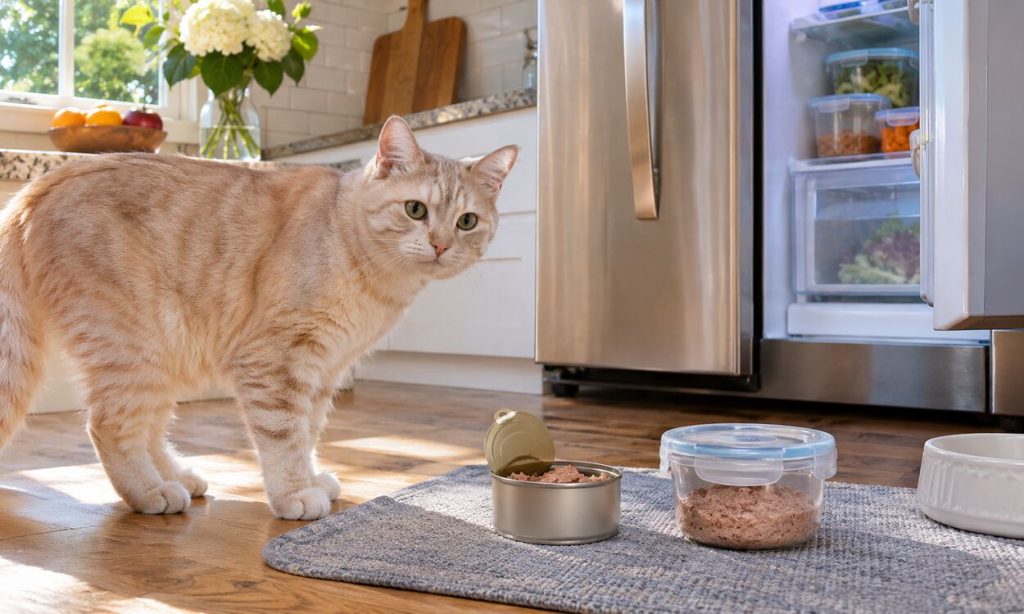
Wet food is often part of a cat’s kidney-care plan because it provides moisture and may be available in veterinary renal formulations. Yet even carefully chosen food can become unsafe when a can stays open on the counter or leftovers are stored poorly. Safe storage protects freshness, reduces contamination risk, and helps preserve a feeding routine that a cat with chronic kidney disease may already find difficult. The right food is only useful when the cat can eat it safely.
This guide explains how to store wet cat food for kidney problems safely, from unopened cans to refrigerated portions and travel meals. It also covers clean utensils, serving temperatures, spoilage signs, and what to do when appetite changes. Kidney diets must be chosen with a veterinarian; see our guide to signs of kidney disease in cats for context about when medical assessment matters.
Store Unopened Cans and Pouches Correctly
Keep unopened wet food in a cool, dry indoor location away from direct sun, hot appliances, and chemical cleaning products. The FDA advises storing unopened canned pet food in a cool, dry place. Check the printed expiration or best-by information, rotate older packages toward the front, and avoid buying more than you can use while the formulation remains appropriate for your cat. Extreme heat, freezing, or damp storage can damage packages or affect food quality. A pantry shelf is typically better than a garage that becomes hot in summer.
Inspect each can or pouch before opening. Do not feed contents from a container that is bulging, leaking, severely rusted, punctured, or damaged at a seam. Unusual pressure, a foul odor, or abnormal appearance also calls for disposal. When a therapeutic kidney diet is involved, keep the precise formula and veterinary instructions with the stored food. A label mix-up can be significant for a cat whose phosphorus or other nutrient intake is being medically managed.
Refrigerate Opened Wet Food Promptly
Once a can or pouch is opened, treat unused food as perishable. The FDA advises promptly refrigerating or discarding leftover canned and pouched pet food and maintaining a refrigerator at 40°F or below. Place extra food in a clean, covered, food-safe container or use a securely fitting cover compatible with the package. Keep the contents away from raw meat, leaking containers, and household contaminants. Do not leave an open can exposed in the refrigerator and assume the cold air alone protects it.
Many veterinary food-handling guides recommend using refrigerated opened wet food within a short period, and individual manufacturers may give more specific limits. Follow the stricter applicable package instruction and discard anything beyond its stated storage window. Mark the opening date and time on the container. FYI, a forgotten can at the back of the refrigerator is not a worthwhile experiment in shelf life, especially for a cat whose appetite and health already need monitoring.
Handle Each Serving and Leftover Bowl Safely
Measure only the portion specified in the veterinarian’s feeding plan, using a clean spoon or utensil designated for pet food. Put the remaining food back into the refrigerator without delay. Avoid dipping a spoon that touched the cat’s mouth or a used bowl into the stored container. Wash and dry feeding utensils after each use. The FDA advises washing food bowls after each use and water bowls daily. These steps help prevent residues and contamination from building up.
Remove uneaten wet food promptly after a meal rather than leaving it out for hours. In a warm kitchen, bacterial growth can be more rapid, and the original package instructions may set an even shorter serving window. Do not repeatedly refrigerate and re-serve the same portion if it has been sitting in the cat’s dish. Discard uncertain leftovers instead of mixing them into a new portion. Good storage includes what happens in the bowl, not just what happens inside the refrigerator.
Warm Food Carefully Without Compromising Safety
Some cats prefer food closer to room temperature, especially when they feel unwell or have reduced appetite. To take the chill off a refrigerated portion, let it warm briefly under controlled conditions or use a manufacturer-approved method. Do not leave a serving at room temperature for long periods. If using a warm-water bath, place the food in a sealed appropriate container so water cannot mix with it. Stir the serving and check that no hot spots remain before offering it.
Avoid overheated food and never assume a microwave heats every part evenly. Do not add salty broth, seasonings, or other flavorings without a veterinarian’s approval; kidney diets may be formulated around specific nutrient limits. If a cat repeatedly refuses a prescribed diet, ask the treating veterinarian about texture, temperature, nausea, dental discomfort, and alternative appropriate formulations. Storage changes may improve palatability, but they cannot replace evaluation of poor appetite.
Keep Prescription Kidney Diets Separate and Identifiable
Cats with chronic kidney disease may benefit from veterinary therapeutic diets designed with controlled phosphorus and other nutritional features. These formulas are not interchangeable with ordinary wet food or with every ‘senior’ label. Cornell University’s feline kidney guidance emphasizes working with a veterinarian to select an acceptable kidney diet. Store different formulas in separate labeled areas and avoid mixing a therapeutic renal diet with another cat’s food by accident.
If multiple cats share a home, supervise meals and identify which cat receives which portion. A feeding chart can help caregivers follow the correct diet without unnecessary changes. Keep a list of the cat’s current medications, feeding amounts, and veterinarian’s instructions nearby, but not inside food containers. Review each new shipment for the exact formula and expiration date. When the food is changed by a veterinarian, do not continue using an older formulation merely because it is still unopened.
Transport and Travel With Wet Food Safely
For short trips, pack only the amount needed in clean, sealed containers and use an insulated cooler with cold packs when refrigeration is not available. Maintain a safe cold temperature; a cooler’s presence alone is not proof that food stayed chilled. If food becomes warm for an uncertain period, discard it rather than guessing. Bring clean bowls and utensils, and keep food away from medicines, ice melt chemicals, or other supplies that could contaminate it.
Longer trips demand a clear plan for refrigeration, meal timing, and access to the cat’s prescribed formula. If a boarding facility or pet sitter feeds the cat, supply written instructions and identify the person to contact if meals are refused. Do not make abrupt diet changes for convenience without veterinary advice. Good preparation reduces the risk of missed meals, which is particularly important when a cat is ill or underweight.
Spot Spoilage and Know When to Call the Veterinarian
Discard wet food that develops an unusual smell, visible mold, strange color, gas pressure, or a slimy appearance. Also discard food after a refrigerator power failure if you cannot verify that safe temperatures were maintained. Do not taste the food or test questionable food by offering a small amount to the cat. Clean the bowl and storage container before the next feeding. Keep the original package and lot code when a serious product concern needs reporting.
A cat with kidney disease may eat poorly because of nausea, dehydration, mouth discomfort, or progression of illness rather than because food was stored incorrectly. Repeated vomiting, inability to eat, marked lethargy, or significant changes in drinking or urination warrant prompt veterinary attention. Safe storage supports treatment, but the underlying medical condition needs regular assessment. The goal is a consistent and acceptable diet, not simply finishing every opened can.
Frequently Asked Questions
These common questions focus on practical decisions owners face after opening a renal wet-food package. Product-specific label directions and your veterinarian’s feeding plan take priority.
When a storage situation is uncertain, err on the side of discarding questionable food. The health cost of feeding spoiled food can exceed the value of a leftover serving.
Can I leave opened kidney wet food in its can?
Use a secure food-safe cover or transfer leftovers into a clean covered container. Refrigerate promptly and observe the product’s directions for the time after opening.
What temperature should my refrigerator be?
The FDA recommends 40°F or below for refrigerated pet food leftovers. Check your refrigerator with a suitable thermometer if its performance is uncertain.
Can I feed wet kidney food straight from the refrigerator?
Many cats can, but some prefer slightly warmer food. Warm a portion gently using safe methods, avoid hot spots, and never leave it sitting out for hours.
Is spoiled renal food safe after heating?
No. Heating does not reliably make visibly spoiled or improperly stored pet food safe. Throw it away, wash containers, and open a fresh, undamaged package.
Should I change food if my cat with kidney disease refuses meals?
Contact the veterinarian promptly. Poor appetite can be a medical symptom. A clinician can evaluate nausea or other problems and discuss appropriate diet textures or formulas.
Final Words
To store wet cat food for kidney problems safely, keep unopened containers cool and dry, refrigerate opened portions promptly, maintain a refrigerator at 40°F or below, and follow the package’s use-by guidance. Use clean utensils, label leftovers, and discard food that shows spoilage or has been left out too long.
Preserve the veterinarian’s chosen kidney diet and monitor how much the cat actually eats. If appetite falls, seek medical advice rather than changing nutrients or storage practices at random. Our guide to storing therapeutic cat diets discusses related household handling habits that can help prevent mix-ups.
Reference
These sources informed the safety guidance about food handling and the veterinary principles behind feeding cats with chronic kidney disease.
Follow the current therapeutic diet label and treating veterinarian’s advice when a specific instruction differs from general food-storage recommendations.
- US Food and Drug Administration, “Tips for Safe Handling of Pet Food and Treats.”
- US Food and Drug Administration, “Proper Storage of Pet Food & Treats.”
- Cornell University College of Veterinary Medicine, “Chronic Kidney Disease” (Cornell Feline Health Center).
- Cornell University College of Veterinary Medicine, “Hydration” (Cornell Feline Health Center).









