
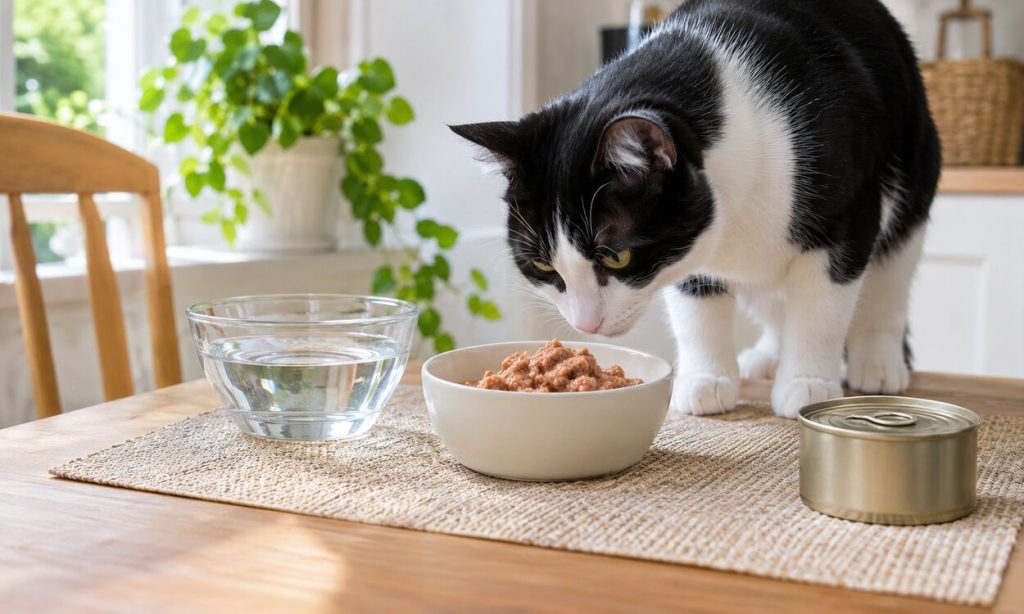
Constipation can make a cat uncomfortable, but changing canned food is not always the entire answer. Affected cats may need better hydration, a different fiber balance, pain management, or treatment for a medical problem. Some have serious stool retention that requires veterinary care rather than a do-it-yourself diet change. When assessing canned food, the important features are nutritional completeness, moisture, suitable fiber, calorie adequacy, and whether the cat will eat it consistently.
This guide explains what features matter most in canned cat food for constipation and how to discuss diet with a veterinarian. It also covers warning signs, feeding transitions, litter-box comfort, and what not to add without guidance. For an overview of available food formats, our canned cat food for constipation guide provides related context.
Confirm Constipation Instead of Assuming a Food Problem
Signs may include passing small hard stools, infrequent bowel movements, straining, repeated visits to the litter box, or discomfort. However, a cat straining because it cannot urinate may appear similar. A urinary obstruction is an emergency, particularly in male cats. When you are unsure whether urine is being produced, contact a veterinarian urgently. Do not try to correct unclear symptoms by simply adding fiber or switching brands.
Veterinarians may assess hydration, abdominal findings, diet, medications, mobility, and whether stool is retained in the colon. Severe or recurring constipation can be associated with megacolon or other disorders that demand targeted treatment. Cornell’s feline health guidance notes that constipation management may involve hydration, dietary changes, medications, and occasionally more intensive intervention. Food choice belongs within that broader plan.
Moisture Content and Drinking Access
Canned food typically contains much more water than dry food, so it may help increase total water intake. Cats can still become dehydrated, particularly when sick, vomiting, or drinking poorly. Check that your cat has continuous access to fresh water, and discuss hydration needs with the veterinarian. Wet food is a practical source of moisture, but not a replacement for prescribed fluids or evaluation of dehydration. Avoid assuming watery food alone will soften every hard stool.
Read the label to compare moisture and calorie information, remembering that moisture percentages do not reflect the entire diet’s hydration value. A cat eating too little may obtain fewer calories and less water overall, even when the food has high moisture. Observe actual intake and report persistent appetite loss. Our guide to encouraging cat drinking explores related household water-access considerations.
Fiber Type and Amount Need Individualization
Fiber affects stool differently depending on the type, quantity, water availability, and intestinal motility. Soluble and insoluble fibers may influence stool water content or bulk in different ways. Some cats benefit from veterinarian-selected higher-fiber diets, while others with severe constipation or megacolon may need an alternative approach. More fiber is not automatically safer or better. Asking ‘how much fiber?’ without considering the medical diagnosis can lead to poor results.
Look for a clear nutritional description and consult the veterinarian before adding pumpkin, psyllium, laxatives, or human supplements. These can interfere with the intended feeding plan or cause problems if hydration is poor. Merck Veterinary Manual describes different approaches for constipation and megacolon, emphasizing that management depends on disease severity. Avoid measuring household fiber additives by an arbitrary online recipe.
Complete Nutrition and Energy Matter Too
A constipation-focused diet must still meet the cat’s broader nutritional needs. Check the nutritional adequacy statement for an appropriate complete and balanced cat food, unless the veterinarian specifically prescribes a therapeutic formulation. A cat with kidney disease, diabetes, food sensitivity, or advanced age may need extra diet constraints. The food should provide enough calories to preserve healthy weight and muscle, even if stool management is the main reason for the change.
Assess daily calories per can or portion so that a switch does not unintentionally reduce food intake. A cat that dislikes a texture may leave meals unfinished, making dehydration or illness harder to manage. Keep a record of offered versus consumed food. Ask about alternative wet textures if acceptance is poor. The right canned food supports regular eating; it should not simply look high in moisture on the label.
Make a Gradual, Well-Monitored Transition
If the veterinarian agrees to a food change and the cat is stable, transition gradually as advised, allowing the digestive system time to adjust. Track stool consistency, frequency, appetite, and vomiting in a simple daily log. Avoid making several unrelated changes at once because it will be harder to understand the response. Do not treat an isolated soft stool as definitive success or an isolated missed bowel movement as failure without context.
Persistent straining, bloating, vomiting, marked discomfort, or absence of stool with worsening symptoms requires veterinary assessment. Never administer a human enema, especially phosphate-containing preparations, without veterinary instruction. Cats may be harmed by inappropriate products. If the cat stops eating or drinking, seek care promptly rather than continuing a diet experiment. IMO, precise observation is more valuable than adding yet another unmeasured spoonful of fiber.
Litter Boxes, Movement, and Other Supporting Factors
Constipated cats may avoid the litter box if squatting is painful or the entry is difficult. Provide large, clean, accessible boxes, especially for older cats or those with joint disease. Short gentle activity may help some cats stay mobile, but exercise is not a substitute for treating impaction. Keep clean water near favorite resting areas and reduce household stress. None of these steps cures a serious blockage or megacolon.
Consider whether hair ingestion, reduced mobility, medication effects, or a change in routine may contribute to difficulties. Ask a veterinarian before assuming hairballs are the primary cause. Our guide to digestive upset in cats outlines symptoms that deserve closer attention. A coordinated plan may involve stool management, hydration, and other care beyond the food bowl.
Compare Food Features Without Shopping by Claims
When evaluating canned food for constipation, prioritize a suitable therapeutic goal, calorie content, a complete nutritional profile, moisture, and veterinary advice about fiber. Ingredient marketing, appealing labels, and broad promises are weak substitutes for these factors. Ask how progress should be measured and how long to try a plan before reevaluation. Avoid making a list of supposedly superior products when the actual cat’s diagnosis remains unknown.
Check storage instructions and feed opened wet food safely. Spoiled or improperly handled food can create digestive symptoms unrelated to the original problem. Make sure every caregiver knows the correct diet and portion. If the cat requires medication for stool movement, do not modify those directions after reading a food label. A diet is one component of care, not permission to stop prescribed treatment.
Frequently Asked Questions
These questions focus on food features and symptom monitoring. They cannot establish whether a specific cat needs fiber, medication, or urgent care.
Keep the veterinarian informed about recurrent constipation and any change in urination. That distinction is particularly important when a cat repeatedly strains in the litter box.
Will wet food cure constipation in cats?
Not always. Wet food adds moisture, but the cause may require veterinary diagnosis, medication, or other treatment.
Is high-fiber canned food always best?
No. Fiber requirements vary with the cat’s condition and intestinal function. Ask a veterinarian which approach fits the diagnosis.
Can I add pumpkin or a human laxative?
Do not add supplements or medicines without veterinary guidance. Amounts, hydration, and existing conditions affect safety.
How can I tell constipation from a urinary blockage?
You often cannot reliably distinguish them by straining alone. Little or no urine, especially in a male cat, requires urgent veterinary care.
When should I contact the veterinarian?
Seek care for persistent straining, vomiting, bloating, poor appetite, painful defecation, or worsening behavior, and immediately for suspected urinary obstruction.
Final Words
The most important features of canned cat food for constipation are appropriate moisture, complete nutrition, adequate calories, and the fiber profile a veterinarian recommends for the individual cat. Evaluate the condition before changing food, and track real stool and appetite changes rather than relying on packaging promises.
If a cat strains, becomes ill, or stops passing stool normally, seek veterinary care promptly. Severe constipation and urinary problems may be emergencies. Good feeding support combines diet, hydration, accessible litter boxes, and a treatment plan tailored to the cat.
Reference
Veterinary sources informed the distinctions among dietary fiber, hydration, severe constipation, and megacolon. These conditions require individualized assessment.
This guide does not specify home doses of laxatives or enemas. Only the treating veterinarian should decide when medication or more advanced intervention is appropriate.
- Cornell University College of Veterinary Medicine, “Constipation” (Feline Health Center).
- Merck Veterinary Manual, “Constipation, Obstipation, and Megacolon in Small Animals.”
- Merck Veterinary Manual, “Disorders of the Stomach and Intestines in Cats.”
- Cornell University College of Veterinary Medicine, “Hydration.”









