
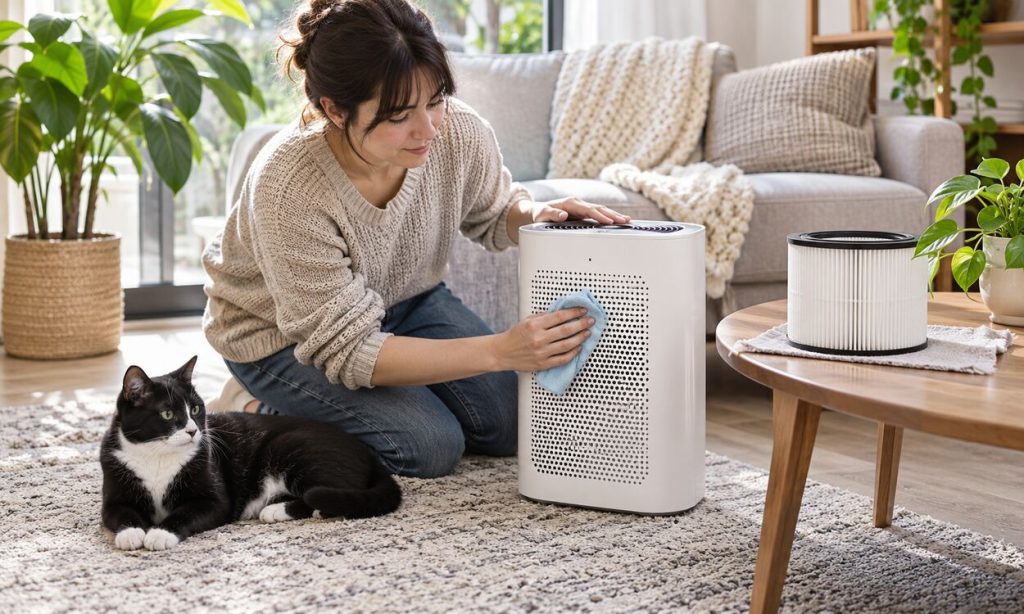
Air purifiers in homes with cats collect fur, dust, and other airborne particles, so maintenance is part of safe daily use. A dirty intake or clogged filter can reduce airflow, create new noise, or lead owners to run the appliance harder than necessary. Cleaning should protect both the equipment and the curious cat nearby. That means knowing which surfaces can be wiped, which filters must be replaced, and when a problem requires a repair rather than another round of dusting.
This guide explains how to clean air purifiers for cats and keep them in good condition. It covers safe preparation, exterior and internal cleaning, filter handling, room placement, and common problems. For background on filtration performance, our guide to air-purifier features for cat allergies provides additional context without promising a medical cure.
Begin With Safety and the Correct Manual
Turn the unit off, disconnect it from power, and let the fan stop completely before opening any panel. Read the appliance’s cleaning instructions; designs differ, and not every grille, filter, or sensor is user-serviceable. Keep cats away from loose screws, packaging pieces, cleaning liquids, and exposed fan openings during the process. If a cord is chewed, the housing cracked, or moisture has entered electrical components, stop using the purifier and seek professional service advice.
Select a stable work surface and gather a soft cloth, gentle brush if permitted, and a suitable vacuum attachment for external dust. Avoid spraying liquid directly into the fan, buttons, or electrical openings. Never clean a plugged-in unit. If the filter is heavily loaded with dust or allergens, handle it gently and consider whether a person with allergies should avoid the task. Work where dislodged dust can be contained rather than blown across a favorite cat bed.
Clean Exterior Surfaces and Air Openings
Wipe the casing, controls, and outer grille with a slightly damp cloth if the manual allows it, then dry the surface. Remove accumulated cat hair from accessible intake slots using a soft brush or appropriate vacuum attachment. Do not push tools deeply into fan openings or force a grille off when it is not meant to be removed. Blocked intakes can restrict airflow, while repeated rubbing with abrasive pads may scratch plastic or damage fine screens.
Check that the outlet and intake have adequate open space once the unit is reassembled. A purifier hidden behind curtains, placed against a sofa, or surrounded by pet toys may circulate less air. Keep the power cord secured away from chewing and tripping hazards. It is normal for some dust to collect, especially during shedding seasons. FYI, the appliance cannot clean the room properly if the cat’s favorite blanket is completely covering its intake.
Handle HEPA and Carbon Filters as Designed
Filter media is not automatically washable. Many pleated HEPA filters lose effectiveness or become damaged when rinsed, so check the manufacturer’s exact instructions. Remove a disposable cartridge carefully and place it in a bag for disposal. If a prefilter is designed for cleaning, brush, vacuum, or rinse it only according to the manual and allow it to dry fully before reinstalling. Do not confuse an outer washable mesh with the main particle filter.
Check the replacement interval and any service indicator, but understand that an indicator may reflect run time rather than actual filter condition. Heavy shedding, dust, or building work can justify earlier inspection. Install the correct compatible filter with its seals and airflow direction properly seated. An ill-fitting cartridge can allow bypass around the filter. Replacing filter media on schedule often matters more than repeatedly dusting the exterior of the appliance.
Watch Sensors, Fans, and Unusual Odors
Some purifiers contain particle sensors or automatic modes that respond poorly when a sensor window becomes dusty. Clean accessible sensors only as the manual specifies, without inserting liquid or sharp tools. A rattling sound may come from an improperly fitted grille, loose cartridge, or debris, but internal mechanical repairs are not routine user cleaning. If the noise persists after safe checks, disconnect the unit and contact a qualified service provider.
An electrical or burning smell requires immediate shutoff and professional assessment. A mild odor from a newly installed component may have a different explanation, but any persistent unusual smell deserves investigation. Do not add fragrance oils, household disinfectants, or deodorizing sprays into the purifier unless its instructions explicitly permit them; these substances may affect materials and expose pets to irritants. A cat with respiratory symptoms needs veterinary care, not stronger appliance fragrance.
Keep the Room Clean as Well as the Purifier
Air filtration can reduce some suspended particles, but cat hair and allergen-bearing dust also accumulate on furniture, rugs, bedding, and floors. Clean surfaces regularly using suitable methods, and vacuum with appropriate filtration when practical. Wash cat bedding according to its care instructions. The US Environmental Protection Agency emphasizes that air cleaners supplement, rather than replace, good source control and ventilation practices. Maintenance works best as part of an overall routine.
Place the purifier where it can draw and return air freely without frightening the cat. Avoid unstable shelves and locations where spilled water from drinking bowls might reach electrical parts. Check cords often in homes with playful kittens. If a human household member has significant allergies or asthma, discuss symptoms with a health professional. A cleaner may contribute to exposure reduction, but symptom control is not guaranteed by filter specifications.
Create a Simple Maintenance Schedule
Check accessible intakes weekly or more often during heavy shedding. Review filter indicators and follow the model’s recommended inspection or replacement interval. Write down the date each cartridge was changed, rather than relying on memory. Inspect the cord, grille, fan noise, and stable placement during routine household cleaning. If the unit is used continuously, maintenance needs may differ from occasional use in a guest room.
After cleaning, reassemble all parts correctly, make sure nothing obstructs the fan, and test the unit at a normal operating setting. Listen for new sounds and verify airflow. If performance remains poor, do not keep adding improvised filter layers. Consult the instructions or qualified repair service. IMO, a short consistent schedule beats a dramatic deep clean after a year of pet hair has gathered inside.
Know When Maintenance Is No Longer Enough
Replace or repair equipment that has damaged electrical wiring, cracked safety housing, failed fans, or inaccessible contamination that cannot be addressed safely. A new filter cannot compensate for an unsafe motor or water-damaged electronics. If replacement cartridges are discontinued, verify whether a suitable compatible option exists rather than forcing an unrelated insert into the frame. Do not bypass protective switches or safety interlocks.
An air purifier may also be too small for the room, even when perfectly clean. The EPA suggests considering room size and clean air delivery rate when choosing portable units. Reassess placement and capacity if the household layout changes or a new cat arrives. Our guide to common cat-hair air-purifier mistakes explains related sizing issues.
Frequently Asked Questions
Cleaning intervals vary by the appliance, household dust, shedding, and how much the purifier runs. Use the owner’s manual as the main technical authority.
If you are unsure whether a part is washable or serviceable, stop and check rather than risk damage or electrical shock. Keep pets away during disassembly.
Can I wash a HEPA filter?
Only if the manufacturer’s instructions explicitly identify that filter as washable. Many HEPA cartridges are disposable and can be damaged by water.
How often should I clean the intake grille?
Inspect it regularly, especially during heavy shedding, and remove accessible dust on the schedule given in the manual.
Can I spray pet deodorizer into the purifier?
Do not add fragrances or cleaning sprays inside the unit unless its instructions specifically permit them. Aerosols may damage components or irritate pets.
Why is the purifier louder after cleaning?
Check that the filter and grille are seated properly and nothing is obstructing airflow. Disconnect it if unusual noises persist and seek service guidance.
Should I clean a purifier while it is running?
No. Unplug it before opening covers or cleaning accessible parts. Keep pets and children away from the work area.
Final Words
To clean air purifiers for cats safely, unplug first, remove accessible fur and dust, handle each filter according to its instructions, and reassemble correctly. Inspect the cord, airflow, and noise before returning the unit to use. Regular maintenance supports performance and reduces the chance of hidden problems.
Keep the surrounding room clean and preserve a safe location where the cat cannot tip over or chew the equipment. Replace defective parts or retire unsafe equipment rather than improvising repairs. A well-maintained purifier is one part of a healthy home environment, not a substitute for veterinary or human medical care.









