
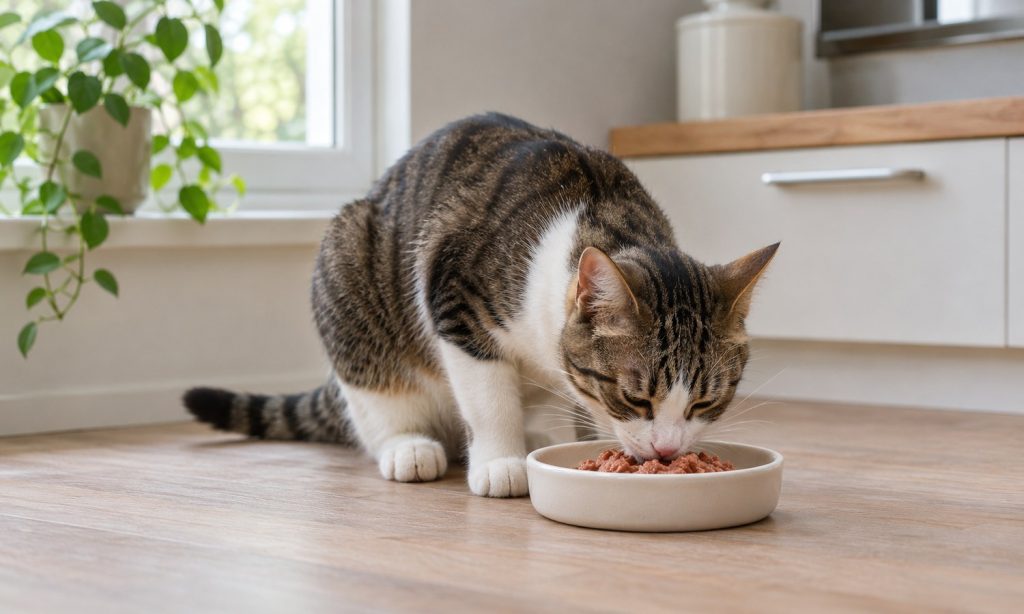
Seeing your cat strain in the litter box can be worrying, and changing food may seem like a simple first step. Constipation can have several causes, so canned food should not be treated as a cure. A veterinarian can help decide whether hydration, fiber, a prescription diet, or another treatment fits your cat. This guide compares seven complete wet foods with digestive-support features, such as moisture, prebiotic fiber, or a stated fiber source. Each product is a discussion point for an adult cat’s care plan, not a promise of relief. If your cat is painful, vomiting, lethargic, or repeatedly producing little stool, contact a veterinarian promptly.
Quick Picks
| Product | Best For | Key Advantage | Buy | |
|---|---|---|---|---|
| Royal Canin Digestive Care Wet Cat Food | Stool-quality-focused everyday feeding | Adult formula with digestive-care positioning | View on Amazon | Jump to Review |
| BLUE True Solutions Digestive Care Chicken | Prebiotic fiber in a canned adult recipe | Adult wet food with digestive-care focus | View on Amazon | Jump to Review |
| Hill’s Science Diet Sensitive Stomach & Skin Wet Cat Food | Sensitive stomachs with prebiotic fiber | Wet adult formula with salmon and vegetable recipe | View on Amazon | Jump to Review |
| Purina Pro Plan Sensitive Skin & Stomach Wet Cat Food Variety Pack | A texture and protein variety pack | Duck and Arctic char recipes | View on Amazon | Jump to Review |
| almo nature Supportive Formulas Digestive Support Mackerel & Spinach | An adult recipe with insoluble-fiber positioning | Mackerel and spinach recipe | View on Amazon | Jump to Review |
| Tiki Cat Solutions Mousse, Digestion, Chicken & Egg | Smooth mousse with gentle-fiber positioning | Complete and balanced for adult cats per listing | View on Amazon | Jump to Review |
| Wellness CORE+ Digestive Health Salmon & Whitefish Pâté | Smooth seafood pâté with prebiotic fiber | Salmon and whitefish variety pack | View on Amazon | Jump to Review |
What to Know Before Choosing Canned Food for Constipation
Canned food contains more moisture than dry food, but diet choice depends on why your cat is constipated. Your veterinarian may recommend an examination, hydration support, a specific fiber approach, or a therapeutic diet. Read our guides to dry cat food for constipation, probiotics for cats with constipation, and signs and causes of cat constipation for related context.
Royal Canin Digestive Care Wet Cat Food

- Adult formula with digestive-care positioning
- Highly digestible proteins
- Slices in gravy add moisture
- Complete and balanced nutrition
- Pairs with matching dry formula
- Not a constipation treatment
- Adult formula is unsuitable for kittens
Royal Canin Digestive Care is a wet adult cat food positioned for sensitive stomachs and healthy digestion. The verified listing describes slices in gravy and highly digestible proteins, with the formula intended to support nutrient absorption and stool quality. That makes it a reasonable option to discuss when your veterinarian wants a complete canned diet in the rotation. The gravy also contributes moisture, which can be useful for cats that eat little water-rich food. It is not labeled as a constipation treatment, so do not interpret the product name as evidence that it will resolve a blockage or chronic constipation.
Because the formula is complete and balanced for adult cats, it can serve as a regular meal when it fits your cat’s life stage and veterinary plan. Its gravy texture may appeal to cats that reject smooth pâté, though texture preferences are individual. Owners who value predictable feeding may like that the product is a defined digestive-care formula rather than a single-ingredient topper. Check the current can label for feeding amounts, calories, and transition directions. Listings can change, so confirm the package and formula match what your veterinarian discussed before ordering.
This may suit an adult cat with mild digestive sensitivity when the veterinarian approves a standard complete diet. The main limitation is that the listing does not establish a therapeutic claim for constipation. A cat straining, vomiting, losing appetite, or repeatedly producing little stool needs veterinary assessment instead of a food experiment. If your veterinarian has recommended a prescription diet, ask before substituting this nonprescription food. Introduce any approved food gradually, track stool frequency and consistency, and make sure the cat continues eating and drinking normally.
My Recommendation
Consider Royal Canin Digestive Care Wet Cat Food only if your veterinarian approves its ingredients and nutritional role for your adult cat. Its clearest advantage is stool-quality-focused everyday feeding; the main limitation is that it is not a constipation treatment.
BLUE True Solutions Digestive Care Chicken
- Adult wet food with digestive-care focus
- Listing identifies prebiotic fiber
- Chicken is the named recipe
- Twenty-four 3-ounce cans in listing
- Moist canned format
- Chicken will not suit every cat
- Does not replace constipation care
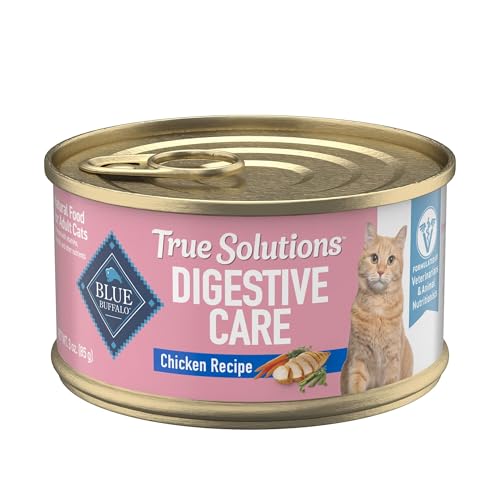
BLUE True Solutions Digestive Care is an adult canned chicken recipe whose listing highlights prebiotic fiber and stool-quality support. It offers a food-based option for a veterinarian-approved routine when the goal is to provide a complete wet meal rather than add an unbalanced topper. Product identity and feature information were checked through the authorized product feed. Since it is chicken-based, it is a poor match for a cat with a known chicken sensitivity or an elimination diet that excludes poultry. Compare the current ingredient statement with your cat’s established diet restrictions.
The multipack can make it easier to keep one consistent food on hand, and the canned texture supplies moisture as part of the meal. The listing presents it as an adult formula, so it should not be selected automatically for kittens, pregnant cats, or pets with a medical nutrition plan. Fiber can affect stool differently depending on the animal, the amount, hydration, and underlying cause. A product emphasizing prebiotic fiber should be viewed as a dietary characteristic, not a guaranteed laxative effect or a diagnosis-specific solution.
This recipe may suit an adult cat that tolerates chicken and whose veterinarian approves a standard digestive-support food. It is not a substitute for an exam when constipation is new, recurrent, or painful. If your cat has diabetes, kidney disease, food allergies, or another condition, ask the clinic whether the formula fits the full medical picture. Monitor stool and appetite after a gradual transition. Stop and call your veterinarian if symptoms worsen, your cat stops eating, or straining continues.
My Recommendation
Consider BLUE True Solutions Digestive Care Chicken only if your veterinarian approves its ingredients and nutritional role for your adult cat. Its clearest advantage is prebiotic fiber in a canned adult recipe; the main limitation is that it is not a constipation treatment.
Hill’s Science Diet Sensitive Stomach & Skin Wet Cat Food

- Wet adult formula with salmon and vegetable recipe
- Listing describes highly digestible ingredients
- Prebiotic fiber is highlighted
- Canned meal adds dietary moisture
- Also positioned for sensitive skin
- Not labeled as a constipation diet
- Recipe may not match every allergy plan
Hill’s Science Diet Sensitive Stomach & Skin Wet Cat Food is an adult canned option the listing describes as highly digestible and made with prebiotic fiber. It is also positioned for skin support, with a salmon-and-vegetable recipe. For a cat that needs a complete wet food and has a sensitive stomach, those features may make it worth discussing with a veterinarian. The canned format can increase moisture intake compared with dry-only meals, although it does not guarantee a constipated cat is adequately hydrated or that a medical problem will improve.
The product is marketed as a sensitive-stomach formula rather than as constipation therapy. Its fiber and digestibility features are relevant to a broader digestive comparison, but they do not prove a particular stool outcome for an individual cat. Review the current label for ingredients and feeding directions, especially if your cat has a history of food reactions. When a veterinarian asks you to keep the diet stable during testing, adding a new food can interfere with that plan. Ask first and make one change at a time.
This can be a candidate for an adult cat whose vet approves a nonprescription sensitive-stomach diet and whose ingredient needs fit the recipe. It may be less appropriate for cats already on a therapeutic diet or strict elimination trial. Introduce it gradually and watch appetite, stool, and tolerance rather than changing several foods at once. If constipation persists or comes with vomiting, lethargy, pain, or poor appetite, contact your veterinarian promptly instead of relying on a sensitive-stomach label.
My Recommendation
Consider Hill’s Science Diet Sensitive Stomach & Skin Wet Cat Food only if your veterinarian approves its ingredients and nutritional role for your adult cat. Its clearest advantage is sensitive stomachs with prebiotic fiber; the main limitation is that it is not a constipation treatment.
Purina Pro Plan Sensitive Skin & Stomach Wet Cat Food Variety Pack

- Duck and Arctic char recipes
- Pâté wet-food texture
- Listing identifies prebiotic fiber
- Adult-focused digestive support
- No artificial colors or preservatives per listing
- Variety pack changes proteins between cans
- Not designed as constipation treatment
Purina Pro Plan Sensitive Skin & Stomach is a canned variety pack with duck and Arctic char entrées. The verified listing describes a pâté texture, highly digestible formula, and natural prebiotic fiber. For an adult cat that eats wet food and tolerates these proteins, it offers more than one flavor while retaining a digestive-support focus. The canned format also contributes moisture to the meal. These attributes can be useful when comparing ordinary complete foods with a veterinarian, but they do not establish that the food treats constipation or addresses its cause.
A variety pack has a practical tradeoff: different proteins may make meals more interesting, but they also make it harder to keep ingredients consistent. That matters when your veterinarian is investigating a food reaction or asking you to monitor a single diet. Before buying, check whether duck and fish fit your cat’s current feeding plan and whether a rotating recipe is acceptable. Follow the label for serving amounts, and transition slowly if your cat has been eating another food.
This is best considered for a cat that enjoys pâté and has no restriction against the listed proteins. It is not the right shortcut for persistent straining, hard stool, or repeated constipation episodes. Ask a veterinarian before changing the diet, especially if the cat is older or has kidney, urinary, or endocrine disease. If the clinic approves a trial, keep a short record of portions, water intake, litter-box visits, and stool changes so you can report useful observations at follow-up.
My Recommendation
Consider Purina Pro Plan Sensitive Skin & Stomach Wet Cat Food Variety Pack only if your veterinarian approves its ingredients and nutritional role for your adult cat. Its clearest advantage is a texture and protein variety pack; the main limitation is that it is not a constipation treatment.
almo nature Supportive Formulas Digestive Support Mackerel & Spinach

- Mackerel and spinach recipe
- Listing identifies cellulose as insoluble fiber
- Complete and balanced per listing
- Gravy format
- Adult-life-stage positioning
- Small can size may not suit every budget
- Fish recipe may not fit all diets
almo nature Supportive Formulas Digestive Support is a wet mackerel-and-spinach recipe. Its verified listing identifies cellulose as an insoluble-fiber source and describes the product as complete and balanced for adult cats. Those are concrete points to compare with a veterinarian if you are considering canned food for stool concerns. The listing does not promise constipation relief, and the presence of fiber alone does not determine whether a food suits a particular cat. The underlying cause, hydration, and total diet all matter.
The flaked texture in gravy differs from a smooth pâté, which can be helpful for cats with strong texture preferences. The relatively small can format may be convenient for single meals, though households with multiple cats should check total daily feeding needs and cost before committing. Because the recipe centers on fish, confirm that it matches any allergy or medical restrictions. Read the current label carefully; product pages and packaging can be updated, and the exact formula should be checked before purchase.
This option may be worth discussing for an adult cat when the vet wants a complete food with a stated insoluble-fiber source. It should not be used to manage a painful or severe episode without veterinary direction. If your cat strains repeatedly, produces very little stool, vomits, or becomes lethargic, contact the clinic. If a diet change is approved, transition gradually and keep the rest of the feeding routine consistent so you can judge tolerance.
My Recommendation
Consider almo nature Supportive Formulas Digestive Support Mackerel & Spinach only if your veterinarian approves its ingredients and nutritional role for your adult cat. Its clearest advantage is an adult recipe with insoluble-fiber positioning; the main limitation is that it is not a constipation treatment.
Tiki Cat Solutions Mousse, Digestion, Chicken & Egg

- Complete and balanced for adult cats per listing
- Mousse pouch texture
- Chicken and egg recipe
- Listing identifies gentle fiber
- Individual pouches for portioning
- Pouch size may be small for larger cats
- Chicken and egg are not universal fits
Tiki Cat Solutions Digestion is a chicken-and-egg mousse sold in individual pouches. The verified listing describes it as complete and balanced for adult cats, easily digestible, and containing gentle fiber. This makes the product distinct from a supplement or topper: it is presented as a complete wet meal. Its soft mousse texture may work for cats that prefer smooth food, and the pouch format can be convenient for controlled portions. The listing does not establish that it is a clinical constipation diet or that it will improve a specific cat’s bowel movements.
The texture and portion format are the main practical reasons to compare it. A cat that dislikes shreds or chunks may accept mousse more readily, while another may reject it. Check the current pouch label for the feeding guide, calories, and transition directions. Because the formula includes chicken and egg, it may not suit cats avoiding either ingredient. A veterinarian-directed elimination trial should not be changed without approval, even if a product is advertised for digestion.
This food may suit an adult cat whose veterinarian approves a complete wet diet and whose ingredient needs match the recipe. It is not a replacement for hydration planning, diagnosis, or prescribed treatment. A cat that has repeated constipation may need an exam and an individualized feeding plan. If the veterinarian recommends trying this food, introduce it gradually and monitor stool consistency, appetite, and water intake. Seek veterinary advice if straining continues or other symptoms appear.
My Recommendation
Consider Tiki Cat Solutions Mousse, Digestion, Chicken & Egg only if your veterinarian approves its ingredients and nutritional role for your adult cat. Its clearest advantage is smooth mousse with gentle-fiber positioning; the main limitation is that it is not a constipation treatment.
Wellness CORE+ Digestive Health Salmon & Whitefish Pâté

- Salmon and whitefish variety pack
- Smooth pâté texture
- Prebiotic fiber highlighted
- Complete and balanced per listing
- Wet format contributes meal moisture
- Seafood-only variety may not suit every cat
- Grain-free is not needed for all cats
Wellness CORE+ Digestive Health is an adult canned pâté variety pack with salmon and whitefish recipes. Its verified listing highlights prebiotic fiber, digestive-health positioning, and a complete-and-balanced formulation. The smooth texture may suit cats that prefer pâté, while the seafood recipes offer a different protein direction from chicken-based options in this roundup. The company also describes wet food as a way to support moisture intake. These attributes make it a comparison candidate, not a proven constipation remedy or a substitute for veterinary assessment.
The variety pack provides two seafood recipes in the same general product line, which may help a cat that tires of one flavor. However, it is not ideal for every feeding plan. Cats with fish sensitivities, strict ingredient trials, or veterinary diet instructions need a different choice unless their clinician approves it. “Grain-free” is a product descriptor, not an inherent advantage for constipation. Check the current package for nutritional adequacy, feeding amounts, and ingredients before purchase.
This option may fit an adult cat that eats smooth pâté and tolerates fish, especially when the veterinarian agrees that a nonprescription digestive-support food is appropriate. It should not delay care for recurrent constipation, straining, vomiting, appetite loss, or abdominal discomfort. If a food trial is approved, transition gradually and avoid adding multiple new foods or supplements at once. Consistent observation gives your vet better information about what is helping and what needs further evaluation.
My Recommendation
Consider Wellness CORE+ Digestive Health Salmon & Whitefish Pâté only if your veterinarian approves its ingredients and nutritional role for your adult cat. Its clearest advantage is smooth seafood pâté with prebiotic fiber; the main limitation is that it is not a constipation treatment.
How to Choose a Canned Cat Food When Constipation Is a Concern
Start with the cause, not the label
Constipation can be associated with dehydration, pain, reduced activity, medication effects, hair ingestion, or other medical problems. A food labeled digestive care cannot identify or fix those causes on its own. If this is a new episode, a recurring problem, or your cat is uncomfortable, call your veterinarian before switching foods. Seek prompt help for repeated straining, vomiting, marked lethargy, appetite loss, or little to no stool. Do not give human laxatives or add oils unless your veterinarian specifically directs you.
Compare moisture, texture, and stated fiber
A canned meal adds water through food, but it does not replace access to fresh water or a veterinary hydration plan. Some products in this roundup name prebiotic fiber; another identifies cellulose as an insoluble-fiber source. Those differences matter more than vague claims about being gentle. Ask your vet whether your cat needs a particular fiber approach, a complete diet, or a prescription formula. Also consider whether your cat eats pâté, mousse, or slices in gravy. A food the cat reliably eats is more useful than one rejected after a few bites.
Check life stage, ingredients, and transition plan
Confirm the food is complete and balanced for your cat’s life stage, and check every ingredient if your cat has allergies or is on an elimination trial. Several options here are adult formulas. Do not use them as kitten diets without veterinary approval. Follow the package’s feeding guide as a starting point, then ask your clinic about portions for your cat’s weight and health. When approved, transition gradually and avoid changing food, treats, and supplements all at once. Track meals, water intake, litter-box visits, and stool. That record helps your veterinarian judge whether the plan is working or needs adjustment.
Also keep the trial practical: use a food only if your cat accepts it and the veterinarian approves its nutritional profile. Measure portions, account for treats, and note stool frequency and texture during any change. A diet may support hydration or digestive needs, but recurring constipation still calls for follow-up to identify the cause. Keep the package label available so the clinic can review calories, fiber, and ingredients.
Frequently Asked Questions
Can canned food help a constipated cat?
Canned food adds moisture to meals and may be part of a veterinarian-approved plan. It does not treat every cause of constipation, and persistent signs need veterinary advice.
Should I add pumpkin or fiber to my cat’s food?
Ask your veterinarian first. The appropriate type and amount of fiber depends on the cat and the cause; adding a supplement can be unsuitable or delay care.
How long should I wait if my cat is straining?
Call your veterinarian for guidance rather than waiting a set number of days, especially if your cat seems painful, vomits, stops eating, or repeatedly strains with little stool.
Can I switch foods suddenly?
Unless your veterinarian advises an immediate change, transition gradually and monitor appetite and stool. A sudden switch can make it harder to tell how your cat is responding.
Do these foods cure constipation?
No. These products are complete wet foods with digestive-support features, not guaranteed treatments for constipation. Follow your veterinarian’s diagnosis and feeding recommendation.
Final Verdict
There is no single best canned cat food for constipation without knowing the cause and your cat’s health history. Royal Canin Digestive Care and the other listed options provide different textures and digestive-support features, but none should replace veterinary care. Ask your veterinarian which formula and feeding plan fit your cat, then monitor the response.
As an Amazon Associate I earn from qualifying purchases.









