
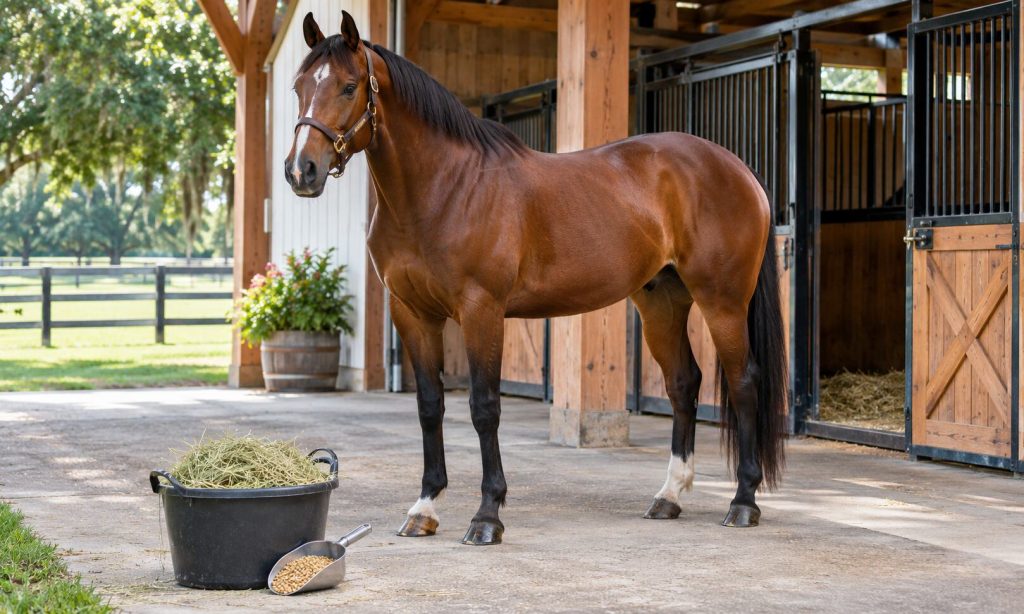
What features matter most in horse supplements for muscle gain? The useful answer begins with the horse’s whole feeding and exercise plan. Muscle develops when suitable training meets adequate energy, amino acids, rest, and good health. A tub promising a dramatic topline cannot replace those foundations. Extra protein alone does not guarantee stronger muscles, and sudden loss of muscle may indicate a problem that needs veterinary attention.
If you are searching for the best horse supplements for muscle gain, start by asking what is missing from the current ration. This guide covers nutrient labels, amino acid balance, feeding amounts, evidence quality, safety, and progress tracking. The goal is to evaluate claims responsibly, not choose a commercial formula. A forage analysis and discussion with a qualified equine nutrition professional can reveal whether any additional nutrient is warranted. Your horse’s age, workload, body condition, and medical history all matter.
Look for a Documented Nutritional Need First
What features matter most in horse supplements for muscle gain depends on what the horse already eats. Quality forage provides much of a typical ration. Concentrates, ration balancers, pasture, and other feeds may contribute additional protein and amino acids. Adding another supplement without reviewing those sources can duplicate nutrients or complicate feeding. It can also distract from low total calorie intake or insufficient conditioning work.
Penn State Extension explains that feeding more protein does not independently produce a muscular topline. Appropriate exercise is essential, while excess dietary protein does not act as a shortcut. Start with forage type, quantity, quality, and the horse’s workload. Assess actual body condition rather than relying on how a mane or shoulder appears in a photograph. Our horse body-condition monitoring guide provides a structured way to record changes.
Separate Weight Gain From Muscle Development
An underweight horse may need more usable energy, dental care, parasite management, or medical assessment. A horse with adequate body fat but weak topline may need a different conditioning plan. These are distinct questions. More calories can increase weight without fixing poor exercise progression; more amino acids cannot repair pain that limits movement. Discuss unexplained muscle loss, weakness, or exercise intolerance with a veterinarian before changing supplements.
Evaluate Protein Quality and Amino Acids
When asking what features matter most in horse supplements for muscle gain, look beyond the front label’s crude protein percentage. That number describes a broad nutrient category, not the amount of each essential amino acid available in the complete ration. Horses need essential amino acids from dietary protein. Their requirements can vary with life stage, activity, and other conditions. A balanced feeding plan considers the quality and combination of protein sources.
University of Minnesota Extension discusses amino acids in forage and horse nutrition. Its research reinforces why forage contribution cannot be ignored when evaluating additional protein. A qualified nutrition professional can compare forage testing, feed labels, and the horse’s requirements. Avoid assuming that a higher percentage printed on a small container means greater daily usefulness. You need the actual serving amount and the larger dietary context.
Read the Serving Amount and Daily Nutrient Contribution
What features matter most in horse supplements for muscle gain includes the amount supplied each day. A label may list a nutrient concentration but not make the practical daily contribution obvious. Review the stated amount per serving and the suggested daily feeding rate. Ask how that contribution fits with hay and existing concentrates. Do not stack multiple fortified feeds and supplements without checking cumulative intake. Our guide to sizing a protein supplement for horses discusses why weight, ration, and professional advice matter more than guessing a scoop size.
Know the Limits of Ingredient Claims
Words such as “performance,” “topline,” or “rapid growth” are not proof that a nutrient is missing or that a formula improves an individual horse’s health. Review whether the ingredient and amount are clearly disclosed. Be skeptical of vague proprietary blends or claims unsupported by relevant equine evidence. More ingredients can make the label longer without making the feeding decision clearer. The useful question is what each component contributes and why the horse needs it.
Check Safety, Transparency, and Feeding Instructions
What features matter most in horse supplements for muscle gain includes clear instructions, lot identification, appropriate storage guidance, and a complete ingredient statement. These details make it easier to use or stop a supplement responsibly. A reliable label should allow the owner and veterinarian to understand the intended species, serving amount, and precautions. Avoid any product with unclear contents or exaggerated medical claims.
Do not treat a supplement as a substitute for diagnosing a health condition. Weakness, muscle wasting, difficulty moving, and sudden behavioral changes can reflect problems unrelated to nutrition. Some horses have metabolic, liver, kidney, or other medical needs that affect diet choices. Ask the treating veterinarian to review the entire ration and any concurrent medications or supplements. This is particularly important for growing horses, older horses, and animals with chronic disease.
Do Not Make Up a Dose From Horse Size Alone
A 1,000-pound horse is not simply a scaled-up version of every other horse. Activity, forage, growth, body condition, and diagnoses influence requirements. Follow professional instructions and the actual label, and use an accurate scale or measuring device where appropriate. Avoid doubling a serving because progress seems slow. A supplement with an unknown daily contribution should not be introduced until its directions are clarified.
Consider Competition and Medication Rules
If the horse competes, check the current rules of the relevant sport organization. Some ingredients, contaminants, or substances may create testing or eligibility issues. Ask the veterinarian or competition authority about specific concerns. Do not assume “natural” means permitted or harmless. Keep packaging and lot details so the exact material can be identified if a question arises.
Evaluate Training, Recovery, and Measurable Progress
What features matter most in horse supplements for muscle gain is only half the decision; your monitoring plan matters just as much. Record body weight estimates, body-condition score, workload, forage changes, and the horse’s comfort. Make conditioning changes gradually with a trainer who understands the animal’s fitness and limits. Muscle adapts over time, not after a single feeding. A sudden decline needs investigation, not an improvised higher dose.
Penn State Extension’s material on exercise workload and energy needs emphasizes that feeding and work should be considered together. Horses doing more work may need an adjusted energy plan, while overfeeding can create other problems. Reassess after an appropriate period with the veterinarian or nutrition professional. A change in appearance could reflect body fat, seasonal coat, or posture as well as muscle. Use multiple observations instead of relying on one photo.
Track the Whole Horse, Not Just the Topline
Look at willingness to move, recovery after appropriate exercise, appetite, weight trends, and comfort during grooming. Note whether the horse can perform the prescribed work without pain or unusual fatigue. The topline supplementation and care guide provides additional context, but no supplement should conceal a gait or back problem. Have persistent concerns examined.
Review the Plan Before Adding Something Else
If no meaningful progress appears, revisit what features matter most in horse supplements for muscle gain and whether the need was documented. Ask whether the diagnosis, training, total calories, or feeding plan needs reassessment. Do not add a second or third supplement simply because the first seemed slow. Confirm what outcome was expected and whether it was realistic. Good records can show the difference between a poor supplement match and a more fundamental issue such as inadequate forage intake or pain-limited exercise.
Mistakes to Avoid When Reading Supplement Claims
What features matter most in horse supplements for muscle gain is frequently obscured by marketing language. Common errors include treating crude protein as the only important number, ignoring the existing ration, assuming visible topline changes are guaranteed, and overlooking training or disease. Another is choosing by a dramatic before-and-after image without knowing the horse’s health, feeding, or exercise history.
The stronger approach is a written reason for each dietary addition. Identify the potential nutrient gap, check the amount, discuss safety, and decide what measure will show whether the plan is working. If the label is confusing, ask for help rather than guessing. A thoughtful nutrition review can sometimes conclude that no supplement is needed at all. That outcome can be just as valuable as a new feeding step.
Frequently Asked Questions
Questions about muscle-building supplements often mix nutrition, exercise, and medical concerns. Separating those topics helps prevent unrealistic expectations and unnecessary additions to the ration.
These answers are general information. For unexplained muscle loss or a horse with a diagnosed condition, obtain individualized veterinary and equine nutrition advice before changing feed or supplements.
Can extra protein alone build a horse’s topline?
No. Appropriate exercise, sufficient energy, good health, and overall dietary balance matter. Excess protein does not substitute for conditioning.
Does “natural” mean a muscle supplement is safe?
No. Natural ingredients can still have side effects, interact with care, or be unsuitable for a particular horse.
Should I add amino acids without testing hay?
A forage and ration review is a better starting point. Ask a qualified professional whether testing or an adjustment is justified.
How soon should a muscle supplement show results?
There is no reliable universal timeline. Any change depends on diet, exercise, underlying health, and the specific deficiency being addressed.
When should a veterinarian examine muscle loss?
Promptly when loss is unexplained, sudden, painful, or accompanied by weakness, poor performance, weight loss, or other concerning signs.
Final Words
What features matter most in horse supplements for muscle gain are transparent nutrition information, a genuine rationale, safe directions, and measurable follow-up. The best horse supplements for muscle gain search should not distract you from forage quality, appropriate exercise, recovery, and possible medical causes of muscle loss. Before adding anything, identify the need and review the complete feeding plan.
If protein is one possible gap, our horse protein supplement format overview explains common nutrient categories without replacing veterinary guidance. What features matter most in horse supplements for muscle gain will always depend on the individual horse. Build the decision around evidence, not a dramatic promise on a container.
Reference
The following university extension resources informed the nutrition, protein, and exercise discussion. They provide general educational evidence, not an individualized supplement prescription.
For a horse with unexplained muscle loss, medical signs, or unusual dietary needs, work with a veterinarian and qualified equine nutrition professional who can assess the full history.









