
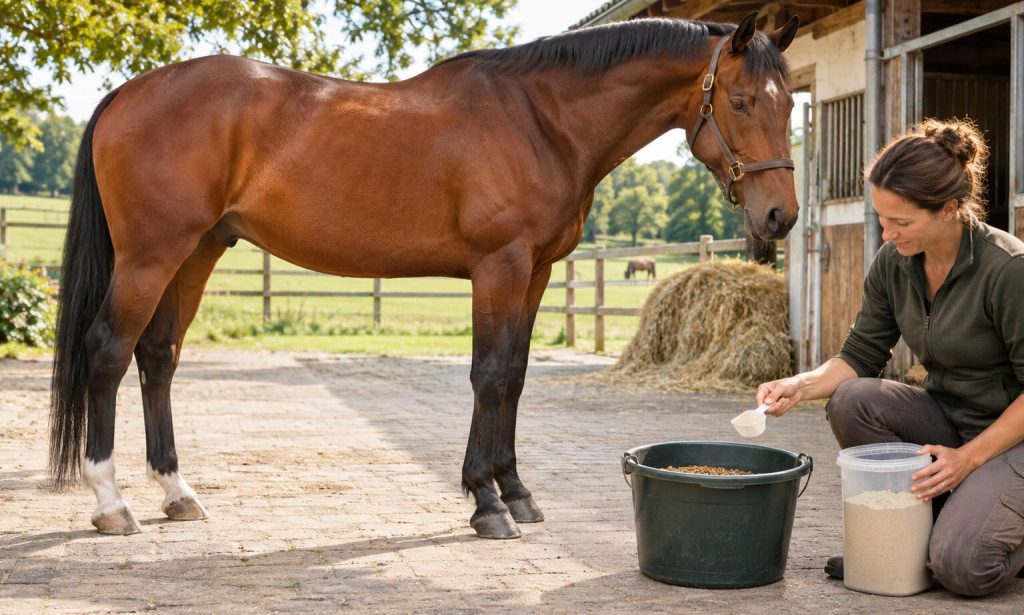
A horse’s topline includes the muscles along the neck, back, and hindquarters. When those muscles look hollow or weak, it is tempting to reach for a feed additive. How to use and care for a topline supplement for horses begins with understanding that a supplement cannot build muscle on its own. Adequate nutrition, appropriate exercise, soundness, and medical health all contribute to topline condition.
A topline supplement for horses may be discussed when the existing ration does not meet specific protein or amino-acid needs. This guide explains how to review the feeding plan, measure and store supplements, monitor changes, and avoid unrealistic expectations. It also covers warning signs that deserve veterinary attention. The aim is steady, evidence-based support for the horse rather than chasing a dramatic before-and-after promise.
Understand What Builds a Healthy Topline
The topline reflects muscle condition, body composition, conformation, fitness, and sometimes illness. A horse may have adequate body fat but poor muscle development. Another may be underweight, recovering from inactivity, or using its body incorrectly because of discomfort. Muscle condition should therefore be assessed alongside body condition and gait, not only by photographs of the back.
Protein supplies amino acids needed for muscle development and repair. The University of Minnesota Extension explains that forage amino-acid content and availability vary. But more protein is not always better when the diet already meets requirements. An effective plan first identifies whether the horse needs additional energy, specific amino acids, veterinary treatment, or a carefully progressed conditioning program.
Do not confuse muscle and fat
A rounder back after weight gain does not necessarily indicate stronger muscle. Assess the neck, shoulders, topline, and hindquarters consistently, ideally with a veterinarian or equine nutritionist. Track overall body condition separately. Our horse body condition and weight monitoring guide provides a starting record for those changes.
Review the Whole Ration Before Adding Anything
List the horse’s forage type, approximate daily amount, pasture access, concentrates, ration balancers, treats, and current supplements. Forage often supplies most daily nutrition, so a hay analysis can clarify protein and energy content. The goal is not simply the highest crude-protein percentage but an appropriate total ration with the essential amino acids and other nutrients the horse can use.
Ask the veterinarian or equine nutritionist to review age, exercise level, weight, health conditions, and workload. A senior horse with dental difficulty may not consume enough forage. A horse with pain or an underlying disease may lose muscle despite good feeding. Those problems require specific care; a topline supplement cannot correct them alone.
Check for duplication
Many feeds are already fortified with amino acids, vitamins, and minerals. Adding another powder can duplicate nutrients without improving results. Compare labels and servings across the entire daily ration. Our article on adding amino-acid supplements to a horse’s routine explains useful questions to ask before making changes.
Understand Label Information and Appropriate Use
A supplement label should identify ingredients, intended feeding directions, lot or batch information, storage requirements, and recommended serving tools. Protein-related products may emphasize amino acids such as lysine, threonine, or methionine. These have different roles in a balanced diet, and one prominent ingredient does not guarantee an overall nutritional benefit.
Use the measured amount recommended in the veterinary-approved plan. Do not increase the portion because muscle changes seem slow. Consistency is more useful than aggressive adjustment. If the product is mixed into feed, check whether the horse consumes the entire meal. Avoid introducing several new supplements at once, because appetite changes or reactions become hard to interpret.
Introduce the routine gradually when advised
If the horse is stable and the veterinarian approves a new additive, follow the label and any tailored transition guidance. Mix thoroughly into an appropriate feed portion without making it unpalatable. Observe intake, stool, appetite, and behavior. Report refusal, diarrhea, or other changes. Never force-feed a supplement or hide repeated adverse reactions with extra flavoring.
Store and Maintain the Supplement Properly
Keep the product in its original labeled container, closed tightly, in a dry location that meets its storage instructions. Protect powders from moisture and insects. Keep liquids away from extremes of heat or cold unless the label specifies otherwise. Record the date opened and retain the lot number so the product can be identified if a quality concern arises.
Use a clean, dry scoop. Do not return feed residue or a wet utensil to the container. Wipe the outside of the closed package as needed, but do not wash edible powder or pellets. If you find mold, pests, unusual odor, moisture damage, or a broken seal, stop using the contents and seek appropriate guidance. Clean storage practices help avoid avoidable feeding problems.
Use a stable feeding schedule
Assign one person or a shared feed chart to track each daily serving. In multi-horse barns, clearly identify the intended animal without repackaging the supplement into an unlabeled container. Ensure another caretaker can follow the plan when you are away. Record skipped or refused meals rather than silently doubling the next serving.
Pair Nutrition With Appropriate Exercise and Saddle Fit
Muscle develops in response to appropriate work, rest, and nutrition. A gradual conditioning plan may include regular turnout, walking, transitions, hill work, or other exercises suited to the horse’s soundness. A trainer or equine rehabilitation professional can help structure movement. Pain, lameness, or fatigue should not be overcome by increasing workload.
Saddle fit may change as muscle develops or body condition changes. The University of Minnesota Extension notes that changing topline shape can affect saddle fit. Recheck tack if the horse shows new rubbing, discomfort, or altered performance. A supplement does not correct pressure points or poor biomechanics. Address those factors so the horse can use its body comfortably.
Avoid rushing visible results
Muscle changes take time, and photographs can mislead when posture, light, or body fat differs. Compare similar angles and conditions at sensible intervals. Focus on movement quality, energy, and veterinary assessments rather than a dramatic curve in the back. If progress stalls, revisit the diet and training plan with professionals.
Monitor Progress and Know When to Reassess
Track body weight, body condition, muscle condition, feed intake, exercise, and any pain signs. A simple log taken every few weeks can reveal trends. For a more structured approach, see our guide to monitoring changes after discussing amino-acid supplements with a veterinarian. Consistent measurements help separate muscle gain from general weight change.
Contact the veterinarian for unexplained muscle wasting, weakness, difficulty chewing, chronic diarrhea, reluctance to work, stumbling, or new back pain. Older horses may have dental, endocrine, or other medical conditions that affect muscle. Do not label every change “poor topline” and compensate with feeding alone. The clinical cause matters.
Review whether the supplement is still needed
Once the ration, pasture, and workload change, ask whether the supplemental amount remains appropriate. Seasonal forage quality and training demands vary. Continue only when the plan has a clear nutritional purpose. A product that worked during rehabilitation may not be necessary indefinitely for a healthy horse on a balanced ration.
Common Handling and Feeding Mistakes
A common mistake is measuring by an unmarked scoop without knowing the actual amount. Another is giving multiple products with overlapping nutrients. Owners may also ignore whether the horse eats the full portion. These habits make it difficult to tell what the animal receives. Review the label and create a simple consistent feeding chart.
Another mistake is expecting supplementation to replace training or medical assessment. A horse with pain may avoid using back muscles normally. A horse eating inadequate forage may need broader ration changes. Avoid changing several factors simultaneously and then crediting a single powder for improvement. Prioritize the horse’s total care plan.
Keep outcomes realistic
No supplement guarantees a rounded topline in a set number of days. Results depend on nutrition, exercise, age, conformation, and health. A measured, patient approach protects the horse from unnecessary dietary experimentation and helps professionals make better adjustments.
Frequently Asked Questions
Topline supplements raise questions about protein, feeding schedules, and how to tell whether the horse benefits. The answers are usually tied to the whole ration and the individual horse.
Use this guidance to prepare a discussion with a veterinarian or equine nutritionist. Do not set doses or diagnose muscle loss from photographs alone.
Can a topline supplement build muscle without exercise?
Not reliably. Muscle development depends on suitable work, adequate nutrition, rest, and health. A supplement cannot replace those factors.
Does every horse need extra lysine?
No. It depends on the total ration and the horse’s requirements. A nutrition assessment should come first.
How quickly should the topline change?
There is no universal timeline. Monitor muscle condition and function over time rather than expecting a rapid transformation.
Can I give two topline supplements together?
Do not combine them without reviewing overlapping nutrients and doses with a veterinarian or equine nutritionist.
When is muscle loss a medical concern?
Unexpected wasting, weakness, pain, or major performance changes warrant veterinary assessment, especially in older horses.
Final Words
How to use and care for a topline supplement for horses is really about a balanced plan: assess the ration, measure carefully, store the product well, and monitor changes alongside exercise and health. Do not judge progress only by coat shine or a fuller-looking silhouette. True improvement should support comfortable function.
If your horse may benefit from a topline supplement for horses, start with a veterinary or equine nutrition review. Keep one clear feeding record, progress conditioning sensibly, and reconsider the plan when the horse’s needs change. Thoughtful daily care does more than any isolated additive.
Reference
These university resources explain equine protein, forage evaluation, body condition, and nutrition across different life stages.
They support general education and do not prescribe a supplement or treatment for an individual horse.









