
The best protein supplement for horses depends on the total ration, not an attractive muscle-building claim. Hay and pasture supply much of a horse’s nutrition. Sometimes an equine professional may recommend additional protein or an essential amino acid, such as lysine. But lysine powder is not the same as complete dietary protein. Exercise, energy intake, health, age, and forage quality also affect muscle condition. Our reading hay and horse-feed labels adds context. This guide compares seven identifiable equine amino-acid and conditioning products. We explain their ingredient focus, intended use, and tradeoffs without promising recovery or muscle gain. A hay analysis and full feeding review should come before choosing any bottle or bag. Check for duplicate vitamins and minerals when combining supplements. Our goal is to help horse owners compare the products with realistic expectations and professional guidance.
Quick Picks
| Product | Best For | Key Advantage | Buy | |
|---|---|---|---|---|
| SmartPak Tri Amino | three-amino-acid support | lysine, methionine, and threonine in one supplement | View on Amazon | Jump to Review |
| SU-PER Lysine | single-nutrient needs | a lysine-focused powder with a straightforward purpose | View on Amazon | Jump to Review |
| AniMed L-Lysine | targeted lysine supplementation | an L-lysine powder formula | View on Amazon | Jump to Review |
| Equinety Horse XL | blended amino acids | a proprietary amino-acid formula for equine feeding | View on Amazon | Jump to Review |
| Pivotal Feeds Total Recovery | combined recovery nutrition | a mixture of amino acids and probiotics | View on Amazon | Jump to Review |
| Organnact Muscle Horse Turbo | multicomponent formulas | amino acids together with prebiotics and probiotics | View on Amazon | Jump to Review |
| Formula 707 MuscleMx | conditioning plans | lysine with other conditioning ingredients | View on Amazon | Jump to Review |
SmartPak Tri Amino
What We Like
- Lysine listed
- Methionine included
- Threonine included
- 2-pound package
What We Don’t Like
- Not complete protein
- Ration review needed
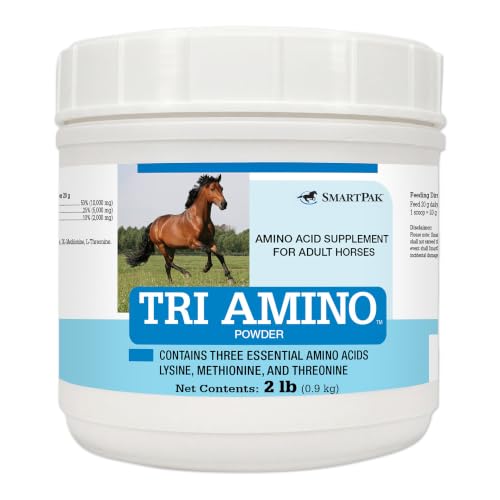
SmartPak Tri Amino is an option for owners investigating three-amino-acid support. The verified product listing identifies lysine, methionine, and threonine in one supplement. The defined trio is easier to compare with a specific amino-acid requirement. An amino acid supplement is not automatically a complete protein feed, so the rest of the diet must be assessed. Use a forage analysis and total ration calculation before deciding that one specific nutrient is deficient. Compare nutrient amounts per serving rather than assuming a larger bag provides more useful protein.
Look at grams of each amino acid rather than container weight alone. Ask whether the horse’s existing forage already supplies enough of the targeted nutrients. Even a defined lysine-methionine-threonine blend cannot compensate for an energy shortage or an unsuitable exercise program. Combined formulas may duplicate vitamins or minerals already included in a ration balancer. Ask an equine nutritionist to calculate the full diet rather than guessing at a nutrient gap. Horses at different life stages can have different protein and amino acid requirements.
This is not a complete protein feed by itself. Compare the three specific amino acids with a professionally assessed shortfall instead of treating this as a complete feed. Marketing promises of rapid muscle gain or recovery are not guaranteed individual clinical outcomes. Do not interpret advertised fast recovery as evidence of proven effects in every horse. Tracking weight and muscle condition over time is more useful than judging one photograph. Unexplained muscle loss deserves veterinary attention before another powder is added. More protein or amino acids are not automatically beneficial when existing needs are already met.
My Recommendation
For three-amino-acid support, consider SmartPak Tri Amino and its lysine, methionine, and threonine in one supplement. This is not a complete protein feed by itself. Check the full instructions and a suitable alternative before deciding. Your horse’s health and current routine matter more than sales claims. Ask an equine professional if the underlying need or product suitability is uncertain.
SU-PER Lysine

What We Like
- Lysine emphasis
- Powder format
- Focused purpose
- Larger package
What We Don’t Like
- One nutrient only
- Avoid unnecessary use
SU-PER Lysine is an option for owners investigating single-nutrient needs. The verified product listing identifies a lysine-focused powder with a straightforward purpose. A single-amino-acid formula can be useful when a documented lysine shortfall exists. Lysine supplementation should not distract from checking forage quantity, total calories, and ordinary muscle development. Combined formulas may duplicate vitamins or minerals already included in a ration balancer. Marketing promises of rapid muscle gain or recovery are not guaranteed individual clinical outcomes. Discuss feeding changes with an equine veterinarian or nutritionist when the horse has special health needs.
Compare the actual lysine amount to a professional’s ration calculation. The large bag makes sense only when its contents will be used appropriately. Track body condition and actual intake rather than relying on appearance or product photographs alone. Unexplained muscle loss deserves veterinary attention before another powder is added. More protein or amino acids are not automatically beneficial when existing needs are already met. Review selenium and other supplemental nutrients for overlap before combining formulas. Training and a healthy energy balance remain important even with amino acid supplementation.
It cannot correct deficiencies in other essential amino acids. The value of a single lysine source depends on a real dietary need, not the size of the bag. An amino acid supplement is not automatically a complete protein feed, so the rest of the diet must be assessed. The best purchasing decision follows a ration plan rather than a dramatic muscle-building claim. A forage analysis can reveal whether the ration is short of protein before supplements are considered. Essential amino acids support normal protein synthesis, but one amino acid is not a complete protein feed.
My Recommendation
For single-nutrient needs, consider SU-PER Lysine for its lysine-focused powder with a straightforward purpose. It cannot correct deficiencies in other essential amino acids. Check the full instructions and a suitable alternative before deciding. Your horse’s health and current routine matter more than sales claims. Ask an equine professional if the underlying need or product suitability is uncertain.
AniMed L-Lysine

What We Like
- L-lysine product
- Powder presentation
- Targeted support
- Simple category
What We Don’t Like
- No full amino blend
- Need defined requirement
AniMed L-Lysine is an option for owners investigating targeted lysine supplementation. The verified product listing identifies an L-lysine powder formula. The product’s narrow ingredient focus is distinct from multi-nutrient blends. Discuss feeding changes with an equine veterinarian or nutritionist when the horse has special health needs. Track body condition and actual intake rather than relying on appearance or product photographs alone. An amino acid supplement is not automatically a complete protein feed, so the rest of the diet must be assessed.
Check its exact directions and nutrient concentration against the diet. This type cannot replace a forage source that supplies complete protein. Use a forage analysis and total ration calculation before deciding that one specific nutrient is deficient. Compare nutrient amounts per serving rather than assuming a larger bag provides more useful protein. Essential amino acids support normal protein synthesis, but one amino acid is not a complete protein feed. An adequate energy intake is necessary before expecting improved body or muscle condition.
A weak topline does not prove a lysine deficiency. An isolated nutrient cannot address a feeding problem caused by low energy intake or an unbalanced forage ration. A simple lysine powder is not a shortcut around a suitable forage ration and progressive conditioning. Horses at different life stages can have different protein and amino acid requirements. A supplement does not replace sufficient forage or appropriate concentrate feeding. Feed changes should be introduced carefully while monitoring normal appetite and intake. Large packages may offer many servings, but storage and shelf life still matter.
My Recommendation
Consider AniMed L-Lysine for targeted lysine supplementation where an L-lysine powder formula is genuinely useful. A weak topline does not prove a lysine deficiency. Check the full manufacturer instructions, compare another suitable product, and review the horse’s individual health or nutritional needs. An equine veterinarian or nutritionist can help clarify whether this option belongs in a broader care plan.
Equinety Horse XL

What We Like
- Amino-acid blend
- Multi-amino-acid blend
- Broader formula
- Conditioning positioning
What We Don’t Like
- Less transparent blend
- Not a complete ration
Equinety Horse XL is an option for owners investigating blended amino acids. The verified product listing identifies a proprietary amino-acid formula for equine feeding. The broader amino-acid approach differs from a pure lysine powder. Use a forage analysis and total ration calculation before deciding that one specific nutrient is deficient. Compare nutrient amounts per serving rather than assuming a larger bag provides more useful protein. Evaluate the amino-acid blend with the horse’s age, workload, diet, and current muscle condition in mind.
Study the current ingredient panel before adding a general conditioning supplement. Do not interpret recovery marketing as a medical outcome. Combined formulas may duplicate vitamins or minerals already included in a ration balancer. Marketing promises of rapid muscle gain or recovery are not guaranteed individual clinical outcomes. Discuss feeding changes with an equine veterinarian or nutritionist when the horse has special health needs. Feed changes should be introduced carefully while monitoring normal appetite and intake. Large packages may offer many servings, but storage and shelf life still matter.
Proprietary blends can limit straightforward nutrient-by-nutrient comparisons. Ask for amounts of individual amino acids if you need to compare this blend precisely with another product. Track body condition and actual intake rather than relying on appearance or product photographs alone. More protein or amino acids are not automatically beneficial when existing needs are already met. Review selenium and other supplemental nutrients for overlap before combining formulas. Training and a healthy energy balance remain important even with amino acid supplementation. A simple formula may be preferable when an exact amino acid shortfall is already documented.
My Recommendation
For blended amino acids, consider Equinety Horse XL for its proprietary amino-acid formula for equine feeding. Proprietary blends can limit straightforward nutrient-by-nutrient comparisons. Check the full instructions and a suitable alternative before deciding. Your horse’s health and current routine matter more than sales claims. Ask an equine professional if the underlying need or product suitability is uncertain.
Pivotal Feeds Total Recovery

What We Like
- Amino acids listed
- Probiotics included
- 30-serving product
- Combined format
What We Don’t Like
- Overlap possible
- Claims need scrutiny
Pivotal Feeds Total Recovery is an option for owners investigating combined recovery nutrition. The verified product listing identifies a mixture of amino acids and probiotics. The listing combines protein-building nutrients with a digestive ingredient category. Combined formulas may duplicate vitamins or minerals already included in a ration balancer. Marketing promises of rapid muscle gain or recovery are not guaranteed individual clinical outcomes. Discuss feeding changes with an equine veterinarian or nutritionist when the horse has special health needs.
Compare the listed nine-amino-acid approach to a simpler formula. Only a documented ration need should justify combining extra ingredients. Track body condition and actual intake rather than relying on appearance or product photographs alone. An amino acid supplement is not automatically a complete protein feed, so the rest of the diet must be assessed. Training and a healthy energy balance remain important even with amino acid supplementation. A simple formula may be preferable when an exact amino acid shortfall is already documented.
Its probiotic component may duplicate another existing supplement. Introducing amino acids and probiotics together makes it harder to tell which change, if any, matters. Use a forage analysis and total ration calculation before deciding that one specific nutrient is deficient. An adequate energy intake is necessary before expecting improved body or muscle condition. Topline appearance depends on exercise, age, health, and feeding rather than one product alone. Compare stated nutrient quantities per serving instead of relying on total package weight.
My Recommendation
For combined recovery nutrition, consider Pivotal Feeds Total Recovery for its mixture of amino acids and probiotics. Its probiotic component may duplicate another existing supplement. Check the full instructions and a suitable alternative before deciding. Your horse’s health and current routine matter more than sales claims. Ask an equine professional if the underlying need or product suitability is uncertain.
Organnact Muscle Horse Turbo

What We Like
- Amino acid blend
- Prebiotics listed
- Probiotics listed
- Bulk offering
What We Don’t Like
- Complex composition
- Large storage need
Organnact Muscle Horse Turbo is an option for owners investigating multicomponent formulas. The verified product listing identifies amino acids together with prebiotics and probiotics. Its large-format presentation differs from a small targeted amino-acid tub. Track body condition and actual intake rather than relying on appearance or product photographs alone. An amino acid supplement is not automatically a complete protein feed, so the rest of the diet must be assessed. Use a forage analysis and total ration calculation before deciding that one specific nutrient is deficient.
Check storage and daily measuring practicality before choosing the large pack. Confirm that each ingredient addresses a known feeding requirement. Compare nutrient amounts per serving rather than assuming a larger bag provides more useful protein. Muscle development also requires suitable training, sufficient calories, and recovery time, whatever a formula contains. Compare stated nutrient quantities per serving instead of relying on total package weight. A lysine-focused powder differs substantially from a blend containing several amino acids. Some muscle formulas also add vitamins or minerals that may overlap a balanced ration.
The formula is more complicated than necessary for some horses. A multicomponent bag is best assessed against the existing feeds and the horse’s actual nutrition targets. Combined formulas may duplicate vitamins or minerals already included in a ration balancer. Large packages may offer many servings, but storage and shelf life still matter. Probiotic ingredients create an additional consideration that is separate from protein adequacy. A proprietary blend may offer less detail for precise nutrient comparisons. Do not interpret advertised fast recovery as evidence of proven effects in every horse.
My Recommendation
For multicomponent formulas, consider Organnact Muscle Horse Turbo and its amino acids together with prebiotics and probiotics. The formula is more complicated than necessary for some horses. Check the full instructions and a suitable alternative before deciding. Individual circumstances matter. Ask an equine professional if the underlying need or product suitability is uncertain.
Formula 707 MuscleMx

What We Like
- Lysine ingredient
- Other conditioning compounds
- Equine powder
- Distinct formula
What We Don’t Like
- Not just protein
- Review full label
Formula 707 MuscleMx is an option for owners investigating conditioning plans. The verified product listing identifies lysine with other conditioning ingredients. This mixed formula offers a different comparison from single-amino-acid products. Compare nutrient amounts per serving rather than assuming a larger bag provides more useful protein. Check whether the horse’s training plan and underlying health explain its topline before buying another supplement. Combined formulas may duplicate vitamins or minerals already included in a ration balancer. Marketing promises of rapid muscle gain or recovery are not guaranteed individual clinical outcomes.
Read all ingredient quantities and identify overlaps with other feeds. Muscle-building claims should not displace a sound training and nutrition plan. Discuss feeding changes with an equine veterinarian or nutritionist when the horse has special health needs. Track body condition and actual intake rather than relying on appearance or product photographs alone. A proprietary blend may offer less detail for precise nutrient comparisons. Do not interpret advertised fast recovery as evidence of proven effects in every horse. Tracking weight and muscle condition over time is more useful than judging one photograph.
The additional ingredients may not match an actual protein deficiency. Conditioning blends add little clarity when the ration has not been evaluated for protein and energy. A simple formula may be preferable when an exact amino acid shortfall is already documented. Check whether a product is meant to address amino acids, calories, or both. Feeding instructions should be adapted through professional guidance for horses with special needs. The best purchasing decision follows a ration plan rather than a dramatic muscle-building claim.
My Recommendation
For conditioning plans, consider Formula 707 MuscleMx and its lysine with other conditioning ingredients. The additional ingredients may not match an actual protein deficiency. Check the full instructions and a suitable alternative before deciding. Your horse’s health and current routine matter more than sales claims. Ask an equine professional if the underlying need or product suitability is uncertain.
How to choose best protein supplement for horses
Choosing best protein supplement for horses requires attention to the individual horse, the current diet or environment, and reliable product information. Assess the actual need, compare appropriate formulas, and involve an equine professional when safety or health is at stake.
Assess forage before adding a product
Start with the forage supply and a realistic picture of the horse’s energy and protein intake. Hay and pasture vary in nutrient concentration, so a forage analysis may clarify what the current ration delivers. Requirements also depend on growth, pregnancy, lactation, age, health, and workload. A weak topline may reflect insufficient calories, conditioning, dental trouble, or illness rather than an isolated protein deficiency. Review body condition and muscle condition separately. Our guide to reading hay and horse-feed labels explains the numbers worth comparing. An equine nutritionist can calculate the whole diet and decide whether supplementation makes sense. Adding nutrients without understanding what is missing can increase cost without improving care.
Understand protein and amino acids
Protein consists of amino acids, but a single-amino-acid powder does not provide complete dietary protein. Lysine is essential, and other amino acids such as methionine and threonine also matter for normal protein synthesis. Compare the grams of relevant nutrients per serving instead of relying on container weight or marketing terms. A three-amino-acid blend serves a different purpose from a single-lysine product. Broad recovery formulas may include probiotics, vitamin E, or selenium that the horse already receives elsewhere. Our article about adding amino acids to a horse ration offers useful context. Read the complete label and discuss appropriate amounts with an equine professional. More of a nutrient is not always better, especially when several supplements are combined.
Compare labels and track the horse
Choose the feeding format your horse will reliably consume and your barn can measure consistently. Powders, pellets, and mixed formulas differ in storage and administration. Check the number of servings and exact nutrient profile to compare value. Introduce feed changes gradually, following professional guidance when special health needs are involved. Track actual intake, body weight, and condition over time, not just product claims. If protein-rich forage is appropriate, compare our guide to alfalfa pellet options as a separate feeding choice. A horse with unexplained muscle loss, weakness, or illness needs veterinary assessment. Supplements should fill documented gaps within a balanced plan. Neither a powder nor a pellet replaces good forage, adequate energy, suitable exercise, and ongoing care.
Frequently Asked Questions
Does every horse need extra protein?
No. Many horses meet their needs with a suitable balanced forage-based ration.
Is lysine powder the same as protein feed?
No. Lysine is one essential amino acid, not a complete protein source.
Will amino acids build muscle without training?
Not automatically. Adequate energy, health, exercise, and a balanced ration all matter.
Can I combine several equine protein products?
Review overlapping amino acids, vitamins, and minerals with an equine nutritionist before combining them.
How do I know if a horse needs lysine?
Start with a forage analysis and full ration assessment rather than judging only its topline.
Final Verdict
SmartPak Tri Amino provides a defined three-amino-acid blend. SU-PER Lysine and AniMed L-Lysine target one nutrient, while Equinety and other products use broader formulas. None replaces a forage-based ration assessment or a veterinarian’s investigation of muscle loss.
Affiliate disclosure: This article contains Amazon affiliate links. If you purchase through them, PetAdvisorPro may earn a commission. As an Amazon Associate I earn from qualifying purchases.









