
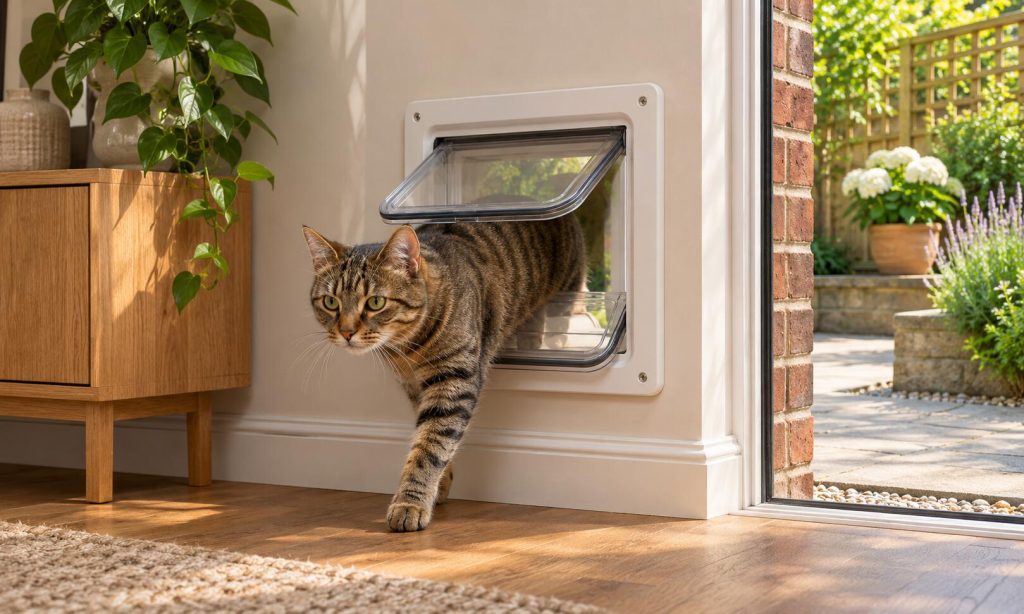
Installing a cat flap through an outside wall is more involved than cutting through a standard interior door. You need a tunnel that spans the wall, weather seals that keep water out, and a flap opening your cat can use comfortably. The best cat door for exterior wall projects should fit the construction of the house as well as the animal. A poorly planned cut can affect wiring, insulation, framing, or moisture protection.
These seven options are wall-specific kits with different tunnels, frames, flap systems, and locking arrangements. I compare the published dimensions and practical tradeoffs, not unverified claims about perfect insulation or burglary protection. Before ordering, measure your cat and the finished wall thickness. Check local building requirements and use a qualified installer when structural, masonry, waterproofing, or electrical work is involved. The right product matters, but a safe, properly sealed installation matters just as much.
Quick Picks for Exterior Walls
Most buyers should start with a wall-specific telescoping tunnel, then compare flap clearances, frame material, weather seals, and removable lock panels. A heavier door is not necessarily easier for a shy cat to push.
| Product | Best For | Key Advantage | Buy | |
|---|---|---|---|---|
| PetSafe Small Wall Entry | Simple wall installation | Rust-free insulated tunnel | View on Amazon | Jump to Review |
| Baboni Small Steel Wall Door | Compact metal frame | Measured small flap and aluminum lock | View on Amazon | Jump to Review |
| Decormax Double-Flap Wall Door | Draft-conscious homes | Two magnetic flaps and slide panels | View on Amazon | Jump to Review |
| ClawJaw Steel Wall Door | Black metal finish | Telescoping tunnel and double flaps | View on Amazon | Jump to Review |
| VOSOIR Aluminum Wall Door | Corrosion-conscious installations | All-aluminum frame and lock panel | View on Amazon | Jump to Review |
| Baboni 3-Flap Medium Wall Door | Larger cats or small dogs | 8.25-by-12.25-inch passage | View on Amazon | Jump to Review |
| Hale Wall Model | Premium custom installation | Aluminum body and 10-inch wall reach | View on Amazon | Jump to Review |
1. PetSafe Wall Entry Small — Best Established Wall Kit

What We Like
- Wall-specific telescoping kit
- Fits 4.75-to-7.25-inch walls
- Double-flap construction
- Non-rusting plastic frame
- Cutting template supplied
What We Don’t Like
- Small size for pets up to 15 pounds
- Thicker walls need separate extension
PetSafe’s small Wall Entry kit is an approachable starting point for households that want a through-wall pet flap without designing a tunnel from separate parts. The listing specifies a telescoping passage for finished walls 4.75 to 7.25 inches thick, with extension kits sold separately for deeper walls. That range should be checked against the full assembly, including siding and interior finishes. A wall may look standard from indoors but contain an unexpectedly deep cavity. Measure it carefully before ordering and confirm the intended installation is allowed for your house.
The plastic frame is designed not to rust, and the door uses two flaps to limit direct airflow. These are sensible features, though no flap is guaranteed to stop every draft, insect, or wind-driven drop of rain. PetSafe supplies a cutting template and instructions. Installation still means penetrating the exterior envelope, so proper flashing, slope, sealant, and protection against water entry are important. An installer should identify utilities and structural elements first. A product that fits the measured wall is only one part of making the finished opening safe and durable.
This small version is marketed for pets up to 15 pounds, so it may suit many ordinary adult cats. Weight alone is not a substitute for shoulder width and step-over height. Let your cat approach the flap from both sides before finalizing placement. A very narrow or stiff opening can discourage a cautious pet. If your cat is large, compare the medium PetSafe size rather than assuming every cat fits the small configuration. The brand-name wall kit offers a straightforward combination of tunnel, flaps, and instructions for the right-sized user.
My Recommendation
PetSafe Small is a sensible first comparison for an average-size cat and a wall within its stated depth range. I like the purpose-built telescoping tunnel and plastic rust resistance. Measure the actual flap clearance before buying, and budget for professional sealing if needed. Large cats may require a larger opening.
2. Baboni Small Wall Pet Door — Best Compact Metal Choice
What We Like
- Steel wall-mount frame
- 5.25-by-8.125-inch flap opening
- 4.75-to-7.25-inch tunnel range
- Double-flap configuration
- Closing lock hardware
What We Don’t Like
- 12-pound listed pet limit
- Narrow flap for wide-chested cats
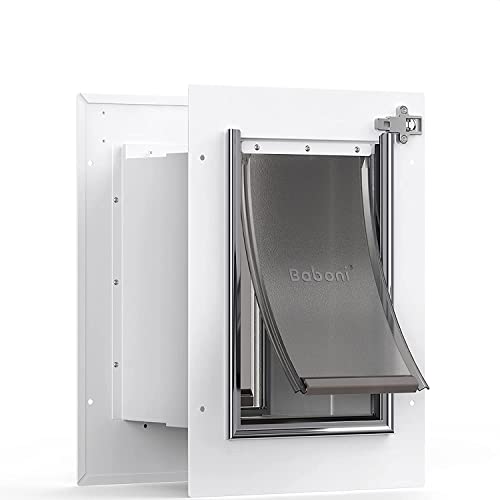
Baboni’s small wall door offers useful published cutout measurements. The flap opening is listed at 5.25 by 8.125 inches, with a wall cutout of approximately 6.75 by 10 inches and an outside frame near 9.25 by 13.125 inches. Those numbers help evaluate stud bays and a cat’s passage. They are not a license to cut without checking the wall. Structural studs, pipes, wiring, and load-bearing elements may make a location unsuitable. The telescoping tunnel covers approximately 4.75 to 7.25 inches of wall depth.
The metal frame and double-flap arrangement aim to provide a firm installation and reduce drafts. Baboni describes aluminum locking hardware and includes an installation template. Metal construction can be appealing in a high-use location, but thermal performance also depends on the junction between wall, tunnel, and flaps. Wind-driven rain can find gaps that look harmless indoors. Use installation details suited to the exterior cladding and local climate. If a contractor is needed for the wall opening or weatherproofing, include that expense in the purchase decision rather than treating it as a simple accessory.
Baboni lists this small version for pets up to 12 pounds. That is a narrower range than many owners expect, particularly for big-bodied or fluffy cats. Measure shoulder and chest width at the height of the flap, then allow clearance to walk without rubbing. A cat may refuse a door that requires squeezing even if it falls below the weight limit. Keep the lock accessible from inside and train the pet gradually with the flap supported open at first. This version makes the most sense for a genuinely small cat and a measured wall cavity.
My Recommendation
I would consider Baboni Small for a compact cat where the exact narrow opening and a metal frame are acceptable. Its published wall and cutout dimensions support careful planning. The 12-pound limit is restrictive, so do not select it by appearance alone. A wider flap is more suitable for broader cats.
3. Decormax Wall Cat Door — Best Wider Depth Range

What We Like
- Fits roughly 3.9-to-7.9-inch walls
- Two sliding lock panels
- Two sliding closure panels
- Steel frame and tunnel
- Published 9.25-by-6.5-inch flap
What We Don’t Like
- Product claims need on-site fit checks
- Flap seal not completely airtight
Decormax is interesting because its telescoping tunnel spans a slightly different range from several wall-door competitors. The listing specifies about 3.9 to 7.9 inches of wall thickness and a 9.25 by 6.5-inch passage, with an outside frame near 13.9 by 9.4 inches. The low, wide orientation deserves particular attention when measuring a cat. A pet needs enough shoulder and back clearance, not simply a low step. Check the listing diagram for the selected variant, since changing size or finish can change dimensions. The frame is described as steel with a white exterior finish.
Two magnetic flaps and sliding lock panels are intended to reduce weather intrusion when the door is not being used. They are practical features for exposed walls, but promises of an impenetrable seal should be taken cautiously. A flap can leak air in strong wind, and a lock panel is not a complete home-security system. Choose a location sheltered from direct rain when possible. Proper exterior waterproofing, interior finishing, and a smooth tunnel edge also matter. Consult a competent installer when the wall has masonry, electrical services, or water-sensitive siding.
The maker advertises suitability for pets up to 22 pounds. That could include some large cats, although actual chest width and the short flap height remain essential checks. Introduce the magnetic flaps gradually, especially to a nervous cat. A door that seals more firmly may need more pushing force than a basic loose flap. Keep the slide closures easy to operate from the secure side of the house. Decormax is worth comparing when the wall depth falls outside a common 4.75-to-7.25-inch tunnel range and you value two closure panels.
My Recommendation
Decormax stands out for its wider stated wall-thickness range and two magnetic flaps. I would shortlist it when draft control matters and the 9.25-by-6.5-inch passage fits your cat. Verify the orientation and cutout diagram carefully. No double flap removes the need for professional weather sealing around the wall itself.
4. ClawJaw Small Exterior Wall Door — Best Dark Finish

What We Like
- Black metal finish
- Listed wall depth 3.9-to-7.9 inches
- Double magnetic flaps
- Sliding lock panels
- Installation template included
What We Don’t Like
- Wide but low flap orientation
- Metal frame requires careful sealing
ClawJaw offers a dark metal-finish wall pet door that may blend with siding or interior trim. Its dimensions are listed as a roughly 9.25-by-6.5-inch flap, 13.9-by-9.4-inch outside frame, and telescoping tunnel for walls 3.9 to 7.9 inches thick. That range can be useful in homes with deeper finished walls. The manufacturer’s animal-weight guidance reaches 22 pounds, but the door still needs to match your cat’s body measurements. The horizontal passage shape should be checked for back height as well as overall width.
A pair of magnetic flaps and sliding panels is intended to slow air movement and provide manual closure. These features are most helpful when they meet a clean, square opening. A poorly aligned tunnel can scrape the flap, leaving gaps or requiring too much force to pass. The product includes installation directions and a template, but cutting through an exterior wall is a permanent alteration. Have a professional assess studs, services, flashing, and weather-resistant barriers when necessary. A black frame can be visually discreet, yet appearance cannot outweigh a properly sealed assembly.
ClawJaw is suitable to compare for a cat accustomed to pushing flaps and a household that wants a darker look. Watch a cautious pet’s first attempts, since magnetic seals may feel heavier than an open passage. Never force the cat through a closing flap. Keep both sliding panels reachable from the secure side, and periodically inspect the magnets and weatherstrip for debris. If the area receives harsh storms, add a sheltered approach rather than expecting the flap alone to stop every drop. This is a practical alternative to similar white metal kits.
My Recommendation
I would pick ClawJaw when its black finish suits the wall and its opening fits the cat. The telescoping range and double-flap format are useful, but they resemble other metal options. Decide based on verified dimensions and installation fit, not color alone. A professional should handle complex exterior cladding and waterproofing.
5. VOSOIR Aluminum Cat Door — Best Lightweight Metal Frame

What We Like
- All-aluminum alloy body
- Listed 3.95-to-7.5-inch wall fit
- 10-by-6.5-inch opening
- Two magnetic flaps
- Closing panel with two locks
What We Don’t Like
- Claims about insulation are unverified
- Small passage height limits some pets
VOSOIR markets this wall-entry door around an all-aluminum frame and telescoping passage. The listed wall range is approximately 3.95 to 7.5 inches, and the flap opening is 10 by 6.5 inches. Aluminum can be appealing where corrosion resistance and a lighter frame matter, although installation quality still determines long-term performance. The opening is broad but relatively low, so measure from floor to your cat’s back when moving. The listing’s 22-pound suitability statement is not enough on its own. Confirm the precise cutout template for the version offered before anyone marks the wall.
The product describes two magnetic flaps, a closing panel, and aluminum locks on both sides of the panel. Those are useful manual access controls. They do not make an exterior wall opening entirely weatherproof or prevent every unwanted animal from approaching. Check the seal each season and clear leaves or grit that could keep a flap ajar. For homes in persistent rain, carefully detail the outer perimeter with appropriate flashing and sealants. Avoid creating a drainage path into the wall cavity. An installer familiar with the home’s construction can help avoid expensive moisture damage.
VOSOIR claims enhanced insulation from its flap materials, but a marketing percentage should not be treated as a measured result for your house. Wind, exposure, and installation vary too widely. Check whether your cat can push the flap without hesitation, then gradually phase out any training prop. A gentle, controlled introduction is especially helpful when two flaps create unfamiliar resistance. Owners who need a metal frame but prefer aluminum over painted steel may appreciate the construction. As always, fit and a safe wall location come before material preference.
My Recommendation
VOSOIR is my all-aluminum option for a small to medium cat that fits its wide, low opening. The magnetic flaps and manual panel are practical. I would not rely on the advertised insulation percentage without site-specific evidence. Prioritize careful framing, moisture protection, and gradual cat training.
6. Baboni 3-Flap Medium — Best Larger Opening

What We Like
- Large 8.25-by-12.25-inch flap
- Listed up to 40-pound pets
- Three-flap barrier configuration
- Metal closing panel
- 4.75-to-7.25-inch telescoping tunnel
What We Don’t Like
- Large wall cutout
- Multiple flaps may resist timid pets
The medium Baboni three-flap model is useful when a small cat opening seems restrictive. Its listed flap is 8.25 inches wide by 12.25 inches high, with an exterior frame of about 12.25 by 17.125 inches. The wall cutout is roughly 9.875 by 13.75 inches. These dimensions can suit a broad cat or cat-and-small-dog household. They also mean more wall must be removed. Have the proposed opening checked against structural members and services before selecting it for comfort. The telescoping tunnel fits approximately 4.75 to 7.25-inch walls.
Baboni describes three flaps, a steel frame, and a metal closing panel. The extra flap is intended to improve the barrier between inside and outside, but greater resistance may be harder for a timid cat. A training period matters here. Start by allowing the pet to walk through a securely held-open passage and gradually introduce each flap according to safe product instructions. The listed 40-pound capacity accommodates pets heavier than most cats, but it does not promise weather tightness. Check alignment, gaskets, and closure panels regularly once installed.
This larger format can be justified for a giant breed or household that genuinely needs the passage. It is less appealing for a small cat or a narrow available wall section. Exterior walls can contain insulation, wiring, plumbing, and water barriers that must not be compromised. Hire an experienced installer where the project requires modifications beyond the manufacturer’s template. Place the entrance where outdoor access can be supervised or contained. An oversized opening may also increase wildlife and security concerns, so do not treat a closure panel as a substitute for household safety measures.
My Recommendation
Baboni 3-Flap Medium is the larger-passage pick when a small cat flap would be uncomfortable. The measured 8.25-by-12.25-inch opening is its key advantage. The cutout is also much bigger, so confirm wall suitability before purchasing. Allow extra time to teach a reluctant cat to push multiple flaps.
7. Hale Wall Model Pet Door — Best Premium Installation

What We Like
- Wall-specific model
- Adjustable tunnel up to 10 inches
- Aluminum frame
- Dual vinyl flaps
- Locking security cover
What We Don’t Like
- Skilled installation is required
- Variant dimensions need confirmation
Hale’s Wall Model is positioned as a more substantial installation choice. Its listing describes an aluminum frame, double weather-resistant vinyl flaps, and an adjustable wall tunnel that accommodates depths up to 10 inches. That extra reach may matter for thick exterior walls where standard telescoping kits run short. The manufacturer sells multiple size options, so the exact flap dimensions depend on the selected variant. Do not assume every Hale wall model fits every cat. Confirm the order’s selected size, wall depth, opening, and fitting instructions before hiring an installer or preparing a cutout.
The flaps are described as textured and frosted rather than clear. Some cats may approach an opaque-looking door cautiously because they cannot see a crisp path outside. Practice with a safe, supervised opening and positive reinforcement before asking the cat to push both flaps. The locking cover adds a manual closure option, but it should not be represented as full intruder protection. As with any wall cut, exterior weather detailing is critical. Hale’s own listing calls for skilled installation, which is appropriate for projects involving masonry, siding, or unusual cavity depth.
This premium unit may make sense when a homeowner values an aluminum frame, a wider wall-depth range, and a formal manufacturer warranty. Its higher-complexity format may be more than a casual project requires. Check the actual model’s warranty terms and replacement-flap availability instead of relying only on broad promotional claims. Make sure the location has a secure outdoor destination; a weather-sealed flap does not make unsupervised roaming safe. For a carefully planned renovation, Hale deserves consideration. For a simple narrow wall, a less involved telescoping kit may be sufficient.
My Recommendation
I would shortlist Hale for a thick wall or a renovation already involving a qualified installer. The 10-inch reach and aluminum frame are differentiators. It is not a casual weekend purchase. Confirm the variant’s actual opening, ask about replacement flaps, and plan the weather barrier before cutting.
How to choose best cat door for exterior wall
An exterior-wall cat door is a permanent house alteration. The right choice fits your animal, the measured wall assembly, and the climate. Make the safety and weatherproofing plan before ordering a product or cutting a hole.
Measure the Cat and the Finished Wall
Measure chest width and back height while your cat stands naturally. Leave enough clearance to pass without scraping, and consider a lower step-over for an older pet. A listed weight capacity is only a rough guide. Compare actual flap width and height, not the much larger outside frame. Also measure the wall’s complete finished depth. Brick veneer, tile, siding, drywall, and trim can change the dimension. A tunnel sold for 4.75-to-7.25-inch walls will not automatically fit a 9-inch finished section. Extension kits may be available but should be confirmed for the exact model.
Locate wiring, plumbing, framing, and structural elements before choosing a cutout. The guide on measuring a wall for cat-door placement covers useful general layout principles, though exterior weatherproofing adds extra work. Cutting masonry, reinforced panels, or load-bearing parts can require professional assessment and permits.
Compare Seals, Flaps, and Access Controls
Double and triple flaps can reduce direct drafts, but their performance depends on alignment, magnets, wind exposure, and the cat’s pushing force. A heavy seal may discourage an inexperienced animal. Check that flaps swing freely and fully return to the closed position after installation. Slide panels and locking covers help control access, yet they are not substitutes for a home-security system. A manual flap generally cannot identify which animal is passing through. If wildlife or neighborhood pets are a concern, use safe outdoor containment or investigate selective-entry alternatives rather than trusting a basic magnet alone.
Weatherproof the perimeter of the installation as carefully as the flap. Water entering a wall cavity can cause damage even when the door itself looks tightly sealed. Follow appropriate flashing, sealant, drainage, and cladding guidance for the building. Inspect the junction after storms and keep the tunnel clean.
Plan Location, Installation, and Training
Choose an accessible location sheltered from extreme rain where possible. The outside should lead to a secure enclosed area or other supervised destination. Avoid cutting near unknown services. Always check permissions if you rent or have a managed building. An experienced contractor can evaluate framing, waterproofing, and local requirements. For complex exterior walls, professional work is often the safer choice. See the separate cat-door safety checks for additional general precautions, while recognizing that exterior access brings its own hazards.
Once the opening is safe, encourage your cat to investigate without being pushed. First let it see through a supported open flap, then use very short positive sessions. Move slowly toward normal flap resistance. Keep the locking mechanism easy for the household to operate. Monitor drafts, water, and the cat’s comfort afterward. Our home adjustment guide for cats offers ideas for reducing stress when familiar spaces change.
Frequently Asked Questions
These questions can help identify a wall kit that works in your home rather than only on a product page.
Can I install a regular door-mount cat flap in an exterior wall?
Only if the manufacturer provides compatible wall hardware and suitable installation instructions. Many standard door flaps lack the long enclosed tunnel needed for a wall. A wall-specific kit is usually simpler to evaluate.
How thick a wall will a telescoping cat door fit?
It depends on the exact model. Several options here list ranges near 4 to 8 inches, while the Hale wall model is described for depths up to 10 inches. Measure the complete finished wall and verify the chosen variant.
Will a double flap stop all drafts and rain?
No. Two flaps may reduce airflow, but wind, alignment, and installation affect results. Proper exterior flashing and sealing around the tunnel are essential. Check for leaks after bad weather.
Should I install an exterior wall cat door myself?
A straightforward nonstructural wall may be manageable for an experienced installer following the kit directions. If framing, wiring, masonry, or waterproof barriers are involved, use a qualified professional and check local requirements.
How do I teach a cat to use a magnetic wall flap?
Begin with a secure open passage and supervised rewards. Gradually introduce flap movement and then normal closure. Never push the cat through. If your pet is fearful, shorter calm sessions work better than forcing progress.
Final Verdict
PetSafe’s Small Wall Entry is a straightforward wall-specific kit for appropriately sized cats, while Decormax offers a wider stated tunnel-depth range and manual slide panels. Baboni’s medium three-flap version provides more passage room for large cats, and Hale is worth examining for a thicker-wall renovation. The safest choice starts with wall and cat measurements, building-specific weatherproofing, and a suitable outdoor destination. Confirm every selected variant before cutting anything.
Affiliate disclosure: This article contains Amazon affiliate links. If you purchase through them, PetAdvisorPro may earn a commission. As an Amazon Associate I earn from qualifying purchases.









