
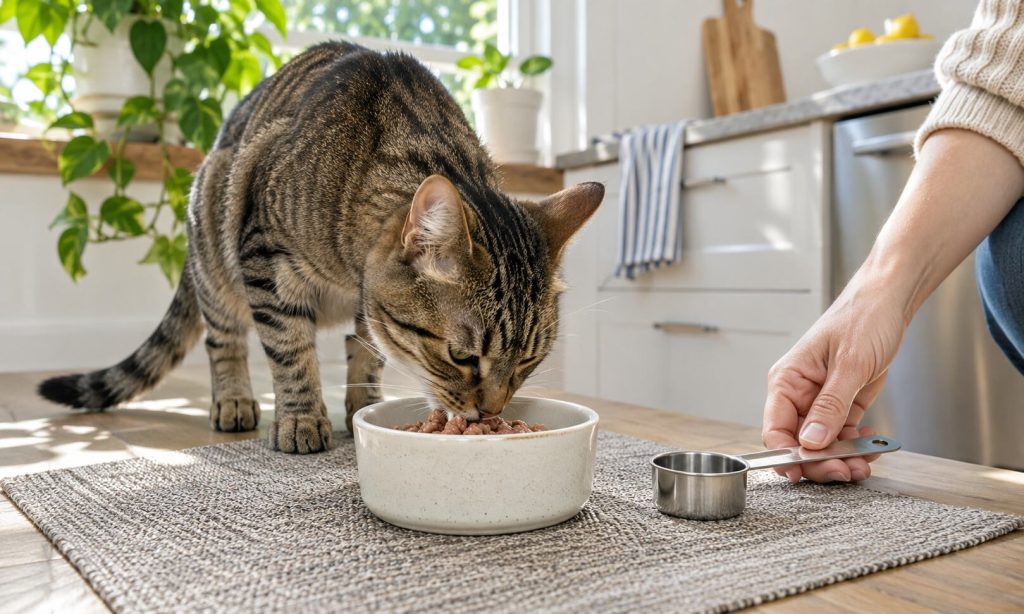
A cat who looks thinner than usual needs more than a bigger bowl. Unexpected weight loss can accompany dental problems, digestive disorders, hyperthyroidism, and other illnesses, so arrange a veterinary assessment before changing the feeding plan. Once your veterinarian identifies a realistic target, learning how to compare canned cat food for weight gain by nutritional fit helps you make a measured choice. Wet foods differ in calories per ounce, moisture, texture, completeness, and suitability for a specific medical condition.
This guide explains how to compare canned cat food for weight gain options by fit and use without mistaking appetite appeal for complete nutrition. You will learn how to read energy statements, match a formula to life stage, and track whether a feeding adjustment works. For specific product categories, see our companion guide to the best canned cat food for weight gain.
Begin With the Cause of Weight Loss
Before you compare canned cat food for weight gain, record the cat’s current weight, recent trend, appetite, stool changes, drinking habits, and any difficulty chewing. A thin coat or prominent spine may reflect reduced fat or lost muscle, which are not the same issue. Your veterinarian can assess body and muscle condition and decide whether tests, dental care, or a therapeutic feeding plan are indicated. Do not assume that a food marketed as rich will address an underlying disease.
A previously stable adult cat who begins eating less deserves prompt attention. Cats that stop eating can develop serious problems and may need urgent veterinary care; do not wait for a delivery or force-feed without guidance. Bring a photo of the current label and a list of treats and supplements to the appointment. That history makes the comparison meaningful because food is one part of a medical and behavioral picture.
Compare Calories Using the Same Unit
The clearest way to compare canned cat food for weight gain is to locate the metabolizable energy declaration: kilocalories per can, tray, or kilogram. A larger container can hold more calories overall while having fewer calories per ounce. Record the actual can size and convert both foods to a common amount before drawing conclusions. Different textures contain different water and fat proportions, so percentage crude protein alone is not a dependable calorie comparison.
If your clinician suggests a daily energy target, divide that number among the prescribed meals rather than guessing how many cans to open. Our cat food portion guide explains the arithmetic behind a feeding schedule. Treat any calculation as a starting point that changes with activity, illness, digestion, and observed weight. A high-calorie food is useful only when the cat tolerates and consumes the planned amount.
Check Complete and Balanced Nutrition
When you compare canned cat food for weight gain, read the nutritional adequacy statement carefully. A food formulated for adult maintenance, growth, or all life stages may have a different nutrient profile than a supplemental topper or short-term recovery diet. Labels should explain whether a product is complete and balanced and the stage for which it is intended. Do not build a long-term diet around a complementary food simply because your cat loves it.
Veterinary recovery formulas can be appropriate for particular diagnosed circumstances, but they are not automatic substitutes for ordinary meals. Kidney disease, gastrointestinal illness, diabetes, and other conditions can require a different approach to food composition and feeding frequency. If a label directs veterinary use, follow the professional’s plan and reassess it. The goal is to restore healthy condition safely, not simply push the calorie number upward.
Match Texture, Smell, and Eating Ability
A smooth pâté, minced food, and gravy-based recipe may all look similar on a shelf, yet each behaves differently in the bowl. When comparing canned cat food for weight gain, observe which texture your cat can comfortably lick, chew, and finish. Dental pain, nausea, aging, and food aversion can make palatability more important than a small difference in stated energy density. A rich food left uneaten contributes no useful calories.
Offer measured portions in a clean, quiet area away from competing pets. Some cats prefer slightly warmed wet food because the aroma becomes more noticeable, but avoid hot spots and never leave opened food out for prolonged periods. Keep preparation consistent during a trial so changes in appetite can be attributed more confidently. If your cat struggles to swallow, drools, vomits, or refuses food, call the veterinary team promptly.
Account for Life Stage and Health Restrictions
Kittens, adult cats, and seniors do not share identical nutritional needs. A growing kitten may need a growth-appropriate formula, whereas a senior with reduced muscle mass needs an assessment that distinguishes insufficient intake from disease. This is why how to compare canned cat food for weight gain varies by individual rather than by breed, body size, or a headline promising extra pounds. The correct formula supports the animal’s overall health.
Review medication instructions and any prescribed diet before mixing foods. Abruptly replacing a therapeutic diet can undermine treatment, and adding fat or calorie boosters without direction may be poorly tolerated. Ask whether an ordinary complete diet with adjusted portions, an alternative wet texture, or a supervised clinical diet suits the cat. Our cat food label guide is a useful companion for understanding declarations.
Plan a Gradual Transition
After choosing a candidate, compare canned cat food for weight gain again at the bowl, not just on paper. If your veterinarian agrees that a transition is appropriate, replace a small portion of the old food with the new one and increase gradually over several days. Some cats need a slower approach because of digestive sensitivity or food aversion. A clinically ill cat may require an individualized transition and should not be managed by a generic schedule.
Keep a simple feeding log with food name, flavor, can size, offered amount, uneaten amount, stool quality, and appetite. Avoid making several changes simultaneously; a new supplement, bowl location, and feeding time can obscure what helped. If vomiting, diarrhea, or refusal occurs, pause the experiment and consult the clinician. Never starve a cat into accepting a preferred brand.
Measure Progress Without Chasing Rapid Gain
A sound approach to how to compare canned cat food for weight gain includes follow-up measurements. Weigh the cat on the same scale at consistent intervals recommended by your veterinarian, and record body condition as well as weight. Rapid changes on a scale can reflect fluid status, stomach contents, or health problems rather than improved nutrition. Muscle and functional comfort matter as much as the number.
Use the veterinary target to adjust portions in small, documented steps; do not double meals because a single check-in disappoints you. If the cat eats normally but continues to lose weight, return for assessment instead of indefinitely increasing calories. For multi-cat households, supervise meals or use separate feeding areas so the measured ration reaches the intended cat. Progress should be repeatable, steady, and medically appropriate.
Compare Cost and Practical Fit
Price per can is an incomplete way to compare canned cat food for weight gain. Estimate cost per 100 kilocalories and per day’s prescribed ration, then consider whether the food is readily available in the right texture and portion size. A large can may be economical for multiple cats but wasteful for one cat who needs small frequent meals. Packaging and storage practicality shape consistent feeding more than promotional language.
Check best-before dates, can integrity, and instructions for refrigerating unused portions. Use clean serving tools, cover leftovers promptly, and follow the manufacturer’s storage window. Do not buy a large bulk supply until your cat has accepted the formula and your veterinarian has confirmed it fits the plan. Our complete wet cat food overview helps distinguish everyday categories from special-use choices.
Mistakes That Distort a Comparison
One common error is ranking foods by protein percentage without correcting for water content. Another is relying on phrases such as high protein or premium while overlooking the calorie statement and nutritional adequacy. To compare canned cat food for weight gain reliably, use the same units and note whether the formula is for routine feeding or a defined veterinary use. Beware of treating one cat’s enthusiastic first meal as proof of long-term tolerability.
Do not assume that adding treats fixes a nutritional gap. Treats can displace balanced food and make portions difficult to audit; our treat calorie guide can help. Avoid sudden food changes and avoid ignoring weight loss accompanied by thirst, vomiting, appetite changes, or lethargy. The most valuable comparison is the one that remains tied to diagnosis, measured intake, and follow-up.
Frequently Asked Questions
These questions summarize the most useful checks when choosing wet food for a cat that needs nutritional support. Every answer assumes that unexplained weight loss has been discussed with a veterinarian.
Use the label as evidence, then confirm that the formula matches the cat’s diagnosed needs and the actual amount eaten. A single product feature cannot replace an individualized feeding plan.
Is the food with the most calories always best?
No. Calorie density matters, but digestibility, complete nutrition, health restrictions, and acceptance matter too. The richest food may be unsuitable for a diagnosed condition or may trigger poor tolerance. Discuss candidates with the veterinary team before changing a therapeutic diet.
Should I use kitten food to help an adult cat gain weight?
Not automatically. A growth formula can have a different nutrient profile, and adult cats with illness may have special restrictions. Your veterinarian can decide whether a growth, maintenance, or clinical formula belongs in the plan rather than using kitten food as a shortcut.
How can I compare two different can sizes?
Find kilocalories per container and the net weight. Divide calories by ounces or grams to compare the same quantity, then calculate the portion needed for the recommended daily energy. Read the adequacy statement before ranking the numbers.
How quickly should my cat gain weight?
There is no safe universal pace. Age, initial body condition, muscle loss, illness, and the cause of weight loss influence targets. Ask your veterinarian for a monitored schedule and reassessment interval; report further loss or poor appetite rather than merely increasing the ration.
Can I mix canned food with dry food?
Sometimes, provided both foods fit the medical plan and the combined calories are measured. Avoid adding a second formula to a prescription diet without discussing it with the veterinarian. Count all meals and treats so the intended daily amount remains clear.
Final Words
Learning how to compare canned cat food for weight gain means looking past the front label to calories, nutritional adequacy, clinical suitability, actual intake, and measurable follow-up. Choosing among the best canned cat food for weight gain options becomes easier once you know whether your cat needs a daily complete food, a different texture, or supervised recovery nutrition. Start with the cause of weight loss, not a promise on a package.
Keep the feeding trial calm and documented, use a consistent scale, and bring your notes to follow-up care. A formula that supports gradual improvement without digestive trouble is a better fit than a more calorie-dense one your cat refuses. The right choice is individualized, and unexpected ongoing loss warrants another veterinary assessment.
Reference
The following veterinary and professional resources inform the discussion of body condition, nutritional assessment, and feeding decisions. They are educational references and cannot replace examination of an individual cat.
Consult your veterinarian for diagnosis, calorie targets, disease-specific diet restrictions, and monitoring intervals before implementing a weight-gain plan.









