
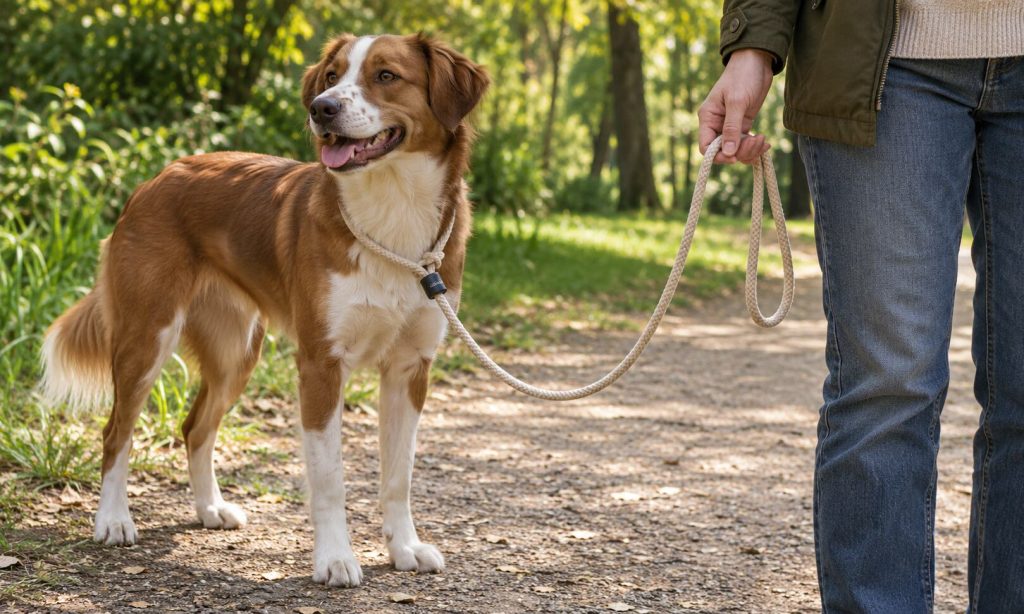
Common mistakes when choosing a slip lead for dogs often begin with treating the rope as an ordinary fixed-length leash. A slip lead combines a loop around the dog’s neck with a leash, so pulling can tighten the loop and put pressure on sensitive neck structures. It may have a place in brief supervised handling by experienced professionals, but it is not an ideal everyday walking tool for many dogs, particularly those that pull, cough, or panic. Humane training and physical safety should guide the decision.
This guide explains common mistakes when choosing a slip lead for dogs and why fit, release control, material, user skill, and the dog’s behavior matter. If you are comparing the best slip lead for dogs, consider whether a well-fitted front-clip harness and fixed leash would be safer for regular outings. Simple equipment still requires care; avoid leash corrections.
Mistake One: Treating the Loop as a Fixed Collar
One of the common mistakes when choosing a slip lead for dogs is forgetting that the loop tightens under tension. A loose-looking rope can become restrictive when a dog lunges, startles, or pulls. Neck pressure may be particularly concerning for small dogs, dogs with airway problems, or those with previous cervical injuries. A slip lead should never be regarded as a harmless shortcut for a properly fitted walking harness.
Observe whether the dog naturally keeps the leash loose or frequently surges forward. A regular neighborhood walker who pulls may need an appropriate harness and reward-based loose-leash training instead of neck pressure. Ask a veterinarian about medical vulnerability and a qualified force-free trainer about equipment and skills. Avoid choosing a tightening loop simply to suppress behavior through discomfort.
Mistake Two: Ignoring the Stopper or Fit
Common mistakes when choosing a slip lead for dogs include overlooking whether the loop has a functional adjustable stopper and how easily it slides. A stopper may help limit how far a loop opens or shifts, depending on design, but it does not make a tightening lead safe under sustained tension. Check the manufacturer’s exact fitting and use instructions before handling a dog. Do not improvise a knot as a substitute for an approved adjustment.
The loop should never ride up into the throat or be positioned so low that it can catch a front leg. Misplacement can produce choking, rubbing, or panic. If the dog resists, stop and reconsider the tool rather than pulling harder. Equipment fit must be assessed in motion as well as while standing. When in doubt, a properly fitted harness can distribute ordinary leash forces away from the neck.
Mistake Three: Choosing Rope Thickness by Appearance
A thin rope might look elegant in photos, while a thick rope looks durable, but comfort depends on material, diameter, weight, and the dog’s size. Among common mistakes when choosing slip leads for dogs, selecting a narrow abrasive rope for a small or sensitive-necked dog can create concentrated pressure. Conversely, an overly bulky lead may be awkward for a tiny dog or handler with limited grip strength.
Inspect how the rope feels in your hand, whether it twists, and whether edges or metal fittings can chafe. Avoid decorative hardware that catches fur or makes the lead heavy. The breaking-strength rating should be appropriate, but high strength alone does not establish suitability for a tightening neck loop. Ergonomic comfort for the person and welfare for the animal must be considered together.
Mistake Four: Using Leash Corrections to Train
A serious mistake in choosing a slip lead for dogs is intending to use abrupt jerks or sustained choking pressure as a training technique. The American Veterinary Society of Animal Behavior recommends reward-based methods and warns against aversive corrections. Pain or fear can affect welfare and the relationship with the handler. A dog who stops pulling under pressure may not have learned a reliable relaxed walking behavior.
Teach loose-leash walking with reinforcement for staying near the handler, planned practice in quiet spaces, and management of triggers. Use appropriate equipment that allows breathing and comfortable movement. If reactivity, fear, or lunging is severe, consult a qualified reward-based trainer or veterinary behavior professional. The AVSAB humane training position statements provide an evidence-based framework.
Mistake Five: Leaving a Slip Lead on Unattended
Another common mistake when choosing a slip lead for dogs is treating it as a collar that can stay on at home. A continuous loop of rope may catch on furniture, branches, or another animal, creating strangulation or injury risk. Remove the slip lead immediately after the supervised handling task and never use it for tethering, crate confinement, or unsupervised yard time. Keep it out of reach when stored.
If identification is needed, use an appropriate safe collar with tags or a registered microchip as advised, not a tightening leash. A dog should not sleep or play while wearing a loop that can cinch. In a multi-dog household, rough play can involve biting or grabbing the rope, increasing danger. Supervision and removal are non-negotiable parts of any temporary handling use.
Mistake Six: Ignoring the Dog’s Medical Needs
Before choosing a slip lead for dogs, consider coughing, respiratory disease, tracheal sensitivity, neck or spine pain, neurologic weakness, and brachycephalic anatomy. These conditions can make neck pressure especially concerning. Ask your veterinarian for equipment guidance if the dog has any relevant symptoms or physical limitations. Avoid assuming a thick rope prevents injury; force can still be transmitted to the neck.
Older dogs may also have reduced balance and mobility. A sudden pull can destabilize them. A well-fitted support harness and a predictable walking plan may be safer and more comfortable. If your dog coughs, gags, struggles to breathe, or collapses during leash handling, stop immediately and seek veterinary assistance. Equipment should accommodate the animal’s health rather than forcing the animal to adapt to a tool.
Mistake Seven: Choosing Length Without a Use Case
A slip lead for dogs may come in different lengths, but longer is not always more flexible or safer. Too much slack near traffic can allow a dog to reach hazards; too little leash can keep the loop tight and limit comfortable movement. Common mistakes include choosing a show-ring style lead for a busy city walk or using a very short lead that encourages constant tension.
Consider where the lead would be used: a supervised veterinary transfer, brief controlled movement, or routine outdoor exercise. In most ordinary walks, a standard fixed leash attached to a suitable harness offers clearer control without a tightening neck loop. Check handle comfort and weather resistance, but do not let a convenient length distract from whether this is the right tool at all.
Mistake Eight: Skipping a Safe Handling Trial
Common mistakes when choosing a slip lead for dogs include first using it in a crowded, noisy place where the dog is likely to startle. If a qualified handler needs a slip lead for a brief controlled task, the dog should be accustomed to calm handling before entering a difficult environment. A quick tug can create panic, so the person must be skilled at preventing sustained pressure and releasing the loop.
Watch body language: avoidance, trembling, crouching, freezing, pawing at the neck, or frantic attempts to back away indicate the dog is not comfortable. Stop rather than forcing the animal onward. For routine training, practice voluntary collar or harness handling with rewards and short sessions. The goal is cooperation, not restraint through fear.
Mistake Nine: Neglecting Rope Inspection
Even when choosing a slip lead for dogs for occasional supervised use, inspect stitching, rope fibers, stopper, rings, and handle every time. Fraying can reduce strength; dirt or moisture can affect how the loop slides. A damaged stopper or jammed ring can prevent adjustment. Replace worn equipment rather than relying on a quick knot or repair tape. Store the lead dry and away from chewing pets. Our leash storage guide covers routine care.
Wash according to the manufacturer’s directions and let it dry completely before storage. Do not apply oils or treatments that might make the rope slide unpredictably. Check that any metal parts are smooth and free of corrosion. A rugged appearance does not guarantee the lead will behave safely when the dog suddenly changes direction. Routine checks matter as much as purchase specifications.
Mistake Ten: Overlooking Better Alternatives
The biggest mistake when choosing a slip lead for dogs may be assuming one is necessary for everyday control. A comfortable harness paired with a fixed-length leash often provides a better starting point for a dog who pulls; see our harness fit guide for adjustment basics, while positive reinforcement teaches the desired walking behavior. Choose equipment that suits body shape, escape risk, and activity, and work with a qualified trainer to improve skills gradually.
For specific temporary handling tasks, veterinary or shelter professionals may have protocols and trained staff. Owners should not imitate emergency capture techniques in routine walks. Our slip lead options overview can help you understand construction differences, but a comparison is not a recommendation to use tightening neck pressure. Welfare and predictable communication come before convenience.
Frequently Asked Questions
These answers emphasize humane handling and the difference between occasional professional use and everyday dog walking. A slip lead is not a shortcut to training.
A veterinarian can advise on neck or airway concerns, while a qualified reward-based trainer can recommend suitable walking equipment.
Are slip leads safe for dogs that pull?
They can tighten around the neck when a dog pulls, so they are generally a poor choice for routine walking of strong pullers. A well-fitted harness and reward-based training are often safer.
Can I leave a slip lead on my dog at home?
No. Remove it after supervised handling. A loose loop can snag and tighten, and it should never be used for tethering or unsupervised wear.
Does a stopper prevent choking?
No stopper eliminates all risks or makes a tightening neck loop safe under force. Check the exact product design and avoid sustained tension.
Should I jerk the lead to correct pulling?
No. Aversive leash corrections are inconsistent with reward-based humane training guidance and can cause distress or injury. Teach loose-leash behavior using positive reinforcement.
What is a good everyday alternative?
A properly fitted comfortable harness with a fixed-length leash is a common starting point. Ask a reward-based trainer about fit and gradual loose-leash practice.
Final Words
Avoiding common mistakes when choosing a slip lead for dogs means understanding neck pressure, fit, material, use case, handling skill, and the risks of unattended wear. The best slip lead for dogs list may show construction differences, but it does not make a tightening loop appropriate for every dog. For routine walking, a suitable harness and reward-based training often offer a better welfare-focused approach.
Do not rely on jerks, choking pressure, or forced handling to control behavior. Inspect equipment, supervise any temporary use, and ask a veterinarian about health vulnerabilities. The right leash choice protects your dog’s comfort and helps build calm, reliable walking habits.









