
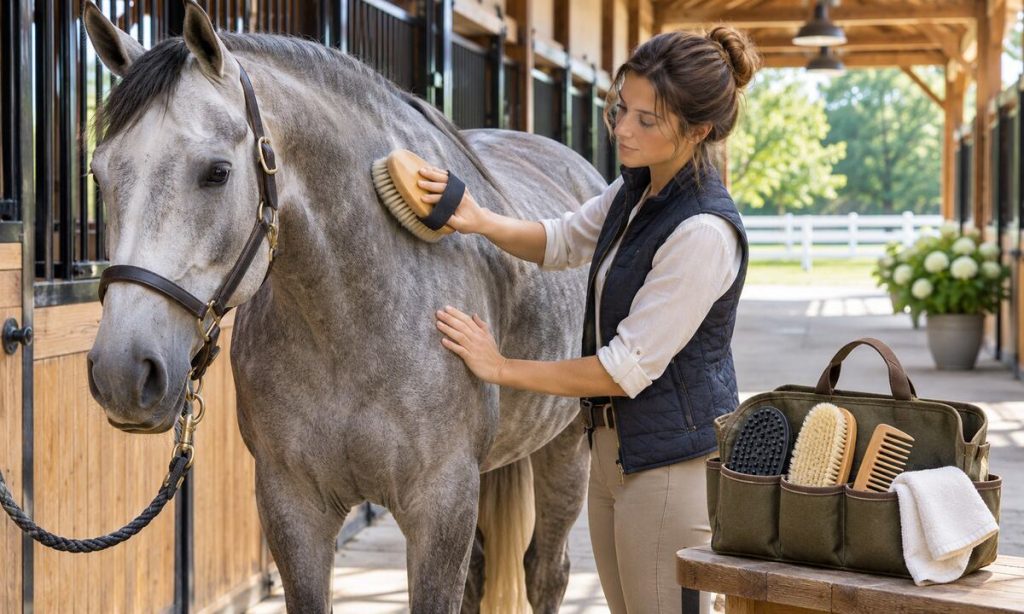
Using and caring for grooming brushes for horses is about more than achieving a shiny coat. A thoughtful grooming routine helps remove loose hair and surface dirt, gives the handler time to notice new rubs or swelling, and makes everyday contact predictable for the horse. Each tool has a different job, and the amount of pressure that works on a muscular shoulder may be uncomfortable over bony or sensitive areas.
A good routine also protects the tools themselves. Packed hair, damp bristles, and sharing dirty equipment between horses can shorten brush life and increase hygiene concerns. This guide explains how to choose the right tool for each area, brush without scraping skin, clean and dry different materials, organize an individual grooming kit, and recognize when a worn or contaminated brush needs to be replaced.
Know Which Brush Does Which Job
A rubber curry comb loosens dried mud and shedding hair on suitable fleshy areas, while a stiffer dandy brush sweeps heavier debris away. A softer body brush picks up finer dust and finishes sensitive coat areas with gentler strokes. A mane-and-tail tool addresses knots in long hair, and a clean towel can finish the muzzle and other delicate places. Avoid assuming every tool should touch every part of the horse. The sensitive-horse curry comb guide discusses tool differences for delicate coats.
Inspect bristle stiffness before use. On clipped coats, thin-skinned horses, and animals with skin irritation, softer contact is generally more comfortable. Keep hard plastic teeth away from the face and bony points, and do not use a curry comb over an open wound. A grooming kit works best when its tools are selected for specific jobs rather than used interchangeably just because one is close at hand.
Prepare the Horse and Work Methodically
Secure the horse in a safe, familiar setting with appropriate supervision and release arrangements. Stand where the animal can see you, watch its ears and body language, and move calmly as you change sides. If the coat is heavily caked with mud, allow it to dry or use a suitable gentle method before pulling at a tangled patch. Never force grooming while the horse is fearful or reactive.
Begin on a comfortable shoulder or neck area, use light circular movements only where suitable for a curry comb, then work with the direction of coat growth using the appropriate brush. Repeated aggressive strokes can irritate skin. Lift dirt away from the coat instead of simply moving it around, and pause to examine any heat, tenderness, scabs, parasites, or unusual loss of hair.
Use Gentler Techniques on Sensitive Areas
Around the face, flanks, belly, and legs, reduce pressure and choose a soft brush or damp cloth as appropriate. Avoid direct pressure over the eyes, nostrils, and prominent joints. A horse that flinches, pins its ears, or repeatedly steps away may be communicating discomfort, not stubbornness. Work in short sessions and adapt to its tolerance, particularly after exercise or clipping.
For long manes and tails, separate large tangles by hand before gently working from the ends upward. Pulling a dense knot from the roots causes discomfort and can break hair. Keep grooming sprays away from eyes and follow their labels if used. The purpose is a comfortable, consistent routine that lets you check the horse’s condition, not a perfectly polished finish at any cost.
Remove Hair and Dirt After Each Session
Tap loose hair from the brush into a waste container and use a curry comb or dedicated cleaning comb to lift hair trapped among bristles. Wipe handles, inspect cracks, and clear mud before returning the item to the tote. This quick maintenance is especially valuable in shedding season, when bristles become packed quickly and brushing performance declines.
A brush that looks superficially clean may still hold skin flakes, sweat, or damp dirt near the bristle base. Do not immediately close a wet brush into an airtight bag. Allow air circulation and keep the tote free of manure or dirty towels. Quick daily cleaning makes periodic washing more effective and helps you notice a broken handle or sharp exposed edge before it reaches the horse.
Wash, Disinfect When Appropriate, and Dry Fully
Follow the manufacturer’s directions for the handle and bristle material. Many washable synthetic brushes can be cleaned with mild detergent and lukewarm water, then thoroughly rinsed. Wooden handles, natural bristles, and glued components may be damaged by prolonged soaking. Always remove visible organic material before any disinfection step because dirt can reduce disinfectant effectiveness.
During contagious-disease concerns, use dedicated grooming equipment and follow a veterinarian’s or stable’s biosecurity protocol rather than guessing at chemicals or contact times. AAEP caretaker biosecurity guidance cautions against sharing equipment that cannot be properly cleaned and disinfected. After approved washing, let every brush dry fully in a clean ventilated location before storing it.
Store Individual Kits to Reduce Cross-Contamination
A labeled kit per horse is a practical precaution in a multi-horse barn. Separate grooming supplies from hoof picks, medication supplies, and dirty washcloths so contamination is not carried from one task to the next. Keep brushes off damp floors and away from rodents, dust clouds, and leaking rooflines. Mesh or ventilated compartments help when items are completely dry.
If brushes must be shared, clean them between horses according to the current barn hygiene plan. A visibly ill horse or one under isolation should have its own supplies and handler sequence. For general grooming tools, mane-and-tail brush comparisons can clarify tool types, but hygiene rules should take precedence over convenience.
Know When to Retire a Brush
Replace a tool with broken or sharp bristles, cracked plastic, splintering wood, loose metal fasteners, or a handle that cannot be gripped safely. Flattened bristles that no longer remove loose hair may simply waste time, while a tool that traps moisture or smells musty despite cleaning may be impossible to maintain hygienically. Never use a visibly damaged brush to save money.
After a suspected contagious skin condition or exposure to an infectious horse, ask a veterinarian or barn manager whether the specific material can be disinfected safely or should be discarded. Photograph or label questionable tools to prevent accidental reuse. Retiring one inexpensive brush is often simpler than trying to sanitize a porous item with unverified procedures.
Frequently Asked Questions
These common questions focus on practical brushing, cleaning, and storage decisions. The right frequency and technique depend on the coat, season, skin health, and tolerance of the individual horse.
Use the answers alongside the brush maker’s care instructions and your stable’s biosecurity policies. If grooming reveals painful skin or signs of contagious disease, stop and consult a veterinarian.
Can I use the same brush for several horses?
Dedicated kits are preferable, especially in a shared stable. If equipment must be shared, remove organic material and clean or disinfect it appropriately between horses according to veterinary or barn guidance.
How often should I wash horse brushes?
Remove hair and dirt after every use; wash whenever sweat, grease, or debris accumulates. More stringent cleaning may be needed after illness or exposure, and each material has different care limits.
Can brushes dry in a closed grooming box?
Not while damp. Let rinsed tools dry completely in a clean ventilated place first, since trapped moisture can cause odor, damage, and hygiene problems.
Is a stiff brush safe on the face?
Use a soft brush or cloth near sensitive areas. Avoid the eyes, nostrils, and bony points, and stop if the horse reacts as though the tool hurts.
What if my horse dislikes brushing?
Check for skin sensitivity, pain, parasites, improper pressure, or an unsuitable brush. Keep sessions gentle and short, and ask a veterinarian about persistent pain or abnormal skin changes.
Final Words
Caring for grooming brushes for horses starts with matching each brush to its job and using comfortable pressure. Quick hair removal after every session, material-appropriate washing, thorough drying, and horse-specific storage protect both the tools and the routine.
Make a habit of checking bristles and handles before every use. Clean tools do not replace careful observation: if grooming uncovers a new wound, swelling, soreness, or abnormal coat change, give the horse appropriate attention rather than brushing over the problem. Consistency and comfort matter more than a show-ring shine.









