
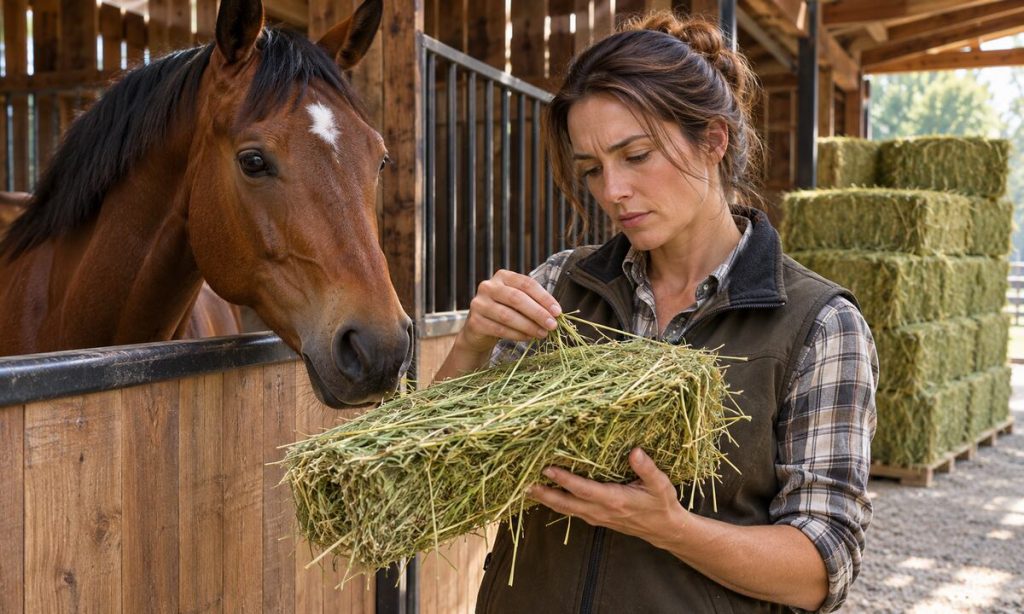
Knowing when to replace hay for metabolic horses is less about an arbitrary number of days and more about forage safety and nutritional fit. Horses with insulin dysregulation or equine metabolic syndrome can be sensitive to the starch and sugar content of their ration. A bale that looks attractive may still be unsuitable if its laboratory analysis does not match the veterinary feeding plan. Conversely, suitable dry hay does not become unsafe solely because a calendar date passes.
Replacement decisions have two separate parts: remove any hay that is spoiled or contaminated, and reconsider apparently sound hay when its nutrient profile no longer fits the horse. This guide walks through visual and smell checks, forage-analysis reports, changes in storage conditions, replacement transitions, and warning signs that call for professional help. Never leave a horse without appropriate forage while trying to locate a replacement.
Replace Spoiled or Contaminated Hay Immediately
Discard forage that smells musty, contains visible mold, feels unusually damp or heated, has rodent contamination, or shows substantial foreign material. Dust alone does not establish chemical composition, but extremely dusty bales warrant caution for respiratory health. Do not assume that shaking out a moldy flake, wetting a spoiled bale, or removing only the most discolored patch makes the remainder safe.
Store rejected hay where animals cannot reach it and inspect neighboring bales for the same problem. Record the lot and supplier to identify patterns. University extension guidance warns against feeding moldy hay to horses, and this caution is especially important for an animal with a tightly managed diet. If the horse has eaten suspect forage and develops colic signs, coughing, poor appetite, or abnormal manure, call a veterinarian.
Reassess Each New Hay Lot With Laboratory Data
Hay from a different field, cutting, harvest season, or supplier should not be assumed nutritionally equivalent to the old lot. Ask for representative testing of the batch, including nonstructural carbohydrates, energy, protein, and useful mineral values. In horses with insulin dysregulation, the veterinarian or equine nutritionist may set specific starch-plus-sugar targets; those depend on test definitions, clinical history, and the whole ration.
Do not choose grass hay by color, softness, or a low-sugar sales claim alone. Different laboratories may report water-soluble carbohydrates, ethanol-soluble carbohydrates, starch, and calculated NSC differently. Compare results on the same dry-matter basis and clarify the method when uncertain. The hay-label guide provides context, but current analysis is the decision tool for the new lot.
Check Whether the Ration Still Fits Body Condition
A metabolically affected horse may need controlled calories, not simply a particular variety of hay. Regularly assess weight trends, neck crest, body condition, grazing access, treats, and concentrates in addition to forage. If the horse gains unwanted condition on a nutritionally acceptable hay, a professional may adjust total intake or feeding management while preserving sufficient fiber. The animal should remain able to perform normal feeding behavior.
Never impose sudden severe forage restriction on your own. Long fasting periods and unsuitable weight-loss strategies can create additional welfare and health risks. If the horse loses weight unexpectedly, becomes weak, or has repeated hoof pain, this calls for veterinary review rather than automatically buying a sweeter bale. The whole diet and health condition must be considered together when choosing replacement hay.
Understand Soaking Without Treating It as a Guarantee
Soaking may reduce some soluble carbohydrates in certain hays, but the size of that change varies with the hay, water conditions, and procedure. A post-soak laboratory test is more reliable than assuming a fixed percentage drop. Soaking can also remove minerals, create handling difficulties, and increase the risk of microbial growth if wet forage is left standing for extended periods.
If the veterinarian recommends soaking, follow their instructions, drain the hay safely, and feed it promptly. Discard wet leftovers rather than keeping them for another meal. Keep the feeding area clean and review the mineral balance of the resulting ration. Soaking does not reverse mold contamination, and an intrinsically poor or heavily contaminated bale needs replacement rather than treatment.
Review Storage Conditions and Lot Age
Dry, ventilated, elevated storage protects usable hay. Check for roof leaks, ground moisture, condensation, direct rain entry, heat, pests, and compressed bales that are not cooling or drying properly. Stack with space for airflow and avoid contact with wet walls. A change in smell or temperature is more meaningful than the mere fact that the hay was purchased several months ago.
Mark the arrival date and test batch for each stack so old and new forage are not mixed without traceability. Use a practical rotation system, but do not feed a questionable old bale simply to avoid waste. Inspect regularly during humid conditions because sound forage can deteriorate after purchase. Nutritionist discussion points can help frame the next decision.
Transition to Suitable Replacement Hay Gradually
After a replacement lot is tested and approved, introduce it progressively while continuing the existing safe forage when possible. Gradual changes give the gut and feeding behavior time to adjust. The precise transition plan depends on health, current forage supply, and the reason the old hay was removed. If the previous lot was moldy, do not continue feeding it for the sake of a slow change.
Track intake, manure output, appetite, body condition, and signs of discomfort during the change. Separate new forage clearly so stable staff can follow the agreed amounts. For horses with recent laminitis, altered insulin results, or other medical complications, ask the attending veterinarian to plan the switch. Never improvise a starvation period while awaiting another suitable lot.
Recognize Red Flags Beyond Hay Quality
Laminitis signs such as shifting weight, reluctance to move, unusual hoof heat, or a strong digital pulse need urgent veterinary assessment. Hay selection is one component of disease management, not an emergency treatment for hoof pain. An animal that suddenly stops eating or develops abdominal pain also needs prompt attention regardless of the forage test numbers and the age of a bale.
Keeping a simple record of hay lot, laboratory values, daily amount, body-condition score, and veterinary recommendations makes future replacement decisions clearer. When a stable changes suppliers, the record reveals whether a new nutrient pattern coincides with weight or hoof changes. This is more useful than relying on how long a bag or bale happens to have been open.
Frequently Asked Questions
The questions below clarify when age, sugar content, soaking, and appearance should influence a forage change. Individual metabolic targets must come from a veterinary plan, not assumptions based on a category name.
Do not use a general article to decide an exact sugar threshold or restricted daily amount for a particular horse. Testing and clinical context determine whether a replacement hay is appropriate.
Does all old hay need replacing?
No. Age alone is not a reliable safety test. Properly dried and stored hay may remain usable, but inspect for moisture, mold, pest contamination, and suitability for the horse.
Can I judge low-sugar hay by color?
No. Color and aroma do not establish starch or sugar levels. A representative laboratory forage analysis is needed to evaluate carbohydrate content.
Does soaking always make high-sugar hay safe?
No. Reduction varies, and soaking cannot make spoiled hay safe. Follow veterinary advice and consider post-soaking analysis when carbohydrate targets are critical.
What if the current hay is moldy and there is no replacement?
Do not feed moldy hay. Contact your veterinarian and a reputable forage supplier promptly to arrange safe alternative forage and a transition plan.
When should I call a vet about a metabolic horse’s hay?
Ask when changing hay lots or intake for a diagnosed condition, and urgently if the horse shows hoof pain, reluctance to move, colic signs, or a marked appetite change.
Final Words
Replace hay for metabolic horses immediately if it is moldy, damp, contaminated, or otherwise unsafe. Reevaluate an apparently sound lot when laboratory analysis, body-condition trends, or veterinary recommendations show that its carbohydrate or calorie profile does not suit the horse. A fresh bale is not automatically more appropriate than a safely stored and tested one.
Keep forage accessible while planning an evidence-based transition, and confirm new lots by representative testing. If the horse is painful, loses appetite, or shows signs of laminitis, seek veterinary care first. The goal is safe, consistent fiber feeding with measured nutrition, not rotating hay as often as possible.
Reference
The veterinary and extension resources below explain equine metabolic syndrome, forage carbohydrate testing, soaking, and hazards of moldy hay. They support the general decision framework rather than an individualized dietary prescription.
Ask the attending veterinarian to interpret forage results and set daily feeding targets. Test methods, medical status, and overall ration composition can alter what is appropriate.









