
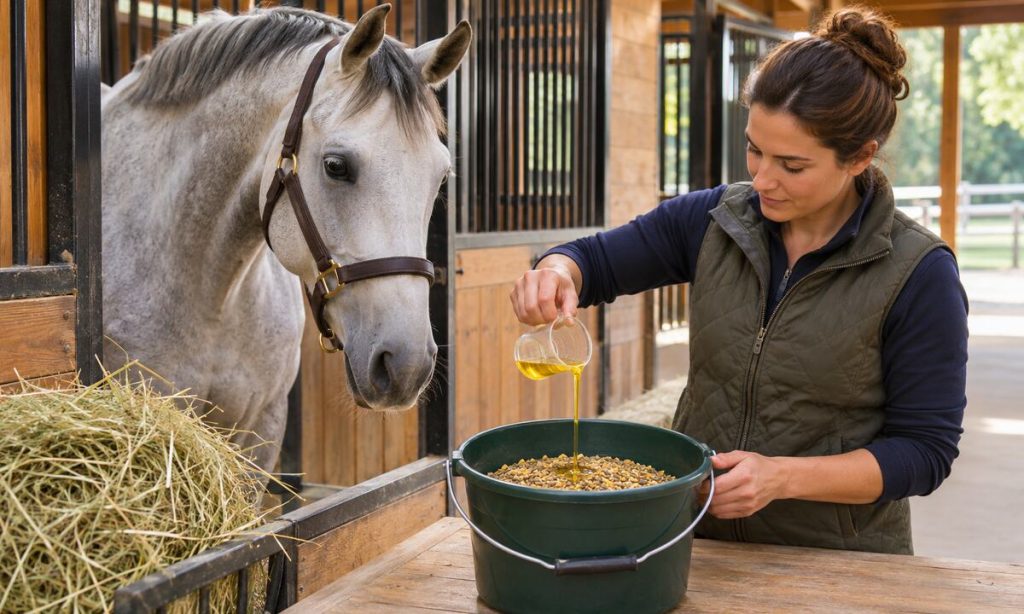
Introducing an oil supplement for horses should be a deliberate change to the whole feeding plan, not simply a splash added to every bucket. Oils provide concentrated dietary calories and certain fatty acids, but they do not supply the complete protein, vitamins, minerals, or fiber a horse needs. Some horses benefit from additional energy, while others already maintain healthy body condition on forage and an appropriate concentrate. The decision depends on the horse, not the popularity of an ingredient.
A smooth introduction means checking the reason for adding oil, choosing a feed-grade product, setting a measured amount with professional guidance, and increasing it gradually. This guide covers ration review, storage, mixing technique, signs of digestive intolerance, and how to judge whether the change is useful. Horses with metabolic disease, poor appetite, liver or gastrointestinal illness, or unexplained weight loss need veterinary assessment before supplements are added.
Decide Whether Extra Dietary Fat Is Needed
Begin with a record of forage intake, current concentrate, body condition, weight trend, workload, and any existing supplements. Oil adds calories without providing much volume, which may suit a horse that needs more energy but cannot safely increase certain starch-rich feeds. However, for an easy keeper, those extra calories can increase unwanted weight. Improving hay quality or correcting a feeding gap may be a better first step.
Unexplained weight loss can reflect dental disease, parasites, pain, illness, inadequate forage, or management issues. An oil product should not cover up those causes. If the horse is thin despite sufficient feed, unusually tired, or eating poorly, involve the veterinarian. A ration analysis can determine whether adding fat is truly appropriate and what other nutrients would need adjustment.
Select a Clear Feed-Grade Oil Product
Choose a product intended for animal feeding, with an identifiable oil source, sealed packaging, a use-by date, and storage instructions. Vegetable oil sources vary in fatty-acid profile and stability; a product advertised as an omega supplement is not the same as a balanced complete feed. Look for transparent ingredients and avoid blends with undisclosed additives or therapeutic promises. Competition owners should check any applicable feed and medication rules.
Evaluate the total cost per measured serving and how consistently staff can feed it. A pump that delivers an uncertain volume can lead to under- or overfeeding. A clean graduated cup or verified dosing device is more reliable. Fat-supplement considerations provide useful background, but the final choice must fit the existing ration.
Review Calories, Fat Intake, and Micronutrient Balance
Because fat is energy dense, a small apparent volume can materially alter total calorie intake. Ask the nutritionist to calculate the proposed contribution in the same units as the other feeds, and check the fat already present in concentrates. Replacing part of an existing feed with oil can change the intake of protein, vitamins, and minerals as well as calories; it must not be treated as a simple one-for-one exchange.
An increase in added fat may affect needs for antioxidant nutrients such as vitamin E, but owners should not independently pile on more supplements. The appropriate balance depends on the source, amount, and total diet. Forage and water access remain essential. The goal is a complete, stable ration rather than a calorie shortcut that accidentally creates a deficiency or excess elsewhere.
Begin With a Small Measured Amount
Once the veterinarian or nutritionist has agreed on a target, start with a small fraction of that amount and increase in measured stages over the recommended transition period. The MSD Veterinary Manual emphasizes gradual changes in horse diets, often over roughly ten to fourteen days, because the digestive system needs time to adapt. The actual schedule may need to be slower for a sensitive individual.
Mix the oil thoroughly into a familiar suitable feed so it is not left pooled at the bottom of a bucket. Introduce only one dietary change at a time and record the amount offered and eaten. Never force-feed a horse that refuses the new mixture or suddenly jump from a test serving to a large daily addition. If the horse requires medication or a special diet, obtain specific veterinary instructions.
Watch Appetite, Manure, and Behavior
Check each meal for refusal, separation of oil from feed, or a change in eating speed. Monitor manure consistency, bloating, signs of abdominal pain, and unusual behavior. A horse that develops colic signs, repeated diarrhea, marked lethargy, or persistent refusal needs prompt veterinary advice. Do not simply switch to a different oil while symptoms continue without understanding what happened.
Keep a simple log with dates, amounts, body-condition scores, weight estimates, workload, and any digestive observations. Change is easier to evaluate when only one new ingredient is introduced. If the horse maintains condition and performs normally without added oil, there may be no clear benefit to continuing it. Consistency and evidence of need should guide the routine.
Store Oil to Protect Quality
Keep the container tightly closed, clean, and away from direct sun, excess heat, moisture, and feed-room contamination. Follow label storage advice and avoid transferring the oil into an unmarked bottle. Write the opening date on the container; check for unexpected odor, discoloration, damaged seals, or residue before use. If quality is uncertain, discard it rather than trying to mask an off smell in feed.
Use clean measuring equipment every time. Do not dip a dirty feed scoop into an oil bottle, and avoid leaving mixed feed sitting for extended periods in a warm stall. Staff should know both the amount and the method of measurement. For a horse on several supplements, keep labels and feeding directions together so oil is not accidentally added twice.
Review Results and Adjust With the Team
Improved condition, if extra calories were appropriate, is usually assessed over weeks rather than hours. Recheck weight trends and body-condition score at consistent intervals, along with appetite, manure, and performance. If the horse gains too much weight, or a diagnosed condition changes, ask the nutritionist to recalculate the ration. Excess supplementation is not evidence of better care.
A gradual introduction also offers an opportunity to reconsider the original goal. If the horse still loses weight despite an appropriate calorie plan, investigate health and management causes rather than escalating oil without limit. Tracking changes after a veterinary discussion can provide a useful record structure for follow-up.
Frequently Asked Questions
These answers cover the most common choices owners face when adding oil, from gradual introduction to storage and monitoring. Individual amounts cannot be safely set by a general article.
The horse’s body condition, current ration, and medical history determine whether added oil belongs in the plan. Always use the specific product instructions and qualified professional advice.
Can I add oil straight to my horse’s feed today?
Ask whether extra calories are needed, then begin with a small measured amount according to a veterinary or nutrition plan. Avoid sudden large additions.
Does oil replace hay or balanced feed?
No. It adds fat calories but cannot replace forage fiber, protein, vitamins, and minerals in a complete diet.
How long should introducing an oil supplement take?
Diet changes are generally made gradually over about ten to fourteen days or as individually advised. Sensitive horses may need a different schedule.
What if my horse refuses oily feed?
Do not force the meal. Reassess the product, amount, and mixing method, and consult the vet if refusal is persistent or accompanied by illness.
Can oil go rancid in the barn?
Yes. Store it sealed as directed, protected from heat and sunlight. Discard products with suspect odor, damaged packaging, or uncertain storage history.
Final Words
An oil supplement for horses can be useful when it fills a genuine calorie or fatty-acid need and the complete ration remains balanced. Start with a clear reason, a feed-grade product, a measured professional target, and a gradual introduction. Oil is not a replacement for forage or a treatment for unexplained weight loss.
Watch appetite, manure, weight, and comfort as the new ingredient is introduced, and keep the oil protected from heat and contamination. If the horse becomes unwell or refuses feed, stop experimenting and consult the veterinarian. A conservative, recorded approach makes it easier to tell whether supplementation is helping.
Reference
The following veterinary references discuss equine dietary energy, vegetable oils, gradual feed transitions, and the importance of considering the full ration. They provide a general foundation, not an individualized dosing plan.
Any precise oil quantity, vitamin adjustment, or feeding duration should be set by a qualified equine nutritionist or veterinarian using the actual feeds and horse’s medical history.









