
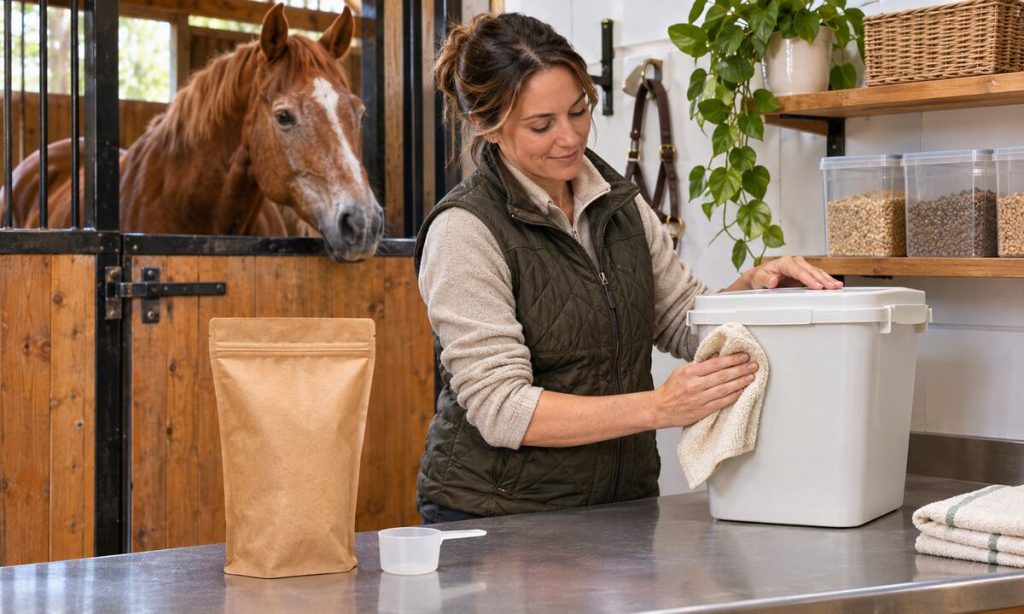
The phrase ‘clean a chasteberry supplement for horses‘ needs an important clarification: never wash, rinse, or disinfect the supplement itself. Cleaning means maintaining its scoop, the outside of its container, and the surrounding feed station while keeping the contents dry and uncontaminated. Powders, granules, and other supplement formats can be damaged by moisture, heat, or dirty utensils. When the seal is broken or storage conditions are poor, the responsible choice may be to replace the product rather than attempt to rescue it.
Chasteberry is also associated with claims about pituitary pars intermedia dysfunction, or PPID, in older horses. Evidence does not support using it in place of veterinary diagnosis and prescribed treatment. This guide separates practical feed-room hygiene from medical claims, then explains safe labeling, storage, scoop care, contamination checks, and disposal. Discuss any proposed chasteberry use with the horse’s veterinarian before beginning or changing a routine.
Understand What Should and Should Not Be Cleaned
Do not put water, soap, disinfectant, or cleaning wipes inside a supplement bag or tub. Do not rinse powder through a sieve, bake it to remove moisture, or spread it in the sun to fix a musty smell. Those actions can introduce contamination or change product quality. The safe tasks are wiping the outside of intact packaging and washing reusable tools only when they can be dried fully before they touch the feed again.
Follow the product’s own handling directions because formats vary. A liquid extract, sealed tablet container, and loose powder each have different sensitivities. Never transfer a supplement into an unmarked container or mix separate lots merely to save shelf space. If a package is damaged or its contents look or smell unusual, isolate it until the maker or veterinarian advises whether it should be discarded.
Keep the Original Label and Batch Identification
Preserve the ingredient list, recommended serving, expiration date, batch number, storage instructions, and manufacturer contact details. These facts matter if the horse develops an adverse response or the product is recalled. Write the opening date on the original package and keep a simple log of which horse receives it, when, and why. Avoid relying on unverified handwritten amounts copied from an earlier container.
Store the product separately from medications, disinfectants, and chemicals so nobody mistakes it for another substance. In a multi-horse stable, assign a clear place for each horse’s feed records. If the veterinarian advises discontinuing chasteberry because of uncertain benefit or interaction concerns, make that change clear to everyone preparing meals. A clean storage system supports accurate feeding decisions.
Clean the Scoop Without Wetting the Contents
Use a dedicated scoop or measured spoon for the supplement rather than dipping a shared grain scoop into multiple tubs. Keep hands dry and avoid leaving the tool on a dirty counter or in contact with manure, hay dust, or medication residue. If a scoop requires washing, use suitable detergent and water away from the open supplement container, rinse thoroughly, and let it dry completely.
A slightly damp scoop can carry moisture back into powder and cause clumping or contamination. Do not return spilled material to the container, even if the floor or counter appears clean. If the original scoop breaks, replace it with an accurately measured tool and confirm how much the stated serving weighs. Guessing by volume can produce inconsistent intake, particularly with different powder densities.
Wipe and Maintain the Outside of Containers
For intact plastic tubs, use a lightly damp cloth to remove external dust or feed residue without allowing liquid near the opening. For paper pouches and labels vulnerable to moisture, use a dry clean cloth and preserve readability. Clean the shelf first so a freshly wiped container is not set back onto a dirty, wet surface. Avoid household spray cleaners near open supplements or feed.
Check the lid threads, gasket, zipper closure, and seals for cracks or trapped debris. Close the package promptly after each measured use. If a lid no longer seals properly, contact the product maker for safe storage advice rather than assuming any substitute jar is equivalent. Container hygiene cannot compensate for a supplement that has already become wet, moldy, or visibly changed.
Store Dry, Cool, and Away From Contamination
Place the original sealed package in a designated feed-storage area away from leaks, direct sun, excessive heat, and pests. Follow the specific temperature and humidity instructions on the label. Keep it off the floor and avoid the top of damp hay stacks or near wash racks. Rotate stock by date without opening multiple containers before they are needed.
Open only the package currently in use, and close it promptly. Do not mix supplements into wet mash far in advance unless the manufacturer and veterinary plan allow that practice. If staff find a product beside a disinfectant bottle, leaking pipe, or rodent droppings, quarantine it and assess contamination rather than simply wiping the outside and resuming use. Safe storage protects animals and feed handlers alike.
Know the Medical Evidence and Limits
Chasteberry, also called Vitex agnus-castus, has been promoted for horses with PPID, but the evidence is limited and conflicting. The British Equine Veterinary Association’s clinical review reports no proven effect on ACTH concentrations and no demonstrated benefit from adding chasteberry to pergolide therapy. It should not replace veterinary testing, monitoring, or prescribed medicine for a horse with PPID. Owners can also consult the PPID supplement caution guide before considering any product claim.
Owners noticing a long or abnormal hair coat, excessive drinking, muscle loss, recurrent infections, or laminitis concerns should seek veterinary assessment. PPID feeding questions can help organize the consultation. The FDA recognizes prescription pergolide products for controlling PPID signs; herbal supplements are not interchangeable with those drugs. Never change prescribed treatment because a tub is labeled for senior horses.
Discard Questionable Products and Record Problems
Throw away or isolate powder with visible moisture, mold, pests, strange odor, damaged seal, or an expired date according to the manufacturer’s directions and local disposal rules. Do not scrape away a clump and use the remainder without professional guidance. If a horse has already consumed suspect product, record the batch and amount and ask a veterinarian what signs to monitor.
Review your routine when contamination happens repeatedly: the problem may be a shared wet scoop, an overflowing wash area, unclosed lids, or confusing containers. Replace compromised tools and fix the moisture source. If there is an adverse event, retain the packaging information for the veterinarian and manufacturer. Keeping the feed station orderly reduces avoidable mistakes but does not establish whether the supplement itself is medically useful.
Frequently Asked Questions
The following questions focus on safe cleaning of equipment and storage of chasteberry products. They also address the difference between hygienic handling and veterinary treatment claims.
For a horse with suspected PPID, decisions about supplements should be part of a clinician-led plan. A clean container does not make an unproven treatment effective.
Can I rinse a chasteberry powder to clean it?
No. Water can damage the product and introduce contamination. Keep the contents dry, and clean only the scoop or exterior container as appropriate.
What if the supplement has formed hard clumps?
Clumping can signal moisture exposure. Isolate the product and contact the manufacturer or veterinarian; do not assume it is safe to feed.
Can one scoop be shared across horse supplements?
A dedicated scoop minimizes cross-contamination. If sharing is unavoidable, wash and fully dry it between products and confirm serving measurements.
Does chasteberry replace pergolide for PPID?
No. Clinical guidelines do not show a proven ACTH benefit, and chasteberry should not replace prescribed pergolide or veterinary monitoring.
How should I label an opened supplement?
Retain the original ingredient and batch label, write the opening date, and store the container as directed, away from feed-room moisture and chemicals.
Final Words
To keep a chasteberry supplement for horses in good condition, clean only the exterior packaging and measuring tools, then keep the actual supplement sealed, dry, labeled, and uncontaminated. Never try to wash or revive powder that has become damp, moldy, or otherwise suspect. Accurate records and a dedicated scoop are practical ways to avoid feeding mistakes.
Most importantly, safe storage is separate from medical effectiveness. Discuss chasteberry with a veterinarian, especially for older horses with signs of PPID. Use evidence-based evaluation and prescribed care instead of relying on supplement claims, and discard questionable feed products rather than trying to salvage them.
Reference
The following veterinary and regulatory sources explain PPID management, the limited evidence for chasteberry, and the role of approved prescription treatment. General horse-feed resources inform hygiene and storage practices.
They are included for context, not as a reason to self-diagnose endocrine disease or to substitute a supplement for veterinary care. Product-specific handling instructions must also be followed.









