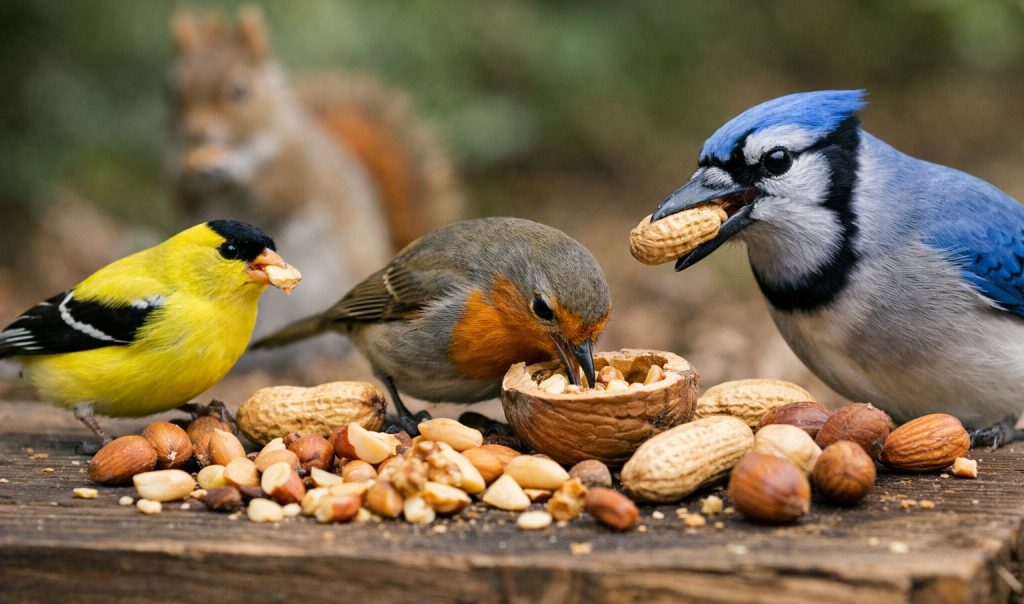
Yes, many birds can eat nuts, but only the right types, prepared safely.
Birds and nuts can be a healthy match when you know which nuts are safe, how much to offer, and how to serve them. I’ve seen many bird owners make simple mistakes here, like offering salted trail mix or moldy peanuts, and those errors can do real harm. If you want a clear, practical guide on can birds eat nuts, this article breaks it down with expert advice, real-world tips, and the safety rules that matter most.
Can Birds Eat Nuts?
Yes, birds can eat nuts, and for many species, nuts are a valuable food source. They provide fat, protein, fiber, and key nutrients that support energy, feather health, and overall body condition. In the wild, many birds naturally crack open nuts, seeds, and kernels as part of their daily diet.
That said, not every nut is safe, and not every bird should eat nuts the same way. The main risks come from salt, seasoning, mold, choking hazards, and nuts that are too hard for small birds to handle. When people ask can birds eat nuts, the best answer is yes, but only with care and moderation.
Why Nuts Can Be Good for Birds
Nuts are nutrient-dense. That means birds get a lot of fuel from a small amount of food. This is especially useful for wild birds in cold weather, breeding season, and migration periods, when energy needs rise.
Here are the main benefits of nuts for birds:
- Healthy fats that support energy and body warmth
- Protein that helps with growth and feather repair
- Minerals such as magnesium, phosphorus, and potassium
- Natural enrichment, since cracking nuts can keep birds busy and active
In my experience, birds that get safe nuts in the right amount often show stronger feeding interest and better enrichment behavior. I’ve also noticed that birds with active lifestyles, like parrots and crows, usually enjoy nuts much more than softer foods because the texture gives them something to work on.
Which Nuts Are Safe for Birds?
Many plain, unsalted nuts are safe for birds when served correctly. The best choices are the ones without flavoring, oil, sugar, or added preservatives. Freshness matters too, because old or damp nuts can grow mold that is dangerous to birds.
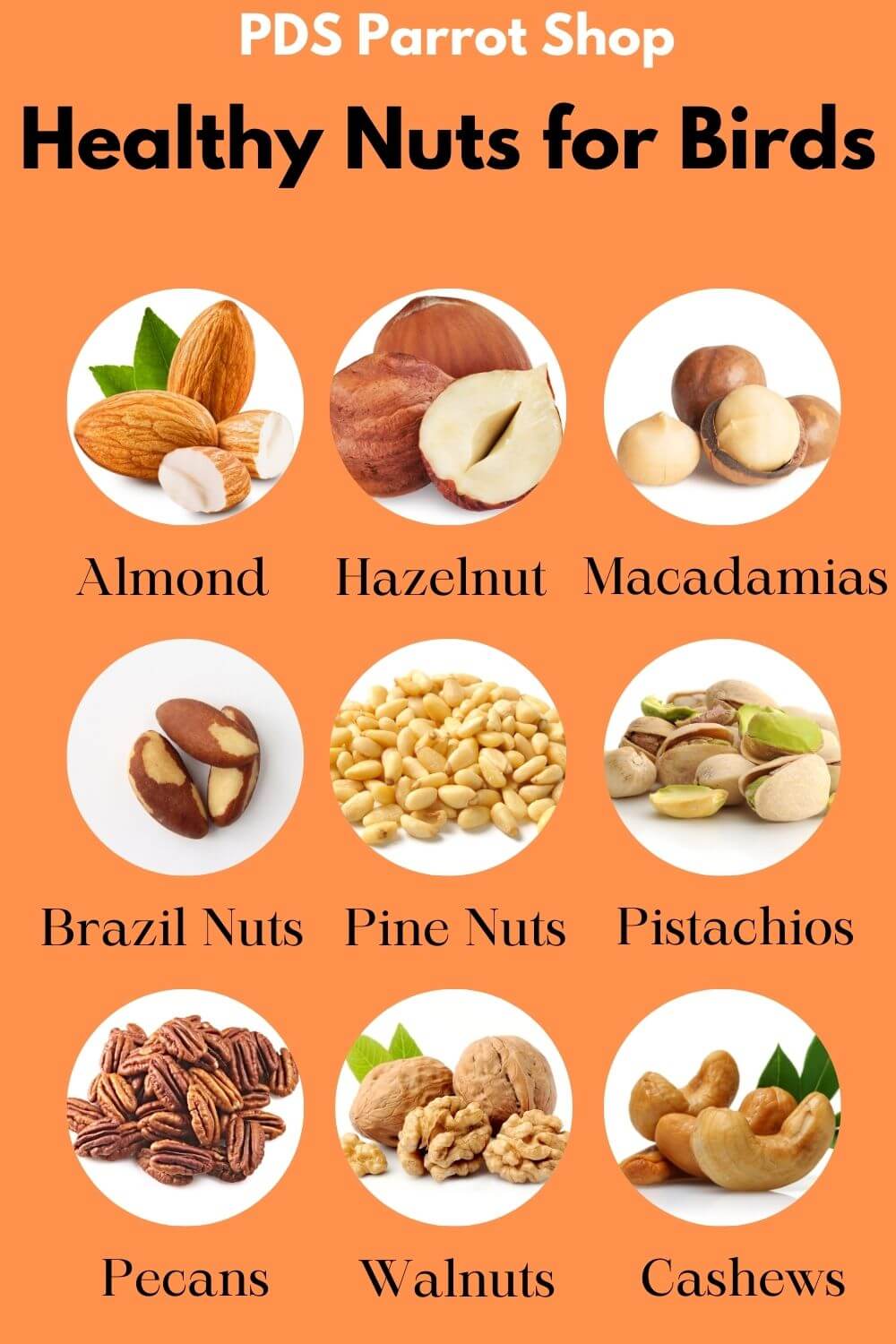
Safe nut options often include:
- Almonds
- Walnuts
- Pecans
- Hazelnuts
- Pistachios without salt or shells that trap debris
- Peanuts that are fresh, unsalted, and mold-free
- Cashews in small amounts
- Brazil nuts in very small portions because they are rich and fatty
If you are feeding wild birds, shelled nuts can be easier for them to eat. If you are feeding pet birds, chopped pieces are often safer, especially for smaller species. For both groups, plain is always better than processed.
Nuts Birds Should Avoid
Some nuts are unsafe because of added ingredients, spoilage, or toxicity risks. A nut can look harmless and still be a problem if it has salt, seasoning, or mold.
Avoid giving birds:
- Salted nuts
- Honey-roasted nuts
- Spiced or flavored nuts
- Candied nuts
- Moldy nuts
- Nuts stored in damp places
- Old peanuts with a musty smell
- Any nut mix with chocolate, xylitol, or artificial sweeteners
One mistake I see often is people assuming all trail mix is bird-safe. It usually is not. Trail mix often contains chocolate, raisins in large amounts, salty pieces, or sugary coatings, and those extras can be risky.
Can Birds Eat Nuts Every Day?
Birds can eat nuts regularly, but not as the only food. Nuts should be part of a balanced diet, not the whole diet. Too many nuts can lead to excess fat intake, especially for pet birds that do not burn much energy.
A good rule is to treat nuts like a rich snack. Offer them in small portions, a few times a week for many pet birds, or as part of a broader feeding plan for wild birds. Larger, active birds may handle nuts more often, while smaller birds need tighter limits.
How to Serve Nuts to Birds Safely
The safest way to serve nuts is plain, fresh, and in small, manageable pieces. The goal is to make the food easy to eat and hard to misuse. Think of it like giving a child a grape: the shape and size matter just as much as the food itself.
Follow these simple steps:
- Choose plain, unsalted nuts.
- Check for freshness and discard anything stale or moldy.
- Crack or chop nuts for small birds.
- Offer only a small amount at first.
- Remove leftovers before they spoil.
- Store nuts in a cool, dry place.
For wild birds, feeders with clean surfaces work best. For pet birds, use a dish or foraging toy to encourage natural behavior. I’ve found that foraging toys make nuts more enriching, because birds work for the reward instead of just eating on autopilot.
Can Baby Birds Eat Nuts?
Baby birds generally should not eat whole nuts. Their beaks are too small, and their digestive systems are still developing. Whole nuts can pose a choking risk and can be hard for young birds to digest.
If a baby bird needs a specialized diet, it should get species-appropriate food recommended by an avian vet or wildlife rehabilitator. Never assume chopped nuts are safe for chicks unless an expert has approved them.
Can Wild Birds Eat Nuts?
Yes, many wild birds eat nuts in nature. Squirrels are not the only ones who love them. Jays, woodpeckers, chickadees, nuthatches, cardinals, and some finches will readily eat nuts when they are available.
For backyard feeding, nuts can be especially useful during:
- Winter, when food is scarce
- Nesting season, when parents need more energy
- Migration, when birds need fast fuel
- Cold snaps, when calorie needs rise
The key is to keep feeders clean and avoid mold. Wet nuts left outdoors can spoil fast, and that can make birds sick.
Can Pet Birds Eat Nuts?
Yes, many pet birds can eat nuts, and parrots often love them. Species such as African grey parrots, macaws, cockatoos, conures, and Amazon parrots commonly enjoy nuts as part of training or enrichment. Smaller birds can also eat nuts, but they usually need smaller pieces and smaller portions.
Still, pet birds need balance. Too many nuts can crowd out pellets, vegetables, and other important foods. If your bird gets excited every time nuts appear, that’s normal, but it also means you should control serving size.
Common Mistakes to Avoid
Feeding birds nuts seems simple, but a few small mistakes can cause big problems. I have seen owners mean well and still choose the wrong food because the packaging looked “natural.”
Avoid these mistakes:
- Giving salted or flavored nuts
- Feeding moldy or stale nuts
- Offering whole nuts to tiny birds
- Using nuts as the main diet
- Leaving spoiled nuts in feeders
- Feeding mixed snack products with unsafe ingredients
- Assuming roasted nuts are always safe
The biggest lesson here is that freshness and simplicity matter more than brand or price. A plain nut in good condition is far safer than a fancy snack mix with hidden risks.
Source: pdsparrotshop.com
Nutrition Facts: What Nuts Provide Birds
Nuts are rich, but they are not complete food by themselves. They work best as a supplement to a balanced diet. The exact nutrition varies by nut type, but most nuts share similar strengths.
Nuts often provide:
- Fats for energy
- Protein for muscle and feather support
- Fiber for digestion
- Vitamin E
- B vitamins
- Minerals like magnesium, selenium, and phosphorus
That richness is a benefit and a limitation. A few nuts can help a bird thrive, but too many can lead to weight gain or dietary imbalance. In avian care, balance is always the real win.
Best Practices for Feeding Nuts in Different Seasons
Birds do not need the same foods year-round. Their energy needs shift with weather, reproduction, and activity level.
Use these seasonal tips:
- Winter: Offer more energy-rich foods like plain nuts in moderation.
- Spring and summer: Use nuts as treats or enrichment, not the bulk of the diet.
- Migration periods: Backyard birds may benefit from nut feeders with clean, dry food.
- Hot weather: Watch for spoilage, because heat can make nuts go bad faster.
For pet birds, seasonal changes matter less than daily activity, but enrichment still helps. Puzzle feeders and foraging cups can make nuts more rewarding without overfeeding.
Expert Tips for Safer Feeding
Based on avian nutrition guidance and practical feeding experience, these tips can help you keep nut feeding safe and useful:
- Buy small quantities so nuts stay fresh.
- Store them in airtight containers.
- Throw away any nut that smells musty.
- Use chopped nuts for small birds.
- Keep feeders dry and clean.
- Introduce new foods slowly.
- Watch for digestive upset, especially at first.
I always tell bird owners to think like a nutrition label and a safety inspector at the same time. If a nut is clean, plain, and sized right, it usually passes both tests.
Frequently Asked Questions
Can birds eat peanuts?
Yes, birds can eat peanuts if they are plain, unsalted, and fresh. Moldy peanuts are dangerous, so quality and storage matter a lot.
Can birds eat roasted nuts?
Yes, but only if they are plain and not salted or seasoned. Dry-roasted nuts are usually better than oil-roasted ones, which may contain added fats.
Are nuts good for parrots?
Yes, parrots often enjoy nuts and can benefit from them in moderation. They are calorie-rich, so they should be treated as part of a balanced diet, not the whole meal.
Can birds eat mixed nuts?
Yes, as long as the mix is plain and free from salt, sugar, chocolate, and seasoning. Always check each ingredient before offering it to birds.
How many nuts should I give a bird?
There is no one-size-fits-all amount because it depends on the bird’s size, species, and activity level. Start small and use nuts as a treat or supplement, not a main food source.
Conclusion
So, can birds eat nuts? Yes, they absolutely can, and for many birds, nuts are a smart source of energy and nutrition when served the right way. The safest approach is simple: choose plain nuts, keep them fresh, avoid salt and seasoning, and offer them in proper amounts.
If you feed birds at home, focus on clean habits and good portion control. If you want to support wild birds, use safe feeders and fresh, unsalted nuts. Keep learning, stay observant, and share your own feeding tips or questions in the comments so others can make better choices too.