Cats have a reputation for being independent, mysterious, and occasionally determined to ignore perfectly reasonable things—including a fresh bowl of water sitting right in front of them. If you have ever wondered, How to Encourage a Cat to Drink More Water?, you are certainly not alone.
Keeping a cat properly hydrated is an important part of everyday care. Water supports normal body functions, helps with digestion, and plays a major role in overall health. The challenge is that many cats do not appear particularly enthusiastic about drinking from a traditional water bowl.
Over the years, after caring for cats and other pets, I have learned that encouraging better hydration often comes down to understanding individual preferences. One cat may happily drink from a wide ceramic bowl, while another acts as though running water from a fountain is the only beverage worthy of consideration. Cats do like to keep us humble. 🙂
The good news is that there are several practical ways to increase your cat’s water intake. From changing the location of the water bowl to offering moisture-rich food, small adjustments can sometimes make a meaningful difference.
Why Is Water So Important for Cats?
Water is essential for virtually every major function in a cat’s body. Proper hydration helps support normal circulation, digestion, temperature regulation, and the body’s ability to remove waste.
A cat that consistently receives adequate moisture from drinking water and food is generally better positioned to maintain normal hydration. However, cats evolved from ancestors adapted to relatively dry environments, and they can have a naturally low thirst drive compared with some other animals.
This is one reason How to Encourage a Cat to Drink More Water? is such an important question for pet owners. A cat may not always drink large, obvious amounts of water, particularly when eating moisture-rich food.
Hydration needs can also change according to a cat’s diet, activity level, environment, age, and overall health. A cat eating primarily dry kibble usually depends more heavily on drinking water than a cat eating a substantial amount of wet food.
Why Do Some Cats Not Drink Enough Water?
Before deciding how to encourage a cat to drink more water, it helps to understand why the problem may be happening.
Cats Have a Naturally Low Thirst Drive
Domestic cats descended from desert-adapted ancestors and may not feel thirst as strongly as people expect. They are also capable of obtaining some moisture from their food, especially when eating wet diets.
That does not mean cats can safely ignore water, of course. It simply means their drinking habits may look different from those of a dog enthusiastically emptying a bowl after every walk.
The Water Is Not Fresh Enough
Many cats are surprisingly particular about water freshness. A bowl that has been sitting out for too long may collect dust, hair, food particles, or other debris.
Fresh water should be available at all times, and bowls should be cleaned regularly. In my experience, some cats immediately show more interest when the water is changed more frequently. Apparently, being served yesterday’s water is beneath them. IMO, cats may have the highest customer-service expectations in the animal kingdom.
The Bowl or Location Is Unappealing
Some cats dislike deep or narrow bowls because their whiskers touch the sides. Others may dislike the material, smell, or location.
Water placed beside food or near a litter box may also be less attractive to some cats. Offering water in a quiet, clean location away from these areas can be worth trying.
Some Cats Prefer Moving Water
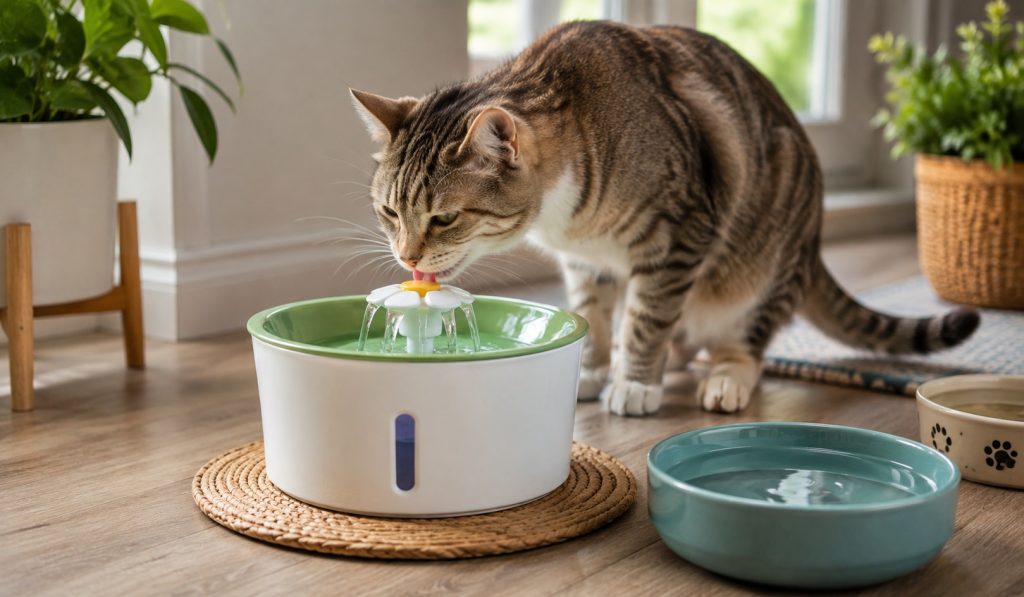
A dripping faucet or running sink can be fascinating to certain cats. This may be why a cat water fountain can encourage some cats to drink more frequently.
Not every cat will care about moving water, but it is a practical option for cats that seem more interested in a faucet than their perfectly good water bowl. :/
How to Encourage a Cat to Drink More Water?
When pet owners ask How to Encourage a Cat to Drink More Water?, there is rarely one solution that works for every cat. The best approach is usually to make water easier to access, fresher, and more appealing while observing what your individual cat prefers.
Offer Multiple Water Stations
One of the simplest ways to increase access to water is to place several bowls around your home.
Consider putting water in different quiet areas where your cat spends time. A multi-level home may benefit from having water available on more than one floor.
Multiple stations can be especially useful in homes with several pets. A shy cat may avoid a water bowl if another animal tends to guard or frequently occupy the area.
Keep the Water Fresh and the Bowl Clean
Fresh, clean water is basic but important. Empty and refill bowls regularly, and wash them thoroughly to prevent buildup.
If your cat suddenly starts drinking less, check the bowl itself. A slimy surface, food residue, or strong soap scent could make the water less appealing.
A simple routine of washing the bowl and replacing the water can be one of the easiest answers to how to get a cat to drink more water.
Experiment With Different Types of Bowls
Cats can have surprisingly strong preferences. Try a few options, such as:
Wide, Shallow Bowls
These may be more comfortable for cats that dislike their whiskers brushing against the sides of a container.
Ceramic or Stainless Steel Bowls
These materials are generally durable and easy to clean. Some owners prefer them because they are less likely to retain odors than certain older plastic bowls.
Place bowls on stable surfaces where they will not slide around while the cat drinks.
Put Water in the Right Location
Consider placing water away from litter boxes and, if possible, away from the main food dish. Some cats seem to prefer separation between eating and drinking areas.
Choose a calm location with relatively little foot traffic. If your cat feels nervous while drinking, a quieter water station may help.
For households with multiple cats, provide enough water options so that one cat does not have to approach another cat to get a drink.
Try a Cat Water Fountain
A cat water fountain may be helpful for cats that prefer moving water. The circulating water can attract attention and encourage some cats to investigate and drink more often.
If you try a fountain, keep it clean according to the manufacturer’s instructions. Filters and internal components can accumulate debris if maintenance is ignored.
A fountain is not automatically better for every cat, but it is one of the most practical options when considering How to Encourage a Cat to Drink More Water?
Add More Moisture Through Wet Food
Diet can make a substantial difference in total moisture intake. Wet food for cat hydration can be particularly useful because canned and other moisture-rich foods contain considerably more water than typical dry kibble.
A cat eating wet food may not visibly drink as much from a bowl, which can be completely different from a cat relying mainly on dry food.
If a dietary change is appropriate for your cat, discuss it with your veterinarian, particularly if your cat has a medical condition or follows a special diet.
Add Water to Suitable Wet Food
Some cats will accept a small amount of additional water mixed into their wet food. Start gradually so you do not make the meal so soupy that your cat suddenly refuses it.
This can be a practical way to support cat hydration, particularly for cats that already enjoy moist food.
However, do not force major changes if your cat stops eating. A sudden refusal of food or water can be more concerning than the original hydration challenge.
Discover Your Cat’s Temperature Preference
Some cats prefer room-temperature water, while others may show more interest in slightly cooler water. You can experiment safely by offering fresh water at different normal household temperatures.
Observe your cat rather than assuming a universal preference. The goal is to learn how to make water more appealing to cats on an individual basis.
Create a Calm Drinking Environment
Stress can affect normal behavior, including eating and drinking. Make sure your cat has access to water without being startled, chased, or crowded.
Older cats or cats with mobility difficulties may also benefit from water placed in easily accessible locations.
How Much Water Should a Cat Drink?
Another common question is how much water should a cat drink each day. There is no single amount that applies perfectly to every cat.
Water needs depend on factors including:
- Body size
- Diet
- Activity level
- Environmental temperature
- Moisture already consumed through food
- Overall health
A general guideline often used in feline care is that total daily water requirements—including moisture obtained from food—vary according to body weight and individual circumstances. This is why simply measuring the amount left in a water bowl does not always provide the full picture.
For example, a cat eating mostly wet food may drink relatively little from a bowl because much of its moisture comes from meals. A cat eating primarily dry food may need to drink more independently.
If you are concerned about how much water should a cat drink, consider monitoring the bigger picture: diet, urination, behavior, appetite, and any sudden changes in normal habits.
Signs of Dehydration in Cats
Recognizing possible signs of dehydration in cats can help owners know when a situation may require professional attention.
Potential warning signs can include:
- Unusual lethargy or weakness
- Reduced appetite
- Dry or tacky gums
- Sunken-looking eyes
- Reduced urination
- Constipation
- Noticeable changes in normal behavior
These signs are not exclusive to dehydration. Many illnesses can produce similar symptoms, so it is important not to diagnose the problem based on one sign alone.
You may find information online about checking skin elasticity, sometimes called a skin-tent test. While this can provide one observation, it should not be treated as a reliable home diagnosis for every cat. Age, body condition, and other factors can affect the result.
If your cat appears significantly unwell or dehydrated, contact a veterinarian rather than relying on home tests.
What Not to Do When Trying to Get a Cat to Drink More Water
Learning How to Encourage a Cat to Drink More Water? also means knowing which approaches to avoid.
Do Not Force Water Into Your Cat’s Mouth
Force-feeding water can cause stress and may create a risk of aspiration if done improperly. Unless your veterinarian has given you specific instructions, do not attempt to syringe large amounts of water into your cat’s mouth.
Do Not Add Random Ingredients to Water
Some online suggestions for flavoring water may not be appropriate for every cat. Ingredients safe for humans are not automatically safe for cats.
If you want to use a commercial hydration product or another flavoring strategy, check with your veterinarian first—especially if your cat has health issues or dietary restrictions.
Do Not Ignore Sudden Changes
A cat that suddenly refuses water, drinks dramatically more than usual, urinates much less, or shows signs of illness deserves attention.
The goal is not simply to win a hydration contest. A sudden change in drinking behavior can sometimes signal an underlying problem.
When Should You Visit a Veterinarian?
Contact your veterinarian if your cat has a sudden or significant change in drinking habits, especially when accompanied by other symptoms.
Seek veterinary advice if you notice:
- A persistent refusal to drink
- Possible signs of dehydration
- Repeated vomiting or diarrhea
- Markedly reduced urination
- Sudden excessive thirst
- Lethargy or weakness
- Loss of appetite
- Other unusual changes in behavior or appearance
Changes in water consumption can sometimes be associated with medical conditions. Only a qualified veterinarian can properly evaluate your cat’s individual situation.
If you are asking How to Encourage a Cat to Drink More Water? because your cat suddenly stopped drinking, focus first on determining whether the change requires veterinary attention rather than trying increasingly elaborate tricks at home.
Prevention: Building Better Hydration Habits
The best long-term approach is to make good hydration part of your cat’s normal routine.
Keep Fresh Water Available
Provide clean water every day and wash bowls regularly.
Offer More Than One Drinking Option
Different locations, bowl styles, or a fountain may give your cat choices and help you identify preferences.
Consider the Moisture Content of the Diet
Wet food can contribute substantially to total daily moisture intake. Ask your veterinarian whether your cat’s diet is appropriate for its individual needs.
Monitor Normal Habits
You do not need to obsessively measure every sip. However, knowing your cat’s usual habits makes it easier to notice meaningful changes.
This is one of the most useful lessons I have learned from years of caring for pets: normal behavior is valuable information. You are often the first person to notice when your cat is acting differently.
Frequently Asked Questions
- How can I get my cat to drink more water?
Try providing several fresh water stations, experimenting with wide bowls, moving water away from food and litter areas, using a fountain, and increasing dietary moisture with suitable wet food. If drinking habits suddenly change, contact your veterinarian.
- How much water should a cat drink each day?
The answer varies according to body size, diet, activity, environment, and health. Remember that cats receive water from food, particularly wet food, so bowl consumption alone does not always show total hydration.
- Is it normal for a cat eating wet food to drink less?
Yes, many cats eating moisture-rich wet food drink less from a water bowl because they obtain part of their daily water intake from their meals. However, a sudden change from your cat’s normal behavior should still be monitored.
- Are cat water fountains good for hydration?
They can be helpful for some cats, particularly those attracted to moving water. However, individual preferences vary, and a fountain must be cleaned and maintained regularly.
- How long can a cat safely go without drinking water?
There is no safe universal time limit to rely on. A cat’s ability to cope without water depends on many factors, but dehydration can become serious quickly. If your cat is refusing water or appears ill, contact a veterinarian promptly rather than waiting to see how long the situation continues.
Final Words
So, How to Encourage a Cat to Drink More Water? Start with the basics: provide fresh, clean water in appealing locations, offer multiple drinking options, experiment with bowls or a fountain, and consider the moisture content of your cat’s diet.
For many cats, small changes are enough to improve their interest in water. The key is patience and observation rather than assuming every cat should drink in exactly the same way.
If you are still wondering How to Encourage a Cat to Drink More Water?, pay attention to what your individual cat prefers. A wider bowl, quieter location, moving water, or moisture-rich food may make a real difference. And if your cat’s drinking habits change suddenly or you notice signs of illness, a veterinarian should always be part of the conversation.
Healthy hydration is not glamorous, but neither is cleaning up preventable problems later. Your cat may never send you a thank-you note for maintaining fresh water—but in classic cat fashion, they may simply continue expecting excellent service every day.