If your dog gives you that unmistakable “Are you seriously eating that without me?” stare whenever fish hits the dinner table, you are not alone. Fish can be a nutritious addition to a dog’s diet, but not every fish—or every preparation—is equally suitable.
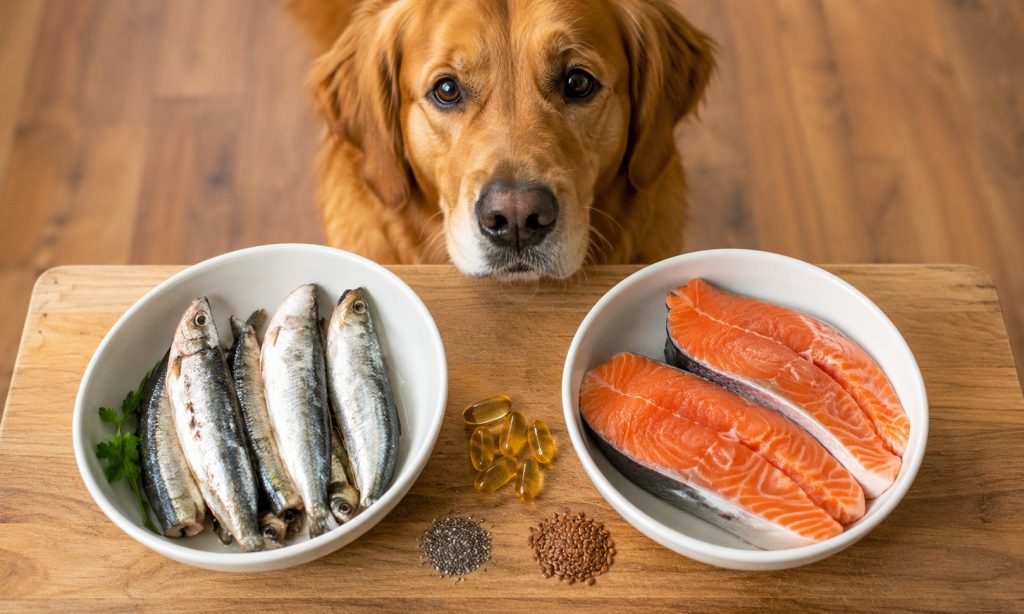
When comparing Sardines vs Salmon for Dogs, both can provide high-quality protein and beneficial omega-3 fatty acids. The better choice depends on how the fish is prepared, your dog’s nutritional needs, and whether you’re using it as an occasional topper or as part of a complete and balanced food.
Sardines have some interesting advantages: they are small fish, generally lower on the food chain, and their soft edible bones can provide calcium. Salmon, meanwhile, is an excellent source of protein and omega-3s and is already used in many commercial dog foods.
So, Sardines vs Salmon for Dogs isn’t really a battle with one universal winner. It’s more about choosing the right fish for the right dog.
Sardines vs Salmon for Dogs: What’s the Difference?
Sardines and salmon are both oily fish, but they aren’t nutritionally identical.
Sardines are much smaller fish. Because they generally have shorter lifespans and occupy a lower position in the marine food chain, they are commonly considered a lower-mercury seafood choice. PetMD lists sardines among fish generally considered safe for dogs when properly prepared and specifically recommends choosing products without added salt.
Salmon is a larger fish and is particularly valued for its protein and omega-3 fatty acids. Cooked salmon can be a nutritious treat or topper when served plain, boneless, and in moderation.
The important distinction is that how you serve the fish matters almost as much as which fish you choose.
A plain sardine can be appropriate. A sardine swimming in salty sauce? Not such a great idea.
The same applies to salmon. Plain cooked salmon is one thing; smoked salmon covered in salt and seasonings is another.
Sardines vs Salmon for Dogs: Nutritional Comparison
| Nutritional factor | Sardines | Salmon |
|---|---|---|
| Protein | Good source | Excellent source |
| Omega-3s | Excellent source | Excellent source |
| EPA & DHA | Yes | Yes |
| Edible bones | Soft bones may be eaten when properly prepared | Bones should be removed |
| Mercury concern | Generally lower | Varies by species/source |
| Calories | Depends on preparation | Can be relatively calorie-dense |
| Convenience | Very convenient, especially canned | Fresh, frozen, canned, or commercial dog food |
| Best advantage | Omega-3s, convenience, edible soft bones | Protein, omega-3s, versatility |
| Main safety concern | Salt, sauces, excess calories | Raw/undercooked fish and bones |
Nutrient levels can vary substantially depending on the fish species, preparation method, serving size, and whether the product is fresh, canned, or incorporated into commercial pet food.
Protein
Both fish provide animal-based protein containing amino acids dogs need.
Salmon is especially popular in commercial dog foods because it provides protein while also supplying beneficial fatty acids. Purina notes that salmon is a source of important fatty acids and protein and is used in formulas designed around skin and coat support.
Sardines also provide useful protein, although most dog owners are not feeding sardines as the primary protein source. They’re generally better thought of as a supplemental food or topper unless a complete diet has specifically been formulated around them.
Omega-3 Fatty Acids
This is where the comparison gets particularly interesting.
Both sardines and salmon can provide the long-chain omega-3 fatty acids EPA and DHA. Fish and fish oil are among the most useful dietary sources of these fatty acids for dogs.
EPA and DHA are different from the plant-based omega-3 ALA found in foods such as flaxseed. Dogs can convert ALA to other omega-3 fatty acids, but EPA and DHA from marine sources are more directly available to the body.
That is why sardines omega 3 for dogs is such a popular search topic among pet owners.
However, don’t assume salmon automatically beats sardines—or vice versa—on omega-3 content. Actual amounts vary according to species, source, preparation, and serving.
Calories and Fat
Both sardines and salmon contain fat, and that is part of their nutritional appeal.
But fat also means calories.
If you are adding fish on top of a complete commercial diet, those calories still count. A generous fish topper every day can quietly turn into a significant portion of your dog’s calorie intake.
For dogs that need to lose weight, have a history of pancreatitis, or have other dietary restrictions, discuss additional fatty foods with your veterinarian before making them a regular part of the diet.
Bones and Minerals
Sardines have a unique advantage here.
Their bones are small and soft enough to be eaten when the sardines are properly prepared. This can provide minerals such as calcium and phosphorus. AKC specifically notes that sardines are an exception among fish because their small, soft bones can be digestible for dogs.
Salmon bones are different. They can be dangerous if swallowed, so cooked salmon offered to dogs should be carefully checked and served boneless.
A dog may consider finding one forgotten fish bone the greatest treasure on Earth. Your veterinarian may have a somewhat different opinion.
Sardines for Dogs: Benefits and Safety
Sardines can make a practical occasional addition to a dog’s diet.
They contain protein and omega-3 fatty acids and can provide several vitamins and minerals. Their small size is also one reason they are generally considered a safer fish choice than many larger predatory species.
Sardines Omega 3 for Dogs
The omega-3 content is one of the strongest reasons pet owners consider sardines.
EPA and DHA can support normal inflammatory responses and contribute to healthy skin, coat, joints, brain function, and overall wellness. Fish oil derived from oily fish such as sardines and salmon is also widely used in canine nutrition.
That does not mean sardines are a treatment for arthritis, allergies, or another medical condition. Nutritional support and medical treatment are not the same thing.
Are Canned Sardines Safe for Dogs?
They can be, provided you choose carefully.
For dogs, look for sardines that are:
- Packed in water rather than heavily seasoned sauces
- Low in sodium
- Free from onion and garlic
- Free from spicy sauces and excessive oils
- Plain and minimally processed
If you’re buying canned sardines for your dog, read the ingredient label rather than assuming every can is pet-friendly.
A tin labeled “Mediterranean garlic chili sardines” might sound fantastic for your lunch. For your dog, put it back.
Salmon for Dogs: Benefits and Safety
Salmon is another nutritious fish option when prepared correctly.
Cooked salmon provides protein, omega-3 fatty acids, and other nutrients. It is also widely used in commercial dog foods and treats.
Why Salmon Can Be a Good Protein Source
Salmon can be useful when a dog does well with fish-based diets or when a veterinarian recommends an alternative protein source.
The omega-3 content may also make salmon appealing for owners interested in supporting normal skin and coat health.
However, salmon can be relatively calorie-dense. Treat it as part of your dog’s total diet rather than something that can simply be added without adjusting anything else.
Why Raw Salmon Is Risky for Dogs
This is one area where Sardines vs Salmon for Dogs has a very important difference.
Raw or undercooked salmon can carry parasites associated with salmon poisoning disease. The condition can be serious and potentially fatal in dogs. AKC advises owners to contact a veterinarian promptly if a dog eats raw salmon that could be contaminated.
For that reason, don’t feed dogs raw salmon simply because it looks fresh or because your dog is a fan of sushi.
Cook salmon thoroughly, allow it to cool, and remove all bones before giving it to your dog.
Smoked salmon is also a poor choice because smoking and processing can introduce substantial amounts of sodium and other ingredients that dogs don’t need.
Sardines vs Salmon for Dogs: Which Is Better?
If you want the shortest answer:
Neither is universally better.
Sardines may be the better choice when you want:
- A convenient omega-3-rich topper
- A generally lower-mercury fish option
- Small fish with soft edible bones
- An affordable fish option
- A simple canned product with minimal ingredients
Salmon may be preferable when you want:
- A substantial protein source
- A highly palatable fish
- A fish commonly used in complete commercial dog foods
- A versatile ingredient for occasional homemade meals or toppers
IMO, the biggest advantage of sardines is their simplicity. A properly selected can of plain, water-packed sardines can be remarkably convenient. Salmon’s biggest advantage is versatility and its combination of protein and beneficial fatty acids.
So when considering Sardines vs Salmon for Dogs, the question isn’t simply “Which fish is healthier?” It should be “Which fish can I safely and appropriately incorporate into this particular dog’s diet?”
How to Feed Sardines or Salmon Safely
Regardless of which fish you choose, follow a few basic rules.
1. Keep It Plain
Avoid:
- Garlic
- Onion
- Heavy salt
- Spicy sauces
- Butter-heavy preparations
- Rich marinades
- Seasoning blends containing unsafe ingredients
Dogs don’t need restaurant-style fish. They need safe fish.
2. Cook Salmon Thoroughly
Never intentionally feed raw or undercooked salmon. Cooked salmon should be cooled before serving and carefully checked for bones.
3. Choose Sardines Carefully
For canned sardines, water-packed and low-sodium options are generally preferable. Avoid products containing sauces or ingredients unsuitable for dogs.
4. Start With a Small Amount
If your dog has never eaten fish before, introduce it gradually. Watch for vomiting, diarrhea, excessive gas, itching, or other unusual reactions. If your dog reacts poorly, stop feeding the new food and contact your veterinarian if symptoms are significant or persistent.
5. Remember That Treats Count
Fish should not casually replace a complete and balanced dog food.
Even healthy foods can become unhealthy when given in excessive quantities.
When to Ask Your Veterinarian
Talk to your veterinarian before regularly adding sardines, salmon, or fish oil if your dog:
- Has pancreatitis or a history of it
- Is overweight
- Has food allergies
- Has chronic digestive problems
- Eats a prescription diet
- Has kidney or other medical conditions
- Is pregnant or nursing
- Is a puppy with special nutritional needs
- Takes medications that may affect bleeding or metabolism
Also remember that many complete commercial dog foods already contain fish oil or fish ingredients. Adding another omega-3 source may not always be necessary.
Frequently Asked Questions
Can dogs eat sardines every day?
Sardines can be nutritious, but that doesn’t mean every dog needs them every day. The appropriate frequency depends on the dog’s overall diet, calorie needs, health, and the amount being served. A complete and balanced dog food should remain the nutritional foundation unless a veterinary professional recommends otherwise.
Is salmon healthier than sardines for dogs?
Not necessarily. Both can provide protein and EPA/DHA omega-3 fatty acids. Sardines have advantages such as small edible bones and generally lower mercury concerns, while salmon offers high-quality protein and is widely used in commercial dog foods. The preparation and individual dog’s needs matter more than declaring one fish the winner.
Are canned sardines safe for dogs?
Plain canned sardines can be appropriate for many dogs. Choose products packed in water and without added salt, onion, garlic, or heavy sauces. Always check the ingredient label.
Can dogs eat cooked salmon skin?
Small amounts of thoroughly cooked, plain salmon skin may be tolerated by some dogs, but it can add considerable fat and calories. It should never be seasoned with ingredients such as garlic or onion. For dogs with dietary restrictions or a history of pancreatitis, ask your veterinarian first.
Which fish has more omega-3 for dogs?
Both sardines and salmon can provide significant EPA and DHA, but the exact amount varies according to species, source, preparation, and serving size. Rather than assuming one always contains more, check the nutritional information for the specific product when available.
Final Words
The Sardines vs Salmon for Dogs debate doesn’t have a one-size-fits-all winner.
Sardines are an excellent option when you want a small, omega-3-rich fish that can be convenient and relatively economical. Their soft bones can also contribute calcium when properly prepared.
Salmon is an excellent source of protein and beneficial fatty acids and can work well as an occasional topper or as an ingredient in a complete commercial dog food.
The most important factors are preparation, portion control, ingredient quality, and your dog’s individual nutritional needs.
For most healthy dogs, either can be a useful addition when served appropriately. Choose plain, properly prepared fish, avoid raw salmon, keep portions sensible, and don’t let an occasional topper replace a nutritionally complete diet.
And if your dog suddenly becomes convinced that fish is the only food worth eating, congratulations—you’ve probably created a tiny seafood critic. 🙂
Veterinary disclaimer: This article is for general educational purposes only and does not replace individualized veterinary advice. If your dog has a medical condition, eats a prescription diet, or develops symptoms after eating fish, consult your veterinarian.