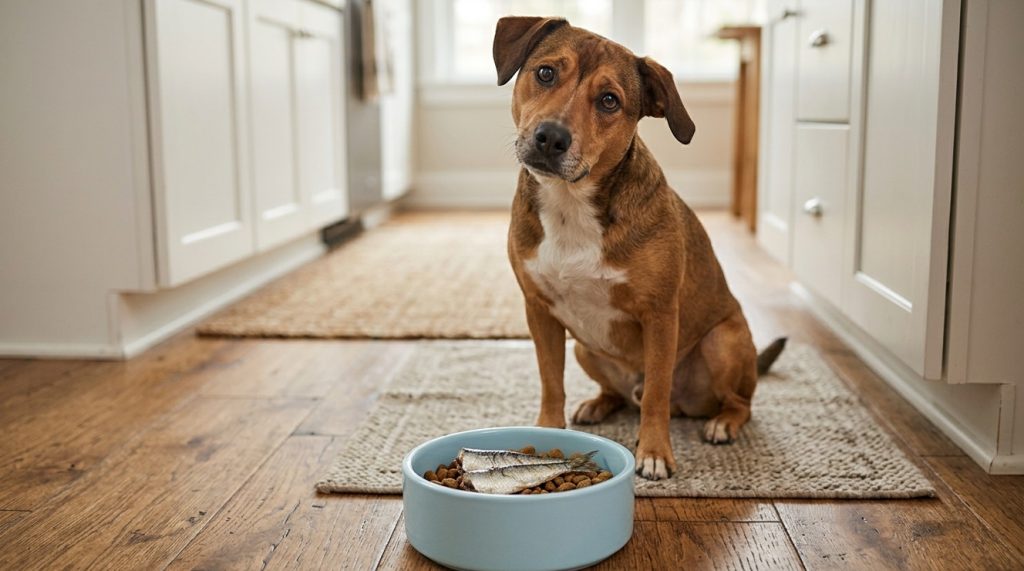
If you have ever cracked open a tin of canned fish in a quiet kitchen, you already know the mystical power of sardines. Before the lid is even halfway peeled back, your dog is suddenly standing right beside you, staring into your soul with wide, unblinking eyes. They know. They always know.
While those oily little fish might smell questionable to us, to a dog, they represent peak culinary perfection. But as loving pet parents, we always have to pause before tossing a treat into the food bowl and ask the responsible question: how many sardines can a dog eat?
Adding sardines to your dog’s diet can deliver a massive boost of nutrition, but moderation is essential. Feeding too few won’t do much, while feeding too many can turn a healthy snack into a messy digestive disaster. Here is everything you need to know about portion control, health benefits, safety rules, and picking the right tin at the grocery store.
Why Are Sardines Good for Dogs?
Before looking at portion sizes, it helps to understand why these tiny, silvery fish are considered a nutritional powerhouse for canines. Sardines sit near the bottom of the ocean’s food chain. Unlike long-lived predatory fish such as tuna or swordfish, sardines feed strictly on plankton. This means they accumulate virtually zero heavy metals like mercury, making them one of the safest sea-based proteins you can feed your dog.
  Nutritional Powerhouse of Sardines
  ┌────────────────────────────────────────────────────────┐
  │ • Omega-3 Fatty Acids (EPA & DHA)                     │
  │   -> Skin hydration, shiny coat, reduced inflammation  │
  │ • Bioavailable Protein                                 │
  │   -> Muscle maintenance & tissue repair                │
  │ • Calcium & Phosphorus                                 │
  │   -> Bone density & joint longevity                    │
  │ • Vitamin D & B12                                      │
  │   -> Immune modulation & cellular energy               │
  │ • Ubiquinol (CoQ10)                                    │
  │   -> Heart cardiovascular support                      │
  └────────────────────────────────────────────────────────┘
1. High in Omega-3 Fatty Acids
Sardines are loaded with eicosapentaenoic acid (EPA) and docosahexaenoic acid (DHA). These essential omega-3 fatty acids work wonders for a dog’s body:
-
Skin and Coat Health: Reduces dry skin, dandruff, and seasonal itching while promoting a soft, glossy coat.
-
Joint Lubrication: Acts as a natural anti-inflammatory for aging dogs struggling with stiffness or arthritis.
-
Brain and Eye Development: Keeps senior dogs sharp and aids cognitive function in growing pups.
2. Premium, Highly Digestible Protein
Protein fuels muscle repairs, immune response, and daily energy. Sardines provide a complete, clean protein source that is easy on delicate stomachs.
3. Rich in Bone-Building Minerals
Because sardines are consumed whole—soft bones included—they provide a natural, highly absorbable balance of calcium and phosphorus, supporting strong bones and healthy teeth.
How Many Sardines Can a Dog Eat? The Daily & Weekly Portion Breakdown
When calculating how many sardines can a dog eat, size and body weight dictate the limit. Sardines are calorie-dense and rich in natural fats. Treats—including healthy toppers like fish—should never exceed 10% of your dog’s total daily caloric intake. The remaining 90% must come from a complete, nutritionally balanced dog food.
A standard canned sardine weighs around 20 to 25 grams and contains roughly 20 to 25 calories.
Here is a recommended serving guide based on dog size and weight:
| Dog Size Category | Weight Range (lbs) | Daily Maximum | Recommended Weekly Frequency |
| Toy / Extra Small | Under 10 lbs | 1/2 small sardine | 1 to 2 days per week |
| Small | 10 – 25 lbs | 1 whole sardine | 2 to 3 days per week |
| Medium | 26 – 50 lbs | 1 to 2 sardines | 2 to 3 days per week |
| Large | 51 – 80 lbs | 2 to 3 sardines | 2 to 3 days per week |
| Giant / Extra Large | 80+ lbs | 3 to 4 sardines | 3 days per week |
Note: If you are serving sardines as an everyday food topper, keep the portions tiny. For instance, a medium-sized dog doing well on sardines can enjoy half a sardine mashed into their kibble once a day rather than 2 whole fish at once.
How Many Sardines Can a Dog Eat Based on Their Life Stage?
Age plays a big part in how a dog handles high-fat, high-protein supplements.
Can Puppies Eat Sardines?
Yes, can puppies eat sardines? Absolutely, but with strict controls. DHA and EPA omega-3s are helpful for a puppy’s rapidly developing brain and eyesight. However, a puppy’s digestive tract is easily thrown out of balance.
If you’re asking how many sardines can a dog eat when they’re still a young pup, stick to tiny morsels. A puppy under 15 pounds should only have a bite-sized piece—roughly a quarter or half of a small sardine—once or twice a week. Always mash the fish into their food to eliminate any potential choking hazards from larger pieces.
  PUPPY SARDINE CHECKLIST
 ╔═════════════════════════════════════════════════════════╗
 ║  [✓] Weaned onto solid foods for at least 2 weeks       ║
 ║  [✓] Packed ONLY in spring water (no oil, salt, sauce)  ║
 ║  [✓] Thoroughly mashed to avoid choking hazards         ║
 ║  [✓] Introduced gradually (quarter-piece test first)    ║
 ╚═════════════════════════════════════════════════════════╝
Feeding Sardines to Senior Dogs
Senior dogs often suffer from joint stiffness, dull coats, and cognitive decline. Omega-3 fatty acids act as a gentle, natural anti-inflammatory that helps older joints move more comfortably. However, senior dogs can also be prone to pancreatitis or weight gain due to lower activity levels. Keep their portions steady, stick strictly to water-packed fish, and avoid overfeeding.
Canned Sardines: How to Pick the Right Tin for Your Dog
Walking down the canned seafood aisle at the grocery store can be surprisingly confusing. You will find sardines packed in water, olive oil, sunflower oil, soybean oil, mustard sauce, and hot sauce.
Which one belongs in your dog’s bowl?
                     CAN SELECTION MATRIX

    RECOMMENDED                    AVOID AT ALL COSTS
 ┌───────────────┐               ┌───────────────────┐
 │ • Water-packed│               │ • Tomato sauce    │
 │ • No salt     │               │ • Hot / Chili     │
 │ • Unseasoned  │               │ • Mustard / Brine │
 └───────┬───────┘               └─────────┬─────────┘
         │                                 │
         ▼                                 ▼
   [ Safe & Healthy ]               [ Digestive Distress ]
1. Sardines Packed in Water (Best Choice)
Always look for sardines in water for dogs with no added salt. Water-packed sardines give your dog all the beneficial protein, minerals, and fish oils without adding extra unwanted calories or excess fats.
2. Sardines Packed in Oil (Use with Caution)
If you can only find sardines in olive oil or sunflower oil, they aren’t inherently toxic, but they add unnecessary calories and fat. If oil-packed is your only option, thoroughly rinse the fish under warm water and drain them completely on a paper towel before serving.
3. Sardines in Tomato, Mustard, or Spicy Sauces (Never Feed)
Never give your dog sardines packed in tomato sauce, mustard, chili oil, or hot sauce. These sauces often contain heavy amounts of sodium, artificial preservatives, and toxic ingredients like garlic or onion powder.
4. Sardines in Brine (Never Feed)
Sardines packed in brine are soaked in high-concentrate saltwater. Dogs cannot process high levels of sodium, and feeding canned fish in brine can quickly lead to dehydration or sodium ion poisoning.
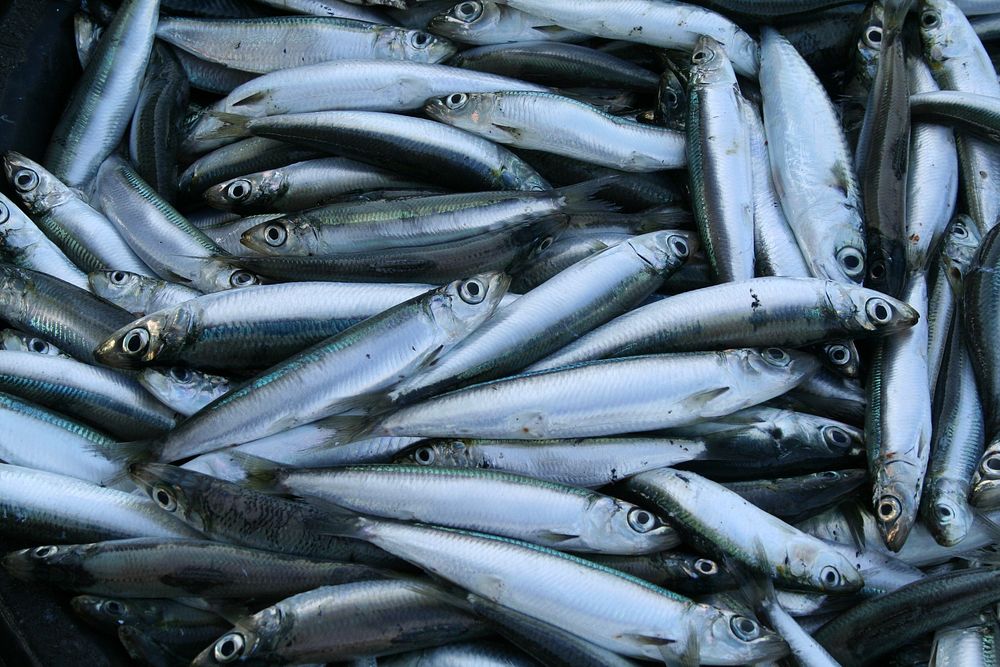
Source: Unsplash — Baskets Full of Freshly Caught Sardines
What Happens If a Dog Eats Too Many Sardines?
Knowing how many sardines can a dog eat matters because too much of a good thing can lead to trouble. Sardines are nutrient-dense and contain natural fats. Overindulgence usually triggers a few predictable issues.
                 OVERFEEDING RISK TIMELINE

  Excess Intake ──► Upset Stomach ──► Severe Complication
  (Too much fat)    (Diarrhea/Vomiting)   (Acute Pancreatitis)
        │                   │                      │
        ▼                   ▼                      ▼
  Monitor calories    Provide water          Requires Vet Care
1. Acute Gastrointestinal Upset
The most immediate consequence of overfeeding sardines is an upset stomach. The sudden influx of fat can cause loose stools, diarrhea, vomiting, or heavy gas.
2. Risk of Pancreatitis
Pancreatitis is a painful, potentially life-threatening inflammation of the pancreas often triggered by high-fat meals. Dogs with a history of pancreatitis or sensitive stomachs should avoid oily fish entirely, or only consume them under direct veterinary supervision.
3. Weight Gain
A single whole sardine might look tiny to you, but to a 15-pound dog, it represents a notable percentage of their daily calories. Consistently overfeeding sardines will lead to extra weight, putting extra strain on your dog’s joints and heart.
How to Introduce Sardines to Your Dog’s Meals
If your pup has never had fish before, introduce it slowly. Dogs can occasionally have food sensitivities or fish allergies, so a gradual introduction is the safest approach.
  Step 1: The Quarter-Piece Test
  Give a small piece (1/4 sardine) and wait 24 hours.

  Step 2: Monitor Stools & Energy
  Check for firm stools and normal appetite.

  Step 3: Establish Regular Schedule
  Scale up to the weight-based serving limit.
Safe Preparation Ideas:
-
The Kibble Topper: Chop one sardine into small pieces and mix it into your dog’s regular dry kibble.
-
The Fish Oil Drizzle: Don’t throw away the water inside the tin! Pour a tablespoon of that sardine-infused water right over your dog’s food bowl for a quick hydration and flavor boost.
-
Frozen Summer Treat: Blend water-packed sardines with a little plain, unsweetened Greek yogurt or pumpkin puree, spoon the mix into silicone molds, and freeze them for hot afternoon treats.
When to Visit the Vet
Most dogs handle sardines without any trouble at all. However, you should call your veterinarian if you notice any of these signs after feeding fish:
-
Persistent vomiting or diarrhea lasting more than 24 hours.
-
Lethargy, weakness, or painful abdominal swelling.
-
Signs of an allergic reaction (facial swelling, sudden hives, intense scratching).
-
Choking, coughing, or gagging after eating whole fresh fish.
Frequently Asked Questions (FAQs)
Can dogs eat raw sardines?
Fresh, raw sardines can be fed to dogs if they are sourced from a clean supplier and kept properly frozen to destroy parasites. However, canned sardines in water are far more convenient, safer from a bacteria standpoint, and feature soft, pressure-cooked bones that digest safely.
Are sardine bones safe for dogs to eat?
Yes! Canned sardine bones are thoroughly pressure-cooked during processing, making them soft, flaky, and completely safe to digest. They serve as a great source of natural calcium. If you are feeding fresh, uncooked sardines, remove large, firm bones first to prevent a choking hazard.
How often can I give my dog sardines?
For most healthy adult dogs, feeding sardines 2 to 3 times per week is ideal. This frequency delivers a steady supply of omega-3 fatty acids without adding too many calories or upsetting their digestion.
Are sardines better for dogs than salmon oil?
Both are excellent sources of omega-3s. Salmon oil is easier to pump onto food, but whole sardines offer whole-food benefits like protein, calcium, selenium, and vitamin B12 that pure oil supplements lack.
What if my dog eats an entire tin of sardines by accident?
If your dog steals an entire tin off the counter, don’t panic, but keep a close eye on them. They may experience temporary diarrhea or an upset stomach due to the sudden fat overload. Ensure they have plenty of fresh water. If the tin was packed in heavy salt or sauce, or if your dog shows severe lethargy, contact your vet right away.
Final Words
Understanding how many sardines can a dog eat comes down to knowing your dog’s weight, keeping portions modest, and choosing plain fish packed in water. When fed responsibly a few times a week, these tiny fish offer an affordable way to support your dog’s joints, skin, coat, and overall vitality. Start small, monitor how your dog responds, and enjoy watching them lick their bowl clean every single time! 🙂