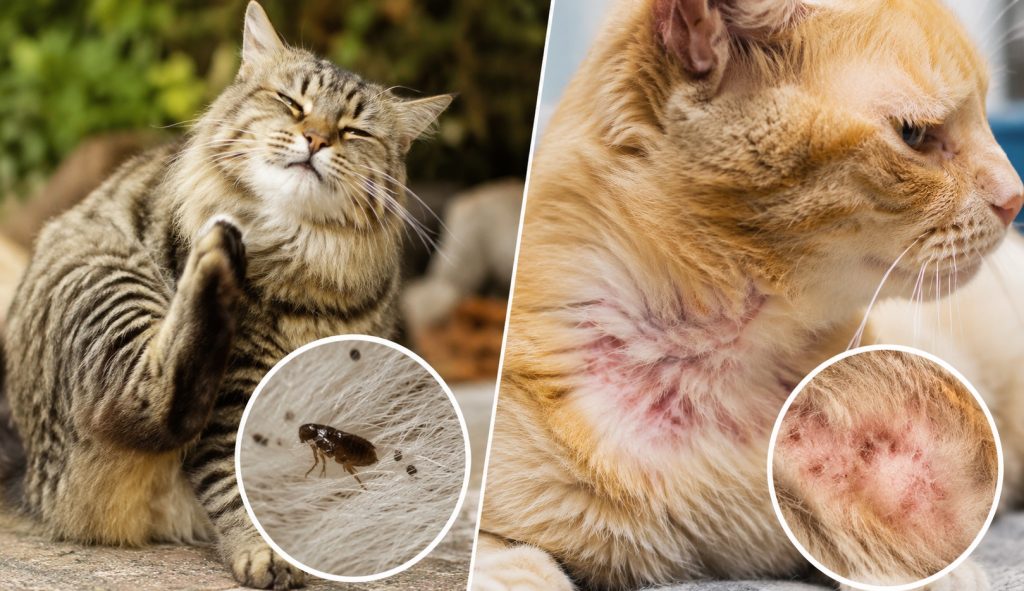
If you have ever woken up at 3:00 AM to the rhythmic, frantic sound of your cat thumping their hind leg against the floor while aggressively biting their own tail, you know the sound of absolute pet-parent frustration. You flip on the bedside lamp, look at your sweet feline, and wonder: Is this a pesky parasite invasion, or is my cat reacting to something in the air or food bowl?
Navigating cat fleas vs allergies is one of the trickiest challenges for pet parents in the US. Both issues turn a calm, sleek kitty into a twitchy, scratch-happy bundle of nerves. To make matters worse, the symptoms overlap so heavily that guessing wrong often means buying the wrong products, wasting hard-earned money, and leaving your furry friend uncomfortable for weeks longer than necessary.
Having shared my home with countless rescues, mischief-makers, and sensitive-skinned felines over the years, I have cleaned my fair share of flea dirt and spent way too many hours deciphering allergic flare-ups. In this guide, we will break down the true mechanics of cat fleas vs allergies, help you spot the exact triggers behind your cat’s skin troubles, and outline actionable steps to restore peace to your household.
Defining the Culprits: What Are Cat Fleas?
Before comparing cat fleas vs allergies, we need to inspect the physical parasite itself.
The cat flea (Ctenocephalides felis) is a wingless, blood-sucking insect engineered by nature to be an absolute nuisance. They are tiny, reddish-brown, and capable of jumping distances that seem physically impossible for their size.
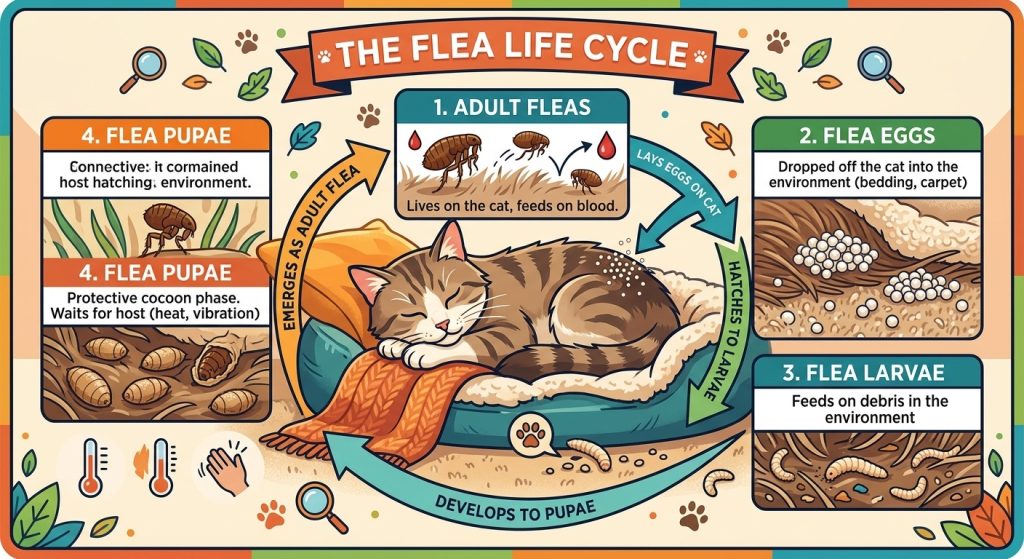
When a flea jumps onto your cat, it bites the skin, feeds on blood, and begins reproducing rapidly. A single female can lay up to 50 eggs a day. Those eggs roll off your cat like tiny microscopic bowling balls, landing straight on your carpets, sofa cushions, and favorite throw blankets.
Common Signs of a Flea Presence
-
Visible Insects: Scurrying tiny dark bugs near the base of the tail, groin, or belly.
-
Flea Dirt: Small, dark specks on your cat’s skin or in their bedding that resemble fresh black pepper.
-
Restless Twitching: Sudden, erratic bursts of running or biting at the skin as if bitten by a invisible bug.
-
Tapeworm Segments: Seeing small, white, rice-like segments near your cat’s rear end (since cats ingest fleas containing tapeworm larvae during grooming).
Unpacking Cat Allergies
Just like humans, cats can possess an overactive immune system that views harmless substances as dangerous invaders. When an allergic cat encounters an environmental or dietary trigger, their body releases histamines, leading directly to systemic inflammation.
Understanding skin allergies in cats requires knowing what categories these allergies fall into:
1. Environmental Allergies (Atopy)
Cats can be allergic to airborne pollens, dust mites, mold spores, and household cleaning chemicals. Environmental allergies in cats often follow seasonal patterns—flaring up in spring or autumn—though house-dust sensitivities can cause year-round scratching.
2. Food Allergies
Contrary to popular belief, cats rarely react to grains. Most feline food allergies stem from animal protein sources like beef, dairy, chicken, or fish. These sensitivities cause chronic itching, skin red spots, and occasional stomach issues like vomiting or loose stools.
3. Contact Allergies
Less common, but very real: a cat’s skin can react negatively to synthetic carpet materials, plastic food bowls, wool blankets, or harsh carpet powders.
Cat Fleas vs Allergies: The Diagnostic Breakdown
When comparing cat fleas vs allergies, identifying where and how your cat scratches offers major clues.
                  FLEAS vs ALLERGIES
        Where to look on your cat for clues:

         [Head & Neck] -------> Environmental / Food Allergies
         [Back & Tail Base] --> Fleas & Flea Allergy Dermatitis
         [Paws & Stomach] ----> Contact Allergies / Mites
Here is a side-by-side comparative analysis to help you narrow down what you are dealing with:
| Symptom / Feature | Cat Fleas | Non-Flea Cat Allergies |
| Primary Target Areas | Lower back, base of tail, inner thighs, belly. | Head, neck, face, ears, paws, or generalized body-wide. |
| Visible Debris | Flea dirt (reddish-black pepper specks). | Clean skin, though red, scabby, or inflamed. |
| Seasonality | Peak in warm, humid months (year-round indoors). | Can be strictly seasonal (pollen) or constant (food). |
| Grooming Behavior | Intense biting, sudden nibbling at tail base. | Constant licking, face rubbing, paw chewing. |
| Secondary Signs | Tapeworms, anemia (in young kittens). | Ear infections, runny eyes, digestive issues. |
In the debate of cat fleas vs allergies, keep in mind that cats are meticulous groomers. A cat can swallow live fleas and lick away flea dirt while grooming, leaving you with zero visible proof of parasites even when they are present.
Flea Allergy Dermatitis (FAD): When Both Problems Collide
Here is where the comparison between cat fleas vs allergies gets tricky: sometimes the issue is both. Many cat owners assume that a flea bite causes itching simply because a bug is crawling on the skin. But for cats suffering from Flea Allergy Dermatitis (FAD), the bite triggers an actual allergic reaction to the proteins present in flea saliva.
Key Takeaway: A non-allergic cat might endure ten flea bites and only scratch occasionally out of minor annoyance. A cat with Flea Allergy Dermatitis can suffer intense, body-wide skin reactions for up to two weeks from a single bite.
Signs of Flea Allergy Dermatitis in Cats
-
Miliary Dermatitis: Tiny, seed-like crusts or scabs spread across the back, neck, and head (it feels like small grit under the fur).
-
Self-Induced Alopecia: Symmetrical hair loss on the hind legs, belly, or lower back caused by rough, sandpaper-like tongue licking.
-
Eosinophilic Plaques: Red, raised, raw, or oozing patches of skin created by constant self-trauma.
IMO, FAD is the sneaky culprit behind most “mysterious” cat skin flare-ups. If you live in an apartment, don’t assume your indoor cat is immune; hitchhiking fleas can easily travel inside on your socks or denim jeans :/.
Home Diagnosis Hacks: The Paper Towel Test
If you suspect your cat’s discomfort stems from fleas rather than environmental or food-related cat allergies, run this simple physical test at home.
       Step 1: Comb coat over white paper towel.
       Step 2: Collect black specks.
       Step 3: Add water drops.
       Result: Red blood ring = FLEAS!
The Wet Paper Towel Test
-
Set your cat on a clean white towel or sheet of paper.
-
Take a fine-toothed metal flea comb and run it through the fur, paying extra attention to the lower back and tail base.
-
Tap the collected fur and debris onto a damp white paper towel.
-
Wait 30 seconds.
If the black specks stay black, it is ordinary dirt or sand. If those specks dissolve and spread into reddish-brown rings of digested blood, you are dealing with flea dirt.
Treatment & Relief Solutions for Your Cat
Once you have unmasked the core issue in the cat fleas vs allergies puzzle, you need an immediate action plan to restore your cat’s skin health and peace of mind.
Treating Fleas (The Environmental War)
If parasites are causing the problem, treating the cat is only half the battle. You must eradicate the entire lifecycle in your environment.
-
Veterinary Topical Treatments: Use topical spot-on preventatives recommended by your vet (containing active ingredients like fluralaner, selamectin, or imidacloprid). Avoid cheap, low-grade grocery store collars or baths containing permethrins, which can be toxic to cats.
-
Deep Environmental Wash: Wash all pet bedding, throw blankets, and human sheets in hot water and dry on high heat to destroy eggs and larvae.
-
Daily Vacuuming: Vacuum all carpets, rugs, baseboards, and upholstered furniture daily. Empty the vacuum canister or bag outside immediately so hatched fleas don’t crawl back inside.
Managing Cat Allergies (Soothing the Skin)
If tests come back clean and you are dealing with non-parasitic skin allergies in cats, focus on environmental controls and skin soothing:
-
Switch to Stainless Steel or Ceramic Bowls: Plastic bowls harbor microscopic bacteria in tiny scratches, aggravating facial skin allergies.
-
Air Filtration: Place HEPA air purifiers near your cat’s favorite sleeping zones to remove airborne pollens and dust mites.
-
Calming Oatmeal Baths & Wipes: Use veterinary-formulated, leave-in oatmeal sprays or feline-safe skin wipes to clear environmental allergens off their coat after windows have been open.
-
Elimination Diet Trial: Work with your vet to run an 8-to-12-week strict novel protein or hydrolyzed protein diet trial to rule out food-related triggers.
Long-Term Prevention Strategies
Preventing skin flare-ups is far easier (and significantly cheaper) than managing full-blown skin infections.
1. Year-Round Flea Prevention
Even if your cat stays indoors 100% of the time, maintain monthly flea prevention year-round. In heated homes, flea pupae can hatch in middle-of-the-winter conditions, triggering severe reactions in sensitive cats.
2. Dietary Fatty Acids
Incorporate vet-approved Omega-3 fish oil supplements into your cat’s routine. Essential fatty acids strengthen the epidermal skin barrier, reducing general reactivity to external allergens and calming dry, flaky skin.
3. Dust-Free Cat Litter
Many commercial litters dump high volumes of silica dust into the air every time your cat kicks around in the box. Choose low-dust, unscented natural litters (like corn, walnut, or paper pellets) to protect sensitive respiratory tracts and delicate skin.
When to Visit the Vet
While mild scratching can be managed with proper grooming, baths, and preventative care, certain red flags demand professional medical intervention.
Make an appointment with your veterinarian if you spot any of the following:
-
Open, bleeding, or weeping sores on the skin (which can quickly turn into secondary bacterial pyoderma).
-
Foul-smelling discharge or dark build-up inside the ears.
-
Sudden weight loss, lethargy, or extreme changes in appetite.
-
Intense scratching that prevents your cat from sleeping, eating, or playing comfortably.
Your vet can perform skin scrapings, allergy blood panels, or prescribe short-term corticosteroid injections or immuno-modulating medications to break the itch-scratch cycle safely.
Frequently Asked Questions (FAQ)
Can an indoor-only cat get fleas?
Yes, absolutely! Fleas can hitch a ride inside on human shoes, clothing, or other household pets like dogs. They can also slip inside through window screens or shared walls in apartment buildings.
How can I tell if my cat’s itching is caused by food or fleas?
Flea bites typically trigger severe itching around the back legs, lower spine, and tail base. Food allergies, on the other hand, usually manifest as intense scratching around the head, ears, and neck, sometimes accompanied by soft stools or vomiting.
Will bathing my cat get rid of a flea infestation?
A gentle bath with warm water and feline-safe shampoo can drown adult fleas currently on your cat’s body. However, water alone does not provide residual protection, nor does it kill flea eggs and pupae hiding throughout your carpet and furniture.
How long does it take for a cat’s skin to heal after a flea allergy flare-up?
Once all fleas are eliminated and appropriate anti-itch treatment is started, most cats show noticeable relief within a few days. Full skin recovery and hair regrowth usually take 2 to 4 weeks.
Can I use dog flea medication on my cat?
Never. Many dog flea products contain permethrin or pyrethroids, which are toxic—and often fatal—to cats. Always use products formulated specifically for felines.
Final Words
Decoding cat fleas vs allergies takes a little patience, a good flea comb, and a sharp eye. FYIs like sudden tail-biting usually point toward unwanted parasites, while red ears and face-scratching suggest environmental or food sensitivities.
Take a methodical approach: start by verifying flea protection, run a quick paper towel check, and clean up your cat’s immediate environment. If the itching continues despite a clean house and proper spot-on treatments, reach out to your veterinarian to trace down potential underlying cat allergies. With the right routine in place, you can ditch the late-night itching routine and get back to enjoying quiet, snappable cuddles with your favorite feline :).