Standing at the veterinary clinic counter with a squirming puppy in your arms while staring down at a clipboard filled with cryptic four-letter and five-letter acronyms can make anyone feel unprepared. You just came in for “puppy shots,” but suddenly the receptionist is asking whether you want the DHPP or the DHLPP combination vaccine. When you first find yourself staring at those options, you will almost certainly ask yourself: DHLPP vs DHPP: What’s the Difference?
Understanding vaccine options does not require a degree in veterinary medicine, even though vet clinics sometimes talk like defense contractors with all their abbreviation systems. Both of these combination shots form the backbone of canine preventive healthcare across North America. However, that single extra letter—the “L”—represents a major distinction in what pathogens your dog is protected against, how often they need boosters, and whether their daily lifestyle calls for extra coverage.
Whether you are bringing home a brand-new rescue pup or reviewing medical records for an adult dog, getting clear on the distinctions ensures you aren’t paying for unnecessary shots—or leaving your dog vulnerable to a dangerous bacterial infection.
Decoding the Alphabet Soup: What Do These Letters Stand For?
To truly evaluate DHLPP vs DHPP: What’s the Difference?, we need to break down what each formula actually protects against. Veterinary vaccines combine protection against several severe canine diseases into a single injection, saving your dog from getting stabbed with a needle five individual times.
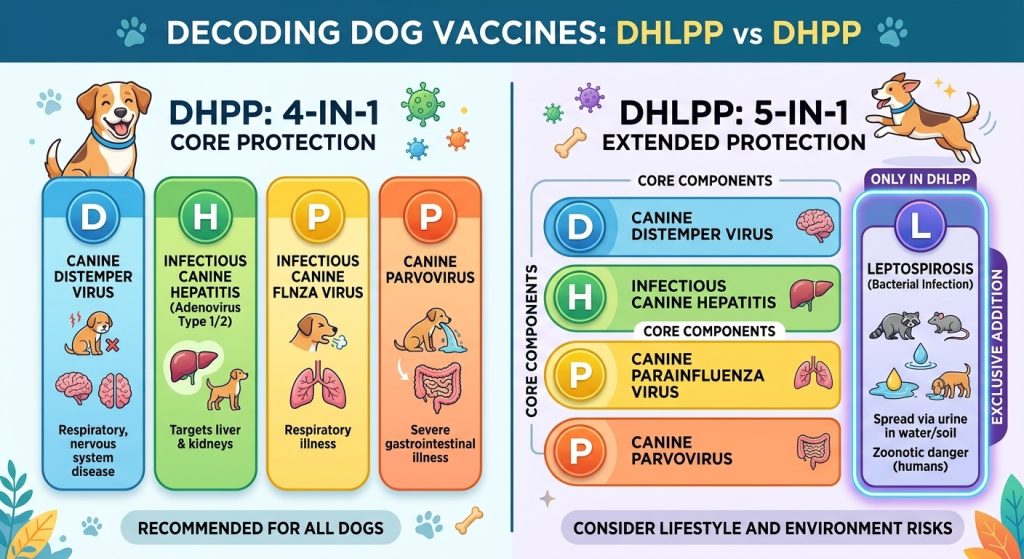
The Core Four: The “DHPP” Components
Both DHPP and DHLPP share four fundamental viral protections. In most veterinary circles across the United States, these four are considered “core” components—meaning virtually every dog, regardless of where they live or what their daily routine looks like, needs protection against them.
-
Canine Distemper (D): A severe, highly contagious viral illness that attacks a dog’s respiratory, gastrointestinal, and central nervous systems. Distemper spreads through airborne exposure or shared water bowls and is frequently fatal or causes lifelong neurological damage.
-
Infectious Canine Hepatitis / Adenovirus (H): Caused by canine adenovirus type 1, this virus targets the liver, kidneys, spleen, and eyes. The vaccine actually utilizes canine adenovirus type 2 (CAV-2) because it provides cross-protection against hepatitis without causing the ocular side effects the older CAV-1 vaccine occasionally caused.
-
Canine Parainfluenza (P): A viral respiratory virus that contributes to the complex commonly known as “kennel cough.” While rarely fatal on its own, it causes hacking coughs, nasal discharge, and secondary respiratory infections that make a dog miserable.
-
Canine Parvovirus (P): The nightmare virus of every puppy parent. Parvo is an extraordinarily tough, resilient virus that attacks rapidly dividing cells in the intestinal lining and bone marrow. It causes severe, bloody vomiting and diarrhea, rapid dehydration, and high mortality rates if left untreated.
The Extra “L”: Leptospirosis
The sole distinction between these two combination shots lies in that single letter L, which stands for Leptospirosis.
Unlike the other four components—which are all viral—Leptospirosis is caused by Leptospira bacteria. Because it is a bacterial infection rather than a viral one, the vaccine behaves differently inside your dog’s immune system, requiring its own distinct administration schedule.
Comparing the Two Options: Side-by-Side Breakdown
When considering DHLPP vs DHPP: What’s the Difference? for your own household, remember that the choice isn’t about which vaccine is “better” in a vacuum. It is about matching the vaccine’s scope to your dog’s actual environment and health profile.
| Feature / Attribute | DHPP (4-in-1 / 5-in-1 Core) | DHLPP (Includes Leptospirosis) |
| Pathogens Covered | Distemper, Hepatitis/Adenovirus, Parainfluenza, Parvovirus | Distemper, Hepatitis/Adenovirus, Parainfluenza, Parvovirus, + Leptospira bacteria |
| Pathogen Type | 100% Viral Diseases | 4 Viral Diseases + 1 Bacterial Disease |
| Core vs. Non-Core | Core (Recommended for all dogs) | Core viral + Non-Core/Lifestyle bacterial component |
| Target Dog Profile | Indoor dogs, urban apartments, low wildlife contact | Dogs exposed to puddles, wetlands, wildlife, urban rodents, yards |
| Booster Schedule (Adults) | Every 3 years (after 1-year initial booster) | DHPP core every 3 years; L component boosted annually |
| Zoonotic Protection | Protects dog only | Protects dog AND human family members (Lepto spreads to humans) |
FYI, some clinics might refer to DHPP as “DAPP” or “DA2PP.” Don’t let the administrative jargon confuse you—these terms all refer to the same basic viral combination shot 🙂
The Leptospirosis Factor: Why That “L” Matters So Much
If you are trying to resolve DHLPP vs DHPP: What’s the Difference?, the entire debate hinges on whether your dog needs protection against Leptospira bacteria.
What Is Leptospirosis?
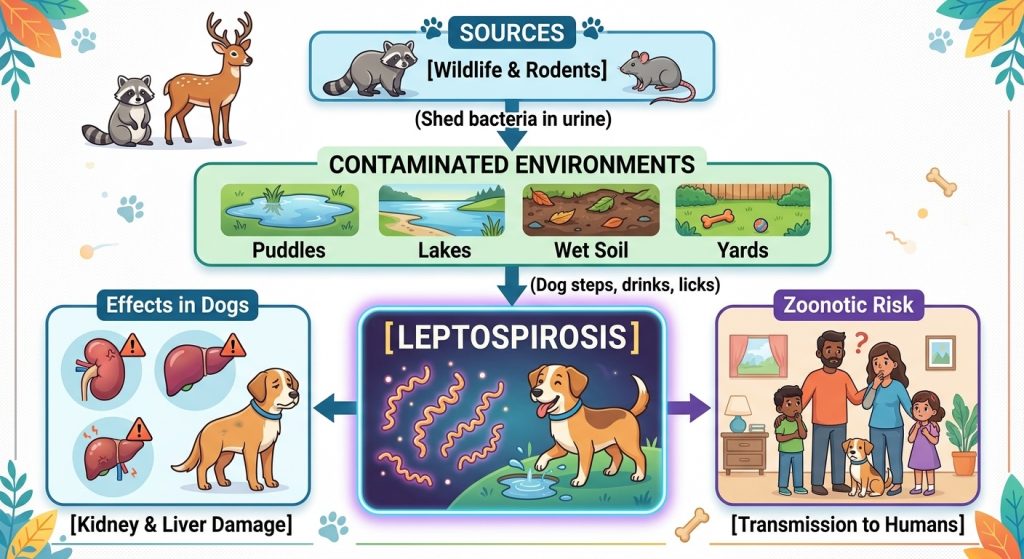
Leptospirosis is a corkscrew-shaped bacterial infection found worldwide. Wildlife—including raccoons, opossums, skunks, deer, rats, and mice—carry the bacteria in their kidneys and shed it in their urine.
When infected urine contaminates standing water, mud, puddles, wet grass, or outdoor water bowls, the bacteria can survive for weeks or even months in warm, humid conditions.
How Dogs Catch It
Dogs do not need to wrestle a raccoon to catch Leptospirosis. They simply need to:
-
Walk through a contaminated puddle on a neighborhood sidewalk and later lick their paws.
-
Drink from a slow-moving stream, pond, or backyard puddle.
-
Sniff around damp soil where an infected urban rat or suburb-dwelling opossum urinated earlier that morning.
The bacteria enter the body through mucous membranes (mouth, nose, eyes) or small cuts and scrapes on the paws.
Signs and Symptoms of Leptospirosis
Once inside the bloodstream, Leptospira bacteria multiply rapidly and target the liver and kidneys. Early symptoms can be subtle and mimic flu-like conditions:
-
Fever and muscle tenderness or shivering
-
Lethargy, reluctance to move, or stiff gait
-
Loss of appetite and increased thirst/urination
-
Vomiting and jaundice (yellowing of the gums, eyes, or skin)
-
Blood in urine or stool
Left untreated, Leptospirosis can lead to acute renal failure, severe liver damage, or fatal pulmonary hemorrhage.
The Zoonotic Danger: Protect Your Human Family Too
IMO, this is the most critical detail that many dog owners overlook: Leptospirosis is a zoonotic disease. That means it can be transmitted from infected animals to humans.
If your dog contracts Leptospirosis, you, your children, and anyone handling your pet’s urine or bedding could be exposed to the disease, which causes flu-like symptoms, liver damage, and kidney failure in humans as well. Choosing the DHLPP option provides a shield for your entire household, not just your four-legged companion.
Determining Your Dog’s Risk Profile
Unless your dog has mastered the art of wearing tiny rain boots and avoiding every patch of grass on earth, they likely face at least some level of exposure risk. Use this quick assessment to evaluate which option fits your situation:
When DHPP (Without Lepto) May Be Sufficient
-
Strictly Indoor/Urban High-Rise Living: Dogs that live in high-rise apartments, walk exclusively on dry concrete, and use indoor turf pads.
-
Arid/Desert Climates: Regions with minimal rainfall, low humidity, and lack of standing water (though urban rodents can still maintain a local reservoir).
-
Prior Severe Vaccine Reactions: Dogs with a documented history of anaphylactic reactions to the Leptospira bacterin under a vet’s supervision.
When DHLPP Is Highly Recommended
-
Suburban and Rural Dogs: Dogs with access to backyards visited by squirrels, raccoons, deer, or stray cats.
-
Active Outdoor Companions: Dogs that accompany you on hikes, camping trips, or visits to dog parks, lakes, and rivers.
-
Humid/Wet Climates: States with heavy rainfall, frequent puddles, or marshy terrain.
-
Urban Environments with Rodent Populations: High-density cities where rats frequent alleyways, park bushes, and sidewalks.
Vaccination Schedules: Puppyhood Through Senior Years
Understanding DHLPP vs DHPP: What’s the Difference? also requires understanding how their dosing timelines differ. Because maternal antibodies naturally fade over a puppy’s first few months, young dogs require a structured series of booster shots to build long-lasting immunity.
The Standard DHLPP Puppy Vaccination Schedule
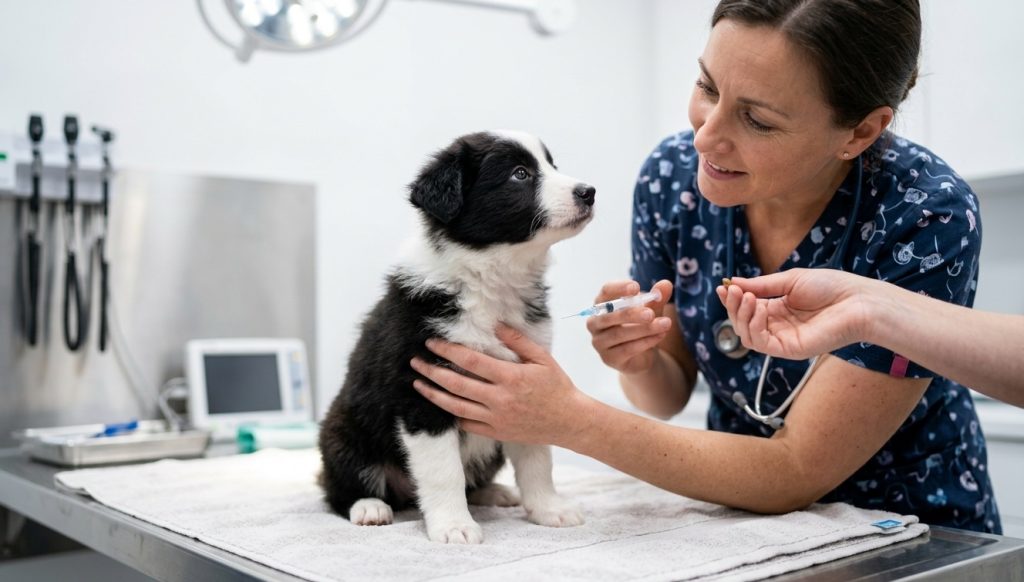
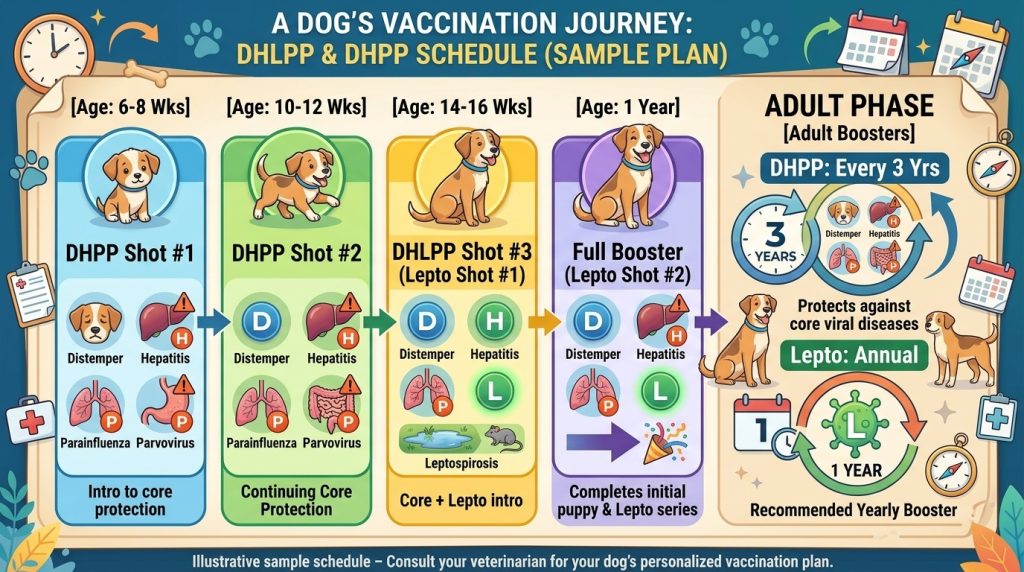
Puppies typically begin their combination vaccination series between 6 and 8 weeks of age. Because maternal antibodies inherited from mother’s milk can neutralize early vaccine doses, shots are repeated every 2 to 4 weeks until the puppy reaches at least 16 weeks of age.
Here is how a typical dhlpp puppy vaccination schedule breaks down:
-
6 to 8 Weeks: First DHPP combination shot. (Veterinarians generally avoid giving the Lepto component at this early age, as young puppies are more susceptible to minor post-vaccine soreness).
-
10 to 12 Weeks: Second DHPP shot. Depending on regional disease prevalence and puppy size, your vet may introduce the first Leptospira dose during this visit.
-
14 to 16 Weeks: Final puppy booster shot. This is where the dhlpp vaccine schedule completes its initial series, delivering the critical final viral booster alongside the second Lepto dose (which requires two initial doses spaced 2 to 4 weeks apart to establish protective immunity).
Keep detailed records of these early visits! A simple digital organizer or physical pet medical record book—available for a few dollars on Amazon—makes tracking your puppy’s shot history much easier when registering for training classes, doggy daycare, or boarding facilities.
The Adult Booster Schedule
Once your pup completes their initial puppy series, their adult vaccination cadence looks like this:
-
One Year After Puppy Series: A full booster shot (DHLPP) is administered to lock in long-term adult immunity.
-
Every 3 Years Thereafter (The Core Viral Component): The viral protections (Distemper, Hepatitis, Parvovirus) hold strong immunity for up to three years. Most modern veterinary guidelines recommend boosting DHPP once every three years for adult dogs.
-
Annually (The Bacterial Lepto Component): Bacterial vaccines do not generate the same long-duration immune memory as viral vaccines. If your dog gets the DHLPP variant, the Leptospira (“L”) component must be boosted every 12 months to maintain protection.
If you are following a standard dhlpp vaccine schedule, your dog will typically receive a standalone Lepto booster in years 2 and 3, followed by a full combination shot (DHLPP) in year 4.
Side Effects, Recovery, and Post-Shot Care
Another common question regarding DHLPP vs DHPP: What’s the Difference? is whether one carries a higher likelihood of post-shot lethargy or side effects.
Historically, older versions of the Leptospira vaccine caused a slightly higher incidence of minor allergic reactions (such as localized swelling or mild hives) compared to pure viral shots. However, modern purified subunit Lepto vaccines used in US clinics today are vastly safer and well-tolerated by the vast majority of dogs, including small breeds.
Common Mild Reactions (Normal)
It is completely normal for your dog to experience mild, temporary reactions for 24 to 48 hours following either shot:
-
Mild lethargy or sleeping more than usual
-
Slight tenderness or a small, firm bump at the injection site
-
Low-grade fever or reduced appetite
To help your dog recover comfortably after their clinic visit, set up a quiet, cozy resting area. A supportive orthopedic dog bed paired with a soothing interactive chew toy or licking mat (great Amazon pickups for distraction) will keep their mind engaged while their body rests.
Rare Severe Reactions (Seek Immediate Vet Care)
While severe adverse reactions are rare, you should monitor your pet closely during the first 2 to 4 hours post-vaccination. Contact your vet immediately if you notice:
-
Persistent vomiting or diarrhea
-
Facial swelling around the muzzle, eyes, or neck
-
Hives, intense scratching, or sudden skin redness
-
Difficulty breathing or collapse
When to Visit a Vet Urgently
When asking DHLPP vs DHPP: What’s the Difference?, knowing when to seek immediate veterinary attention is vital—both for vaccine-related issues and potential disease exposure.
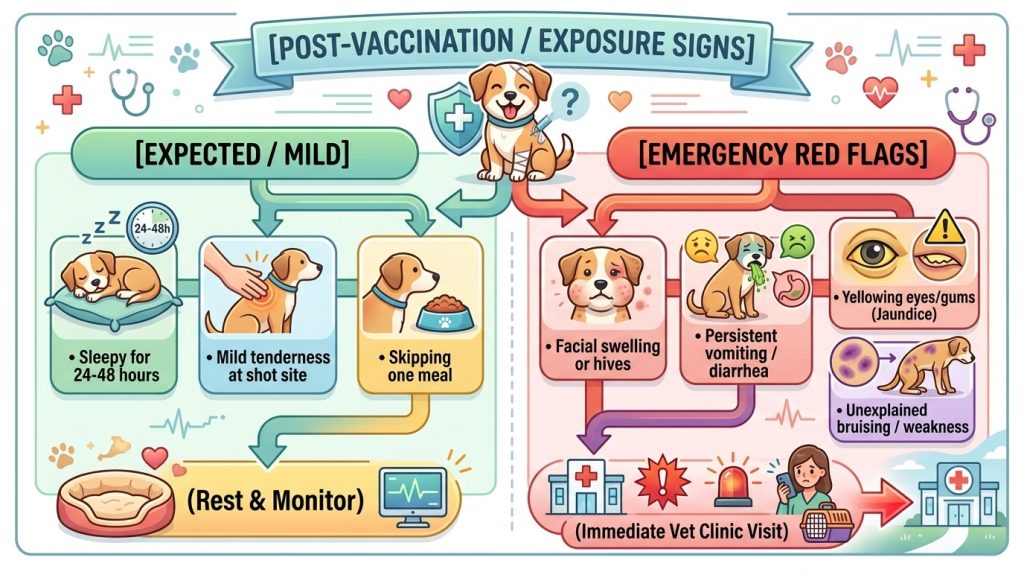
Seek immediate veterinary emergency care if your dog exhibits any of the following critical indicators:
-
Signs of Acute Leptospirosis: If an unvaccinated or overdue dog shows sudden jaundice (yellow eyes/gums), severe vomiting, total refusal to drink water, or dark/bloody urine after being near stagnant water or wildlife habitats.
-
Anaphylactic Shock Post-Shot: Sudden weakness, pale gums, cold limbs, or breathing distress within 1 to 2 hours of receiving a shot.
-
Prolonged Lethargy: If your puppy or adult dog remains unresponsive, refuses food and water entirely, or cries in pain when touched 48 hours after vaccination.
Frequently Asked Questions About DHLPP vs DHPP
Regarding DHLPP vs DHPP: What’s the Difference in average cost at the vet?
The price difference between the two shots is minimal. A standard DHPP combination shot generally ranges from $25 to $50 at most US veterinary clinics, while adding the Leptospirosis component (DHLPP) typically adds only $10 to $20 to the total cost. Given the severe medical expenses associated with treating a full-blown bacterial infection, the extra protection offers tremendous value.
Is the Leptospirosis vaccine safe for small or toy breeds?
Yes. Older vaccine formulations from several decades ago had higher reaction rates in toy breeds, which led to a persistent myth that small dogs shouldn’t get Lepto shots. Modern vaccines are highly purified. While small puppies under 12 weeks may feel slightly more sore post-shot, major veterinary associations strongly recommend Lepto protection for small dogs, especially since toy breeds face high risks from urban rodent exposure.
Can my dog contract Leptospirosis without going hunting or hiking?
Absoltely. Urban rats and suburban raccoons frequently travel through fenced backyards, suburban sidewalks, and apartment complexes. If your dog walks across wet grass where an infected animal urinated earlier, or licks their paws after a walk through a puddle, they can contract the disease without ever setting foot in a forest.
What happens if my dog misses an adult Lepto booster?
Because bacterial immunity wanes faster than viral immunity, the Leptospirosis vaccine must be boosted every 12 months. If your adult dog goes longer than 18 to 24 months without a Lepto booster, your vet may recommend restarting the two-dose initial series (spaced 2 to 4 weeks apart) rather than just giving a single booster shot.
Can I administer these vaccines at home using feed store kits?
While over-the-counter multi-way shots are sold at agricultural supply stores, DIY vaccination is generally discouraged. OTC vaccines are easily rendered useless if temperature controls fail during shipping or storage. Furthermore, self-administered vaccines are rarely accepted as official medical proof by boarding kennels, dog parks, or municipal licensing authorities.
Final Words: Making the Right Choice for Your Companion
When wrapping up the debate over DHLPP vs DHPP: What’s the Difference?, the choice comes down to your dog’s specific environment, lifestyle, and risk factors.
While DHPP provides non-negotiable core protection against devastating viral threats like Distemper and Parvovirus, adding the extra “L” for Leptospirosis creates a vital shield against a dangerous bacterial threat that lurks in everyday puddles, yards, and urban streets.
Talk openly with your veterinarian about your dog’s daily routines, outdoor habits, and local wildlife activity. By matching your dog’s vaccination plan to their real-world environment, you can step out on every walk, trail run, and backyard game of fetch with complete peace of mind. :/