
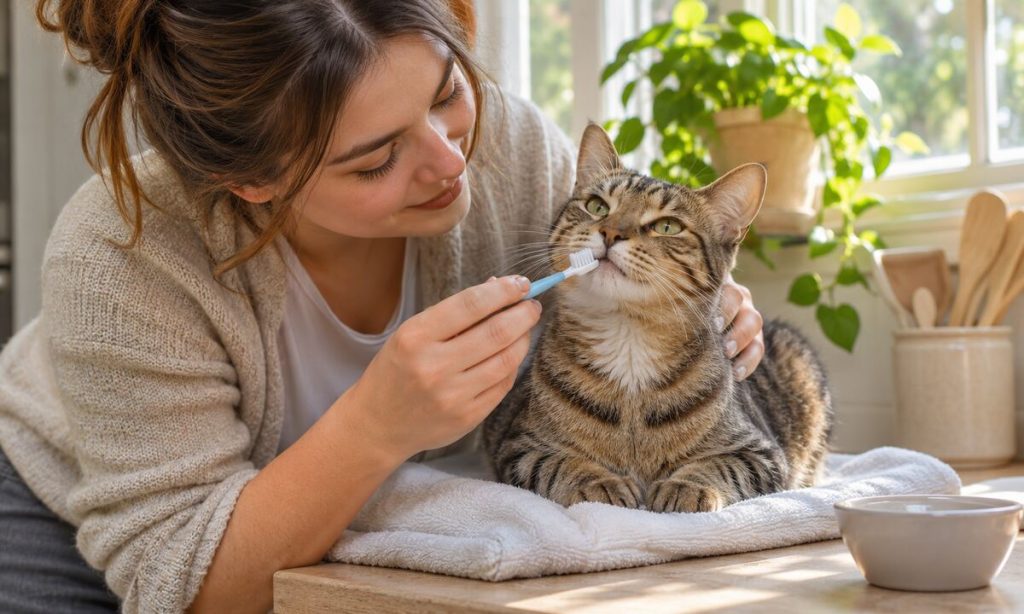
Cat dental care is easier when you build a calm routine around products your cat will actually tolerate. Brushing with feline-safe toothpaste remains a key home-care method, but some cats resist a brush. Dental treats, water additives, and oral-care powders have different roles and evidence. The best dental care for cats starts with a veterinary mouth examination, especially when breath changes, drooling, chewing difficulty, or gum redness appears. This comparison looks at seven identifiable products and how each fits into a realistic home routine.
No product here can replace treating painful dental disease or cleaning beneath the gumline. Introduce oral care gradually, use cat-specific products, and never force a frightened cat’s mouth open. If your cat shows subtle chewing changes, our guide to dental pain in cats with missing teeth explains why veterinary assessment matters.
Quick Picks
A brush and toothpaste serve a different purpose from a treat or water additive. Compare product type, cat acceptance, evidence and health cautions.
| Product | Best For | Key Advantage | Buy | |
|---|---|---|---|---|
| Petrodex Cat Dental Care Kit | Starting a brushing routine | Malt toothpaste plus dual-ended brush | View on Amazon | Jump to Review |
| Virbac C.E.T. Enzymatic Toothpaste for Cats and Dogs | Owners who already own a brush | Poultry-flavored enzyme toothpaste | View on Amazon | Jump to Review |
| Purina DentaLife Daily Dental Cat Treats | Crunchy treat approach | Porous texture aimed at tartar control | View on Amazon | Jump to Review |
| Greenies Feline Dental Treats, Catnip Flavor | Adult cats that enjoy textured treats | Crunchy shape for dental contact | View on Amazon | Jump to Review |
| ProDen PlaqueOff Powder for Cats | Powder format with veterinary oversight | Seaweed-based formula and VOHC claim | View on Amazon | Jump to Review |
| TropiClean Fresh Breath Water Additive for Cats | Cats that accept treated water | Cat-specific water additive | View on Amazon | Jump to Review |
| Oxyfresh Premium Pet Dental Water Additive | Multi-pet household water care | Odorless additive for cats and dogs | View on Amazon | Jump to Review |
Petrodex Cat Dental Care Kit

- Toothpaste and brush together
- Cat-oriented malt flavor
- Enzymatic paste formula
- No-rinse application
- Requires gradual handling training
- Brush size may not suit all cats
The Petrodex Cat Dental Care Kit combines a malt-flavored enzymatic toothpaste with a dual-ended toothbrush. That pairing is practical for owners starting from scratch because a single package supplies the two basic tools. The manufacturer describes a no-rinse formula for pet dental cleaning. Brushing is most appropriate when your cat’s mouth is comfortable and a veterinarian has ruled out painful disease. The goal is to gently disrupt plaque on accessible tooth surfaces. A kit cannot remove tartar beneath the gumline or replace a professional dental examination.
Begin well before expecting a complete brushing session. Let your cat sniff a small amount of paste, then reward a calm response. Later, touch the lip briefly and gradually introduce the brush along a few outer teeth. Cats vary greatly in handling tolerance. The dual-ended brush offers options, but the smaller head may still be too large for a tiny mouth. Never use force or pressure that makes the cat struggle. If there is bleeding, swelling, or obvious pain, stop and consult your veterinarian rather than trying to brush through the problem.
Wash and dry the brush according to its instructions and store the toothpaste closed. Replace a brush with bent or frayed bristles, because rough edges can irritate gum tissue. Keep the kit separate from human toothpaste, which is not appropriate for cats. A malt flavor may encourage acceptance for some pets and be rejected by others. Product claims about plaque and breath should be understood as supportive home care, not a guaranteed outcome. This kit is most useful for a patient owner who can build a calm, repeated habit over time.
My Recommendation
Choose Petrodex if you need both a cat brush and feline toothpaste in one purchase. It makes a logical starter kit. The important tradeoff is the handling time required; for a fearful cat, begin with cooperative-care training before any mouth brushing.
Virbac C.E.T. Enzymatic Toothpaste for Cats and Dogs

- Designed for cats and dogs
- Enzymatic toothpaste formula
- No foaming agents listed
- Poultry flavor
- Toothbrush sold separately
- Flavor acceptance varies
Virbac C.E.T. Enzymatic Toothpaste is a poultry-flavored paste labeled for both cats and dogs. Its maker describes an enzyme system for everyday oral care and notes that the formula does not rely on foaming agents. This product differs from a complete kit because you select your own soft brush or finger tool. That flexibility can be helpful when a cat tolerates one brush size better than another. The toothpaste is intended for use with a brushing routine, not simply for squeezing into food or replacing cleaning with a flavored gel.
A cat may accept poultry flavor readily, but taste does not solve handling anxiety. Begin with tiny amounts and let the cat choose to engage. Pair the routine with calm praise and stop before the pet becomes defensive. The manufacturer recommends daily use or your veterinarian’s instructions. Follow any individualized advice, especially after extractions or treatment of gum disease. Avoid vigorous scrubbing; the outer tooth surfaces are the usual starting point for home brushing. If the cat refuses repeated attempts, ask the veterinary team about behavior-friendly alternatives rather than forcing the mouth open.
Keep the tube closed between uses and use a clean brush for each cat. Do not substitute ordinary human toothpaste. The product’s plaque-control claims do not remove a need for veterinary examinations or professional dental care. Persistent odor may reflect an infection, damaged tooth, or other illness. For owners whose cats already tolerate brushing, a standalone tube is convenient because it avoids buying another full kit. New owners should budget for an appropriate brush and time to teach the process. Check the exact formulation and label before first use.
My Recommendation
Virbac C.E.T. is a practical standalone paste when you already have a suitable soft cat toothbrush. Poultry flavor may help acceptance. If you need every tool in one package, Petrodex is simpler; neither choice replaces a veterinary dental exam.
Purina DentaLife Daily Dental Cat Treats

- Porous crunchy treat texture
- Salmon flavor option
- Taurine and calcium listed
- Probiotic addition
- Treat calories must be counted
- Not ideal with painful teeth
Purina DentaLife Daily Dental Cat Treats use a porous crunchy texture intended to influence tooth contact as cats chew. The salmon-flavored product listing also describes added calcium, taurine, and probiotics. It is a treat, not a complete daily diet or substitute for toothbrushing. For a cat that already enjoys crunchy rewards, the format may be easier to introduce than a brush. However, effectiveness depends on actual chewing. A cat that gulps treats whole may not get the same mechanical contact as a cat that bites each piece.
Treats can be part of an oral-care routine, but they carry calories. Account for every serving within the day’s food plan, especially for indoor cats prone to weight gain. Check age and feeding directions on the exact package. Do not give hard crunchy treats to a cat with tooth pain, loose teeth, or obvious chewing difficulty. The maker’s tartar-related testing claims should be read as product claims rather than a guarantee of a clean mouth. A veterinary exam remains necessary when odor or gum problems develop, even if a cat eagerly eats dental treats.
The large pouch may suit a multi-cat household, but freshness and serving control are important. Keep the bag sealed, follow storage guidance, and avoid letting treats replace balanced meals. Watch for vomiting, appetite changes, or a new reluctance to chew. The listed probiotics are an additional formulation feature and do not make the treat a treatment for gastrointestinal illness. This option is best for cats that enjoy dental treats and have no painful oral condition. Owners should still prioritize regular brushing where feasible and professional oral examinations.
My Recommendation
DentaLife offers a low-handling dental treat format for cats that enjoy crunching. The porous texture is its central distinction. Treat calories and chewing comfort limit its use, so a painful mouth or weight-management plan may call for another approach. Keep portions measured each day.
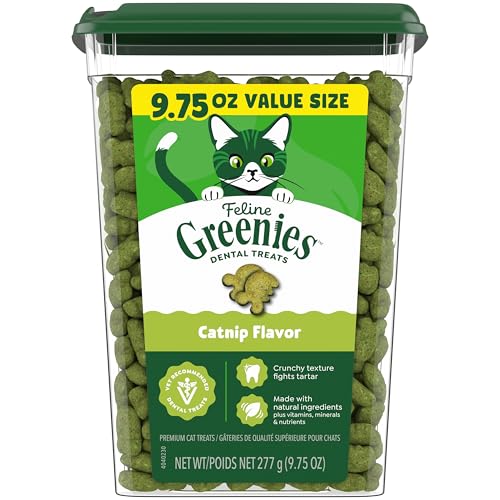
Greenies Feline Dental Treats, Catnip Flavor
- Cat-specific crunchy treats
- Catnip flavor variety
- Dental texture focus
- Convenient daily treat form
- Extra calories per serving
- Cannot treat gum infection
Feline Greenies Dental Treats are crunchy cat-specific treats, with this listing offering a catnip flavor. The manufacturer describes a texture designed to interact with tooth surfaces and reports tartar-related results from its product testing. This kind of treat appeals to owners who cannot reliably brush every day, although it should remain an adjunct rather than the entire care plan. The product is for adult cats according to the listing. Read the exact feeding directions and treat the dental claims as applying to this formulation, not automatically to every flavor or product.
Cats are individuals when it comes to texture. Some crunch repeatedly, while others swallow a treat with little chewing. Observe what your cat actually does rather than assuming a dental result from the package shape. Never use crunchy treats to force a cat with painful teeth to eat. Sudden preference for soft food, dropping bites, or pawing at the mouth can indicate a problem that needs veterinary assessment. A treat may help manage surface deposits for some pets, but it cannot clean below the gumline or resolve infection.
Offer the measured number of treats and subtract their calories from the day’s allowance as appropriate. Keep the pouch sealed and dry so pieces retain their intended texture. If a cat vomits or refuses them, stop and reassess; do not increase the dose to chase a breath-freshening claim. For multi-cat homes, separate portions so one enthusiastic pet does not consume several servings. Greenies are convenient for reward-based routines, yet they are not a replacement for daily home brushing when possible or a veterinarian’s plan for existing dental disease.
My Recommendation
Greenies are a simple treat-based option for healthy adult cats that chew crunchy bites comfortably. They are easy to fit into a reward routine. A cat with weight concerns or oral pain may need a different strategy and veterinary advice.
ProDen PlaqueOff Powder for Cats

- Cat-specific 40-gram powder
- Seaweed-based ingredient
- VOHC acceptance stated
- No toothbrushing during feeding
- Iodine may matter in thyroid disease
- Not appropriate for every diet
ProDen PlaqueOff Powder for Cats is a seaweed-based oral-care powder intended to be added to food. The product listing claims Veterinary Oral Health Council acceptance and describes support for plaque and tartar control over time. Its convenience is obvious: it does not require direct handling of a cat’s mouth. However, convenience should not be mistaken for universal suitability. Seaweed can contain iodine, which may matter for cats with thyroid disease or a special prescription diet. Ask your veterinarian before using this category, especially in older cats or those taking medication.
The powder is not a mechanical toothbrush, and it cannot remove painful disease below the gums. Its evidence should be judged for the exact product and claimed outcome. A small quantity on food may be easy to administer, but some cats reject even minor changes in flavor or texture. Watch whether the full meal is consumed and avoid disguising the powder in a way that prevents you from tracking intake. Cats with hyperthyroidism, other endocrine disorders, or a veterinarian-directed iodine plan require special caution. This is an important limitation that distinguishes the powder from basic brushing supplies.
Follow the specific cat label and the veterinarian’s recommendation rather than guessing amounts from a dog product. Store the container closed and dry, and keep the original ingredients and batch information. If your cat stops eating, vomits, or develops a new symptom after introduction, discontinue and contact the veterinary team. Do not combine multiple dental supplements without checking possible overlaps. The powder may support a long-term oral-care plan for selected cats, but professional examination, toothbrushing where tolerated, and treatment of existing disease still matter most.
My Recommendation
Consider PlaqueOff only after checking the seaweed ingredient and your cat’s thyroid and medical history with a veterinarian. It offers a different administration method from brushing. The iodine-related caution is the biggest reason not to recommend it universally. Check iodine content before any routine use.
TropiClean Fresh Breath Water Additive for Cats

- Water-bowl administration
- Cat-labeled formula
- No brush required to add
- Measured 16-ounce bottle
- Some cats may drink less
- Cannot replace mouth cleaning
TropiClean Fresh Breath Water Additive for Cats is intended to be measured into drinking water. Its marketing emphasizes breath freshness and plaque-related benefits without handling a toothbrush. The practical advantage is less direct contact with the mouth. For a cat that strongly resists brushing, this can seem attractive. Yet drinking-water products must be assessed differently from dental treats or a brush. A water additive does not mechanically scrub the teeth, and a changed taste or odor could alter how much a sensitive cat drinks.
Hydration is particularly important for cats, so start by monitoring ordinary water intake. Provide a separate bowl of clean, untreated water so your cat has a choice. Follow the bottle’s mixing directions precisely rather than using stronger concentrations for better breath. Do not assume a product advertised as flavorless is imperceptible to every cat. Any reduction in drinking, change in urination, or signs of illness warrants stopping and seeking veterinary advice. The maker’s timing claims are not a diagnosis of gum health or a guarantee that tartar beneath the gums has been addressed.
Keep water bowls clean, refresh water according to directions, and avoid contamination of the bottle or dosing cap. Introduce only one new care product at a time so you can see the response. Cats with kidney disease, special diets, or ongoing medication should have the entire plan cleared by their veterinary team. A water additive may be a support step, especially while you work on cooperative brushing, but it must not lead to postponing an exam for bad breath, drooling, or painful chewing. Choose hydration and veterinary care over convenience.
My Recommendation
TropiClean’s cat-specific water additive is an optional support for cats that continue drinking normally with the measured solution. The key advantage is avoiding direct brushing during administration. If water intake drops, discontinue and choose a different approach. Keep a plain water bowl available.
Oxyfresh Premium Pet Dental Water Additive

- Labeled for cats and dogs
- Odorless formula claim
- Easy measured water dosing
- No brush used during dosing
- Drinking acceptance varies
- Not a substitute for brushing
Oxyfresh Premium Pet Dental Water Additive is a water-bowl product marketed for both cats and dogs. The maker describes an odorless, tasteless solution intended to help with plaque, tartar, and breath. A household with several pets may appreciate a product labeled for both species, though each animal’s intake and medical needs still matter. The key distinction from direct toothbrushing is administration: you measure liquid into drinking water rather than touching the mouth. That convenience should not be confused with evidence that all dental surfaces are cleaned as effectively as brushing.
A cat may detect changes in water that humans cannot notice. Monitor drinking and offer plain fresh water alongside any treated bowl. If the animal avoids the additive, hydration takes priority. Follow exact dilution instructions and do not combine it with another dental additive in the same bowl. Ask your veterinarian first if your cat has kidney or urinary disease, receives medication, or follows a restricted diet. A dental water product does not treat abscesses or painful gum disease. Bad breath that persists deserves an oral exam regardless of whether the solution changes the odor temporarily.
Clean the bowl frequently and prepare the solution as directed rather than topping up indefinitely. Keep the bottle sealed and away from heat, and make sure all household members know the proper dose. In a mixed cat-and-dog home, separate bowls can make it easier to observe each pet’s drinking patterns. The absence of mint or other fragrance is a product design choice, not proof of acceptance by a sensitive cat. Use this only as a supplemental step in a broader plan that includes veterinary checks and toothbrushing where your cat tolerates it.
My Recommendation
Oxyfresh may suit a mixed-pet home seeking one labeled water additive, provided each cat keeps drinking normally. Its odorless approach differs from some flavored products. It remains an adjunct, and any suspected dental disease needs veterinary care first. Watch each cat’s hydration closely.
How to choose best dental care for cats
Choose dental products according to your cat’s mouth health and temperament. Start with an exam when problems are suspected. Then use one tolerable routine consistently, with professional advice where needed.
Start with a veterinarian and gentle toothbrushing
Cats frequently hide mouth discomfort. Bad breath, drooling, pawing at the mouth, reduced grooming, or sudden preference for soft food can signal painful disease. Have a veterinarian assess these changes. A home product does not remove infected tissue or tartar hidden below the gums. When the mouth is healthy enough, introduce a small cat toothbrush and feline-safe toothpaste slowly. Let the cat investigate the brush, then reward a brief touch near the cheek before attempting gentle brushing along the outer tooth surfaces. Avoid human toothpaste and never force the jaw open. Short sessions are more sustainable than restraining a frightened cat. If your pet has lost teeth, our article on dental pain after tooth loss can help you recognize signs. Ask your veterinary team to demonstrate an appropriate technique and adjust the plan for a cat with active pain or disease.
Compare evidence and product type
A paste, crunchy treat, seaweed powder, and water additive should not be compared as if they work the same way. Brushing physically disrupts plaque along accessible tooth surfaces. Dental treats rely partly on bite mechanics and may have specific plaque or tartar-control evidence. The Veterinary Oral Health Council acceptance list can help identify exact products that met defined testing criteria. Check the named product rather than assuming every item in a brand’s range has the same seal. Water additives are convenient but cannot mechanically brush the teeth, and claims about instant fresh breath are not a dental diagnosis. Cats that refuse a changed water taste may drink less, which is an important tradeoff. Powders require attention to ingredients and veterinary cautions, especially in cats with thyroid conditions or dietary restrictions. Choose a product that supports the whole care plan rather than one with the strongest marketing promise.
Keep calories, hydration, and safety in view
Dental treats count toward daily calories and should not displace a complete, balanced cat food. Follow the exact product’s serving directions, then adjust ordinary food portions with veterinary guidance where needed. A cat with tooth pain may struggle with crunchy treats, so do not encourage painful chewing. For water additives, provide another bowl of plain fresh water and monitor drinking. Stop the additive if intake falls or the cat seems unwell. Never use canine products that are not labeled suitable for cats. With kelp-based powders, discuss iodine and any thyroid history before starting. Store pastes sealed and avoid cross-contamination between cats. Introduce one item at a time so you can observe changes. Our guide to veterinary tooth-abscess diagnosis in cats explains why painful oral signs need professional assessment. Routine checkups and home observation remain essential even when breath seems better.
Frequently Asked Questions
Here are practical answers to the questions owners often ask before choosing.
Should I brush my cat’s teeth every day?
Daily brushing is a useful goal when your cat tolerates it and the veterinarian has confirmed the mouth is suitable. Begin with short positive sessions and work gradually. Never force a painful or frightened cat.
Do dental treats replace toothbrushing?
No. Treats can play a supportive role, but brushing and veterinary examinations remain important. Look for evidence that applies to the exact treat and follow calorie guidance.
Are cat water additives safe?
Use only products labeled for cats and follow directions. Monitor whether your cat continues drinking normally. Ask the vet about chronic disease, medication, or any adverse reaction.
Is seaweed dental powder safe for hyperthyroid cats?
Seaweed products may contribute iodine. Discuss any thyroid disease, prescription diet, or medication with your veterinarian before using them.
When should I see a veterinarian for cat bad breath?
Seek an exam for persistent or new odor, red gums, drooling, painful chewing, loose teeth, swelling, or appetite changes. A fresh-breath product does not treat underlying infection.
Final Verdict
For cats comfortable with handling, Petrodex’s complete kit or Virbac C.E.T. toothpaste can support a brushing routine. Greenies and DentaLife offer crunchy treat formats, while water additives may suit cats that resist brushing but continue drinking normally. ProDen PlaqueOff needs extra caution when thyroid or iodine considerations apply.
Choose the method your cat tolerates without stress and involve your veterinarian before treating suspected disease. Reliable dental care is a long-term routine, not a promise that one product will eliminate bad breath.
Affiliate disclosure: This article contains Amazon affiliate links. If you purchase through them, PetAdvisorPro may earn a commission. As an Amazon Associate I earn from qualifying purchases.









