
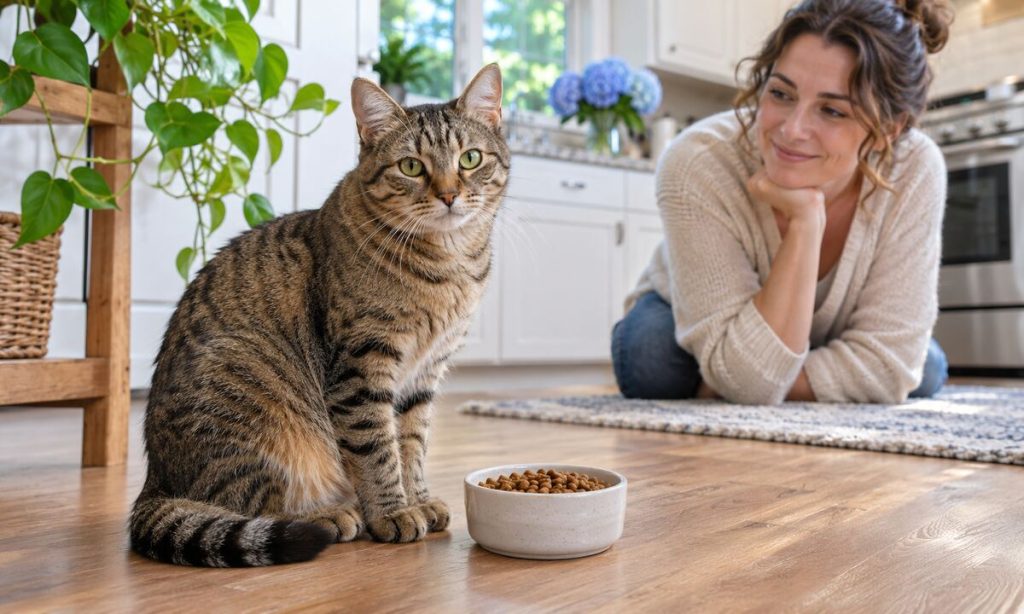
Frequent vomiting is not a normal part of cat ownership, even when a cat acts hungry afterward. Hairballs, rapid eating, dietary intolerance, and medical disease can look similar at first. Before changing food, a veterinarian should evaluate repeated vomiting, especially with blood, weakness, weight loss, or reduced appetite. The best dry cat food for cats that throw up depends on what is causing the problem. These seven digestive-support formulas may be worth discussing for a cat whose vet recommends an ordinary nonprescription diet.
We compare ingredient approaches, fiber, prebiotic and probiotic claims, kibble format, and practical feeding tradeoffs. None of these products is a guaranteed vomiting treatment. Keep a symptom and feeding diary, then share it with your veterinarian. Our guide to digestive upset signs in cats can help you recognize changes that deserve attention.
Quick Picks
These formulas focus on digestive support in different ways. Compare the exact life stage and ingredients rather than assuming every sensitive-stomach label means the same thing.
| Product | Best For | Key Advantage | Buy | |
|---|---|---|---|---|
| Hill’s Science Diet Sensitive Stomach & Skin Adult | Prebiotic fiber and adult digestion | Digestible chicken-and-rice formula | View on Amazon | Jump to Review |
| Purina ONE +Plus Sensitive Stomach & Skin | Turkey-first adult formula | Prebiotic fiber with turkey protein | View on Amazon | Jump to Review |
| Purina Cat Chow Gentle Sensitive Stomach & Skin | Larger-bag sensitive nutrition | Turkey and natural prebiotic fiber | View on Amazon | Jump to Review |
| Royal Canin Digestive Care Adult Dry Cat Food | Kibble shape that slows eating | Ring-shaped pieces and fiber blend | View on Amazon | Jump to Review |
| IAMS Proactive Health Sensitive Digestion Turkey | Turkey-led digestive nutrition | Fiber and prebiotic blend | View on Amazon | Jump to Review |
| Wellness CORE+ Digestive Health Chicken & Rice | Probiotic-coated kibble | Enzymes and prebiotic fibers | View on Amazon | Jump to Review |
| Blue Buffalo True Solutions Digestive Care Chicken | Prebiotic-focused adult food | Chicken first and prebiotic fiber | View on Amazon | Jump to Review |
Hill’s Science Diet Sensitive Stomach & Skin Adult
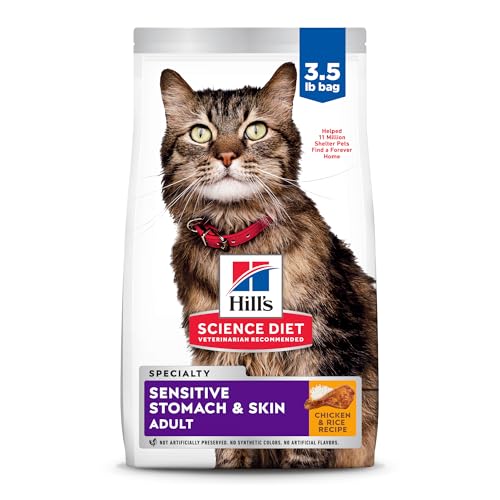
- Adult sensitive-stomach recipe
- Prebiotic fiber listed
- Omega-3 and omega-6 fats
- Vitamin E and antioxidants
- Chicken not suitable for every diet trial
- Not a veterinary treatment diet
Hill’s Science Diet Sensitive Stomach & Skin Adult is a chicken-and-rice dry formula described as highly digestible. The listing highlights prebiotic fiber, fatty acids, and vitamins. Those are relevant nutritional features when a veterinarian recommends an ordinary adult food for a cat with mild digestive sensitivity. They do not identify the cause of vomiting. A cat may throw up because of medical disease, rapid swallowing, hair ingestion, or other factors unrelated to this recipe. Choose the food for an appropriate adult cat, not as a way to avoid investigating persistent symptoms.
Prebiotic fiber is intended to support a normal gut environment, while the fatty acids and vitamin E relate more to skin and coat nutrition. Neither category guarantees relief from vomiting. Check the exact label for life stage, calorie content, and ingredients before switching. A chicken-based formula may be fine for many cats, but a veterinarian managing a suspected protein reaction may prefer a controlled therapeutic diet instead. If the cat is losing weight or refusing meals, food marketing should not delay a medical appointment. Observe whether episodes occur before or after meals and record the pattern.
The 3.5-pound package can be practical for a trial of routine feeding when the cat is otherwise healthy and the vet agrees. Introduce gradually and keep the previous food available during the transition. Monitor appetite, stool, vomiting frequency, and weight. Store the bag sealed and away from heat and moisture. If symptoms worsen or continue, stop experimenting and ask your veterinarian for a tailored plan. This product offers a recognizable combination of fiber and adult nutrition, but the most useful evidence of suitability will come from your cat’s condition and professional follow-up.
My Recommendation
Hill’s is a sensible starting comparison for adult cats whose veterinarian recommends a regular sensitive-stomach diet. Prebiotic fiber is its key feature. The limitation is that a chicken-based nonprescription food cannot diagnose or treat the reason for recurring vomiting. Maintain a written symptom log.
Purina ONE +Plus Sensitive Stomach & Skin
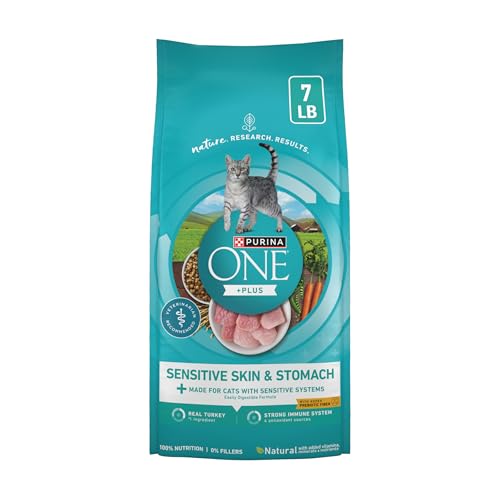
- Turkey listed first
- Added prebiotic fiber
- Calcium and antioxidant sources
- No artificial flavors listed
- Not a novel-protein prescription diet
- Crunchy kibble may be gulped
Purina ONE +Plus Sensitive Stomach & Skin is an adult dry cat food with turkey identified as the first ingredient. The maker describes an easily digestible formula that includes prebiotic fiber, calcium, and antioxidant sources. This option provides a different protein emphasis from the chicken-led products in the roundup, which may matter for flavor preference. Yet a turkey-first label does not make a food safe for a cat with a diagnosed food allergy. Persistent vomiting requires veterinary evaluation before owners start swapping protein sources repeatedly or interpreting short-term changes as proof of a reaction.
The formula’s sensitive-system positioning can be useful for an otherwise healthy adult cat with a veterinarian-approved diet change. Fiber may contribute to digestive regularity, but it does not rule out parasites, inflammation, or systemic disease. The listing notes crunchy bites and dental-related ingredients, though ordinary dry food should not be treated as professional dental care. Observe whether your cat eats too quickly and brings up undigested food immediately afterward. The veterinarian may ask about regurgitation versus vomiting. A slow feeder or smaller meal portion can be discussed only after medical concerns are considered.
Measure servings and compare calories with the previous food, because equal cup volumes do not always contain equal energy. Transition gradually, noting the date and portion at each step. Keep treats and supplements stable while assessing tolerance so the observations are easier to interpret. Store the food sealed and keep the lot information. If your cat develops lethargy, weight loss, bloody vomit, or repeated episodes, contact the veterinary team rather than making further diet changes. This food is best regarded as an adult nutrition option with a different protein profile and fiber strategy.
My Recommendation
Purina ONE is worth comparing when turkey is an appropriate protein and a standard adult sensitive-stomach diet fits your veterinarian’s plan. Its prebiotic fiber is useful context. It is not a substitute for diagnostic testing when vomiting repeats. Monitor weight throughout the change.
Purina Cat Chow Gentle Sensitive Stomach & Skin

- Adult turkey-based formula
- Prebiotic fiber included
- Omega-6 fatty acids
- No artificial colors or flavors
- Large bag may outlast freshness
- Not ideal for strict diet trials
Purina Cat Chow Gentle Sensitive Stomach & Skin is a turkey-based adult dry food marketed for easier digestion. The product lists prebiotic fiber and omega-6 fatty acids. Its larger 13-pound bag distinguishes it from several small-bag competitors, which may appeal to multi-cat households. However, value should follow suitability, not lead it. For a cat that throws up repeatedly, the cause must be assessed first. The formulation may be worth discussing for a healthy adult with digestive sensitivity, but it should not be promised as a solution for vomiting or skin symptoms.
The label positions this as a gentle everyday food, not a therapeutic elimination diet. Turkey as a featured ingredient does not mean it contains only one protein source. Read the complete ingredient statement if your veterinarian is tracking a suspected reaction. Prebiotic fiber may support the gut’s normal function, while omega-6 relates to skin and coat nutrition. Neither is proof that a cat’s episodes will stop. Cats can also bring up food after eating too quickly. If you see frequent undigested food, note the timing and ask the veterinarian to distinguish regurgitation from vomiting.
A bag needs careful storage. Keep kibble in its original packaging inside a dry, sealed container, and use it before the indicated date. Start with small measured meals and transition slowly if the veterinary team approves. In a household with several cats, feed separately so you can identify which animal is vomiting or eating poorly. Record stool, appetite, weight, and all episodes during the change. If a cat loses energy or refuses food, seek prompt care. This product’s main strengths are familiar adult nutrition and a larger quantity, not evidence of a specific medical benefit.
My Recommendation
Cat Chow Gentle may fit a multi-cat home where an adult sensitive-digestion formula is appropriate. The turkey and fiber profile is easy to compare. The larger bag is a drawback if one cat eats slowly or needs a short supervised diet trial.
Royal Canin Digestive Care Adult Dry Cat Food

- Specialized ring-shaped kibble
- Prebiotics and dietary fiber
- Adult digestive focus
- Six-pound package
- Brand study covers stool, not vomiting
- Shape may not slow every cat
Royal Canin Digestive Care Adult uses a ring-shaped kibble designed to encourage more chewing and potentially slower eating. Its listing also describes a tailored blend of prebiotics and dietary fiber. That makes it a distinct candidate when a veterinarian suspects that meal pace contributes to digestive problems. The manufacturer reports stool-quality data from an internal study, but stool quality is not the same outcome as eliminating vomiting. An owner should not treat that percentage as a guarantee that a cat bringing up food will improve. Investigate recurring episodes with a veterinary professional.
A cat that gulps dry food may swallow large amounts quickly, but not every rapid post-meal episode is simply overeating. The vet may distinguish regurgitation from active vomiting and recommend further examination. A ring shape could make some cats chew more, while others may still swallow pieces whole. Observe the actual behavior without forcing the cat to eat a disliked texture. The fiber blend may help ordinary digestion but cannot diagnose gastrointestinal disease. Check the nutritional adequacy statement and the full ingredient list if your cat has another medical concern or dietary restriction.
Use the six-pound bag as part of a consistent, measured trial only after professional guidance. Transition over several days as appropriate, and monitor both stool and the timing of episodes. Keep water available, avoid several simultaneous food changes, and record the amount eaten each day. A special bowl or feeding puzzle may be another consideration for gulping cats, but it does not treat inflammation, obstruction, or systemic illness. The product stands out for kibble geometry and fiber, not for a proven ability to stop vomiting in all cats.
My Recommendation
Royal Canin Digestive Care is the distinctive choice when eating speed is part of a veterinarian-guided plan. The ring-shaped kibble offers a practical difference. Do not mistake its stool-quality claim for evidence that it cures recurring vomiting. Continue clinical follow-up as needed.
IAMS Proactive Health Sensitive Digestion Turkey

- Real turkey first
- Specialized fiber blend
- Prebiotics included
- Omega-3 and omega-6 fatty acids
- Large bag needs good storage
- Not a controlled allergy diet
IAMS Proactive Health Sensitive Digestion is a turkey-first adult dry food that emphasizes a specialized fiber blend and prebiotics. Its listing also highlights omega-3 and omega-6 fatty acids for skin and coat support. This makes it relevant for an adult cat whose veterinary team recommends an ordinary digestive-support food. The featured turkey ingredient may appeal to owners comparing chicken-heavy formulas, but ingredient order does not establish digestibility for a particular animal. If a cat vomits frequently, a full clinical history and examination are more important than the protein pictured on the bag.
The product’s fiber formulation is intended to support healthy digestion, but it cannot be assumed to resolve food reactions, chronic inflammation, or other diseases. A cat may tolerate one recipe better than another without revealing the cause. Work with your veterinarian if symptoms persist. Check the exact formula for life stage and calories. Large bags are economical only if the food stays fresh and is actually eaten. If one cat in a household is ill, feed separately during any approved trial so you can track its portions and episodes reliably.
Introduce the food slowly when appropriate. Keep water available and watch the cat’s overall behavior rather than counting vomiting episodes alone. Weight loss, poor appetite, or visible discomfort should prompt veterinary contact. Note stool quality, meal size, treats, and any changes in activity. Store the bag sealed in a dry location away from household cleaners. If a cat has been placed on a prescription diet, do not replace it with this standard food without authorization. IAMS provides a familiar turkey-and-fiber option, not a medical treatment for throwing up.
My Recommendation
IAMS is a comparison choice for adult cats that do well with turkey and a fiber-focused formula. Its label is straightforward. If you need a strict diet trial or ongoing vomiting evaluation, use the plan set by your veterinarian instead.
Wellness CORE+ Digestive Health Chicken & Rice

- Probiotic-coated kibble
- Digestive enzymes listed
- Prebiotic fiber blend
- Chicken-and-rice recipe
- Many digestive additives
- May not suit elimination trials
Wellness CORE+ Digestive Health Chicken & Rice uses a combination of digestive enzymes, prebiotic fibers, and a probiotic coating. These elements distinguish its formulation from a plain adult dry cat food. The manufacturer frames the recipe around digestive wellness, which may interest owners after a veterinary assessment identifies an appropriate diet direction. However, supplementing a formula with probiotics or enzymes does not prove it will prevent vomiting. Different conditions require different care, and a cat with recurrent episodes should not be managed by nutrition marketing alone.
The probiotic coating is a product feature, but results can vary with the exact organisms, storage, and individual animal. Do not assume a product is better simply because it lists more gut-related terms. A veterinarian may recommend a particular therapeutic diet, a feeding change, or diagnostic testing instead. The product also contains chicken, rice, and other ingredients; a cat undergoing a strict elimination trial may need a more controlled formula. Observe stool, appetite, and actual meal behavior during any approved switch. If episodes are severe or accompanied by weakness, seek prompt veterinary attention.
Keep the bag closed and stored as directed to protect freshness. Use measured portions and avoid pouring kibble over several days of leftovers in a bowl. Some cats respond better to smaller meals, but ask your veterinarian whether that is appropriate for the observed problem. Change one variable at a time; introducing supplements, toppers, and a new kibble together makes it harder to identify what happened. If the cat remains unwell, contact the veterinary team rather than adding more digestive products. The major attraction here is the blended digestive-support approach, not a guaranteed remedy.
My Recommendation
Wellness CORE+ is distinctive for its probiotic, enzyme, and fiber formulation. It may be considered when the veterinarian supports an ordinary digestive-health diet. The multiple ingredients make it less suited to a strict diagnostic food trial. Check the whole ingredient panel first.
Blue Buffalo True Solutions Digestive Care Chicken

- Chicken listed first
- Prebiotic fiber emphasized
- Adult digestive-care formula
- No corn, wheat or soy listed
- Ingredient exclusions don’t diagnose intolerance
- Not a substitute for treatment
Blue Buffalo True Solutions Digestive Care Chicken is an adult dry cat formula focused on prebiotic fiber and digestive wellness. The maker lists chicken as the first ingredient and describes development involving veterinarians and animal nutritionists. It also highlights the absence of several ingredients, including corn, wheat, and soy. Those omissions may help owners identify what is in the food, but they are not evidence that this recipe treats vomiting. A veterinarian must first evaluate persistent episodes and decide whether an over-the-counter digestive-support product is reasonable for the cat.
Prebiotic fiber may support normal stool and gut function, but cats vomit for many reasons unrelated to fiber intake. A product claim about stool quality should not be confused with proof about vomiting frequency. Likewise, avoiding corn or wheat is not universally necessary for a healthy cat. If the veterinarian suspects a food reaction, a formal diet trial may require another product with tighter ingredient controls. Check the exact nutritional adequacy statement, calories per cup, and ingredient panel. Observe whether your cat eats too fast, shows pain, or has other symptoms that suggest a different problem.
The 3.5-pound bag can be helpful when evaluating whether the cat accepts a flavor under a veterinary-approved plan. Introduce gradually and keep consistent notes about food amount, episodes, stool, and body weight. Do not continue an unsuccessful trial indefinitely. Store kibble dry and sealed, and avoid mixing in novel treats that complicate observations. Provide fresh water and monitor appetite. Blue Buffalo’s main distinction is a chicken-first adult digestive formula with prebiotic fiber. Its suitability depends on the individual cat’s condition and a careful medical assessment.
My Recommendation
Blue Buffalo offers a chicken-first, fiber-focused adult formula that some owners may want to compare. Its ingredient exclusions should not drive the decision alone. Veterinary assessment remains essential when a cat repeatedly throws up or loses weight. Use measured portions during transitions.
How to choose best dry cat food for cats that throw up
First find out why your cat is vomiting. Then choose a food that matches its age, medical needs, and feeding behavior. Digestive claims describe formulation features, not a diagnosis or cure.
Investigate vomiting before blaming the food
Cats may vomit for many reasons, including a swallowed object, gastrointestinal disease, parasites, inflammation, or other illness. Regurgitating undigested food soon after eating is different from active vomiting, and the distinction can matter. A short video and written record can help your veterinarian assess the pattern. Note timing, frequency, appetite, stool, water intake, weight changes, and whether hair or foreign material appears. Seek prompt care for blood, repeated retching, weakness, dehydration, painful abdomen, or inability to keep water down. Do not keep testing new foods while significant signs continue. Even a cat that seems normal between episodes can have a condition worth investigating. Our cat digestive-upset checklist provides related context. If the veterinarian identifies a dietary component, ask whether a commercial sensitive-stomach formula or a more controlled therapeutic diet is appropriate.
Compare formulas without overreading labels
A sensitive-stomach product may emphasize prebiotic fiber, easily digestible ingredients, digestive enzymes, probiotics, or a particular protein. These approaches are not equivalent, and none proves the food will stop your cat’s vomiting. Check the nutritional adequacy statement for the proper life stage. Review the calorie content, primary protein, fat level, and any other ingredients your veterinarian wants monitored. A cat with a proven food reaction may need a carefully selected elimination diet rather than an ordinary turkey or chicken formula. Do not assume grain-free means easier digestion, or that a product is hypoallergenic because it excludes corn. Some digestive formulas emphasize stool quality, which is not the same outcome as controlling vomiting. Keep product claims in perspective. If a cat has a medical condition such as kidney disease, the best dietary choice may differ from every food in this roundup.
Change meals gradually and monitor outcomes
If your veterinarian approves a routine change, mix increasing amounts of the new kibble over several days, moving more slowly for a sensitive cat. Abrupt changes can alter stool and appetite, obscuring whether the formula helps. Measure portions and consider smaller, more frequent meals if your veterinary team recommends them. A slow-feeding bowl may be useful for a cat that eats too quickly, but it does not treat disease. Provide fresh water and monitor body weight. Keep the original packaging and note the lot number if a reaction develops. Avoid adding multiple toppers or supplements at the same time because that makes evaluation harder. For feeding stress and routine ideas, see our guide to easier cat mealtimes. Recheck with the veterinarian if vomiting continues, even if the cat enjoys the new flavor.
Frequently Asked Questions
Here are practical answers to the questions owners often ask before choosing.
Is it normal for cats to vomit hairballs often?
No. Frequent vomiting, even when hair is present, deserves discussion with a veterinarian. Changes in frequency, appetite, weight, or energy make evaluation especially important.
Can sensitive-stomach dry food stop vomiting?
It may help selected cats when the cause relates to diet, but there is no guarantee. Vomiting has many causes, and veterinary assessment should guide any diet trial.
Should I use grain-free food for a vomiting cat?
Not automatically. Grain-free does not prove easier digestion or better tolerance. Choose based on the cat’s diagnosis, nutritional adequacy, and veterinary guidance.
How should I change to a new dry cat food?
When the vet approves, transition gradually over several days or longer as needed. Monitor stool, vomiting, appetite, and weight, and stop for signs of illness.
When is vomiting an emergency?
Seek urgent veterinary help for blood, repeated unsuccessful retching, severe lethargy, painful swelling, suspected toxins or foreign objects, or an inability to keep fluids down.
Final Verdict
Hill’s Sensitive Stomach & Skin and Purina ONE Sensitive are reasonable adult formulas to compare when a veterinarian recommends a nonprescription digestive-support diet. Royal Canin Digestive Care adds a slower-eating kibble shape, while Wellness CORE+ highlights probiotics and enzymes. There is no single top choice for every cause of vomiting.
Track symptoms and feed consistently rather than switching bags repeatedly. If episodes persist or any warning signs appear, prioritize veterinary diagnosis over another product purchase.
Affiliate disclosure: This article contains Amazon affiliate links. If you purchase through them, PetAdvisorPro may earn a commission. As an Amazon Associate I earn from qualifying purchases.









