
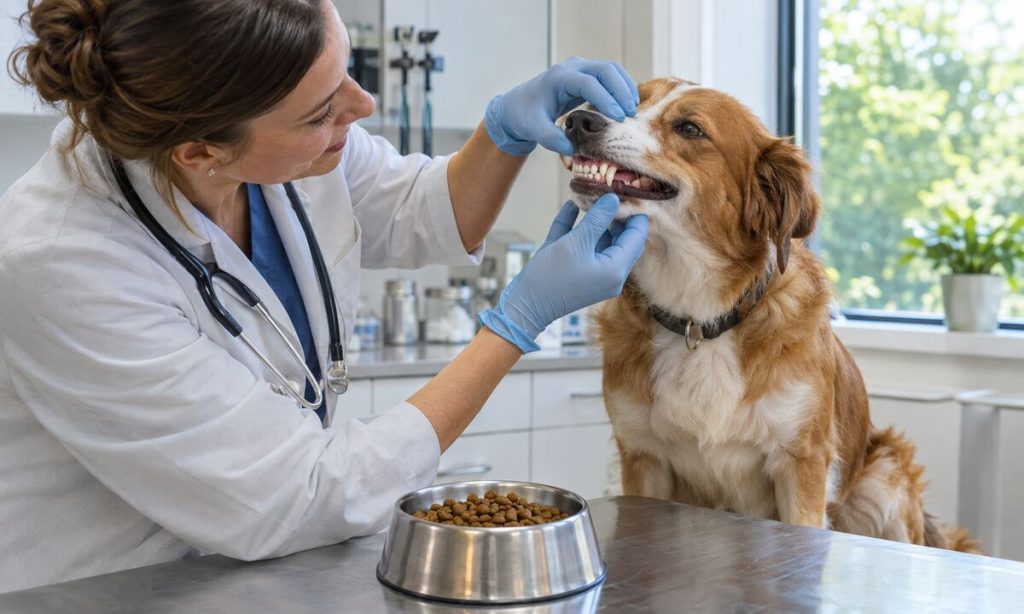
Persistent bad breath in dogs is a reason for a dental check, not just a change of kibble. Plaque, gum disease, broken teeth, and other health concerns can cause odor. A dental-focused dry food may help control plaque or tartar when used as directed, but it cannot remove disease beneath the gumline. This guide compares the best dog food for bad breath support across seven dental-oriented formulas. We look at kibble design, breed-size fit, life stage, and whether veterinary oversight is needed.
Before buying, have your veterinarian examine significant or new mouth odor, bleeding gums, loose teeth, or chewing pain. Our guide to dental pain signs in older small dogs explains why changes in appetite matter. Regular tooth brushing and professional dental care remain central, even if your dog eats a dental diet.
Quick Picks
Dental diets use particular kibble sizes and textures to influence chewing contact. These seven options target different dog sizes and levels of dental-care supervision.
| Product | Best For | Key Advantage | Buy | |
|---|---|---|---|---|
| Hill’s Science Diet Adult Oral Care Chicken & Barley | General adult dental kibble | Fiber texture designed for tooth contact | View on Amazon | Jump to Review |
| Hill’s Science Diet Oral Care Small & Mini | Small adult mouths | Dental kibble for smaller dogs | View on Amazon | Jump to Review |
| Royal Canin Small Dental Care Adult | Dogs up to 22 pounds | Small-dog textured kibble | View on Amazon | Jump to Review |
| Royal Canin Medium Dental Care Adult | Adults from 23 to 55 pounds | Medium-dog dental kibble texture | View on Amazon | Jump to Review |
| Royal Canin Large Dental Care Adult | Adults from 56 to 100 pounds | Larger texture for big dogs | View on Amazon | Jump to Review |
| Purina Pro Plan Veterinary Diets Dental Health Small Bites | Veterinary-guided smaller dogs | VOHC-accepted tartar-control small bites | View on Amazon | Jump to Review |
| Purina Pro Plan Veterinary Diets Dental Health | Veterinary-guided general dental care | VOHC-accepted crunchy kibble | View on Amazon | Jump to Review |
Hill’s Science Diet Adult Oral Care Chicken & Barley

- Dental fiber structure listed
- Adult food positioning
- Chicken-based recipe
- Large bag available
- Not a treatment for gum disease
- Check kibble size for your dog
Hill’s Science Diet Adult Oral Care uses a dry kibble structure the maker describes as clinically supported for helping reduce plaque and tartar. The adult chicken-and-grain formula comes in a substantial bag. Its key distinction is a food designed around mechanical tooth contact rather than a routine adult kibble that happens to be crunchy. For a dog with bad breath, this can be one element to discuss after a veterinary dental examination. It should not be represented as treatment for established periodontal disease, tooth infection, or other causes of halitosis.
The bite has to be appropriate for your dog’s mouth and chewing style. A dog that crushes or swallows pieces rapidly may interact differently with a dental kibble than one that chews carefully. Do not attempt to encourage chewing if the dog has obvious mouth pain. The product’s dental claims refer to its specific technology; an owner should verify which benefits are supported for the exact formula. Even with a dental food, plaque beneath the gumline and painful teeth require professional diagnosis. Routine daily brushing with dog-safe toothpaste remains a useful preventive measure.
Check the calorie statement before replacing your dog’s entire ration. A dental formula is still food, and measured servings help prevent weight gain. Introduce it gradually if your veterinarian recommends a standard transition, and watch stool and appetite. Keep the bag sealed and dry so its texture remains appropriate. If your dog refuses to chew, drops kibble, or rubs its mouth, stop and seek advice rather than hiding the issue with flavor toppers. This option makes the most sense for a healthy adult dog whose veterinarian agrees that dental-focused kibble suits its broader care plan.
My Recommendation
Consider Hill’s Adult Oral Care as a dental-oriented daily food for an adult dog after dental assessment. Its specialized kibble is the main reason to compare it. Dogs with painful teeth or other dietary restrictions need veterinary guidance before switching.
Hill’s Science Diet Oral Care Small & Mini

- Small & Mini adult formula
- Fiber technology for plaque
- Omega-6 and vitamin E
- Four-pound package
- Not suited to every dog size
- Different from standard Oral Care
The Small & Mini version of Hill’s Science Diet Oral Care is positioned for adult small dogs between one and six years. Its listing describes a specialized fiber structure intended to help manage plaque and tartar, plus omega-6 fatty acids and vitamin E. This product deserves a separate comparison because a Chihuahua-sized mouth differs from a medium dog’s. A giant dental kibble may be hard for a small pet to handle, while pieces that are too tiny may not encourage meaningful chewing contact. The four-pound option suits smaller households.
A size-targeted label is not a substitute for checking your pet’s actual chewing behavior. Some dogs gulp food, others nibble slowly, and dogs with oral pain may avoid crunching entirely. Pay attention to dropped food, reluctance to chew, or sudden changes in preferences. Those symptoms call for dental care. The maker’s claims concern supportive dental hygiene; they do not imply that a small dog with bad breath can skip professional examination. Check the specific product’s adequacy and calorie information when planning a full daily diet rather than using kibble as an occasional treat.
Gradual switching is sensible for many healthy dogs, but follow your veterinarian’s directions if there is an active medical problem. Store the food in the original resealable or sealed bag, and avoid mixing in large amounts of soft toppers that alter chewing behavior. A small bag reduces the time it sits open, though the price per pound may differ from larger packages. Brush teeth regularly using dog-safe products, and discuss the frequency of professional cleaning with your veterinary team. This version is a small-dog choice, not a general-purpose solution for dogs of every size.
My Recommendation
The Small & Mini Oral Care formula suits eligible adult small dogs whose veterinarian recommends dental kibble. Its size-focused design is useful. Owners of medium or large dogs should compare the correct size-specific alternatives instead of simply buying the biggest bag.
Royal Canin Small Dental Care Adult

- For adult dogs up to 22 lb
- Specialized dental kibble
- Age guidance stated
- Works alongside tooth cleaning
- Small-dog weight limit
- Not suitable for growing puppies
Royal Canin Small Dental Care is formulated for adult dogs weighing up to 22 pounds and older than the maker’s stated ten-month threshold. Its specially shaped kibble is designed to increase tooth contact during chewing. The company also reports a reduction in tartar formation under its described feeding conditions. That is a product-specific claim, not a promise that your dog will have fresh breath or disease-free gums. The small-dog focus makes it relevant when ordinary dental kibble pieces feel oversized. As with every dental food, check nutritional adequacy and calorie information for the exact product.
Small dogs can develop significant dental problems despite appearing otherwise healthy. If your pet has persistent bad odor, red gums, loose teeth, or painful chewing, seek a veterinary exam first. A dental kibble may support surface maintenance after care, but it does not remove infection beneath the gumline. The manufacturer instructs owners to combine the food with regular teeth cleaning. That combined approach is more credible than expecting a single bag to replace brushing. Do not assume the listed percentage applies to every dog, every mouth, or other Royal Canin products.
Confirm the dog’s mature weight before choosing this formula. A medium-sized pet above the target range should not be placed on the Small version merely because it is the cheapest option. Introduce food gradually where appropriate, observe eating style, and measure daily portions. The 17-pound bag may last a small dog a long time, so storage and freshness become practical considerations. Keep original label details available for your veterinarian. This is a choice for the correct adult size category, not an easy fix for pain, infection, or persistent oral odor.
My Recommendation
Royal Canin Small Dental Care is a targeted option for adult dogs in the stated small-breed weight range. Its bite design helps explain its intended role. Do not use it for larger dogs or as a way to delay needed dental treatment.
Royal Canin Medium Dental Care Adult

- 23–55 lb adult target
- Specialized crunchy texture
- Adult age guidance supplied
- Dental-care focused recipe
- Only for stated size range
- Dental claims are not a cure
Royal Canin Medium Dental Care is aimed at adult dogs from 23 to 55 pounds and at least twelve months old. It uses a kibble texture meant to encourage a tooth-brushing contact effect during chewing. This weight bracket is the main difference from the brand’s Small and Large versions. A 40-pound mixed breed, for example, may be a more reasonable size candidate than a toy breed or a 90-pound dog. The company lists measured tartar-control results under defined feeding conditions, which should be understood as a formula claim rather than a guarantee about individual breath.
A dog’s current weight and chewing comfort are essential selection factors. A medium-sized dog with tender gums may not want to work through a textured kibble, and forcing crunchy food can worsen discomfort. Examine visible signs such as head tilting while chewing, dropping food, unusual drool, or reluctance to eat. Bad breath can indicate dental disease that needs an anesthetized veterinary evaluation and care below the gumline. This diet may become part of a maintenance plan after the mouth is assessed. It does not replace brushing or professional cleaning.
Before switching, compare the calories per cup with the food you currently use. The medium variant’s nutritional profile and kibble form should be checked on the actual bag rather than assumed identical to other sizes. A gradual transition can help you observe digestive tolerance. Store the 28-pound bag carefully to preserve freshness, especially in a one-dog household. Continue dog-safe tooth brushing, and schedule dental checks as advised. If your pet has another medical condition requiring a special diet, your veterinarian should decide whether this formula is appropriate alongside the other care.
My Recommendation
Choose the Medium formula for an adult dog squarely within the maker’s weight range and comfortable chewing its texture. It offers a clearer size match than buying a generic dental product. Ask your veterinarian first if mouth pain or disease is suspected.
Royal Canin Large Dental Care Adult

- 56–100 lb adult target
- Purpose-built dental kibble
- Large 30-pound bag
- Defined age and weight ranges
- Not intended for small breeds
- Large pieces unsuitable with pain
Royal Canin Large Dental Care is designed for adult dogs weighing roughly 56 to 100 pounds and meeting the manufacturer’s age guidance. Its kibble uses a specialized texture intended to make tooth contact as a large dog chews. This is important because a food designed for a small mouth may not produce the same mechanical interaction in a much larger dog. The listing also presents tartar-related testing claims, which must be interpreted within that formula’s conditions. Large Dental Care is a separate size-targeted option, not simply a larger package of Small Dental Care.
For a big dog with new bad breath, first examine whether the mouth is comfortable. Broken teeth, gum inflammation, and dental infection cannot be solved by crunchy food. A veterinarian may need to inspect deeper structures and recommend cleaning or treatment. After care, a correctly sized dental diet may be a useful addition to regular brushing. Observe the dog’s chew pattern: an animal that rapidly swallows large pieces may not get the expected tooth contact. Likewise, dogs recovering from oral surgery may need softer food temporarily. Follow professional instructions rather than a generic product recommendation.
This formula comes in a 30-pound bag, which may suit a large dog’s daily intake but still needs dry, cool storage. Check the calories and feeding chart because a big dog can gain weight on any complete diet when portions are too generous. Introduce gradually as directed and monitor stool, appetite, and chewing comfort. Keep all label details available for veterinary appointments. The main reason to select this version is its adult large-dog fit. If the animal falls outside the stated weight range, choose another appropriate formulation and seek nutritional advice.
My Recommendation
Royal Canin Large Dental Care is the size-specific option for big adult dogs within its stated range. Its texture is built around larger mouths. Owners should still prioritize veterinary examination of persistent odor and avoid hard kibble when chewing is painful.
Purina Pro Plan Veterinary Diets Dental Health Small Bites

- VOHC tartar acceptance stated
- Small-bite dental texture
- For dogs under 35 lb
- Veterinary diet positioning
- Veterinary guidance appropriate
- Not suited to larger dogs
Purina Pro Plan Veterinary Diets Dental Health Small Bites is a specialized dental food for dogs weighing less than 35 pounds. The maker describes a unique crunchy texture and reports Veterinary Oral Health Council acceptance for helping control tartar. That independent acceptance is a useful differentiator when comparing evidence, provided it applies to the exact named formula. This product is also part of a veterinary diet line, so it belongs in a veterinarian-guided decision rather than casual shopping for breath freshness. It is not a treatment for active infection or painful periodontal disease.
The smaller bite size matters for dogs that may struggle with a large dental kibble. However, small pieces do not guarantee that a dog will chew in the intended way. Watch the mouth during meals and mention changes to your veterinarian. A dental formula can be a supportive part of daily oral hygiene, while brushing and examinations remain important. The product describes suitable protein content and antioxidants; these are nutrition features, not evidence that the diet addresses every cause of halitosis. Persistent odor may reflect gum disease or an unrelated health concern.
Check with your veterinarian that this food meets your dog’s overall nutritional and medical needs. If approved, follow the prescribed feeding amount and switching schedule. The six-pound bag may be easier to store and use while fresh in a small-dog household. Keep the kibble dry and avoid excessive treats that displace the complete ration. If oral surgery or extractions are planned, ask whether a temporary soft diet is necessary. Return for follow-up dental assessments as recommended; improved smell alone does not prove that all painful oral changes have resolved.
My Recommendation
This Purina veterinary formula is worth discussing for a smaller dog when dental maintenance is part of a professional care plan. Its VOHC tartar acceptance is relevant. The main limitation is the need to match both veterinary guidance and dog size.
Purina Pro Plan Veterinary Diets Dental Health

- VOHC tartar acceptance stated
- Specialized kibble texture
- Vitamin E included
- Veterinary diet formulation
- Requires individualized feeding advice
- Not for dogs unable to chew
The standard Purina Pro Plan Veterinary Diets Dental Health formula is another dental-specific dry food, using a crunchy texture described as helping reduce tartar buildup. The manufacturer identifies Veterinary Oral Health Council acceptance for tartar control and includes a vitamin E-related nutrition claim. Unlike the Small Bites variant, this product serves a different kibble-size situation. Confirm the exact product identity and package details with your veterinary team. The distinction is important because a family name alone does not tell you whether the chosen pieces will match your dog’s mouth or chewing behavior.
The presence of the VOHC seal can help owners compare a specific tartar-control claim, but it is not a promise to cure bad breath. Gum disease, broken teeth, and problems below the gumline still require clinical care. Ask your veterinarian to determine whether a dental diet should replace the present food or supplement another plan. If your dog has kidney disease, food allergies, or other specialized needs, nutritional compatibility matters. Watch the way your pet handles the kibble and report difficulty chewing rather than increasing the pressure to finish a crunchy meal.
Follow the feeding schedule your veterinarian provides, including calories and any transition instructions. The listed 16.5-pound bag may be manageable for a medium-sized household dog, but keep it sealed away from moisture and heat. Continue regular tooth brushing with dog-safe products and schedule follow-up dental exams. Chewing texture is only one component of oral care. Stop using the diet and contact the vet if your dog shows new pain, repeated vomiting, or poor appetite after a change. This product is most useful when chosen for a defined dental-care need and an appropriate individual dog.
My Recommendation
The standard Purina Veterinary Dental Health formula suits an adult dog whose veterinarian recommends its specific kibble design. VOHC tartar acceptance is helpful evidence. It is not a substitute for examining persistent breath odor, and medically complex dogs need tailored advice.
How to choose best dog food for bad breath
Start by ruling out painful oral disease. Then match a complete dental food to your dog’s size, life stage, and medical needs. A dental kibble is an adjunct to brushing and veterinary care.
Seek a dental examination before changing food
Bad breath is often an early sign of oral disease. A mouth may look normal at a glance while painful problems lie below the gums. Arrange a veterinary assessment for persistent odor, discolored teeth, drooling, bleeding, loose teeth, or a dog that suddenly chews on one side. Do not try to mask these signs with mint, supplements, or a new kibble. Your veterinarian can recommend brushing, professional cleaning, dental imaging, or treatment when needed. A dental diet may be useful after that assessment, but it cannot replace a diagnosis. If your dog recently had dental treatment, follow postoperative feeding instructions carefully. Some patients need soft food until the mouth heals. Our guide to switching food after dog dental surgery offers background; the treating veterinarian’s instructions take priority. Look for chewing discomfort rather than assuming crunchy food is always desirable.
Understand kibble texture and independent evidence
Dental kibble differs from ordinary dry food through bite size, shape, and internal fiber structure. Some formulas encourage the tooth to sink into a piece rather than shattering it instantly. That contact can help remove deposits from exposed tooth surfaces. Still, the effectiveness depends on the exact product and how the dog chews. Read label claims carefully and check independent acceptance where a verified listing exists. The Veterinary Oral Health Council recognizes products that meet defined standards for plaque or tartar control; not every marketed dental food has the same evidence. Avoid transferring acceptance from one size or veterinary variant to another without confirmation. Dental kibble also supplies calories and nutrients, so a product cannot be judged solely by tooth claims. A dog that swallows pieces whole may get less mechanical brushing contact. Watch eating behavior and ask the veterinarian whether the size and texture fit.
Choose by dog size and full feeding needs
Compare the manufacturer target weight and age before ordering. A small-dog dental food may use pieces sized for a Chihuahua, while a large-dog formula is intended for a much bigger mouth. Different Royal Canin formulas have distinct size ranges; they should not be treated as interchangeable bag sizes. A veterinary diet may require professional direction, especially when a dog has other medical conditions. Check the exact product’s nutritional adequacy statement and energy content. Transition slowly unless the treating veterinarian says otherwise. Keep tooth brushing in the routine using products safe for dogs; our dog toothpaste selection guide covers useful considerations. Measure meals, monitor stool, and maintain access to fresh water. Finally, return for dental checks at the interval recommended for your dog. Improved breath alone does not confirm that hidden gum disease has resolved.
Frequently Asked Questions
Here are practical answers to the questions owners often ask before choosing.
Can dog food cure bad breath?
No. Dental diets may help with plaque or tartar management, but persistent odor can signal disease. Arrange a veterinary oral exam and use the diet only as one part of the care plan.
Does crunchy kibble clean a dog’s teeth?
Ordinary kibble is not a replacement for tooth brushing. Dental-specific formulas use targeted structure or shape, and results vary. Look for appropriate independent evidence for the exact product.
What does the VOHC seal mean?
It indicates the specific accepted product met the council’s criteria for plaque or tartar control when used as directed. It does not mean all products from that brand or family have the same approval.
Should a dog with painful teeth eat dental kibble?
Do not assume hard food is safe when chewing hurts. See a veterinarian, who may recommend a different diet while dental problems are assessed or treated.
Do veterinary dental diets require a prescription?
Access and feeding requirements depend on the exact product and jurisdiction. Consult your veterinarian before starting a veterinary-formulated diet, especially if your dog has another health condition.
Final Verdict
Hill’s Science Diet Adult Oral Care is an accessible comparison point for many adult dogs, while its Small & Mini version targets smaller mouths. Royal Canin’s size-specific Dental Care formulas help narrow the choice by body weight. Purina Pro Plan Veterinary Dental Health is best considered with veterinary direction rather than as a casual breath freshener.
Whichever food you choose, persistent bad breath deserves examination. Pair any appropriate dental diet with regular brushing and professional care. Diet may support dental hygiene; it does not substitute for treating oral disease.
Affiliate disclosure: This article contains Amazon affiliate links. If you purchase through them, PetAdvisorPro may earn a commission. As an Amazon Associate I earn from qualifying purchases.









