
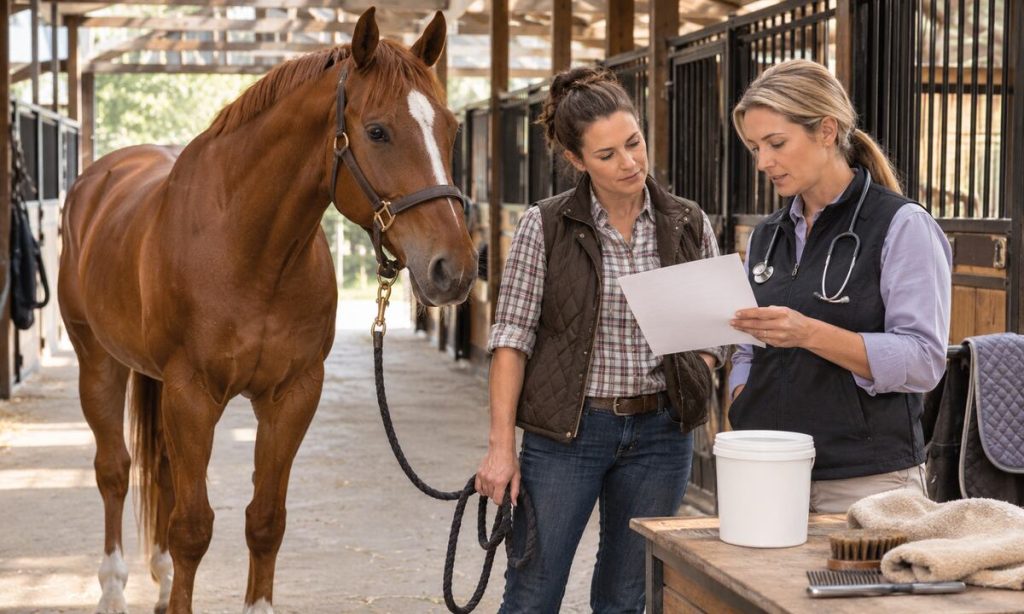
A horse that scratches, develops hives, coughs, or seems uncomfortable may have an allergy, but those signs have several possible causes. The biggest mistake when choosing an allergy supplement is treating a label as a diagnosis. Insects, parasites, infection, dust, mold, and other triggers can overlap. A supplement may add nutrients or ingredients without addressing the actual problem. Veterinary assessment and environmental management should come before assumptions about a jar of powder.
If you are considering an allergy supplement for horses, use this guide to recognize common selection errors. It explains evidence limits, ingredient overlap, label checks, interactions, and what to monitor. The goal is not to rank products or propose a treatment dose. It is to help horse owners ask better questions and avoid decisions that delay proper care.
Mistake 1: Guessing the Allergy Trigger
Equine itch can result from insect-bite hypersensitivity, parasites, skin infection, contact reactions, or environmental allergens. Respiratory signs can involve dust and mold exposure or other disease. Cornell’s veterinary dermatology service notes that horses may react to pollen, mold spores, or storage mites. Similar outward signs do not establish the same cause. A clinician may need history, examination, and tests before choosing management. A veterinary workup may be needed; the itchy-skin diagnosis guide describes why appearance alone is insufficient.
Record the season, pasture, bedding, feed changes, insect activity, and where lesions appear. Photograph skin changes if it can be done safely. Do not assume that every itchy horse needs an immune support supplement. A targeted approach may involve insect control, environmental adjustments, or medical treatment depending on the diagnosis. Starting multiple new supplements at once can also make it harder to recognize what changed.
Mistake 2: Treating a Supplement Like Medication
Supplements do not become proven allergy treatments because their names contain soothing, immune, or respiratory language. Evidence for specific ingredients in horses may be limited, inconsistent, or unrelated to the condition at hand. Check whether a claim refers to general nutrient support or documented treatment of an equine disease. Avoid extrapolating from human or laboratory findings without veterinary interpretation.
Serious hives, intense itching, open sores, breathing difficulty, fever, or rapid worsening need veterinary attention. A supplement cannot replace diagnosis, prescribed therapy, parasite control, or appropriate stable management. The American Association of Equine Practitioners supports evidence-based decisions for medication and care. Ask the veterinarian what benefit is realistically expected and how it would be measured.
Mistake 3: Overlooking the Full Diet
A horse may already receive vitamins, minerals, oil, or other nutritional ingredients through forage, concentrate, and a ration balancer. Adding another mixed supplement can duplicate nutrients and upset balance. Some vitamins or trace minerals can cause harm in excess. Before starting anything, list all feed, forage, salt, mineral sources, supplements, and medicines. Review the ration with an equine veterinarian or qualified nutritionist.
University of Minnesota Extension emphasizes using forage analysis and diet balancing rather than assuming every horse needs more nutrients. If a real deficiency exists, the response should address that deficit and its cause. An allergy label does not prove a deficiency. Choose a product only after clarifying what it adds, why the horse needs it, and how it fits the total intake.
Mistake 4: Ignoring Ingredient and Quality Details
Read the entire label, including active amounts per serving, carriers, sweeteners, herbs, and feeding instructions. A proprietary blend without disclosed quantities can be difficult to evaluate. Check expiration date, batch identification, storage requirements, and manufacturer contact information. Avoid relying on testimonials or claims of instant immune balance as scientific evidence. A reputable label should be clear enough for a veterinarian to review.
Consider dietary restrictions and competition rules when relevant. Certain herbal compounds can interact with medicines or create regulatory concerns in performance horses. Do not assume natural ingredients are harmless. Ask the veterinary team about ingredients you cannot identify and whether the product conflicts with prescribed treatment. Keep a photograph of the label and lot number before introducing anything.
Mistake 5: Forgetting Environmental Management
For a horse sensitive to biting insects, prevention may involve turnout scheduling, fly management, shelter, and protective methods. For a horse affected by dusty forage or bedding, better ventilation and cleaner materials may be more relevant than a supplement. These steps should follow the veterinarian’s assessment. Avoid improvising irritating topical mixtures or using pesticides outside their labeled purpose.
Monitor stable dust, mold, hay quality, and insect activity. An allergy supplement cannot remove airborne irritants from a poorly managed environment. The site’s barn parasite-risk guidance discusses broad environmental prevention concepts, though equine insect hypersensitivity has its own specific management needs. Work with your veterinarian for a targeted plan.
Mistake 6: Changing Many Things at Once
If you add a supplement, switch feeds, change bedding, and alter turnout together, it becomes difficult to know what helped or harmed. Use a veterinary-approved plan with clear timing and monitoring. Maintain notes on itching severity, skin lesions, coughing, appetite, manure, and activity. Track season and weather because symptoms can vary independently of any new supplement.
Stop and seek veterinary advice if new symptoms appear after introducing a product. Do not automatically increase the dose when improvement is slow. Some conditions require prompt treatment, and others fluctuate naturally. A reasonable trial should have a defined goal, safe duration, and a point for reassessment. Without those elements, continued use can become an expensive habit rather than an informed decision.
Mistake 7: Missing Medical Red Flags
Breathing difficulty, marked facial swelling, severe hives, fever, spreading lesions, or a sudden decline in appetite or activity may indicate an urgent problem. Contact the veterinarian promptly. Even less dramatic but recurring symptoms deserve investigation, particularly when skin damage or secondary infection develops. Do not wait for a bag of supplement to run out before seeking help.
A veterinarian can distinguish allergy from other skin or respiratory disease and discuss testing or treatment options. Cornell’s research on insect hypersensitivity illustrates the complexity of allergic mechanisms in horses. An informed diagnosis helps set realistic expectations about prevention, treatment, and any supportive nutritional role. Keeping good records and responding to warning signs is part of responsible care.
Frequently Asked Questions
These answers address common assumptions about supplements marketed for horse allergies. They are educational and do not recommend a particular formula, ingredient, or dose.
Any horse with persistent itch, skin lesions, or breathing signs deserves individualized veterinary assessment. Supportive nutrition decisions should fit that plan.
Can a supplement diagnose a horse’s allergy?
No. It cannot identify an allergen or distinguish allergy from parasites, infection, or another disease. Veterinary examination and tests may be needed.
Are herbal allergy supplements automatically safe?
No. Herbs can have side effects, interact with medicines, or affect competition rules. Ask the veterinary team to review every ingredient.
Could my horse get too much of a vitamin?
Yes. The whole ration matters, including forage, feed, and other supplements. Some nutrients can be harmful when overprovided.
Should I treat seasonal itching only with a supplement?
No. Insect control, environmental management, diagnosis, and medical care may be necessary. The appropriate plan depends on the cause.
When should I call a veterinarian?
Seek prompt care for breathing difficulty, swelling, severe hives, fever, open lesions, or rapid worsening. Persistent itch also deserves assessment.
Final Words
The most common errors with an allergy supplement for horses are guessing the diagnosis, overestimating evidence, duplicating nutrients, ignoring ingredients, and overlooking environmental triggers. Keep the complete ration and medicine list available for a veterinarian. Define a measurable goal and monitor the horse rather than trusting vague promises on packaging.
For category context, the site’s allergy supplement for horses overview should be read through that safety lens. If symptoms persist or worsen, veterinary diagnosis and an appropriate management plan matter more than another unverified supplement claim.
Reference
The following equine veterinary and university sources support the discussion of allergic skin disease, insect hypersensitivity, environmental triggers, and balanced horse nutrition. Individual diagnosis and treatment remain veterinary responsibilities.
Research on specific supplement ingredients varies and does not automatically establish a benefit for a particular horse. The safest plan is a documented, evidence-informed decision with the treating veterinarian.
- Cornell University College of Veterinary Medicine — Dermatology (equine allergy guidance).
- Cornell University Wagner Laboratory — Culicoides Hypersensitivity.
- American Association of Equine Practitioners — Equine Veterinary Education on equine pruritus.
- University of Minnesota Extension — Understanding Your Hay Analysis.
- University of Minnesota Extension — Providing Your Horse Vitamins and Minerals.









