
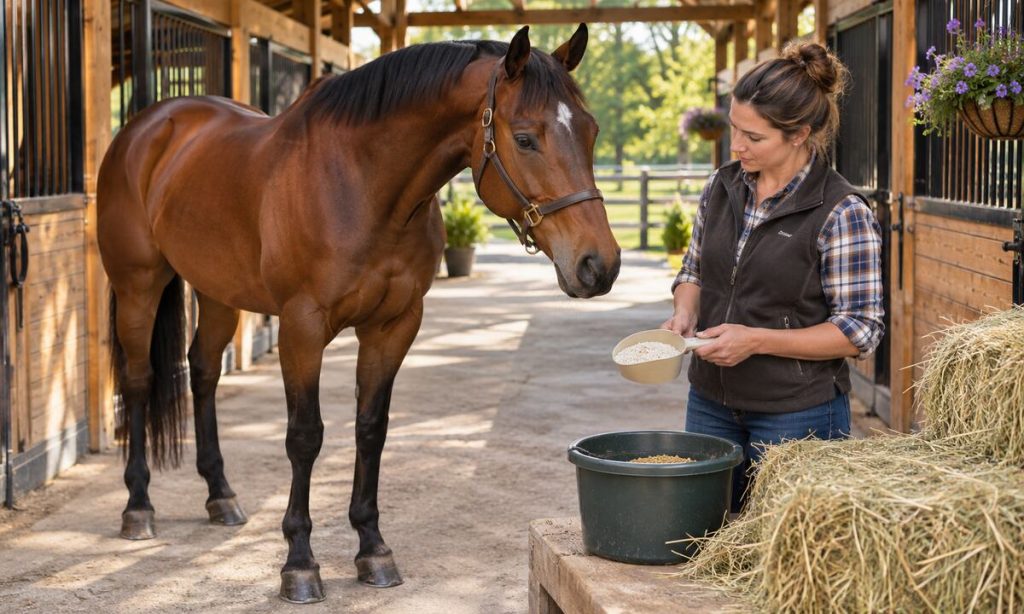
A supplement labeled for horse bones may contain calcium, phosphorus, vitamin D, and other minerals, but more is not always better. Bone health depends on the balance of the whole ration, including hay, pasture, concentrate, mineral mixes, and the horse’s life stage. An additional scoop can create excesses or worsen an existing imbalance. A sound decision starts with diet analysis and veterinary guidance rather than a promise of stronger bones on packaging.
When examining a bone supplement for horses, ask what specific nutritional gap it is meant to fill. This guide covers calcium-phosphorus balance, growing horses, label transparency, duplicate nutrients, and signs that require medical assessment. It does not recommend a product or individual dose. Supplements cannot correct every skeletal condition and should never delay diagnosis of pain, lameness, or abnormal growth.
Start With a Complete Ration Review
Write down all forage, grain, complete feed, ration balancer, salt, mineral blocks, and existing supplements. Record actual amounts rather than only product names. A horse eating fortified concentrate may already receive much of its needed mineral intake, while an all-forage ration may need targeted balancing. University extension guidance recommends evaluating the total diet instead of adding unrelated nutrients without evidence of need. The horse feed and hay-label guide can help organize the forage information needed for that review.
Gather recent hay analysis when available, because forage mineral content varies with plant type, soil, harvest, and storage. A qualified equine nutritionist can interpret calcium, phosphorus, and other values in the context of intake. Do not assume that every hay type is low in calcium or that a mineral block supplies a consistent daily amount. The first question is whether a deficiency or imbalance actually exists.
Understand Calcium and Phosphorus Together
Calcium is central to bone structure, while phosphorus also plays essential roles in skeletal and metabolic function. The relative amounts matter. University of Minnesota Extension advises attention to a roughly 1:1 to 3:1 calcium-to-phosphorus ratio in common mature-horse diets, with specific needs depending on life stage and ration. An inverted ratio with more phosphorus than calcium can create problems, especially during growth. For context on another bone-related nutrient, see vitamin D supplement safety in horses before adding it independently.
Do not attempt to repair a ratio from one ingredient label alone. The total daily intake of both minerals determines the dietary balance. The MSD Veterinary Manual describes how excess phosphorus or an inverted ratio can contribute to nutritional skeletal disorders. A clinician may need to assess a horse with suspected bone disease before making corrections. Blindly adding calcium can also create an inappropriate balance.
Consider Age and Physiological Stage
Growing foals and young horses are developing bone rapidly and have nutritional requirements that differ from mature maintenance horses. Pregnant and lactating mares also need special attention. A supplement marketed for adult bones may not be suitable for a growing animal. Incorrect mineral supply during development can have consequences that are not quickly reversed. Consult the veterinary team and an equine nutritionist before making substantial changes.
Older horses are not automatically deficient simply because they are older. Dental health, forage intake, weight, muscle condition, and illness may influence nutrition more directly than age alone. A horse with poor appetite or difficulty chewing might need a broader feeding assessment rather than a mineral powder. Focus on actual intake and diagnosis, not generalized life-stage claims.
Read All Ingredients and Amounts
Check the declared amount of each mineral and vitamin per serving and the recommended daily quantity. Some products combine calcium with phosphorus, magnesium, copper, zinc, or vitamin D. Compare those amounts with what the horse already receives. A product that hides active quantities inside a vague blend is harder to assess responsibly. Look for a batch number, expiration date, storage instructions, and a manufacturer able to answer formulation questions.
Be wary of claims that a supplement will cure lameness, heal fractures, or prevent every bone disorder. Such outcomes require far stronger evidence than a nutrient label. Quality of evidence matters: findings from other species or a tiny study may not apply to your horse. Consider competition rules and other medicines if the formula includes herbs or unusual additives. Document the exact product used.
Avoid Excesses and Duplicate Supplements
More mineral intake can reduce the usefulness of other nutrients or create toxicity. Vitamin D and trace minerals deserve particular caution because unnecessary high doses can cause harm. A commercial ration balancer may already contain a carefully planned mix. Adding a second broad supplement can undermine that balance. Do not stack several products simply because each has a different marketing purpose.
Keep one list that the veterinarian can review, including treats and fortified feeds. If a deficiency is identified, the clinician or nutritionist can select a targeted response and monitor progress. Do not change the ration repeatedly while trying to judge results. Bone remodeling and overall nutritional outcomes are not reliably measured by a horse appearing brighter after a week.
Know the Difference Between Nutrition and Disease
Pain, lameness, swelling, abnormal limb alignment, or trouble chewing can signal a medical condition. A supplement cannot diagnose a fracture, developmental orthopedic disease, or nutritional secondary hyperparathyroidism. The MSD Veterinary Manual describes skeletal problems associated with mineral imbalances, but similar signs can have other causes. Veterinary examination and appropriate diagnostics are necessary before treatment decisions.
Do not increase mineral doses in response to a sudden limp or swelling. Restrict activity when advised and contact your veterinarian. For a growing horse with joint enlargement or irregular gait, prompt evaluation matters. Nutritional support may be part of a treatment plan when a genuine imbalance exists, yet it should not replace the primary medical care.
Monitor Changes and Keep Records
If a veterinarian recommends supplementation, record the daily amount, start date, associated feed, and any other changes. Monitor appetite, manure, body condition, movement, and relevant laboratory or ration-review results as instructed. Keep the product label and lot information. Reevaluate the supplement when hay lots, concentrate, pasture access, or physiological stage changes. A plan suitable in winter may need adjustment after a forage change.
Store powders and pellets dry and sealed according to the label. Use a dedicated measuring scoop and prevent other animals from accessing the product. If adverse signs appear after a change, contact the veterinarian before continuing. A thoughtful monitoring plan provides stronger evidence of usefulness than a broad promise printed on a container.
Frequently Asked Questions
These answers address common mineral-nutrition concerns. They do not provide individualized dosage recommendations because needs depend on the horse’s entire diet, body size, age, and health.
A qualified equine nutritionist and veterinarian can help determine whether supplementation is needed and what should be monitored after a ration change.
Does every horse need a bone supplement?
No. The need depends on the total ration and individual requirements. Forage analysis and professional evaluation help identify genuine gaps.
Why is the calcium-to-phosphorus ratio important?
Too much phosphorus relative to calcium can interfere with normal skeletal mineral balance. The entire ration matters more than a single supplement label.
Can bone supplements treat a lame horse?
No. Lameness has many possible causes and needs veterinary diagnosis. Supplementation is not a substitute for medical treatment.
Are young horses more sensitive to mineral imbalance?
Growing horses have different skeletal nutrient needs and can be especially affected by poor balance. Use an age-appropriate professionally assessed ration.
Should I add vitamin D for bone strength?
Not without establishing a need. Excess supplementation can be harmful. Ask the veterinary team to evaluate the whole diet and circumstances.
Final Words
The essential things to look for in a bone supplement for horses are a verified nutritional need, transparent ingredient quantities, appropriate calcium-phosphorus balance, and compatibility with the existing ration. Do not treat supplements as cures for lameness or skeletal disease. Start with forage and feed analysis, then seek professional guidance for targeted corrections.
Use the site’s bone supplement for horses category overview as background while keeping the full-ration perspective. If the horse has pain, swelling, abnormal gait, or growth concerns, veterinary assessment takes priority. The right nutrition decision is based on measurable needs, not the number of ingredients in a tub.
Reference
These veterinary and university sources inform the discussion of equine calcium, phosphorus, mineral balance, and nutrition-related skeletal disease. Requirements vary with age, physiological stage, and total diet.
Supplement decisions for a specific horse should be guided by an equine veterinarian or qualified nutritionist, particularly when skeletal disease or abnormal growth is suspected.
- MSD Veterinary Manual — Nutritional Requirements of Horses and Other Equids.
- MSD Veterinary Manual — Nutritional Diseases of Horses and Other Equids.
- University of Minnesota Extension — Providing Your Horse Vitamins and Minerals.
- University of Minnesota Extension — Understanding Your Hay Analysis.
- American Association of Equine Practitioners — Trace Mineral Supplementation for Horses.









