
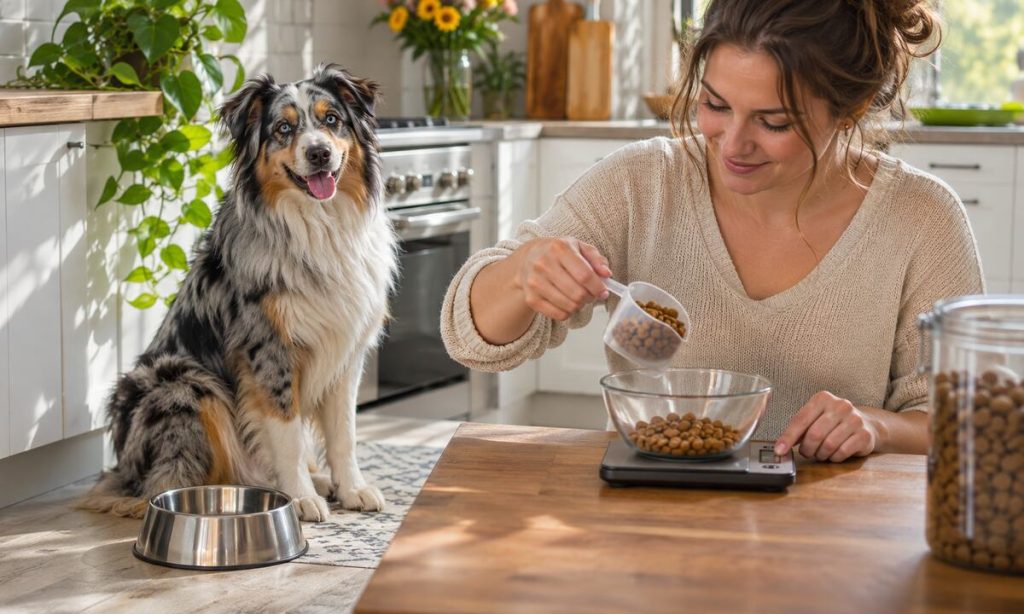
Australian Shepherds can be busy, athletic dogs, but their activity varies widely. A food chosen only because the breed is energetic may supply too many calories for a mostly indoor pet. Another common mistake is judging quality by marketing phrases instead of nutritional adequacy and the individual dog’s needs. Good feeding starts with life stage, body condition, activity, and a label you can understand. No single formula suits every Australian Shepherd.
When looking at dog food for Australian Shepherds, avoid letting coat photographs, exotic ingredients, or promised performance outcomes make the decision. This article explains the selection mistakes that matter most: wrong life stage, inaccurate portions, unexamined claims, rushed diet changes, and ignoring health conditions. The goal is a practical checklist that supports steady health and helps you know when veterinary nutritional advice is needed.
Mistake 1: Assuming Every Aussie Needs High Calories
An Australian Shepherd that competes in demanding activities may have different energy needs from one who enjoys ordinary walks and family life. Breed reputation is not an accurate calorie prescription. Feeding a high-energy formula to an inactive adult can cause gradual weight gain. Cornell’s veterinary guidance notes that excess treats, free feeding, and unsuitable portions commonly contribute to canine obesity. Begin with the individual dog’s weight and body condition.
Assess the waistline and rib coverage with a veterinarian’s help. Recheck portions when work, exercise, weather, age, or neuter status changes. A puppy, pregnant dog, or senior may need a different plan. Avoid rigid statements that a certain breed must always eat the same protein or fat level. Activity patterns can change from week to week, while excess calories accumulate quietly.
Mistake 2: Skipping the Nutritional Adequacy Statement
The ingredient list attracts attention, but it cannot by itself show whether the food supplies the nutrients your dog needs. Read the nutritional adequacy statement to see whether the food is complete and balanced for the intended life stage. The FDA explains that such claims are supported through AAFCO nutrient profiles or feeding trials under recognized procedures. A supplemental or intermittent feeding product should not be mistaken for a complete daily diet.
Check whether the food is formulated for growth or adult maintenance, and whether it has any size-specific limitations relevant to a growing puppy. Ask a veterinarian about diets for pregnancy, nursing, serious illness, or weight management. Do not assume that an attractive bag or a long list of ingredients establishes formulation quality. The manufacturer’s nutritional expertise and quality-control process matter too.
Mistake 3: Treating Marketing Claims as Evidence
Words such as natural, premium, ancestral, and high-protein can sound appealing without showing that the recipe is the best nutritional match. Likewise, the absence of a particular ingredient is not proof of medical benefit. An Australian Shepherd with suspected food allergy needs an appropriate veterinary workup, not a series of unplanned ingredient experiments. Compare the actual adequacy statement, calories, analysis, and the reliability of the manufacturer’s nutrition information.
Grain-free claims deserve balanced interpretation. The FDA has investigated reports of canine dilated cardiomyopathy associated with certain diets, including many labeled grain-free, but it has not established that one ingredient alone causes the condition in every dog. Avoid simplistic conclusions in either direction. Discuss unusual diets and heart concerns with a veterinarian rather than adopting an unproven rule from a headline.
Mistake 4: Ignoring Calories in Treats
Training often involves frequent food rewards, especially for responsive herding dogs. Those bites count toward daily calories even when they are small. If a dog gets many treats on a practice day, the regular meal allowance may need adjustment under a sensible feeding plan. Repeatedly filling a bowl without measurement makes it hard to detect excess intake. Use a measuring scale or consistent measuring method and record what the dog actually eats.
Consider setting aside a portion of the complete daily diet for training instead of adding countless extras. Adjust for the individual dog’s body condition and activity. If weight increases, do not simply double exercise while leaving intake unchanged. The site’s Australian Shepherd food portion guide provides further context on measurement and daily feeding checks.
Mistake 5: Switching Food Abruptly
Even a nutritionally suitable food can cause digestive upset if introduced too quickly. Dogs may develop loose stool, gas, or reluctance to eat when a familiar diet changes overnight. A gradual mix of old and new food over several days or longer often improves tolerance. The exact pace depends on the dog and any veterinarian-prescribed plan. Keep treats and supplements consistent so you can interpret changes more easily.
Monitor stool, appetite, vomiting, itching, and energy during the transition. Seek veterinary help for persistent diarrhea, repeated vomiting, blood in stool, or lethargy. Do not mask problems with rich toppers that add calories and create more variables. Keep food packaging and lot information until the transition is successful, especially if a recall or suspected reaction arises.
Mistake 6: Overlooking Health and Life Stage
An Australian Shepherd puppy needs food suitable for growth, while an adult with obesity, digestive disease, or a prescribed diet may require individualized feeding. Older dogs can experience muscle loss or mobility changes that affect nutrition plans. Do not self-prescribe supplements for every concern. Many complete diets already supply balanced vitamins and minerals, and adding more is not automatically beneficial.
Keep regular veterinary assessments of weight and body condition. A change in drinking, urination, appetite, coat, or activity may need medical evaluation rather than a new food trend. If the dog has a diagnosed condition, ask whether the replacement diet interferes with treatment. The site’s Australian Shepherd diet handling guidance explores routine feeding practices and storage considerations.
Mistake 7: Ignoring Storage and Freshness
Food quality can deteriorate after purchase if storage is poor. Keep dry kibble in its original bag or with the label and lot details preserved, and use a clean, sealed container when appropriate. Store in a cool, dry place away from pests, heat, and moisture. Check expiration dates and inspect for unusual odor, visible mold, or damage. Do not assume a bargain-sized bag is practical if it will remain open too long.
Wash bowls and scoops and prevent old crumbs from building up under a new batch of food. If you are switching formulas, keep clear labels so family members do not accidentally mix incompatible diets. Use a small feeding log when several people share responsibilities. Routine consistency can prevent problems that have nothing to do with the nutrient profile.
Frequently Asked Questions
These answers clarify why different Australian Shepherds can need different feeding strategies. They cannot substitute for the veterinarian’s assessment of body condition, allergies, or a medical diet.
Focus on evidence you can verify: the label, the dog’s actual intake, how the animal looks and feels, and changes over time. That approach is more durable than chasing each new nutrition trend.
Does every Australian Shepherd need a high-protein sports diet?
No. Energy and nutrient needs depend on activity, life stage, body condition, and health. A typical family dog may not need a performance formula.
Is grain-free food always safer?
No. Grain-free labels are not proof of greater safety or nutritional value. Diet-associated heart disease remains a complex topic for veterinary discussion.
Can I judge dog food quality from the ingredient list alone?
No. Nutritional adequacy, formulation expertise, quality controls, calorie density, and your dog’s needs provide important context beyond ingredient order.
How do I tell if I’m overfeeding?
Track measured portions and treats, monitor weight and body condition, and ask the veterinary team to help set and adjust an appropriate calorie target.
Should I switch foods every few months?
Not without a reason. A complete, balanced diet that suits your dog may be continued. If a change is needed, introduce it gradually.
Final Words
The biggest mistakes when choosing dog food for Australian Shepherds are assuming every dog has the same energy needs, overlooking nutritional adequacy, overvaluing marketing, ignoring treats, and changing food too quickly. Select for the individual dog’s life stage, body condition, health, and activity. Measure portions and review them regularly rather than relying on breed stereotypes.
For category background, revisit the site’s dog food for Australian Shepherds overview. Ask your veterinarian when special diets, weight changes, allergies, or persistent digestive symptoms are involved. Clear nutritional criteria and steady monitoring matter more than any eye-catching label claim.









