
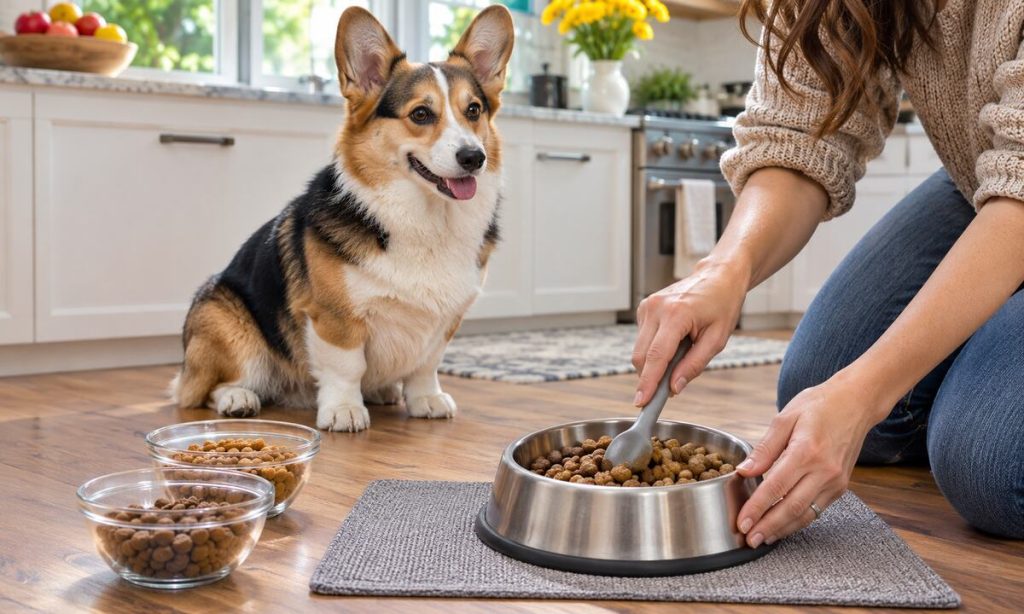
Switching a Corgi to a different food works best when the change is gradual and the new diet meets the dog’s life stage and health needs. Sudden swaps can trigger loose stool, gas, or food refusal. A Corgi’s appetite and compact build also make portion control important, because a generous scoop of a more calorie-dense food can quietly increase daily energy intake. Start with the label and your veterinarian’s advice when medical issues are involved.
If you are introducing dog food for a Corgi, plan the transition before opening the new bag. Know the calories per cup, the old food’s portion, and whether the new recipe is complete and balanced for the right life stage. This guide outlines a practical mixing schedule, what to monitor, and when to slow down or call a veterinarian. There is no need to rush a healthy dog through a change.
Confirm the New Diet Is Appropriate
Read the nutritional adequacy statement on the package. The FDA explains that a ‘complete and balanced’ pet food claim is supported by recognized AAFCO nutrient profiles or feeding trials. Match the stated life stage to your Corgi, such as growth or adult maintenance. Do not assume a diet intended for an adult fits a puppy, pregnant dog, or animal needing veterinary nutrition care. Marketing phrases alone do not determine adequacy. For portioning, use the new food’s calorie information alongside your Corgi’s weight, life stage, and body condition; a puppy and an adult may need different amounts.
Consider why you are changing food. A supply issue, lifestyle change, or veterinarian’s recommendation may call for different planning. If the Corgi has allergies, kidney disease, pancreatitis, diabetes, or a prescribed therapeutic diet, seek professional guidance before switching. A medical diet may have a specific transition protocol or require monitoring. Avoid making several diet changes at once when you need to identify the cause of a reaction.
Calculate the Starting Portion
Check the calories per cup or other labeled serving unit for both foods. The old and new formulas may have different energy density, even if the pieces look similar. Compare the veterinarian’s calorie target, current weight, body condition, activity, and treats. Measuring by volume alone can mislead when kibble size changes. A kitchen scale can improve consistency if you know the food’s weight-to-calorie information.
Use the package’s feeding guide as a starting point, not a fixed guarantee. Observe your dog’s body shape, stool, appetite, and weight over time. If the Corgi is overweight or losing muscle, ask the veterinarian for an individualized plan rather than sharply cutting food. Treat calories count too. Try to keep rewards predictable during the transition so you can assess the new diet more clearly.
Mix Old and New Food Gradually
For a healthy dog without special instructions, begin with mostly the familiar food and a small portion of the new diet. One practical example is roughly 75 percent old and 25 percent new, then equal parts, then 25 percent old and 75 percent new, before completing the switch. Hold each step for a few meals or longer as tolerance allows. Cornell’s veterinary guidance supports gradual changes and slowing the process when gastrointestinal symptoms occur.
Some dogs adjust in several days; others need a week or two. There is no prize for reaching 100 percent new food early. Mix thoroughly so the dog cannot easily select one portion and leave the other. If the Corgi has a sensitive stomach, ask whether a slower schedule is appropriate. Do not hide new foods with rich toppings that make it difficult to judge tolerance.
Keep Meals and the Environment Consistent
Feed at the normal times in a calm place. Wash bowls after meals and provide fresh water. Limit sudden additions of new treats, table scraps, or supplements while testing a diet. Consistency helps you connect any changes in stool or appetite to the food itself. If the dog habitually eats fast, discuss safe feeding strategies with your veterinarian or qualified trainer without introducing new changes all at once. If appetite is disrupted by feeding routines, see tips for calmer dog mealtimes without changing several diet variables at once.
Watch the whole feeding routine. A dog that seems less interested may dislike the new texture or may be feeling unwell. Give a reasonable opportunity to adapt, but do not force-feed or let the dog go without appropriate nutrition. Puppies and medically fragile dogs need more urgent attention when they refuse food. The correct response depends on age, symptoms, and overall health.
Monitor Stool, Appetite, and Behavior
During each transition step, note stool consistency, frequency, vomiting, appetite, energy, itching, and any new discomfort. Mild temporary stool changes can occur, but repeated diarrhea, vomiting, blood in stool, severe lethargy, or signs of dehydration require veterinary advice. Contact the veterinarian sooner for puppies, seniors with illness, or dogs taking medications. Keep a simple log with the proportions fed and any changes.
If loose stool develops, do not automatically add more new food the next day. Cornell suggests returning toward the prior tolerated diet and restarting more slowly when a rapid switch appears to be the cause, while contacting the veterinarian when symptoms persist. A previously tolerated food may not be appropriate if the change was prescribed for medical reasons. Follow the veterinarian’s plan in those circumstances.
Handle Picky Eating Without Pressure
A Corgi may sniff a new formula and walk away. Check freshness, storage conditions, bowl cleanliness, and whether the new kibble is very different in size or aroma. Offer measured meals rather than an endless sequence of alternatives. Avoid adding highly flavored toppings that could cause digestive upset or make a balanced diet difficult to assess. If appetite drops substantially, do not wait several days to seek guidance.
Monitor whether refusal is selective or accompanied by other symptoms. Oral pain, illness, stress, or medication can alter eating behavior. If the dog eats the old food eagerly but rejects the new formula, the transition may simply need more time or reconsideration. A veterinarian can help distinguish preference from medical concern. Never treat prolonged appetite loss as stubbornness.
Review Results After the Transition
Once the Corgi eats the new food consistently, continue tracking body condition and weight. Some formulas provide more calories per serving, so long-term portions may need adjustment. Watch the coat, stool, and activity, while remembering that those observations are nonspecific. A balanced diet should support everyday health without unintended weight gain. Review the plan at routine veterinary visits, especially during growth, aging, or major activity changes.
Store the new food in a cool, dry place according to its instructions and keep the lot number and expiration information. Avoid mixing an entire old bag with a new bag if freshness or recall tracking would become unclear. Maintain access to the current food while the transition remains underway. A few extra days of careful observation can prevent an avoidable digestive setback.
Frequently Asked Questions
These questions address common home feeding decisions during the switch. Individual medical diets and health conditions can require a different timetable than the examples here.
When in doubt, use your Corgi’s symptoms and veterinarian’s recommendations to guide the pace. A cautious transition helps, but it cannot prevent every food intolerance or illness.
How long should a Corgi food transition take?
Often several days to about two weeks, depending on tolerance and veterinary advice. Slow the change if mild digestive upset occurs.
Can I switch food overnight if it looks similar?
A sudden change may still upset digestion. Ingredient and nutrient differences are not always obvious from appearance. Gradual mixing is usually safer.
Should I use the same cup amount of new kibble?
Not automatically. Compare calories per cup or weight, because formulas differ in energy density. Adjust to a suitable calorie target.
What if my Corgi gets diarrhea?
Pause the progression and contact your veterinarian if symptoms persist, worsen, or include blood, vomiting, or lethargy. A slower restart may be appropriate.
Is a puppy transition different?
Yes. Puppies have life-stage nutritional needs and can be more vulnerable to poor intake or dehydration. Ask your veterinarian about timing and food adequacy.
Final Words
Introduce dog food for a Corgi by checking life-stage adequacy, comparing calorie density, and blending new food into familiar meals over a gradual schedule. Keep portions measured and monitor stool, appetite, energy, and weight. Slow down when the dog struggles, and obtain veterinary guidance for persistent symptoms or medical conditions. A steady routine makes the change easier to evaluate.
For broader nutrition context, the site’s dog food for a Corgi overview explains typical adult feeding considerations. The right transition is one your dog tolerates comfortably, not a deadline on a calendar. Adjust portions as needed and keep regular veterinary nutritional assessments.









