
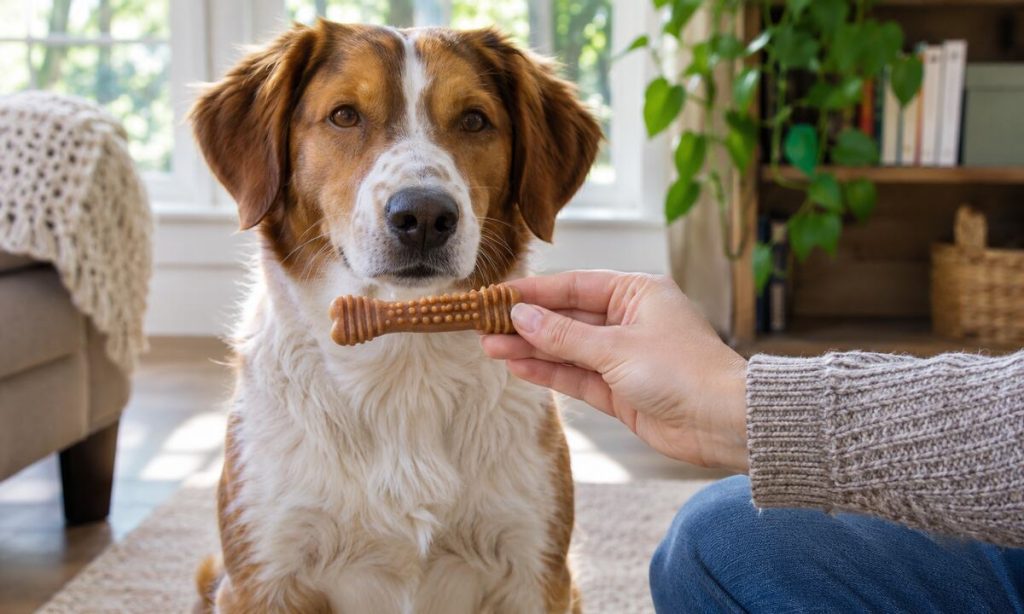
Dental chews are often marketed for bad breath, but their size and texture affect safety more than any freshness claim. A chew should be large enough that a dog cannot swallow it whole and appropriate for its mouth, body weight, age, and chewing habits. An oversized or very hard chew can also cause problems. Bad breath may signal dental disease, so a chew should never be used to hide symptoms that need veterinary attention.
When assessing dog chews for bad breath, use the product’s current size chart as a starting point, then evaluate the individual dog. This guide explains practical sizing checks, texture, calories, supervision, and when to avoid the chew. There is no single safe measurement that applies to every dog. The objective is a manageable chewing activity that does not replace daily oral care or an examination.
Why Chew Size Matters
A chew that fits easily across a dog’s mouth can become a swallowing hazard if it is gulped without adequate chewing. The ASPCA warns that inappropriately small chews may cause choking or an intestinal blockage. A long chew can also become dangerous as it wears down. Size must be reassessed during use, not just when the package is opened. Dogs who swallow treats quickly deserve especially careful supervision.
Too large is not automatically better. A rigid oversized object may encourage crushing bites, strain the mouth, or contribute to tooth fractures. Cornell University’s veterinary guidance warns that very hard chewing objects can break teeth. Consider the dog’s jaw shape and dental history as well as body weight. A flat-faced dog or one with missing teeth may struggle with an otherwise ordinary size.
Read the Weight and Age Guidance
Start with the manufacturer’s specified weight range and age limitations. Weight bands are not a guarantee of fit, but they prevent obvious mismatches. Check whether the instructions assume a fully grown adult, a puppy with developing teeth, or a senior dog. If the dog falls between categories, ask your veterinarian rather than arbitrarily choosing the larger item. Never substitute an adult chew for a puppy simply because the puppy enjoys chewing.
Body weight is only one clue. Two dogs at the same weight can have very different jaw shapes and chewing styles. An older dog with periodontal disease may need a different approach from a healthy younger dog. A small dog may have a crowded mouth and greater difficulty grasping bulky shapes. Avoid treating a chart as a personalized dental safety assessment.
Assess Length and Swallowing Risk
Observe the dog holding the chew under close supervision. The object should not be small enough to disappear entirely into the mouth without chewing. It should be easy to grasp rather than slippery or prone to rotating into the throat. Check its dimensions again once the dog has consumed part of it. Remove the last piece before it becomes a swallowable plug. The exact discard point varies by dog and shape.
Never leave an edible chew unattended in a crate or overnight. Supervise chewing from nearby and know how to take the item away calmly if needed. If the dog becomes possessive, use an established trade cue rather than a sudden grab. The site’s chew safety guide offers a broader checklist for damaged and undersized items. Use the same conservative judgment for dental chews.
Check Hardness and Texture
Dental products vary from softer edible shapes to dense, nearly rigid pieces. A chew that feels like a rock can place damaging force on teeth. Vets commonly advise against bones, antlers, and very hard objects for this reason. A thumbnail indentation check can offer a rough warning about hardness, but it does not certify that a chew is safe. Teeth with previous cracks, wear, or pain may require extra restrictions.
Look for edges that crumble into large hard chunks or splinter-like fragments. A chew should not have sharp broken surfaces that can injure the mouth. If the dog uses powerful crushing bites, becomes frantic, or shows discomfort, end the session. Do not interpret the amount of chewing as proof of dental benefit. A safer texture and proper fit are more important than maximal chewing time.
Remember Calories and Ingredients
Dental chews are usually treats that add energy to the daily diet. Read the calorie information and consider the full day’s food allowance, especially for overweight dogs. A large chew chosen solely for size may provide too many calories. Ingredient restrictions also matter for dogs with food allergies, gastrointestinal disease, or prescribed diets. A veterinarian can help evaluate how a chew fits an individual feeding plan.
Some products make claims about plaque control or breath freshness, but their wording does not replace a dental examination. Bad breath often results from oral bacteria, plaque, or disease, and can sometimes have other medical causes. Do not change to a stronger-smelling or harder chew in an effort to suppress the odor. Focus on the underlying cause and a sustainable oral-care routine.
Spot Signs of Dental Pain
Changes during chewing can be more informative than the breath itself. Watch for one-sided chewing, dropping food, pawing at the face, excessive drooling, bleeding gums, or reluctance to eat. Dental pain may be subtle, and a fractured tooth may not cause obvious crying. Cornell University describes how hard objects can fracture teeth. Seek veterinary care if you suspect injury or persistent mouth discomfort.
A chew is not a treatment for gum disease, broken teeth, or oral infection. Regular toothbrushing and veterinary dental visits remain important. The site’s guide to dental pain signs provides more context for changes in eating and chewing. Do not delay an exam because a chew briefly makes the breath smell different.
Adjust the Routine Over Time
Reevaluate chew size as a puppy grows, an adult dog gains or loses weight, or a senior dog develops dental changes. A shape that was manageable last month may become inappropriate after an extraction or new dental diagnosis. Keep fresh water available and follow any feeding interval instructions. Discard leftovers once they are small or damaged, rather than saving them to maximize value.
Record reactions that concern you, such as vomiting after chewing, diarrhea, discomfort, or swallowing unusually large pieces. Contact a veterinarian when symptoms occur. Choking, inability to breathe normally, collapse, or repeated unproductive retching requires urgent care. Store unused treats according to their label, away from pets and children. A calm, supervised chewing routine is preferable to any claim that more chew time automatically means healthier teeth.
Frequently Asked Questions
These answers help with common sizing and safety decisions, but no chart can determine risk for an individual mouth. A veterinarian should review any dog with known dental disease or unusual swallowing habits.
Bad breath deserves attention independent of chew size. The goal is good oral health, not merely a temporary scent change after a treat.
Can I choose a chew by dog weight alone?
No. Weight guidance is a starting point. Mouth shape, missing teeth, chewing strength, and swallowing habits also affect safety.
Should a dental chew be larger than the mouth?
It should not fit entirely into the mouth in a way that can be swallowed whole. Exact safe dimensions vary, and oversized hard chews also pose risks.
Is a harder chew better at cleaning teeth?
Not necessarily. Very hard objects can fracture teeth. Use veterinary guidance for oral-care choices instead of treating hardness as a measure of effectiveness.
When should I remove the leftover piece?
Remove it before it becomes small enough for the dog to gulp, or whenever cracks, sharp edges, or distress appear.
Does bad breath always mean the chew is too small?
No. Persistent bad breath often suggests dental issues and deserves a veterinary assessment. A different chew size is not a treatment for disease.
Final Words
Size dog chews for bad breath by combining the labeled weight range with the dog’s mouth shape, chewing style, dental health, and the changing size of the chew during use. Avoid tiny swallowable pieces and exceptionally hard textures. Watch every session and discard damaged remnants. A treat should be a manageable activity, not a test of how forcefully a dog can bite.
For background on the broader category, see the site’s dog chews for bad breath guide. Speak with a veterinarian about persistent odor or signs of dental pain. Toothbrushing and professional evaluation matter far more than masking breath with an edible chew.
Reference
These veterinary and animal-welfare references inform the discussions of dental health, chew hardness, choking, and obstruction risk. Chew safety is a health concern rather than merely a packaging preference.
Individual dental conditions can change what is safe. A veterinarian should advise when the dog has a painful mouth, a history of swallowing objects, or symptoms after chewing.
- Cornell University College of Veterinary Medicine — Dental Disease and Home Dental Care.
- Cornell University College of Veterinary Medicine — Risks From a Fractured Tooth.
- ASPCA — Position Statement on Dog Chews/Treats.
- American Veterinary Medical Association — Pet Dental Care.









