
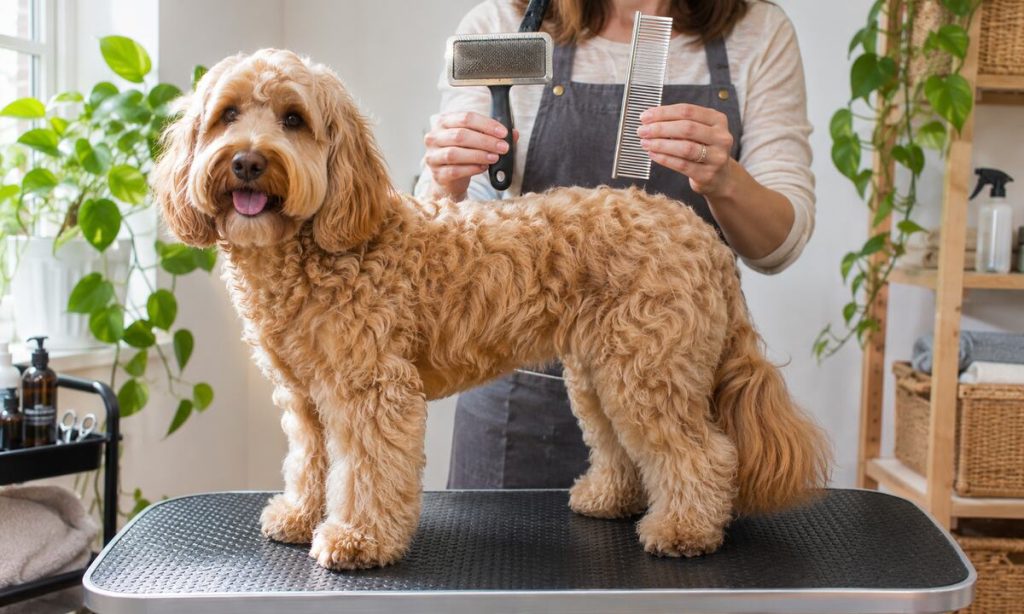
Doodles do not share one predictable coat. A Labradoodle may have loose waves, a Goldendoodle may have tight curls, and an individual dog’s coat may change with age. That variety makes brush choice a matter of hair length, density, tangles, and skin sensitivity rather than a breed label. A tool that skims the surface can leave mats underneath, while stiff pins and excessive pressure can irritate skin. The right brush should make regular grooming gentle and thorough.
If you are searching for a dog brush for doodles, examine your dog’s actual coat first. This guide focuses on differences among curly, wavy, and mixed coats rather than a single Goldendoodle style. It explains brush shape, pin length, comb checks, technique, and when a professional groomer is needed. Consistent coat care helps you discover small tangles before they become painful.
Identify the Coat in Front of You
Look closely at the hair near the shoulders, chest, belly, legs, and behind the ears. Some doodles have soft loose waves; others develop dense curls that hold shed hair close to the skin. Mixed coats can feel smooth along the back but form dense tangles under a harness. Do not assume that a dog with little visible shedding needs less brushing. Loose hair can stay trapped inside curls instead of falling on the floor.
Part the coat with your fingers and check how easily you can reach the skin. Note where the hair catches or separates into clumps. A puppy’s soft coat may require a different tool as adult texture develops. Record trouble spots and share them with a groomer. A useful grooming routine is based on the coat’s changing condition, not a fixed claim about what all doodles need.
Understand What Each Tool Does
A slicker brush uses fine angled pins to lift loose hair and work through many curly or wavy coats. A metal comb checks whether brushing reached through the hair rather than only smoothing the outside. A soft bristle brush may distribute surface oils but may not reach dense curls. Tools should have smooth construction and be used lightly. Avoid treating the stiffest-looking brush as automatically the most effective.
Check whether the brush has flexible pins, a smooth head, and a handle you can control. A longer pin may reach deeper into a thick coat, but it can also apply more pressure if used carelessly. A short pin may be comfortable on sparse areas but ineffective under dense hair. Matching tools to the coat may mean using a brush and a comb together rather than searching for one magical attachment.
Match Pin Length to Coat Depth
Separate a small section of hair and observe its thickness. A brush must be able to reach useful depth without scraping skin. When the coat is long, work in sections and check behind each brush pass with a comb. If the comb snags close to the skin, surface brushing has not finished the job. Do not force the comb through. Stop and gently separate an easy tangle or ask a professional for help.
Pay special attention to friction zones: behind the ears, under collars and harnesses, in the armpits, and along the inner legs. These locations may mat faster than the back. VCA notes that long and curly coats often require frequent brushing to prevent knots. A gentle, repeated routine is better than a rare marathon session that becomes painful for the dog.
Check Brush Pressure on Sensitive Skin
Before grooming, run the tool carefully across your own forearm to understand its sharpness and resistance. This is only a rough sensitivity check; dog skin remains different. Keep the head flat and use light strokes rather than driving pins down through the coat. Hold loose skin steady when needed without pulling. Watch for twitching, flinching, licking, or turning to bite the brush. These are signals to adjust or stop.
Do not use a pin brush over open sores, inflamed skin, or tight mats. If redness appears after a few strokes, reduce pressure and reassess the tool. A distressed dog may associate future brushing with discomfort, making routine care harder. Begin with small sections and reward calm behavior. Training a dog to accept grooming takes patience, not stronger grip.
Use a Section-by-Section Routine
Choose a quiet non-slip surface. Start with an area the dog tolerates and separate the coat into manageable sections. Brush in the direction of growth using short, controlled strokes. Follow with a comb to confirm that the hair separates without pulling. Proceed gradually from easier areas to more sensitive spots. End before the dog becomes frustrated. It is reasonable to groom one small region at a time across several sessions.
Check under the collar, behind the ears, around the legs, and beneath the tail as appropriate. The site’s slicker brush overview for Poodle-type coats adds background on brush shapes, though a doodle’s coat can be less predictable. Never cut a tight mat near the skin with household scissors. Thin skin and movement make accidental cuts possible. Seek professional grooming support for severe mats.
Account for Bathing and Coat Changes
Water can tighten preexisting tangles. Before bathing a doodle, check for mats and remove manageable knots gently. Use a dog-appropriate washing routine, rinse well, and dry the coat thoroughly using a method the dog tolerates. Avoid leaving a dense underlayer damp. Dogs with very curly coats may need professional drying and brush-out techniques to prevent new tangles after washing.
Reevaluate the brush when the coat changes through puppyhood, seasonal shedding, a new haircut, or aging. A close trim may require lighter care than a long winter coat. A dog with skin allergies or an infection may need veterinary treatment before normal brushing resumes. The site’s Goldendoodle brush selection guidance discusses one common coat pattern, but always check the individual dog.
Know When to Call a Groomer or Veterinarian
If a brush repeatedly catches at the skin, a mat may be too dense to remove safely at home. Groomers can evaluate the coat and help choose techniques that protect the animal. Veterinary advice is appropriate for redness, painful skin, unusual hair loss, odor, sores, or obsessive scratching. A brush does not treat an infection or resolve the cause of itching. Continued brushing over injured areas can worsen the problem.
Set realistic maintenance expectations. A longer coat needs more frequent attention and may require a shorter groom if the household cannot maintain it comfortably. That is not a failure of the dog or owner. A well-managed, practical coat length is preferable to hidden painful mats. Review tool condition too: bent pins, rough edges, or loose components are reasons to stop using a damaged brush.
Frequently Asked Questions
These answers address common questions about brush types and grooming schedules. Because doodle coats vary within and across mixes, use the dog’s individual hair and comfort as the deciding evidence.
Brush selection is an ongoing process. If grooming becomes difficult, a qualified groomer can show safe sectioning and comb checks before tangles become severe.
Is a slicker brush suitable for every doodle?
No single tool suits every coat. Slickers can help with many curly coats, but pin length, pressure, coat density, and skin condition determine suitability.
Why does a comb snag after brushing?
The brush may have smoothed only the surface. A comb can reveal deeper tangles. Do not force it through a tight mat; use gentle sectioning or professional help.
How often should doodles be brushed?
Long or dense curly coats may need daily attention, while shorter coats vary. Inspect friction areas frequently and adjust the routine to actual matting risk.
Can I cut mats out with scissors?
Avoid cutting tight mats near the skin yourself because accidental injury is easy. A groomer or veterinarian can advise safe removal.
When should I replace a grooming brush?
Replace it when pins bend or break, sharp edges develop, the handle loosens, or cleaning no longer removes accumulated debris safely.
Final Words
Choose the right dog brush for doodles by checking actual curl pattern, coat depth, skin sensitivity, and the tool’s ability to work without pulling. A gentle slicker and an appropriate finishing comb often serve different purposes. The goal is complete but comfortable coat care, not simply collecting hair on the brush. Change technique when the dog or coat changes.
For more focused context, see the site’s dog brush for doodles discussion through its Goldendoodle example. Use short sessions, check high-friction areas, and seek grooming or veterinary help when needed. Maintaining comfort is more important than making a coat look perfectly fluffy at all times.









