
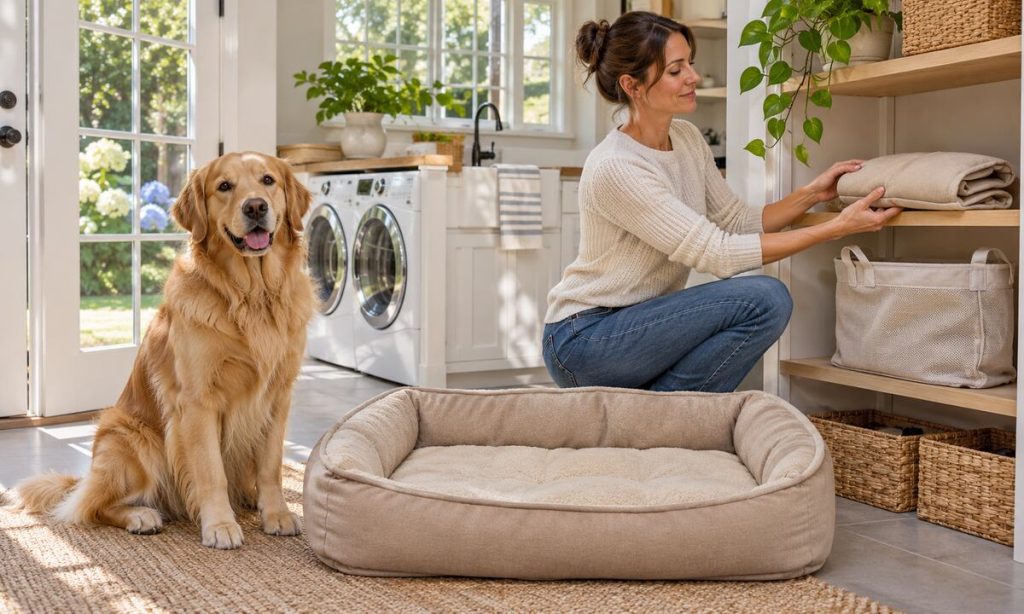
Storing a spare dog bed seems simple until an old cushion comes out smelling damp or has lost its shape. Golden Retrievers often need large bedding, and bulky foam is easily damaged by moisture, sharp folds, or long compression. A safe storage routine begins with cleaning and complete drying, then protecting the materials from pests, heat, and dampness. This is especially useful when rotating seasonal beds, keeping an extra cover, or saving a bed during travel.
If you own dog beds for Golden Retrievers, treat the cover and the inner cushion as different materials. The care label for one may not apply to the other. This guide explains how to prepare bedding for storage, choose a dry place, avoid damaging foam, and inspect it before reuse. The goal is a bed that remains clean, structurally sound, and comfortable when your dog needs it.
Clean Everything Before Putting It Away
Begin with a close inspection. Vacuum loose hair and crumbs from the cover, seams, and underside. Check for saliva stains, urine marks, muddy paw prints, or lingering moisture. Remove the cover when the design allows and wash it according to the care label. Do not assume high heat is safe for every fabric or zipper. Cleaning before storage matters because soil and organic residues can produce odors and attract pests during months of inactivity.
Handle the insert separately. Many memory foam or layered foam cores should not be immersed in water. Follow the manufacturer’s spot-cleaning and drying directions. A damp core sealed in a bag can remain wet long after its surface feels dry. Allow generous airflow and check thick sections before packing. If a bed has persistent mold-like stains, serious contamination, or damaged inner filling, replacing it may be safer than storing it.
Dry the Bedding Thoroughly
After laundering, dry fabric to the standard required by its label. Turn seams and zipper areas outward when practical to check for hidden dampness. Foam may require more time because moisture moves slowly through dense material. Never pack bedding while it feels cool and wet, smells musty, or leaves moisture on your hand. A clean bed is not ready for storage until all parts are dry.
Choose a drying location with good airflow and moderate temperature. Avoid putting foam against a heater or in direct scorching sun if its materials could degrade. Check that the core has returned to its normal thickness after cleaning. If you must delay storage, leave the pieces in a clean, ventilated area rather than compressing them into a closed plastic container. Mold prevention starts before the closet door closes.
Select a Dry, Stable Storage Space
A climate-controlled closet or clean indoor storage room is generally more predictable than a damp garage, basement corner, or outdoor shed. Keep bedding off bare concrete where condensation, dust, and pests may collect. Do not place it beneath pipes that can drip or next to chemicals, paints, and strongly scented cleaners. A shelf or raised platform can separate a large cushion from floor moisture while allowing visual checks. For outdoor setups, waterproof dog bed selection explains how intended exposure changes material priorities.
Inspect the space seasonally. Condensation around windows, recurring musty smells, or visible water damage suggests that the location is unsuitable. Protect bedding from direct sunlight that can fade fabrics, and from heat that may affect adhesive layers or foam. Golden Retriever bedding takes considerable room; making space before packing helps avoid crushing it under boxes. A good storage area is boring in the best possible way.
Avoid Harmful Compression and Folding
Some covers fold easily, but thick foam inserts may crack, crease, or fail to rebound after long-term tight compression. Check the manufacturer’s specific storage advice before rolling, vacuum-sealing, or forcing a cushion into a small bag. A memory foam bed is not automatically designed for repeated compression just because it arrived compressed for shipping. Long pressure from stacked objects can also create a permanent hollow.
Store large foam pieces as flat as space allows, with no heavy load on top. If a cushion must be propped upright briefly, ensure it stays supported and cannot bend sharply or fall onto a pet or child. Avoid hanging heavy bedding from one corner, which can stretch fabric and seams. For a bulky bed, keeping the insert intact and folding only its removable cover often preserves shape better.
Use Packaging That Matches the Material
Clean breathable covers can help shield bedding from dust while allowing some air exchange. A sealed plastic bag may protect against splashes, but trapped residual moisture can become a problem in humid spaces. Follow any specific packaging instructions supplied with the bed. Whatever container you choose, keep it clean, dry, and large enough that zippers, seams, and foam are not forcibly distorted.
Label the stored item with size, part count, and the date it was cleaned. Keep matching covers and liners together so pieces are not lost. Store small repair parts separately and out of the dog’s reach. If you have several beds, avoid stacking dirty used covers with clean spares. A simple inventory is useful when the bed will be stored for a season or moved between homes.
Protect Bedding From Pets and Pests
Store the spare bed where the dog cannot chew, drag, or tear it while nobody is watching. This matters for young dogs that explore fabrics and filling with their mouths. Inspect the storage area for pests before leaving textiles there. Rodent damage, insect activity, or droppings can make a bed unsuitable for reuse and may require cleaning the storage space itself. Never apply household pesticides directly to bedding that a dog will later use.
Keep scented moth products, cleaning chemicals, and strong fragrances away from pet fabrics. A dog is likely to press its face and body against the bed after it is unpacked. If the material develops a chemical odor, do not assume airing it briefly makes it safe. Follow the relevant product and veterinary guidance. The safest storage method prevents contamination instead of trying to cover it afterward.
Inspect Before Returning the Bed to Use
Unpack the bed in good light. Smell for mustiness and check for moisture, mold-like spotting, insect damage, loose threads, and foam that no longer rebounds. Let the materials air out. Refit the clean cover and verify that the cushion lies evenly on the floor. Check that the usable sleeping area still fits your dog, particularly if the Retriever grew or gained weight while the bed was stored.
Place the bed where your dog can approach comfortably and observe the first rest period. A once-suitable bed may not meet a senior dog’s mobility needs. If you are considering a different form factor, the site’s large-dog elevated bed guidance explains access and stability questions. Replace any bedding that remains compressed, damaged, or unhygienic rather than relying on a clean-looking cover.
Frequently Asked Questions
Storage decisions depend on foam construction, fabric care, climate, and how long the bed will remain unused. These answers emphasize conditions to check, not a fixed maximum storage period. Whenever instructions for a specific bed differ, follow those instructions.
Before reuse, prioritize hygiene and comfort. Storage is successful only if the bedding remains safe to lie on and can support the dog’s body without awkward pressure or exposed filling.
Can I vacuum-seal a foam dog bed?
Only when the manufacturer explicitly permits that storage method. Long compression can damage some foams, even if the mattress was shipped compressed once.
Is a garage a safe storage space?
Only if it stays clean, dry, and temperature appropriate for the material. Humid garages and bare concrete floors can expose bedding to condensation and pests.
Should I wash the bed again after storage?
Inspect first. A clean, well-stored cover may need only airing, but visible dust, odor, or contamination calls for appropriate washing. Never use damaged foam.
Can I store a bed while slightly damp?
No. Trapped moisture can cause odors and microbial growth, especially in thick foam or sealed packaging. Dry each component completely first.
How do I know stored foam has failed?
Look for permanent creases, cracking, uneven support, inability to rebound, musty odor, or contamination. Replace the affected component when safety or comfort cannot be restored.
Final Words
To store dog beds for Golden Retrievers safely, remove hair and dirt, wash approved fabrics, dry every layer thoroughly, and use a clean, stable storage space. Keep foam free from prolonged heavy compression and protect everything from pests, moisture, and chemicals. A few minutes of preparation can prevent damage that cleaning alone cannot reverse.
For general size and design context, return to the site’s dog beds for Golden Retrievers guide. Before bringing a stored bed back into daily use, inspect the seams, foam, and fit as if you were evaluating it for the first time. A spare bed should be ready for comfortable rest, not a surprise cleaning project.









