
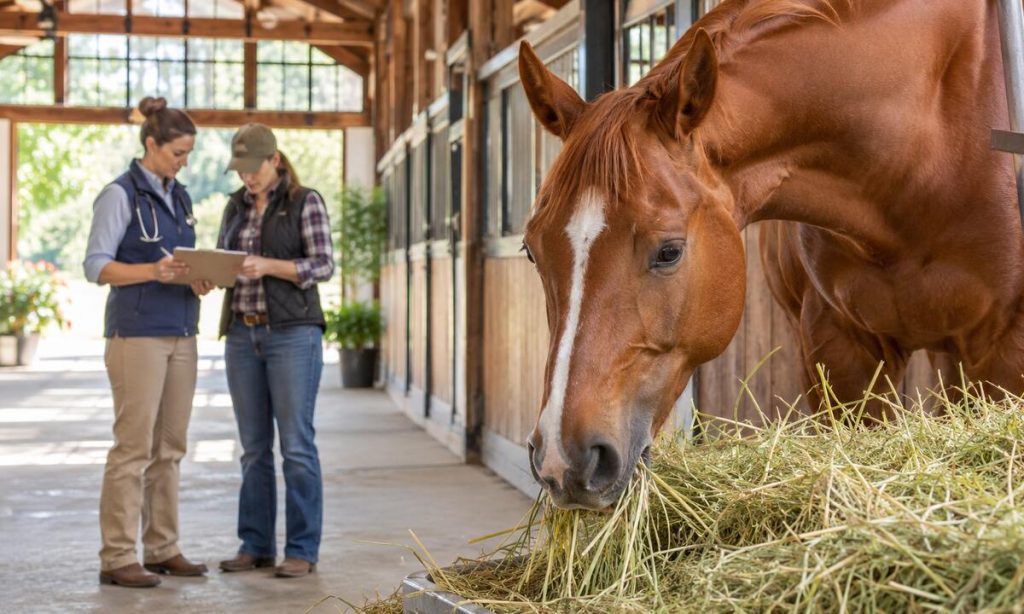
Choosing an ulcer supplement for a horse can feel urgent when appetite, attitude, or performance changes. Yet there is a critical distinction between supportive nutrition and treatment for gastric disease. The common mistakes when choosing an ulcer supplement for horses often begin before an owner reads a label: assuming the horse has ulcers without a veterinary assessment. A practical approach starts with the horse, not the container.
This guide explains the pitfalls that matter most, from confusing stomach and hindgut problems to overlooking forage and medication. It also shows how to assess claims, document changes, and know when professional care cannot wait. If you are researching an ulcer supplement for horses, use these questions to organize a conversation with your veterinarian. The goal is sensible support within a complete care plan, never a substitute for diagnosis.
Mistake 1: Treating Suspicion as a Diagnosis
Reduced appetite, girthiness, weight loss, and a dull attitude may prompt an owner to search for ulcer support. None of these signs proves a horse has gastric ulcers. UC Davis explains that many affected horses have no obvious symptoms, while similar behavior can arise from dental disease, musculoskeletal pain, stressful management, and other gastrointestinal conditions. Buying a supplement based only on one sign risks delaying treatment for the real cause.
A veterinarian can assess the history, feeding pattern, exercise, pain, medication exposure, and physical findings. Gastroscopy is the definitive way to identify gastric ulcers and their location. An owner who keeps dated notes about eating behavior, manure, performance, and discomfort can help that examination. Consult the site’s guide to signs of ulcers in horses for warning signs and likely veterinary checks. New, persistent, or worsening symptoms deserve evaluation even if a supplement appears to help.
Mistake 2: Assuming a Supplement Heals Ulcers
The phrase “stomach support” can sound reassuring, but it does not establish that a product treats ulcers. UC Davis veterinary resources emphasize that no diet or supplement is a stand-alone cure. Some ingredients may affect gastric acidity for a short time or contribute to overall nutrition; controlled evidence for meaningful healing varies. Treat a label’s promise as a claim requiring proof, not as a diagnosis or treatment plan.
In the United States, veterinary medicines and feed supplements have different purposes and oversight. A product marketed for digestive comfort should not be confused with an FDA-approved treatment prescribed under veterinary direction. The correct therapy depends on the type and severity of lesions, the horse’s health, and follow-up findings. This is one of the most consequential common mistakes when choosing an ulcer supplement for horses: substituting a reassuring description for a proven treatment pathway.
Mistake 3: Mixing Up Gastric and Hindgut Problems
The stomach and hindgut are separate parts of the horse’s digestive system. Gastric ulcers involve the stomach lining; the phrase “hindgut ulcers” is sometimes used loosely for problems in the large intestine. Their causes, diagnostic methods, and care plans are not interchangeable. A product presented as general gut support cannot tell you which organ is affected. Even ordinary changes in manure do not establish a specific ulcer diagnosis.
Ask what condition the ingredient is supposed to address, what outcome was studied, and whether the evidence involved actual horses with a confirmed diagnosis. Avoid assuming studies of one disease apply to another. The related discussion of hindgut digestive issues is useful when you need to separate digestive claims from known disease. If a horse develops significant abdominal pain, repeated rolling, reduced manure, or concerning systemic signs, seek urgent veterinary assessment rather than attempting a home supplement trial.
Mistake 4: Ignoring Feeding and Management
A horse’s feeding schedule is not background detail. Long periods without forage may leave the stomach exposed to acid, while high-starch meals, travel, intensive training, and changes in routine may contribute to risk. UC Davis emphasizes consistent forage access and thoughtful management. The simple act of changing a supplement cannot compensate for an unsuitable feeding pattern or persistent stressor.
Review total daily forage, meal intervals, concentrate quantity, water availability, turnout, exercise, and recent disruptions with the care team. Do not make abrupt ration changes during an illness. A veterinarian and qualified equine nutrition professional can tailor changes for horses with metabolic disorders or special calorie needs. The guide to feeding horses with ulcers offers a starting point for that discussion. Nutrition deserves attention, but a feed adjustment is still not a replacement for indicated medical treatment.
Mistake 5: Reading the Front Label but Not the Details
A striking label can hide practical questions about ingredient identity, quantities, directions, and interactions. “Natural” is not a guarantee of safety. Herbs, minerals, buffering compounds, and concentrated nutrients may already be present elsewhere in the ration. More is not necessarily better, especially when the horse receives several fortified feeds or supplements. Review the full ingredient panel and daily serving information, rather than relying on a product’s marketing summary.
Before any change, make an inventory of feed, forage, treats, medicines, and existing supplements. Record actual quantities, not just brand categories. Ask your veterinarian whether an ingredient could interfere with treatment, produce an unwanted nutrient excess, or complicate monitoring. When evaluating introducing a gut-health supplement, use one change at a time so an adverse reaction is easier to identify. This careful review prevents common mistakes when choosing an ulcer supplement for horses that are otherwise difficult to spot.
Mistake 6: Expecting Overnight Results
Some owners interpret a quieter ride or a better meal as proof that the chosen approach is healing the stomach. Behavior and appetite fluctuate for many reasons, including weather, workload, social stress, and concurrent care. A few comfortable days do not confirm ulcer healing. Equally, a lack of obvious symptoms does not exclude disease. Monitoring should be structured and tied to goals that matter to the horse.
Agree with the veterinarian on what to record and when a follow-up assessment is appropriate. Track appetite, body condition, training tolerance, medication adherence, feeding times, and new concerns. Do not increase a dose because improvement feels slow. Do not stop prescribed therapy when behavior improves unless the veterinarian agrees. A successful plan uses clinical judgment and, when indicated, repeat examination rather than trusting an owner’s impression alone.
A Safer Checklist Before Making Any Change
Begin with the reason you are considering additional nutrition. Is there a confirmed veterinary diagnosis, a known nutritional gap, or simply a vague concern? Then examine the full ration and the horse’s current treatment. Ask whether the intended benefit is supported by equine research and whether a measurable outcome exists. This process is useful even if you decide that no supplement is needed.
Bring a short, clear record to your appointment. Include the horse’s age, current weight estimate, living conditions, forage schedule, grain meals, exercise, medicines, and reactions to prior diet changes. Photograph labels or write down exact ingredients. Ask who will monitor progress and what change would prompt stopping. The best decision is the one that integrates nutrition, welfare, and veterinary care, not the one with the longest list of promises.
- Confirm the health concern and whether diagnostic testing is needed.
- Check the complete ration and every current medication or supplement.
- Ask for species-specific evidence, known risks, and realistic outcomes.
- Plan one change at a time with documented observations.
- Know which symptoms require urgent veterinary care.
Frequently Asked Questions
These questions often come up when owners begin reviewing digestive support. The answers distinguish reasonable nutritional planning from the diagnosis or treatment of a potentially painful disease. They are general guidance and cannot replace an examination of an individual horse.
If your horse has severe abdominal pain, repeated lying down or rolling, refuses feed, or appears distressed, contact a veterinarian promptly. Do not wait for a new feeding schedule or supplement to take effect. Use the answers below to prepare questions for the care team, especially when symptoms have persisted.
Can a supplement cure gastric ulcers in a horse?
Do not assume so. A supplement is not a substitute for veterinary diagnosis and an indicated treatment plan. Evidence for individual supportive ingredients varies.
How can a veterinarian confirm gastric ulcers?
Gastroscopy lets the veterinarian inspect the stomach lining and determine where lesions are located. Symptoms alone are not definitive.
Does a horse need extra gut support when already eating balanced feed?
Not necessarily. Review the full ration with a veterinarian or equine nutrition professional before adding nutrients that may already be supplied.
Should I stop the supplement if appetite changes?
Contact the veterinarian for advice. Note the timing, amount given, other changes, and any signs of colic or illness. Severe signs need urgent care.
What is the most useful question to ask about a label?
Ask what evidence in horses supports the specific claimed outcome, and whether the product is safe alongside the horse’s current feed and treatment.
Final Words
The common mistakes when choosing an ulcer supplement for horses are preventable when owners separate nutritional support from disease treatment. Start by understanding the horse’s symptoms and existing ration. Then assess the evidence, discuss interactions, and set a meaningful monitoring plan with the veterinarian. Do not let a vague health claim postpone diagnosis.
If you are still comparing an ulcer supplement for horses, treat the information as one piece of a broader care conversation. The more useful question is not which label sounds strongest, but which steps help your individual horse safely. Thoughtful forage access, careful management, veterinary assessment, and realistic expectations belong together.
Reference
The following veterinary and university resources support the discussion of diagnosis, feeding practices, and treatment boundaries. They were consulted as background evidence for this medical-topic guide, not as endorsements of any supplement.
For specific symptoms, medication decisions, or dietary changes, consult a licensed equine veterinarian familiar with your horse. Published evidence describes populations and general approaches; an individual care plan needs clinical assessment.









