
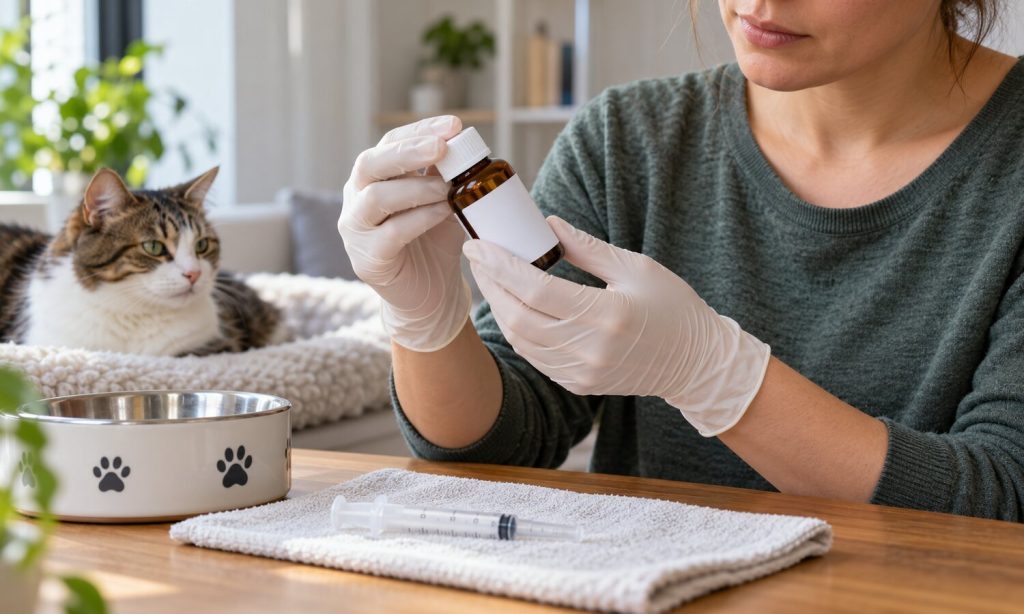
Common setup and adjustment problems with appetite stimulant often begin with unclear directions, a difficult medicine form, or uncertainty about what to do after a missed dose. Cats may also keep eating poorly because the underlying cause still needs treatment. Do not change a dose or switch products on your own. Ask the prescribing veterinarian to clarify the plan and tell you when to follow up. A written medication list and food log can make the conversation more useful. For a broader checklist, see our guide to questions to ask before using medicine for a cat. Clear communication can prevent dosing mistakes and help uncover why appetite remains low. A brief call can prevent a guess from becoming another medication error. An appetite stimulant for cats should be adjusted only by the prescribing veterinarian.
Make sure the prescription is clear
Before the first dose, compare the label with the veterinarian’s instructions. Confirm the cat’s name, medication name, strength or concentration, route, schedule, and duration. If anything differs or is hard to read, call the prescribing clinic or pharmacy. Do not assume that a familiar-looking bottle contains the same medicine or strength as a previous prescription.
Ask what the medicine is intended to improve and when the clinic expects a check-in. Appetite stimulants may be used in selected situations, but poor appetite can have many causes. A medication can support a care plan without treating the underlying condition. Ask whether the veterinarian recommends additional tests, nutritional support, or treatment for nausea, pain, dental disease, or another concern.
Tell the veterinarian about all prescription drugs, over-the-counter medicines, supplements, and recent treatments. Mention chronic conditions and any previous reaction to medication. These details can affect the choice of drug and monitoring plan.
Common administration problems
The cat refuses the dose
Ask whether the medicine can be given with food or whether it must be administered separately. Some formulations have specific directions. Do not hide a dose in a full meal unless the veterinarian approves it, because the cat may not finish the food. If the cat becomes distressed or handling is unsafe, pause and contact the clinic for another method.
The medicine is spat out or vomited
Do not repeat the dose automatically. Write down the time, amount, and what happened, then call the veterinarian or pharmacist. The correct next step depends on the medication and how much may have been swallowed. Avoid giving an extra dose to make up for uncertainty.
The measuring device is difficult to use
Use the supplied oral syringe or measuring tool. Ask the clinic to demonstrate the technique and confirm where to read the measurement. Do not use a kitchen spoon or estimate a partial amount. Replace a cracked or hard-to-read syringe and keep it with the correct medicine to avoid mix-ups.
Storage and routine problems
Storage instructions differ by formulation. Read the label for temperature, light, moisture, and beyond-use requirements. Do not refrigerate or freeze a product unless directed. Keep medicine in its original labeled container, away from children and pets. If it was stored outside the allowed range, ask the veterinarian or pharmacy whether it should be replaced.
A dose log can prevent skipped or repeated doses when several people care for the cat. Record the time, person who administered it, and any issues. If a dose is missed, follow the instructions on the prescription or ask the clinic; do not double the next dose unless told to do so.
If the cat needs a different formulation, ask whether an alternative is available and whether it is appropriate. Do not split, crush, dissolve, or combine a medicine without approval. A different form may have different instructions or absorption, so the veterinary team should guide the change.
When the appetite does not improve
Record how much food is offered and eaten, along with weight if the veterinarian has asked you to monitor it. Note vomiting, stool, water intake, energy, and new behavior. If the cat continues to eat very little, loses weight, or develops other symptoms, contact the clinic rather than waiting for the next refill.
Ask whether the follow-up date should change and what signs require urgent care. Severe weakness, collapse, trouble breathing, repeated vomiting, or a suspected overdose need immediate veterinary attention. Do not increase the amount, add another stimulant, or stop other treatment without advice.
If eating improves, ask how long to continue and whether the veterinarian wants a recheck. Do not assume that a few better meals mean the cause has resolved. A clear plan can include a target amount of food, a date to report progress, and next steps if the cat’s intake remains low.
Questions that help resolve a problem
When you call, have the label and dose log nearby. Explain the problem in order: when the medicine was given, what happened, how much the cat ate, and whether any other sign appeared. Ask whether to give the next dose, how to handle missed or vomited doses, and whether the cat needs an examination. If you suspect accidental extra exposure, say so immediately.
Keep the conversation focused on this cat and this prescription. Online advice, old prescriptions, and another pet’s response cannot establish what is safe now. If the clinic is closed, use its after-hours instructions or contact an emergency veterinary service for urgent symptoms.
Before calling, check whether the issue is about the medicine or the cat’s condition. If the dose label is unclear, read it aloud to the clinic rather than interpreting abbreviations. If the cat is refusing food, explain the amount eaten and the time since the last normal meal. Mention any recent diet change, stressor, or new medicine. These details can help the veterinarian decide whether to adjust the administration routine, examine the cat, or investigate another cause.
If you travel with the medicine, keep it labeled and stored under the package’s conditions. Carry the prescription details and contact information, and avoid transferring doses into an unlabeled organizer unless the pharmacy approves that setup.
If the label becomes unreadable or detached, do not rely on a handwritten guess. Ask the dispensing pharmacy for a replacement label and verify the medication details before the next dose.
Frequently Asked Questions
Can I increase the amount if my cat still will not eat?
No. Contact the prescribing veterinarian. A lack of response may mean the plan or underlying problem needs reassessment.
Should I repeat a dose my cat spat out?
Do not repeat it automatically. Call the clinic with the medicine name, amount, and time given.
Can I mix the medicine into food?
Ask first. Some medicines have specific instructions, and a cat may not eat the entire portion.
What if the medicine was left out of the refrigerator?
Check the label and call the pharmacy or veterinarian. Do not assume it remains effective or safe.
When is poor appetite an emergency?
Urgency depends on the cat’s health and other signs. Contact a veterinarian promptly for persistent refusal to eat and seek urgent care for collapse, breathing difficulty, severe weakness, or repeated vomiting.
Final Words
Most appetite stimulant setup problems are best resolved by checking the label and calling the prescribing team before changing anything. Keep the medicine stored as directed, measure doses carefully, record food intake, and report side effects or continued poor appetite. Do not double, stop, or alter a dose without veterinary advice. Use this veterinary medicine question checklist to make the next call clear and specific Do not adjust an appetite stimulant for cats without the prescribing veterinarian’s direction..









