
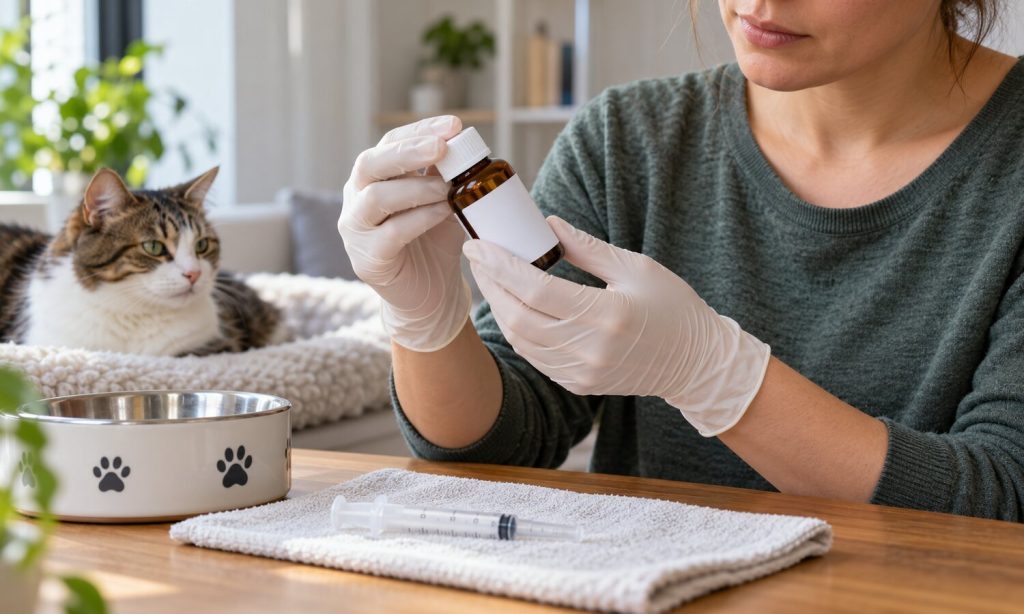
How to clean, inspect, and maintain appetite stimulant requires an important distinction: medicine itself is not cleaned or serviced. The product should stay in its original container and be used exactly as labeled. Cleaning applies to reusable measuring tools or applicators, while inspection means checking the package, label, expiration, and storage conditions. Appetite loss can signal illness, so do not begin a stimulant without veterinary direction. If a veterinarian has prescribed one, ask which parts may be washed, how to store the product, and what to do if it looks different. Our guide to questions to ask before using medicine can help you prepare. This guide focuses on safe handling of the prescription and its approved measuring tools. Small checks can prevent storage problems and make errors easier to spot early. Any appetite stimulant for cats should be handled according to the prescribing veterinarian’s instructions.
Treat the medicine as prescribed
An appetite stimulant may be prescribed as part of care for a specific cat and condition. It does not identify why a cat is eating less. A veterinarian may review the cat’s history, weight, hydration, other symptoms, current medicines, and examination findings before recommending it. Do not use a stimulant left over from another pet or a previous illness.
The phrase how to clean, inspect, and maintain appetite stimulant can sound as if the medicine is equipment. It is not. Never wash tablets, capsules, liquid medicine, or a topical formulation. Do not add water or cleaning solution to a bottle, transfer medicine to another container, or remove the pharmacy label. If the product is contaminated, spilled, or appears altered, do not use it until the veterinarian or pharmacist advises you.
Read the dispensing label before every use. Check that the cat’s name, medicine, concentration or strength, route, and directions match the plan. If the label is damaged or any detail is unclear, call the prescribing clinic or pharmacy. Do not rely on memory when several medicines or pets are in the household.
Inspect the package and product safely
Before each dose, look for a cracked container, leaking cap, broken seal, damaged blister, unreadable directions, or visible change in a liquid or ointment. Check the expiration date and any beyond-use date from a compounding pharmacy. Do not use medicine if the package has been exposed to heat, freezing, moisture, or another condition outside its storage directions.
Keep the original packaging because it identifies the drug, concentration, lot, expiration, and storage requirements. Do not combine separate medicines in one bottle. Keep a written medication list with the cat’s name, the prescribing clinic, and the pharmacy contact. These steps help prevent mix-ups and make it easier to report a concern.
Store the medicine exactly as directed on its label. Some products need refrigeration; others should be kept at room temperature. Do not assume one rule applies to every appetite stimulant. Keep medicine away from children, animals, food, direct sunlight, and damp areas. Use a closed cabinet or other secure location that still meets the labeled temperature range.
Clean reusable measuring tools
If the veterinarian or pharmacy supplied an oral syringe or measuring device, ask whether it is disposable or reusable. Follow the specific cleaning directions. In general, a reusable oral syringe may be rinsed with warm water after use, separated if designed to come apart, and air-dried completely. Do not boil it, place it in a dishwasher, or use household disinfectant unless the manufacturer or veterinary team confirms that method is safe.
Do not wash a measuring device while it contains medicine or put a wet tool back into a powder or bottle. Avoid sharing the syringe between pets or medicines unless the veterinary team explicitly approves it. Label tools when confusion is possible. Replace a cracked, sticky, cloudy, or hard-to-read device so you can measure accurately.
For topical products, do not reuse gloves or applicators if the directions say to discard them. Wash your hands after handling medicine, and prevent the cat or other pets from licking treated skin as directed. If medicine contacts your skin or eyes, follow the label instructions and contact a health professional or veterinarian as appropriate.
Maintain a safe routine
Use a consistent place and time for the dose, and record when it is given. Store the medicine away promptly after each use. Keep the dosing tool with the correct product, and do not leave medicine on a counter where a cat can knock it down or chew it. If more than one person provides care, use a shared written log to avoid accidental repeat dosing.
Ask the veterinarian what to do if a dose is missed, spat out, or vomited. Do not repeat or double a dose without instructions. If a person or another pet may have swallowed the medicine, contact a veterinarian or emergency clinic immediately and have the package available. Do not wait for signs to appear.
If the medication was compounded, follow the pharmacy’s beyond-use date and storage directions. Do not freeze, warm, or shake a preparation unless the label says to. Contact the compounding pharmacy when appearance, texture, or smell changes, or when the bottle was stored incorrectly. Do not decide that a product is safe simply because it looks normal.
Keep a separate note of the storage location and any power outage or travel exposure that may have affected temperature. That context can help the dispensing pharmacy determine whether the remaining supply should be replaced.
When food intake still does not improve
Track how much the cat eats and note vomiting, stool, water intake, energy, and behavior. A medicine that is being given correctly may still not resolve the underlying problem. Contact the veterinarian at the planned check-in, or sooner if the cat worsens, refuses food, loses weight, or develops new symptoms. Seek urgent care for collapse, breathing trouble, severe weakness, repeated vomiting, or suspected overdose.
Do not increase the amount, change the route, or add a supplement to make the medicine work faster. Do not stop a prescribed treatment based only on one good meal. Ask the veterinary team whether the plan should continue and when the cat needs a recheck. Safe upkeep means following directions and reporting changes, not adjusting the medicine independently.
Frequently Asked Questions
Can I clean appetite stimulant medicine?
No. Do not wash or alter the medicine. Keep it in the original container and clean only reusable tools according to the veterinary team’s directions.
Can I use a household spoon to measure liquid medicine?
No. Use the supplied measuring device or one approved by the veterinarian or pharmacist.
What if the liquid looks different?
Do not give it until the prescribing clinic or pharmacy reviews the product and its storage history.
Should I refrigerate an appetite stimulant?
Only if the specific label or pharmacy instructions say to. Storage needs vary by product and formulation.
What should I do with expired medicine?
Do not use it. Ask the pharmacy or veterinarian how to dispose of it safely and obtain a replacement if needed.
Final Words
The safe approach to how to clean, inspect, and maintain appetite stimulant is to leave the medicine unchanged, inspect its original package, follow its storage instructions, and clean only approved measuring tools. Keep a dose log and contact the veterinarian about changes in appearance, missed doses, side effects, or continued poor appetite. A stimulant belongs within a veterinary plan for the individual cat. Review the related medicine discussion checklist when you need to clarify handling instructions. An appetite stimulant for cats should remain within a veterinarian’s plan from storage through follow-up.









