
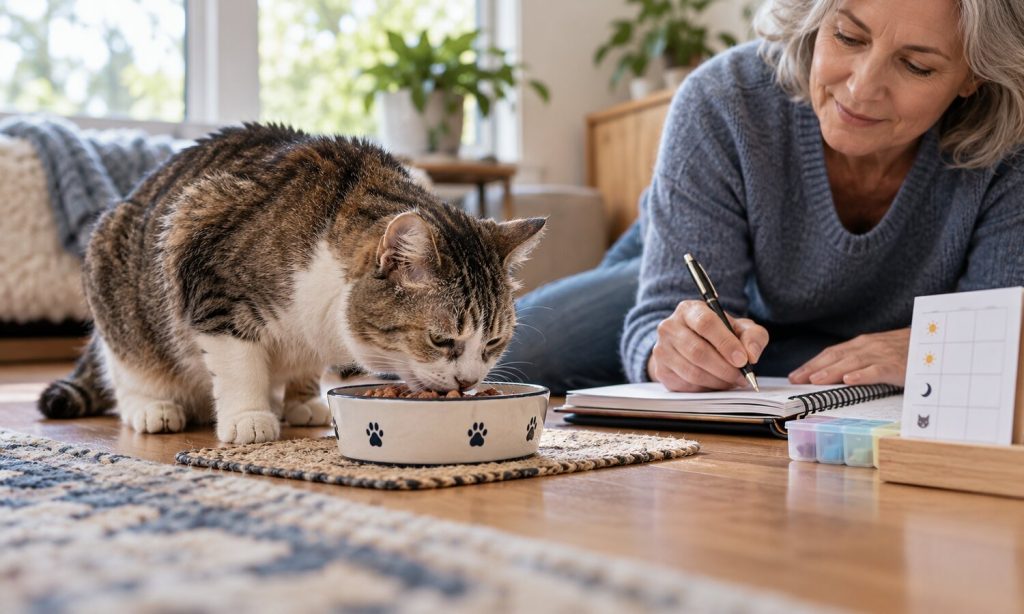
How to use appetite stimulant safely with cats begins with finding out why appetite changed. A medicine may help in selected cases, but it does not replace diagnosis, nutrition planning, or treatment of an underlying illness. Cats can become seriously unwell when they eat too little, so a sudden appetite change deserves prompt veterinary advice. Never give a human medication or another pet’s prescription to your cat. If your veterinarian prescribes an appetite stimulant, use the exact product and instructions provided, keep a record of meals and doses, and know which reactions need a call. Our guide on questions to ask before using medicine can help you prepare for that discussion. A veterinary visit can also identify problems that medicine alone cannot resolve. An appetite stimulant for cats should only be used under veterinary direction.
Why a veterinarian should assess appetite loss
Reduced eating can result from dental pain, nausea, infection, kidney disease, stress, medication effects, or many other problems. A stimulant may encourage eating while the underlying cause still needs attention. The veterinarian will consider the cat’s history, examination, weight trend, hydration, and other signs. Testing may be recommended based on what the exam suggests.
Some medicines are approved for specific feline situations. The U.S. Food and Drug Administration lists transdermal mirtazapine for managing undesired weight loss and oral capromorelin for managing undesired weight loss in cats with chronic kidney disease. Approval for a specific use does not mean every cat with a poor appetite should receive that medicine. A veterinarian decides whether a drug is suitable and how it fits the broader plan.
Contact a clinic promptly if your cat stops eating, eats far less than usual, loses weight, or has vomiting, weakness, pain, or behavior changes. Seek urgent care for collapse, breathing difficulty, repeated vomiting, severe weakness, or suspected poisoning. Do not wait several days to see whether an appetite stimulant is needed.
Before the first dose
Confirm the cat’s name, medicine name, formulation, route, and directions on the pharmacy label. If any detail differs from what the veterinarian said, pause and call the clinic or dispensing pharmacy before giving it. Ask whether the medicine should be given with food, whether gloves are needed, and how to handle a missed or late dose. Do not estimate a replacement dose.
Give the veterinarian a complete list of prescription drugs, over-the-counter medicines, supplements, and recent treatments. Mention kidney or liver disease, heart conditions, pregnancy, nursing, allergies, and any past reaction to medication. Ask what benefits you should expect and when to report that the cat is still eating poorly.
Some appetite medicines come as an oral liquid, tablet, or skin-applied formulation. Each has different handling steps. Do not crush a tablet, open a capsule, change a liquid measurement, or apply a topical medicine to a different site unless the veterinarian’s directions allow it. If the cat spits out or vomits a dose, ask what to do instead of repeating it automatically.
How to give the medicine as directed
Use the supplied dosing device for liquids and read the measurement at eye level. Keep the cat steady but gentle; stop if handling becomes unsafe and contact the clinic for another technique. Never use a household spoon to measure a liquid medicine. Wash and dry reusable devices as directed, and keep them with the medicine so they are not confused with another pet’s supplies.
For a medicine applied to the skin, follow the exact site and application directions. Wear disposable gloves if the label or veterinarian instructs you to do so. Avoid touching the treated area until it is dry, keep children and other pets away as directed, and wash exposed skin promptly. If some medicine gets on your hands or the cat licks the application site, contact the clinic for product-specific advice.
Keep the medication in its original container with the label attached. Store it at the temperature and conditions on the package, away from food, moisture, heat, children, and animals. Do not refrigerate a medicine unless instructed, and do not use it after its expiration date. Ask the pharmacy how to dispose of leftover medication safely.
Track eating and watch for changes
Measure the food offered and the amount left, rather than writing “ate some.” Record meal times, appetite, vomiting, stool, water intake, energy, and medicine time. Weigh the cat as advised by the veterinary team. A short daily log helps the veterinarian judge whether intake is improving and whether another cause needs attention.
Ask which side effects are expected with the prescribed medicine and which are urgent. Possible effects vary by drug and formulation, so use the specific client information sheet and the veterinarian’s instructions. Report unusual vocalizing, agitation, marked sleepiness, loss of coordination, vomiting, diarrhea, or a new behavior change. Seek immediate veterinary help for collapse, difficulty breathing, seizures, or a suspected overdose.
If the cat eats better, continue only for the prescribed duration. Do not increase, decrease, stop, or restart the medicine without advice. If there is no improvement by the planned follow-up, contact the clinic. A stimulant may be part of care, but the veterinarian may need to adjust the overall nutrition or diagnostic plan.
Common mistakes to avoid
Do not give a stimulant that was prescribed for a different cat, a human, or a previous illness. Do not combine it with another medicine unless the prescriber has reviewed the combination. Avoid forcing food or medicine into a struggling cat’s mouth, since this can create stress or risk aspiration. Ask for a demonstration or an alternative administration plan.
Do not rely on appetite alone as a measure of recovery. A cat may show interest in food while still losing weight or experiencing nausea. Keep the follow-up appointment and share the written log. Do not mask worsening signs by giving extra doses or adding unapproved supplements.
Frequently Asked Questions
Can I give an appetite stimulant without a veterinarian?
No. A veterinarian should assess why the cat is eating less and decide whether a medicine is appropriate. Never use another animal’s prescription or a human drug.
Should I repeat a dose if my cat vomits?
Do not repeat it automatically. Call the prescribing clinic and provide the medicine name, amount, and time given.
What if my cat refuses the medicine?
Do not force a dose if handling is unsafe. Contact the veterinarian to discuss a safer technique or another formulation.
How long should a cat take an appetite stimulant?
The duration depends on the medicine and the cat’s condition. Follow the prescription and ask the veterinarian before stopping or continuing beyond the planned course.
What signs need urgent attention?
Collapse, breathing difficulty, seizures, severe weakness, or suspected overdose require immediate veterinary help. Call the clinic about other new or worsening signs.
Final Words
Use an appetite stimulant only under veterinary direction, after discussing why the cat is eating less and how success will be measured. Check the label, follow the route and schedule, store the medicine correctly, and record food intake and side effects. If the cat worsens or the plan does not help, contact the clinic instead of changing the dose yourself. Before the next prescription, review these questions to ask a veterinarian about medicine and make sure you know whom to call after hours. Any appetite stimulant for cats should remain part of the veterinarian’s plan.









