
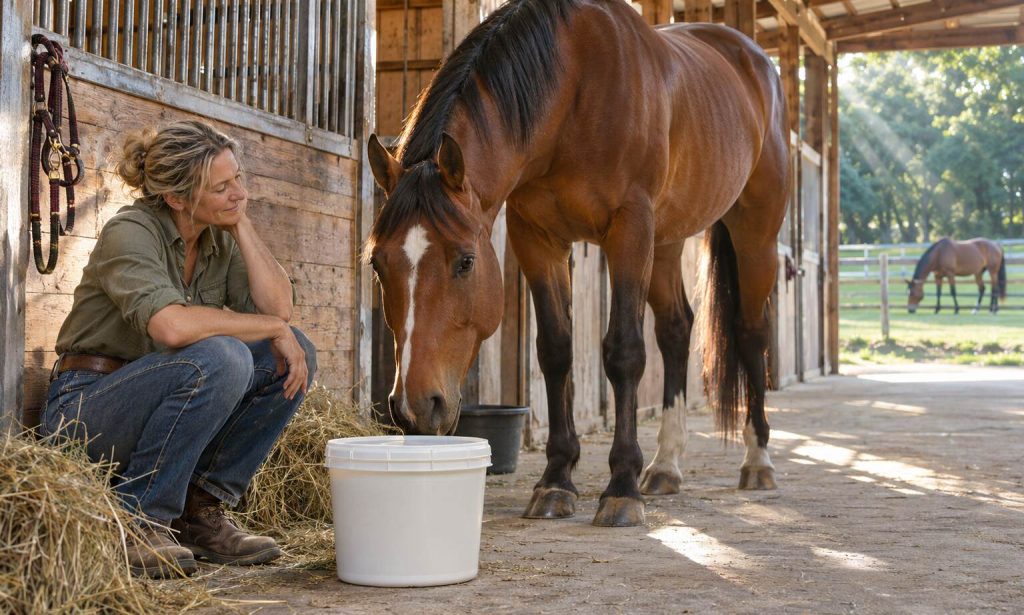
A nervous horse deserves a careful assessment before any new supplement. Anxiety can show up as pacing, rushing, spooking, sweating, or trouble settling after a change in routine. Choosing a horse calming supplement for anxiety requires more than reading promises on a label. Pain, inadequate turnout, poor social contact, and learned fear can all produce similar behaviors. The first question is why the horse is distressed.
This guide explains how to approach ingredient lists, nutritional overlap, safety, and realistic monitoring. Calming formulas are not proven substitutes for training, welfare changes, or veterinary treatment. Some horses should not receive certain ingredients, and competition rules may apply. The goal is an informed conversation with your veterinarian, not a shortcut that hides an important problem.
Identify the Trigger Before Considering Supplements
Record when the behavior occurs and what changes before it starts. Trailer loading, isolation, clipping, feeding time, turnout, and unfamiliar locations can create different challenges. Notice whether the horse recovers after the trigger ends. If fear occurs suddenly, or a previously quiet horse changes behavior, arrange a veterinary check for pain, illness, vision problems, or other medical causes.
A log should separate observed behavior from an interpretation such as ‘stubborn’ or ‘difficult.’ Write what the horse actually did, how long it lasted, and whether another handler saw it. A horse’s social setting and workload matter, too. Our guide to tracking changes after introducing a calmer offers ideas for objective observations without assuming a supplement caused the outcome.
Understand What Evidence Can—and Cannot—Show
Calming supplements often contain magnesium, tryptophan, B vitamins, or herbal substances. Research has not established reliable benefit for every marketed formula, every anxious horse, or every situation. A nutrient may help when a genuine dietary shortfall exists; it does not follow that extra amounts settle a horse whose ration already meets requirements. Avoid claims of instant behavioral transformation or treatment of anxiety disorders without adequate evidence.
A University of Florida IFAS review of equine behavior and nutrition highlights limits in evidence for calmative supplements. That is a reason to inspect study quality and ingredient amounts, not proof that every formula fails. The horse calming supplement for anxiety overview provides context on common formats, but your veterinarian should determine whether supplementation belongs in the plan.
Read Labels for Ingredients, Amounts, and Warnings
Look for a complete ingredient list, serving size, concentration per serving, intended species, batch or lot information, and clear safety instructions. Vague ‘proprietary blends’ make it harder to judge actual exposure. Check for stimulants, sedating herbs, or compounds that may interact with medications. An attractive package does not establish potency, purity, or consistent manufacturing quality.
Compare the full diet before adding anything. Fortified feeds, ration balancers, forage, treats, and several supplements can provide overlapping nutrients. Excess intake may create different risks from deficiency. If the horse has kidney, liver, metabolic, gastrointestinal, or neurologic disease, obtain veterinary advice before making changes. Ask about pregnancy and young animals separately because label guidance may not apply.
Consider Behavior, Management, and Training First
Calming strategies often begin with predictable routines, appropriate turnout, social contact, enough forage, gradual exposure, and patient handling. A qualified equine behavior professional can help build a training plan that reduces fear rather than suppressing a horse’s responses. Punishment during a panic response may worsen the association. Adjust the environment so the horse can learn at a manageable level.
If a horse becomes unsafe around people, stop the activity and obtain experienced help. A supplement should never be used to push a horse through a situation it cannot tolerate. Review what to know before adding a calmer to a horse’s diet while discussing management changes. Consider whether the proposed ‘calming’ outcome is actually lower distress, rather than simply less visible movement.
Discuss Interactions and Competition Restrictions
Tell your veterinarian about every medication, herb, additive, and supplement the horse receives. Combining ingredients can alter effects or complicate a medical assessment. Do not use human anxiety medicine or sedatives without a veterinary prescription and clear instructions. Adverse effects may include digestive changes, unusual quietness, agitation, or allergic signs. Stop and seek advice if the horse behaves abnormally after a change.
Competition organizers may restrict substances that affect behavior. Rules vary by organization and event, and labels may not address current testing policy. Check the specific governing body’s published rules before entry. Do not assume that ‘natural’ means permitted, harmless, or free from contamination. Keep packaging and lot details if a veterinarian later needs to review a reaction.
Measure Progress With Meaningful Observations
Agree on a baseline before adding any approved supplement. Record sleep or rest patterns when observable, appetite, interactions, trigger exposure, recovery time, and any concerning changes. Keep the horse’s training routine as consistent as practical. If several things change at once, it becomes difficult to tell what helped. Note the timing of every ration adjustment accurately.
Plan a veterinary review instead of increasing the amount whenever the result seems small. Some horses need targeted behavior work or a medical investigation, not a larger serving. A transparent log also makes it easier to stop an ineffective trial. Our guide to using and caring for horse calming supplements includes handling and monitoring considerations.
Know When to Seek Professional Help
Sudden aggression, violent rearing, dangerous escape attempts, severe panic, or a major behavior change call for professional assessment. Pain and neurologic problems can affect behavior, so labeling everything ‘anxiety’ risks missing treatable disease. If an animal has an adverse reaction after a new supplement, stop the product and contact the veterinarian. Emergency symptoms warrant urgent attention.
Remember that persistent fear can be a welfare issue. A horse showing chronic distress may need changes to social housing, exercise, transport routines, or handling practices. Ask for an assessment that includes the environment and not just the feed bucket. That is a more responsible basis for how to choose the right horse calming supplement for anxiety.
Frequently Asked Questions
There is no evidence-based universal calming supplement that suits every horse. The most useful questions concern the cause of fear, ingredient disclosure, and what change would count as success.
These answers are educational and cannot establish an individual dose or diagnose anxiety. Use them to prepare questions for the treating veterinarian.
Can magnesium always calm an anxious horse?
No. A benefit cannot be assumed when dietary magnesium is already adequate. A veterinarian or equine nutritionist should assess the full ration.
Are natural calming herbs automatically safe?
No. Herbal ingredients may have adverse effects, interactions, or competition restrictions.
How quickly should a calming formula work?
There is no universal onset. Do not rely on marketing time claims; ask a veterinarian whether a trial is appropriate.
Can I use calming supplements instead of training?
No. Gradual behavior work and better management may address the actual source of distress.
When is anxiety an emergency?
Severe panic, unsafe behavior, collapse, or serious sudden behavior change warrants urgent professional assessment.
Final Words
Choosing a horse calming supplement for anxiety begins with observation and a horse-centered welfare plan. Review the entire ration, investigate pain, read ingredient labels carefully, and check interactions and event rules. Be cautious about claims that a blend will reliably eliminate fear. Good training and a suitable environment are often essential parts of the solution.
If you are still deciding how to choose the right horse calming supplement for anxiety, start by documenting behavior and arranging a veterinary conversation. The related horse calming supplement guide can help you recognize terminology, but the right decision follows the horse’s needs and the evidence, not a marketing promise.
Reference
The following veterinary and university materials support the discussion of equine behavior, fear, and limits of nutrition-based calming approaches. They are included for readers who want to review the underlying context.
No cited source determines whether an individual horse should receive a specific supplement. A veterinarian who knows the animal’s history must make that assessment.









