
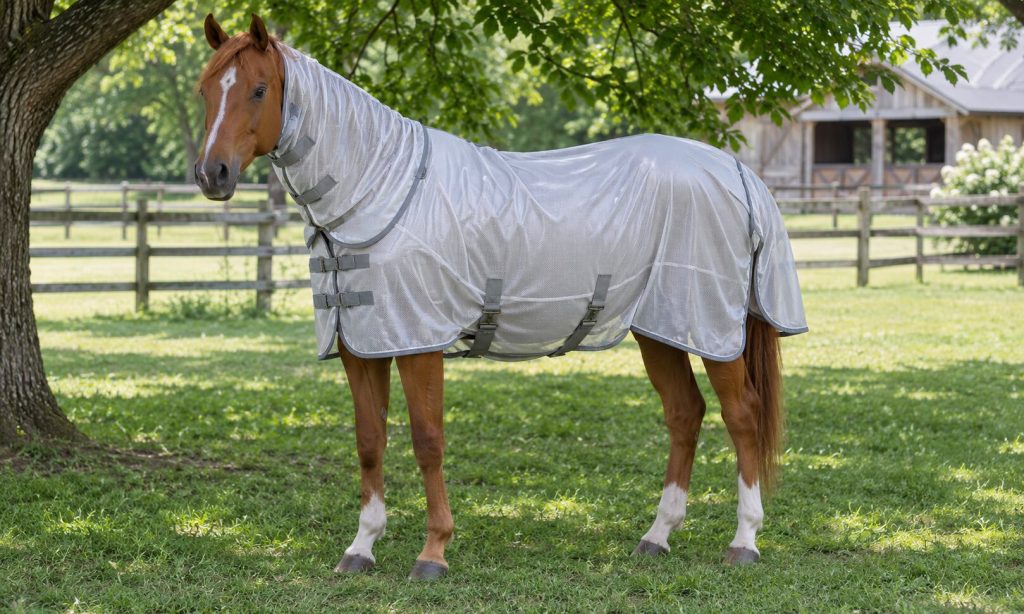
How to choose the right uv protection fly sheet for horses begins with understanding what the garment can and cannot do. A fly sheet is usually sold as an insect barrier, but only some fabrics offer documented ultraviolet protection. Horses with pale or unpigmented skin may be more vulnerable to sun damage, while every horse still needs shade, water, airflow, and freedom to move.
When comparing the best uv protection fly sheet for horses, look beyond a bright color or dense-looking mesh. This guide covers evidence behind UV claims, fabric and fit, cooling considerations, daily checks, and signs that require veterinary attention. Its goal is to help you select a comfortable protective layer without mistaking it for a substitute for proper sun management or treatment of a skin disorder.
Distinguish UV Protection From Ordinary Fly Protection
A standard mesh fly sheet is designed mainly to put a physical barrier between biting insects and covered skin. That does not establish how much ultraviolet radiation passes through the mesh. A UV protection fly sheet for horses should have a clear manufacturer description of its sun-protective purpose and, ideally, a test method or rating.
Light-colored fabric, tightly woven material, and thick mesh may look protective without giving you a reliable number. Ask the maker how its stated protection was measured and whether the percentage applies to the complete garment or only a particular fabric sample. Our general horse fly-sheet selection guide explains insect-barrier and closure decisions; this article focuses on sun exposure.
Identify Your Horse’s Sun-Exposure Risk
Start by observing the horse’s coat and uncovered skin, its turnout schedule, and where shade falls over the paddock. White markings and pink skin, especially on the nose, face, and lower legs, deserve attention because unpigmented areas are more susceptible to sunburn. A horse grazing in an exposed field has different needs from one with reliable shelter and morning turnout.
Look for redness, peeling, crusting, tenderness, or unusual avoidance of touch. Significant reactions are not always ordinary sunburn: photosensitization can appear similar and may be related to underlying disease or exposure to certain plants or substances. A veterinarian should evaluate painful or recurring lesions, especially if they worsen rapidly. A UV protection fly sheet for horses is a management aid, never a diagnosis or a way to delay medical care.
Read Fabric Claims and UV Ratings Carefully
Look for a specific ultraviolet protection factor, documented percentage of UV blocking, or an explanation of the test used. Compare like with like. A garment may use a tested panel but leave gaps at the belly, neck, or shoulders where sunlight still reaches skin. If the seller supplies only phrases such as ‘sun shield’ or ‘high protection,’ ask for documentation before treating the number as established. There is no reason to assume every fly sheet follows the same rating standard.
Check whether the claimed performance depends on fabric condition, stretch, moisture, or repeated laundering. Manufacturer instructions may set different limits for washing, drying, and use of detergents. A UV protection fly sheet for horses should be evaluated as an entire wearable system: fabric, coverage, closures, neck extension, and uncovered regions.
Balance Sun Coverage With Heat and Breathability
Sun blocking is only helpful when the horse can remain comfortable. Choose an open, breathable construction appropriate to local heat and humidity and watch whether the horse sweats beneath the sheet during ordinary turnout. A sheet can reduce direct sun on covered skin while also changing the way air moves over the body. Never leave a horse in distress under a garment because its label promises ultraviolet coverage. Shade and water remain essential regardless of sheet choice.
University of Minnesota Extension cautions against putting a sheet or blanket on a horse that is being actively cooled for heat stress. During hot conditions, move the animal to shade, follow veterinary cooling advice, and remove unnecessary layers. If the sheet feels damp and the horse is breathing hard, weak, or unusually hot, stop using it and seek appropriate help. See our hot-weather fly-sheet guide for additional ventilation checks.
Measure the Horse and Check Freedom of Movement
Use the manufacturer’s measuring diagram and measure the horse on level ground, rather than choosing by breed or an old blanket size. Check the front chest, shoulder points, withers, back length, belly straps, and hindquarter coverage. The UV protection fly sheet should lie smoothly without pulling as the horse reaches down to graze or walks and turns. A high collar or neck attachment should not tighten around the throat or slide into the eyes.
After fastening the sheet, lead the horse at a walk and observe from both sides. You should see comfortable shoulder extension, stable placement at the croup, and clear space around the elbows and legs. Loose straps can catch; tight seams can rub skin. Recheck fit after the first short supervised turnout and again as body condition or muscle changes. Our horse fly-sheet measuring tutorial provides a more detailed fitting sequence.
Plan for the Nose, Face, Neck, and Other Gaps
A body sheet does not cover every vulnerable patch of skin. A pink muzzle, pale eyelids, white lower legs, and exposed neck may still receive strong sunlight. Select compatible neck or face protection where needed, with careful attention to vision, breathing, hearing, and eye clearance. A fly mask advertised for insect control is not necessarily a documented UV blocker, so read its actual claims. Avoid any accessory that shifts into the eyes or restricts normal activity.
Because facial protection requires specialized fit, test it separately and observe the horse while eating, drinking, and interacting with companions. A vet can advise about suitable sun-safe topical products for exposed areas and whether a lesion needs examination before coverage. Our guide to fly masks for sensitive eyes can help frame questions about fit and coverage. Do not use human sunscreen or medicated creams without checking product safety for equines.
Inspect Construction, Durability, and Cleaning Instructions
Before buying a UV protection fly sheet for horses, examine mesh edges, seam placement, buckles, belly closures, and tail straps. Pasture fencing, brush, or herd play can damage mesh and reduce coverage. Prioritize smooth hardware, replaceable straps if available, and stitching that will not abrade the coat. Ask whether patching a tear preserves the garment’s sun-blocking claim; an ordinary repair patch may be unsuitable or allow a gap in protection.
Read the care label rather than guessing at wash temperature or detergent. Remove dirt and sweat as recommended, rinse thoroughly, and allow the sheet to dry fully before storage or reuse. Check for stretched areas, holes, loose elastic, rough fasteners, and persistent odors after every cleaning. Store it away from direct sunlight and moisture when not in use.
Introduce the Sheet Gradually and Monitor Every Turnout
Let the horse inspect the garment, then fit it in a calm setting with a handler and short, supervised wear. A horse unfamiliar with neck covers or belly straps may move abruptly, so do not force a frightened animal into prolonged turnout. Start with a brief period, check whether it grazes, walks, and stands normally, and remove the sheet if it becomes tangled. A UV protection fly sheet for horses is most useful when the horse accepts it without stress.
Build a daily check around body temperature, behavior, rubbed hair, fastening security, and weather. Lift the garment to inspect the skin rather than assuming covered areas are fine. If the sheet becomes soaked, twisted, torn, or contaminated, take it off and reassess. Continue to offer shade, ventilation, and fresh water; a garment should add protection, not replace those basics.
Use a Practical Comparison Checklist Before Buying
Compare two or three candidates with the same checklist: evidence for UV blocking, amount of body and neck coverage, fit chart, airflow, strap security, cleaning limits, repair options, and price over expected use. Decide which factors are essential for your horse’s skin and turnout environment. The cheapest sheet is not necessarily good value if it cannot be fitted, and the most elaborate design may be uncomfortable in warm, humid conditions.
Ask what problem the item is solving. If the horse has no persistent sun exposure and already has shade, a conventional breathable fly sheet may meet its insect needs. If unpigmented skin is repeatedly exposed, a documented UV protection fly sheet may be worth discussing with a veterinarian alongside shade and face protection.
Frequently Asked Questions
These answers address common questions about UV protection fly sheets for horses. They offer general selection and care guidance, not a diagnosis for a horse with painful skin changes or suspected photosensitization.
Use the questions as a short check before turnout and whenever weather, skin condition, or the sheet itself changes. Contact your equine veterinarian if discomfort continues despite adjusting the garment.
Does every fly sheet protect a horse from UV radiation?
No. A sheet designed to limit biting insects may still allow substantial ultraviolet light through its mesh. Look for a documented UV-related claim, suitable coverage, and manufacturer test details. A dense-looking fabric alone does not prove a particular protection level.
Is a higher UV rating always the best choice?
Not by itself. Fit, breathable fabric, safe closures, and the horse’s temperature and behavior matter just as much. A high-rated material that overheats or rubs the horse is a poor fit for its circumstances.
Can a UV fly sheet prevent all sunburn?
No. Uncovered areas such as the muzzle, face, and legs remain exposed, and no garment eliminates every risk. Shade and an appropriate turnout schedule are still important. Have painful, blistered, or recurring lesions checked by a veterinarian.
Should I keep the sheet on during extreme heat?
Do not assume that coverage makes it safe. Monitor the horse closely and follow veterinary heat-stress guidance. If active cooling is needed, remove sheets and blankets while following professional instructions and provide appropriate cooling and shade.
When is it time to replace a UV fly sheet?
Replace it when tears, stretched mesh, damaged coatings, rough seams, insecure straps, or a poor fit prevent reliable coverage or comfort. Follow the maker’s recommendations about care-related loss of protective performance; visual appearance alone may not establish UV effectiveness.
Final Words
How to choose the right uv protection fly sheet for horses comes down to verified protection claims, comfortable fit, sensible coverage, and realistic daily monitoring. Start with the horse’s skin and exposure needs, then compare evidence for the fabric, breathable design, construction, and safe fastening. Introduce the garment patiently, inspect the skin each day, and replace damaged or ill-fitting equipment before it causes rubbing or leaves important gaps.
If you are looking for the best uv protection fly sheet for horses, remember that a product comparison is only a starting point. The best result for an individual horse combines appropriate sheet coverage with shade, water, heat awareness, and veterinary attention to unusual skin problems. Choose the option your horse can wear safely and comfortably through its actual turnout routine.
Reference
These university veterinary and equine-extension resources describe sun sensitivity, photosensitization, hot-weather safety, and protective management. They support the health cautions in this guide; they do not certify UV-performance claims for any particular fly-sheet model.
Check each maker’s own specifications for fabric ratings and use the horse’s veterinarian for diagnosis or individual treatment, especially when sun-exposed skin is inflamed or ulcerated.









