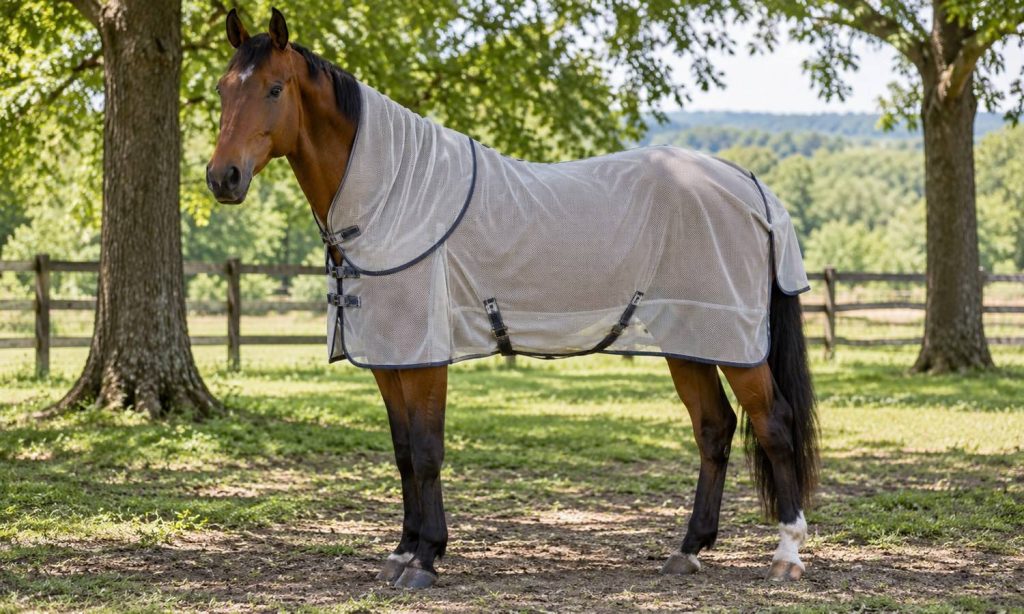
How to choose the right fly sheet for hot weather begins with matching the sheet to your horse’s insect needs, climate, and turnout conditions. No fabric is cool in every condition: sun, humidity, airflow, coat, work level, and the horse’s health all affect heat load. A sheet that is useful on a breezy day may be too warm during humid weather or after exercise. Start by asking whether a physical barrier is needed, then compare lightweight construction, color, coverage, fit, and ventilation. Monitor the horse rather than relying on a product’s “breathable” label. This guide explains how to select and use a summer fly sheet thoughtfully, when to remove it, and how to recognize heat stress that requires immediate attention. The horse’s behavior and skin provide important feedback.
Decide whether a sheet is appropriate
A sheet can provide a physical barrier against insects, but it is only one part of fly management. Consider the insect pressure, access to shade and shelter, turnout timing, and other options such as a fly mask. If the horse is comfortable without a sheet, do not add one just because it is warm weather. Unnecessary coverage can trap heat or cause rubbing.
Hot, humid, still conditions deserve special caution. Horses rely on sweating to cool themselves, and a covering can interfere with evaporation and airflow. University extension guidance advises against blanketing when trying to cool an overheated horse and cautions against blankets in hot, humid conditions. If the horse is working, sweating heavily, or showing heat-stress signs, remove the sheet and follow veterinary or extension cooling guidance.
Choose lightweight, breathable construction
Compare mesh size, fabric weight, weave, and airflow. Open mesh may ventilate well but allow smaller insects through; tighter fabric may add coverage but reduce airflow. The right balance depends on local pests and the horse. Check whether the manufacturer describes intended use, coverage, care, and limitations rather than relying on broad words such as “cooling.”
Light-colored fabric can reflect more solar radiation than dark material, but color alone does not prevent overheating. A fitted sheet in a sunny, windless paddock may still add heat. Check that the material does not cling tightly to the coat or block airflow more than necessary. If UV protection is a priority, look for a clearly stated product-specific claim and ask your veterinarian about sensitive skin.
Match coverage to the horse’s needs
Some sheets cover only the body; others include a neck piece, belly strap, or tail flap. More coverage may reduce insect access but can also increase warmth and rubbing points. Consider where flies are bothering your horse and whether another barrier, such as a mask or leg protection, would address that area with less overall coverage.
Look for compatible closures that stay secure without compressing the chest, shoulders, or belly. A neck piece should not pull the sheet backward or restrict grazing. Tail flaps should not tangle or obstruct movement. Avoid adding loose straps or homemade extensions that could catch on fencing, branches, or equipment.
Fit for movement and inspect for rubbing
Use the manufacturer’s measuring guide, then check the sheet on your horse while standing and moving. It should allow a full stride, shoulder reach, grazing, and turning without pulling across the withers or restricting the chest. Closures should lie flat and stay fastened. A sheet that shifts can expose skin to insects while creating pressure or friction.
Inspect the withers, shoulders, chest, girth area, and hindquarters after the first use and regularly afterward. Look for damp hair, rubbed patches, broken hairs, heat, swelling, or skin sensitivity. Remove the sheet if it causes irritation or slides out of place. Horses with unusual body shape, skin disease, or prior pressure sores may need a different cut or professional advice.
Monitor heat and weather conditions
Check temperature, humidity, wind, sun exposure, and whether the horse has recently exercised. A light sheet may still be unsuitable during peak heat or when airflow is poor. Provide shade, ventilation, and free access to clean water. Reassess conditions through the day because cloud cover and breeze can change quickly.
Watch for distress, heavy or abnormal sweating, rapid breathing, lethargy, weakness, or poor coordination. If you suspect heat stress, remove the sheet, move the horse to a cooler shaded area, offer water, begin appropriate cooling with cool water, and contact a veterinarian promptly. Do not keep a horse sheet on while attempting to cool an overheated horse.
Compare sheets with the daily routine
Think about when and where the horse will wear the sheet. A horse turned out only during cooler hours may need different coverage than one exposed through midday, but schedule changes should also account for shelter and the horse’s access to companions, forage, and water. A sheet should not trap the horse in direct sun without shade or prevent it from moving naturally.
For horses that live out, make sure the design can withstand normal turnout and that the horse cannot easily snag closures on fencing. For a horse that is stalled, airflow and bedding conditions still matter. Remove the sheet for grooming and inspect the whole body; repeated checks can reveal sweat, rubs, or insects that are hidden under fabric. Adapt use to the individual horse rather than applying a fixed schedule.
Use and care for the sheet safely
Put the sheet on a clean, dry horse and follow the manufacturer’s instructions. Check fasteners each time and inspect for tears, stretched straps, or damaged mesh. A loose or torn sheet can snag or tangle. Remove it before riding unless a product is specifically designed for mounted use and is safe with the tack.
Wash the sheet according to its care label and dry it fully before storage. Dirt, sweat, and debris can irritate skin and clog mesh. Check the horse’s body directly rather than assuming the sheet’s exterior tells you whether the horse is cool. Store it where it stays dry and cannot be chewed or damaged.
Frequently Asked Questions
Can horses wear fly sheets in very hot weather?
It depends on the horse and conditions. A sheet can interfere with cooling, so monitor closely and remove it during heat stress or hot, humid weather when unsuitable.
Are white fly sheets cooler?
Light colors may reflect more sunlight than dark ones, but they do not eliminate heat risk. Fabric, airflow, weather, fit, and individual horse response also matter.
Does breathable mesh prevent overheating?
Not by itself. Mesh may improve airflow, yet a covered horse can still overheat in hot or humid conditions. Check the horse, not just the fabric description.
Should I leave a sheet on after riding?
Remove it while the horse cools and follow appropriate post-exercise care. Do not cover a horse you are trying to cool.
How often should I check a fly sheet?
Check fit and skin daily at minimum and more often in hot, wet, or high-insect conditions. Remove it if it shifts, rubs, or becomes damaged.
Final Words
A suitable fly sheet for hot weather balances insect coverage with airflow, comfort, and the horse’s ability to cool itself. Choose coverage for a clear need, check fit and skin, and reassess conditions as heat and humidity change. Remove the sheet if the horse is hot, distressed, or exercising, and provide shade, ventilation, and water. If heat-stress signs appear, contact a veterinarian promptly.