How to choose the right lightweight horse sheet for summer begins with matching the sheet to your horse’s needs, summer routine, and climate. “Lightweight” describes neither a universal warmth level nor a guarantee that a sheet will stay cool in every condition. Compare material, weave, coverage, fit, and intended use before choosing. A mesh fly sheet, a smooth summer sheet, and a light turnout layer may look similar but serve different purposes. This guide explains how to identify the job, take measurements, check construction and closures, evaluate UV or water claims, and monitor the horse after use so the sheet supports comfort without unnecessary coverage. The horse’s response matters more than a broad product label for summer use. The right match should be comfortable for your animal and practical to maintain.
Start with the purpose
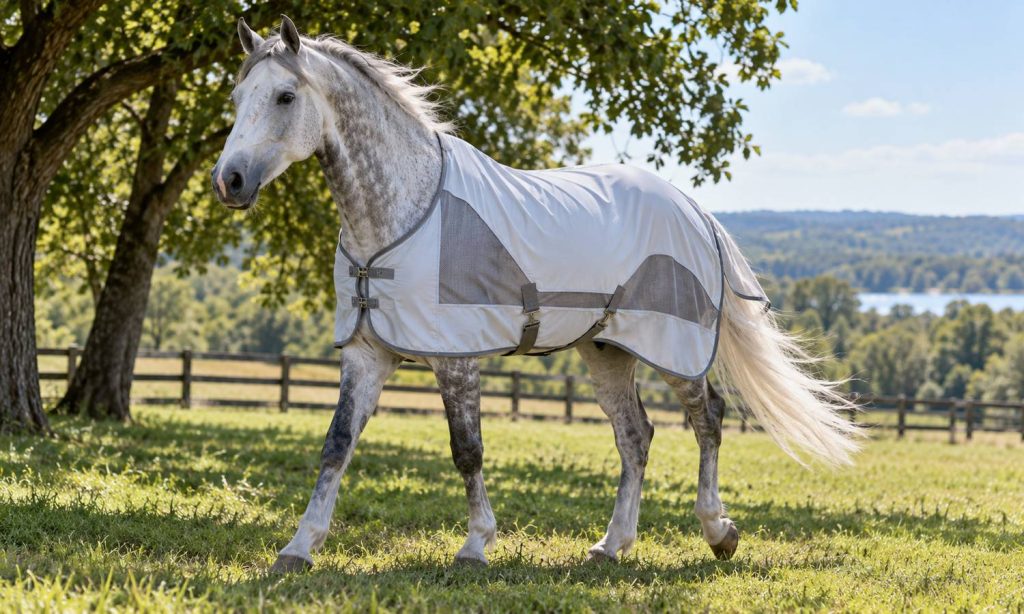
Decide what you want the sheet to do. An open mesh design may help deter insects while allowing airflow. A closer weave may block more dust or provide more sun coverage, but it can also reduce ventilation. Some summer sheets help keep a coat clean before an event, while others are designed primarily for turnout. Check the maker’s description and limitations rather than treating every summer sheet as interchangeable.
Think about the horse’s routine: turnout hours, shelter, shade, regional insects, coat color, and sensitivity. A horse that is bothered by flies may need a fly barrier; a horse with sun-sensitive skin may need a particular level of coverage. If the horse has a skin condition or recurring reaction, ask a veterinarian whether a sheet is appropriate. A sheet is not a substitute for shade or a veterinary plan.
Compare fabric and airflow
Look at weave density, fabric weight, mesh panels, lining, and seams. Open mesh tends to improve ventilation but may allow small insects through; a denser weave can add coverage while holding more heat. The practical balance depends on the environment and the individual horse. Consider whether the sheet feels flexible and smooth where it contacts shoulders, withers, and chest.
Product terms such as “breathable,” “cool,” or “summer weight” are not standardized guarantees. If UV protection matters, look for a specific product claim and its stated coverage. Color alone does not establish a UV rating. Light fabric may reflect more sunlight than dark fabric, but fit, airflow, shade, humidity, and exposure still affect comfort.
Get the right size and cut
Use the manufacturer’s measuring instructions because sizing can vary among brands and styles. Measure a standing horse on level ground and compare the result with the size chart. Check chest closure position, shoulder reach, length over the hindquarters, and the shape of the neck or belly pieces. A sheet that is too short may expose areas; one that is too long can catch or shift.
Try the sheet on the horse and watch it walk, turn, graze, and lie down if appropriate for the turnout setting. It should not pull tight across the shoulders or slide backward. Neck covers must allow lowering the head without pulling at the mane or throat. Avoid tightening straps to compensate for a poor cut; choose a different size or design.
Check closures and safety details
Inspect chest straps, belly surcingles, leg straps, tail cords, and fasteners. They should be adjustable, secure, and free of sharp edges. Loose straps can snag; overly tight straps can rub or restrict movement. Follow the maker’s directions for fitting each closure, and never add extra ties that create a new entanglement risk.
Look for reinforced areas where the horse is likely to rub, but confirm that reinforcements do not create hard edges against the skin. Check stitching and mesh before use. If the horse lives out, assess fences, trees, and other objects where a sheet could catch. A product designed for stabling may not be suitable for unsupervised turnout.
Consider water resistance and insect coverage
A summer sheet may be designed to resist a brief shower or simply to ventilate; do not assume that all sheets are waterproof. Check the exact claim and whether the design includes a lining or coating that could affect airflow. If rain is expected, decide whether the horse has adequate shelter and whether a water-resistant layer is appropriate. A wet or heavy sheet can become uncomfortable and rub.
Coverage also varies: neck pieces, belly flaps, tail covers, and leg protection each add protection and material. Match coverage to insect activity and the horse’s tolerance. A full coverage sheet can be more likely to shift or feel warm. Use a mask or other barrier only if it fits properly and is suitable for the setting.
Monitor fit, skin, and temperature
Check the horse after the first wear and regularly afterward. Feel under the sheet for unusual heat or dampness and look for rubbed hair, pressure marks, skin irritation, or swelling. Check withers, shoulders, chest, belly, and hindquarters. Remove the sheet if it slips, becomes wet, causes rubbing, or the horse appears distressed. Reassess as weather changes throughout the day.
Horses cool themselves through sweating. Provide shade, airflow, and clean water, and do not use a sheet while trying to cool an overheated horse. Heavy sweating, rapid breathing, weakness, lethargy, or poor coordination warrants immediate cooling measures and veterinary contact. Older, unfit, or medically compromised horses may need extra attention in hot weather.
Care and storage
Follow washing instructions, remove dirt and hair from mesh, and let the sheet dry fully before storage. Sweat, dust, and debris can irritate skin or block airflow. Inspect closures and seams after cleaning, replacing a sheet with torn mesh, stretched straps, or broken fasteners. Keep it away from chewing animals, sharp tools, and damp storage areas.
Remove the sheet for grooming and inspect the whole coat rather than checking only exposed areas. Clean the horse’s skin if it becomes sweaty or dirty, then allow it to dry before putting the sheet back on. Keep a record of the size and model that fits well, since a familiar design can simplify seasonal changes.
Frequently Asked Questions
Is a lightweight horse sheet the same as a fly sheet?
Not always. Some are designed mainly for insects, while others focus on coat, dust, or sun coverage. Confirm the stated purpose and construction.
How do I know if a summer sheet is too warm?
Check for dampness, excessive heat under the fabric, heavy sweating, or distress. Remove it if the horse seems uncomfortable and contact a veterinarian for heat-stress signs.
Does a white sheet provide UV protection?
Color alone does not confirm a UV rating. Look for a specific product claim if UV protection is important.
Can a lightweight sheet be worn in rain?
Only if the product is designed for those conditions. Check its water-resistance instructions and provide shelter.
How should a horse sheet fit?
It should stay in place without restricting stride, grazing, or shoulder movement. Follow the maker’s size and adjustment instructions and inspect for rubbing.
Final Words
The right lightweight horse sheet for summer matches a clear need, fits the horse’s shape, and balances coverage with ventilation. Check the actual material, closures, size, and product claims, then monitor skin and heat under the sheet. Remove it when the horse becomes hot, wet, irritated, or uncomfortable. Shade, airflow, and water remain essential even when the sheet is well chosen.