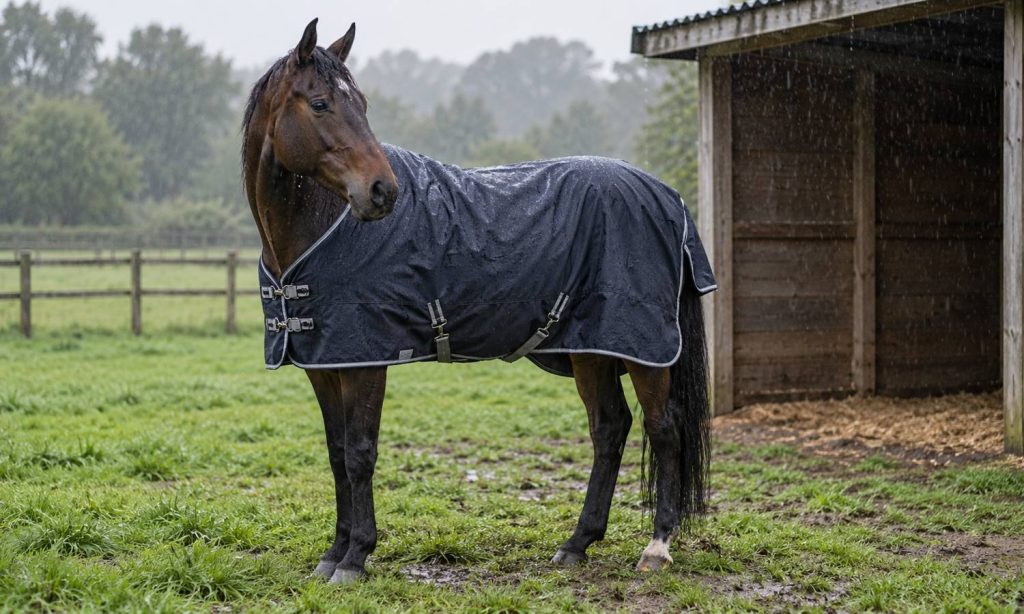
How to choose the right waterproof horse blanket for turnout begins with matching the blanket to your horse’s turnout, weather, and insulation needs. Waterproofing alone does not determine warmth: a rain sheet may have no fill, while an insulated turnout blanket adds warmth. Match the layer to precipitation, wind, temperature, coat, shelter, and the individual horse. Check the outer fabric, seams, closures, fit, and care instructions before relying on it in wet weather. A wet horse under a poorly fitted or damaged blanket can become chilled or develop rubbing. This guide explains how to compare turnout construction, choose an appropriate weight, fit it safely, and inspect both horse and blanket during changing weather. These checks help prevent avoidable wet-weather problems.
Separate waterproofing from warmth
Start by deciding whether the horse needs a rain barrier, insulation, or both. A no-fill waterproof sheet blocks rain but provides little warmth. A filled turnout blanket adds insulation and should be selected based on the horse’s coat, body condition, acclimation, wind exposure, and access to shelter. Product labels and fill descriptions differ, so confirm what the specific model is designed to do.
A horse’s own coat is a natural insulating layer when dry. Rain and mud can flatten the coat and reduce its insulating value, while wind adds to heat loss. But over-blanketing can make a horse sweat, leaving moisture under the blanket. Check weather over the full turnout period, not just at the time you put the blanket on.
Inspect shell, seams, and closures
Review the product’s waterproof claim, outer-shell material, seam construction, and any stated breathability information. A fabric may be waterproof yet less comfortable if it traps moisture from sweat. Look for quality stitching around shoulders, seams, and openings. Check whether the manufacturer explains how to restore water resistance after washing or wear.
Chest buckles, belly straps, leg straps, and tail cords must remain secure without restricting movement. Check them before each turnout. Loose straps can catch on fencing; tight ones can rub or limit stride. Choose closures suited to the horse’s environment and behavior, and follow the manufacturer’s fitting directions. No fastening system eliminates the need to inspect the paddock for snag hazards.
Choose fill for the horse and weather
Consider temperature alongside wind, rain, shelter, hair coat, and the horse’s condition. A clipped horse, an older or thin horse, or one not acclimated to local weather may need a different plan from a healthy adult with a full coat. Ask a veterinarian or equine professional for help if the horse has a medical condition, poor body condition, or difficulty staying warm.
Do not choose fill from a chart without checking the horse. Feel under the blanket at the shoulder and chest. A warm, dry coat is different from dampness or sweat. If the horse is sweating, remove or reduce layers. If it appears chilled or distressed, consider shelter, wetness, wind, and health, and seek advice if the signs continue.
Get the size and cut right
Measure the horse according to the manufacturer’s instructions, since size systems vary. Check how the chest closes, whether the shoulders have room to extend, and whether the blanket covers the back and hindquarters without dragging. A neck cover should not pull the body blanket backward when the horse grazes.
Try the blanket on dry, clean hair and observe the horse walking, turning, and lowering its head. The fabric should lie smoothly without tight pressure at the withers or shoulders. Check straps for twisting and confirm that the blanket remains centered. Poor fit can cause rub marks and sores, even when the fabric is waterproof and warm.
Plan for rain, mud, and changing conditions
Turnout blankets encounter more than rain: mud, wet grass, rolling, and contact with fences can damage fabric or shift the fit. Check the blanket after storms and remove it if it is torn, soaked through, or displaced. Do not put a blanket over a wet horse; allow the coat to dry first. If the blanket becomes wet inside, remove it and dry the horse before re-covering.
Provide shelter where possible and adjust the blanket as the weather changes. On a warm day, remove layers so the horse does not sweat underneath. During periods of heavy rain or freezing precipitation, reassess the horse more often. A waterproof turnout blanket does not replace adequate shelter or daily observation.
Know the limits of waterproofing
Water resistance can decline with age, abrasion, detergent, and repeated washing. A label may describe a fabric test or coating, but turnout performance also depends on seams, closures, fit, and how the horse moves. A blanket that bunches at the withers or shifts backward can expose the coat even if the shell is intact. Rain can enter through an opening or a damaged seam.
After a wet turnout, feel the horse’s coat under the blanket instead of judging by the outer surface. If the coat is damp, remove the layer, dry the horse, and inspect the lining and seams. Do not use a damp blanket as though it were protective insulation. Let it dry fully and follow manufacturer guidance on restoring water resistance; replacing a worn item may be safer than applying an unsuitable treatment.
Daily care and maintenance
Remove the blanket daily to inspect the horse’s skin, coat, and body condition. Check withers, shoulders, chest, belly, and hindquarters for rubs, pressure marks, dampness, or irritation. Inspect the blanket inside and out for moisture, dirt, torn seams, broken closures, and worn waterproofing. Reposition it if it has twisted.
Follow washing and reproofing instructions. Incorrect detergent, heat, or coating products may damage water resistance. Dry the blanket completely before storage. Keep a spare dry layer if your conditions warrant one, and label blankets by horse and size to avoid accidental swaps. Replace a blanket that can no longer stay dry or secure.
Frequently Asked Questions
Does waterproof mean warm?
No. Waterproofing keeps rain out; warmth depends on fill and the horse’s needs. A no-fill sheet may block rain without adding meaningful insulation.
Can I put a turnout blanket on a wet horse?
Wait until the horse is dry. Trapping moisture under a blanket can reduce comfort and contribute to chilling or skin problems.
How do I know if my horse is too warm?
Check under the blanket for dampness or excessive heat and watch for sweating or distress. Remove or reduce layers if needed.
How often should I check a waterproof blanket?
Inspect the horse and blanket daily, and recheck after heavy rain, rolling, or turnout changes.
How can I tell if the waterproofing has worn off?
Follow the care instructions and inspect the shell after rain. Contact the manufacturer about maintenance or replace a blanket that no longer keeps the horse dry.
Final Words
The right waterproof horse blanket for turnout keeps the horse dry under the conditions it will face and provides only as much insulation as needed. Confirm fill, shell, seams, and fit, then remove it daily to check the horse and blanket. Keep both dry, adjust for changing weather, and remove or change layers if the horse sweats. A suitable blanket works alongside shelter and regular care.