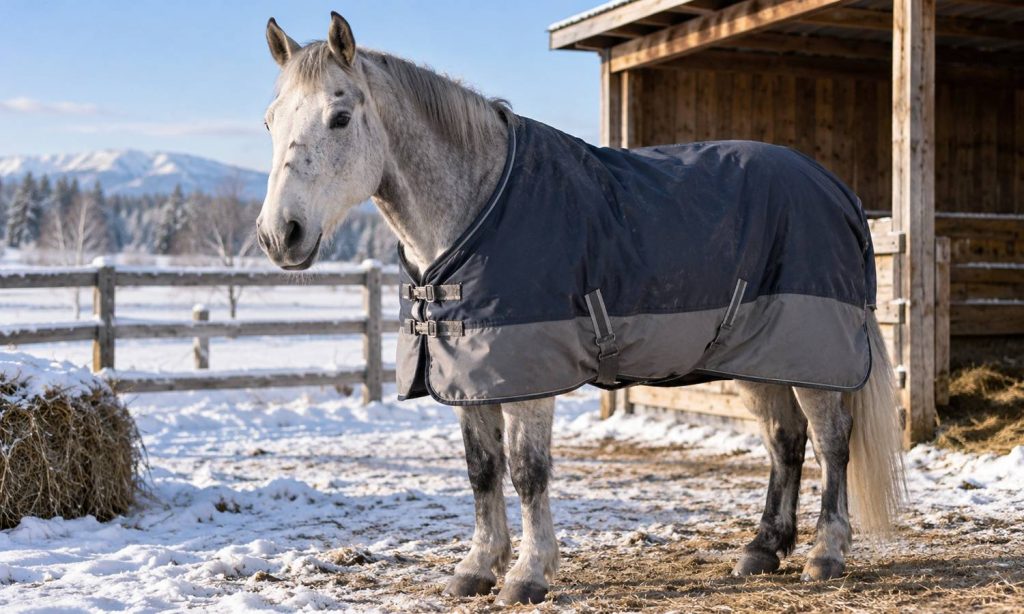
How to choose the right horse blanket for senior horses begins with matching the blanket to your horse’s condition, weather exposure, and comfort. Some older horses maintain a full coat and good body condition; others have difficulty keeping weight, regulating temperature, or staying comfortable in wet and windy conditions. Begin by observing the horse and discussing health or weight changes with a veterinarian. Then compare warmth, waterproofing, fit, closures, and how easy the blanket is to check daily. A blanket can help in appropriate conditions, but a poor fit, excess warmth, or trapped moisture can cause problems. This guide explains how to build a practical plan for an older horse while keeping shelter, forage, water, mobility, and daily monitoring in view.
Assess the horse rather than the birthday
Older horses are individuals. Consider body condition, coat thickness, recent weight changes, dental function, mobility, health, and how well the horse handles weather. An older horse with a good winter coat, adequate body condition, shelter, and a dry turnout area may need a different approach from a thin horse with a clipped coat or chronic illness. Chronological age alone does not determine blanket weight.
Schedule routine veterinary checks and discuss changes in weight, appetite, behavior, or heat and cold tolerance. Dental problems, endocrine disease, pain, and other health conditions may affect the horse’s needs. Do not treat a blanket as a solution to unexplained weight loss or shivering. A veterinarian can help assess the underlying issue and recommend a broader care plan.
Consider coat, shelter, wind, and precipitation
A horse’s hair coat traps air for insulation when it is dry and not flattened by mud. Wet weather, strong wind, and lack of shelter can increase heat loss. Evaluate where the horse spends its time, whether shelter is accessible to all animals, and whether it can remain dry. A sheltered stable, a windy paddock, and a wet open field present different demands.
Temperature is only one factor. Look at wind, rain, snow, humidity, coat, and acclimation together. Avoid relying on a single blanket chart or a universal temperature threshold. A well-fed horse with a natural winter coat may tolerate conditions differently than a clipped or underweight senior. Adjust care as the weather changes, and provide a dry sheltered area whenever possible.
Choose the right warmth and shell
Blankets vary in fill, shell construction, and intended use. A stable blanket is generally for indoor use; a turnout blanket is made for outdoor weather. A no-fill sheet may block rain or wind but does not provide the insulation of a filled blanket. Select the layer based on the horse’s coat and exposure, and confirm what the product is designed to handle.
For wet turnout, check whether the outer shell is waterproof and whether seams and closures are designed for rain. For cold, dry conditions, warmth and fit may matter more than waterproofing. If the horse has a thick coat, too much fill can cause sweating. Dampness under the blanket can chill the horse and irritate skin. Remove layers when the weather warms or the horse becomes sweaty.
Prioritize fit and ease of movement
Measure the horse following the manufacturer’s guide because sizes vary. The blanket should stay centered and cover the areas intended without dragging or gaping. Check chest closures, wither clearance, shoulder room, belly straps, leg straps, and neck pieces. A senior horse with a changing topline or reduced muscle may need a different cut than one that fit years earlier.
Observe the horse walking, turning, lowering its head, and lying down. The blanket should not pull tight across the shoulders or shift backward when the horse grazes. Straps should be secure but not restrictive. Watch for rubs and pressure marks at the withers, chest, shoulders, and hindquarters. If the fit is poor, choose another size or design rather than tightening the straps.
Check closures and safety
Inspect buckles, snaps, surcingles, leg straps, and tail cords for wear. Fasteners must remain secure without creating loose loops that could snag. A blanket should not be so tight that it limits movement or circulation. Follow the maker’s directions for fastening, and confirm that the blanket is suitable for the horse’s turnout area.
Some senior horses may move less quickly or have arthritis, so ensure the blanket does not make rising, turning, or walking harder. Remove unnecessary neck covers or accessories if they rub or restrict grazing. Check the blanket after turnout, especially after rolling, wet weather, or a change in the horse’s activity.
Make daily checks part of the plan
Remove the blanket daily to inspect the horse and the layer. Feel the coat at the chest, shoulder, withers, and under the belly for excess heat, dampness, or cold. Look for rubs, sores, swelling, weight loss, or changes in skin. Check that the blanket is dry, intact, and centered. Reposition it if it has twisted and replace worn or damaged equipment.
Senior horses may need more frequent observation when weather changes quickly or they have a medical issue. Adjust the blanket when the coat changes, the horse is clipped, or the animal moves between stall and turnout. If the horse seems cold, overheated, unusually lethargic, or uncomfortable, assess shelter and health, remove or adjust layers as appropriate, and contact a veterinarian for concerning or persistent signs.
Support warmth beyond the blanket
Blanketing is only one part of winter care. Provide access to shelter, clean unfrozen water, and appropriate forage. Adequate forage supports heat production through digestion, and body condition is important for temperature regulation. A blanket cannot compensate for inadequate nutrition, poor dental care, dehydration, or illness. Ask a veterinarian or equine nutrition professional to evaluate feed changes for an older horse.
Comfortable movement matters too. Many older horses benefit from turnout and light activity if their health allows. Avoid unnecessarily confining an arthritic horse solely because it wears a blanket. Ensure footing is safe and the horse can reach water and forage. Coordinate any care changes with a veterinarian who knows the horse’s health history.
Frequently Asked Questions
Do all senior horses need blankets?
No. Needs vary with coat, body condition, health, shelter, weather, and acclimation. Age is one factor, not a standalone blanket rule.
What blanket weight is best for an older horse?
There is no universal weight. Choose based on fill, shell, exposure, and daily checks under the blanket. Ask a veterinarian for help if the horse struggles to stay warm.
Should a senior horse wear a blanket in rain?
If a horse needs protection from wet weather, use a suitable turnout blanket and provide shelter. Keep the horse and blanket dry and inspect for moisture.
How do I know if my senior horse is too warm?
Check for sweat or dampness under the blanket and observe the horse. Remove or reduce layers if it is too warm, and contact a veterinarian if the horse seems unwell.
Can a blanket help an older horse that is losing weight?
It may reduce heat loss in some conditions, but weight loss needs veterinary assessment. Review nutrition, dental health, and other causes rather than relying on a blanket alone.
Final Words
The right horse blanket for senior horses is based on the horse’s condition, coat, exposure, and fit—not age alone. Choose suitable warmth and weather protection, then remove the blanket daily to check the horse’s skin, comfort, and body condition. Keep shelter, forage, water, and mobility in the plan. If an older horse has new weight loss, difficulty staying warm, or other health changes, consult a veterinarian before changing blanket weight alone.