
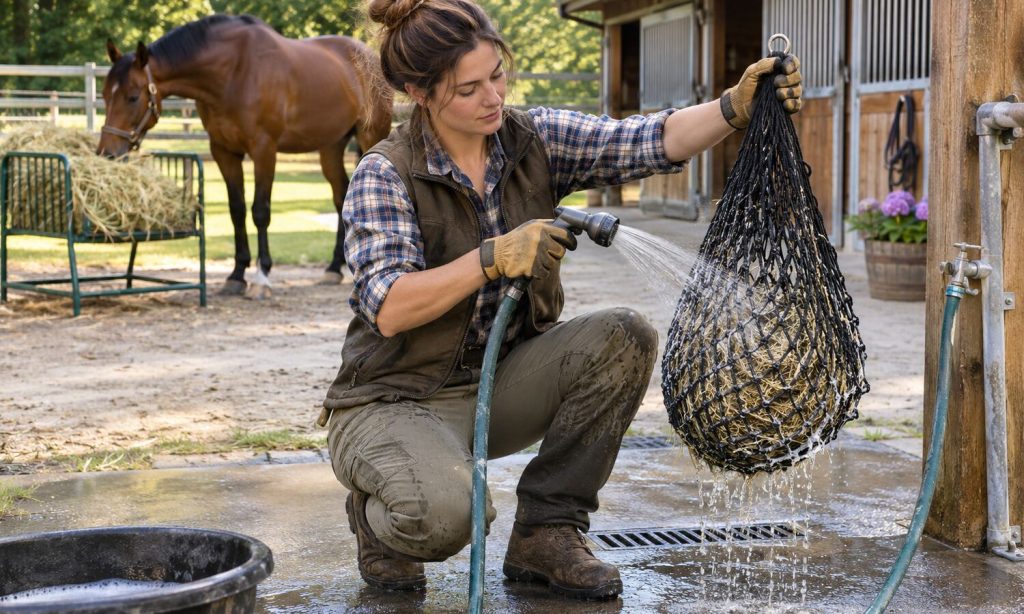
Hay nets can slow eating and reduce scattered forage, but they collect dust, saliva, damp hay, and everyday barn debris. How to clean a hay nets for horses and keep it in good condition means removing old forage, washing suitable materials, drying them completely, and inspecting the ropes or straps for damage. A net that looks clean from across the aisle may still contain moldy fragments or frayed cords that need attention.
The process also includes safe use, not just neat storage. Our hay nets for horses guide explains the category, while this article focuses on maintenance and handling. You will learn when to wash, how to check for wear, what to avoid when using cleaners, and how to keep spare nets dry. Even a well-maintained net must be mounted safely for the individual horse and checked regularly for entanglement risks.
Remove Old Hay Before Washing
Empty the net completely before cleaning. Shake loose stems and dust outdoors away from other horses’ feed, water, and sensitive airways. Use gloves if the material is rough or contaminated. Pick trapped hay out of knots and seams rather than pulling hard enough to stretch mesh openings. If the net contains manure, mud, mold, or a strong sour odor, keep it separate from clean feeding equipment until it has been properly cleaned or discarded.
Inspect the hay that was left behind. Damp, moldy, or otherwise spoiled forage should never be fed simply because it sits in a reusable net. Moisture can accumulate in a barn during rain or humid weather, especially when a net rests against a wet wall or floor. Remove and discard unsafe feed. The site guide to hay quality for horses in winter offers context on choosing and handling forage in changing conditions, although its focus differs from equipment sanitation.
Use a Cleaning Method That Suits the Material
Check the hay net manufacturer’s washing instructions before soaking or machine-washing it. Some synthetic fibers tolerate gentle washing, while others may be damaged by heat or harsh chemicals. For washable nets, brushing away debris, using mild soap and clean water, and rinsing thoroughly is a reasonable approach. Avoid powerful detergents or disinfectants unless explicitly approved for the net material and animal-contact use. Excess chemical residue can end up close to the horse’s mouth.
If the net can be submerged safely, use a clean tub that has never held pesticides, fuel, or strong barn chemicals. Work through the openings with your hands or a soft brush, paying attention to knots and straps. Rinse until no soap or debris remains. Do not scrape the mesh with sharp tools or stretch it across hooks during washing. If a net cannot be cleaned thoroughly because of embedded contamination or damaged fibers, replacement is safer than endless scrubbing.
Dry Every Net Completely Before Storage
Hang the washed net in a well-ventilated area where it will not contact dirty floors, standing water, or animals. Spread the mesh enough that folds and knots can dry, following material instructions for sun exposure and heat. Do not bunch a wet net into a bucket or close it inside a plastic tote. Trapped moisture can encourage unwanted odor, mildew, and deterioration. Check the center of knots and heavier straps; the outside may feel dry while those areas remain damp.
Once dry, shake out remaining loose debris and fold it neatly. Store the net off the ground in a clean, dry location away from pests, damp walls, and direct contact with stored chemicals. Label spare nets for their intended horse or feeding location when several sizes are in use. FYI, a perfectly washed net stuffed wet into a cupboard has mostly undone the effort. Drying and storage are part of the cleaning job.
Inspect Mesh, Knots, and Fasteners
Before each use, examine the entire net. Look for frayed rope, thinning fibers, widened or torn holes, loose knots, cracked clips, corrosion, and deformed rings. Tug gently on accessible joins without deliberately damaging the mesh. A single compromised section may become larger as a horse pulls hay through it. Retire equipment with structural damage rather than relying on an improvised knot or cable tie that creates an unexpected snagging point.
Pay particular attention to attachment straps and hardware. They may carry significant tension even when the net itself looks fine. Replace parts only using suitable manufacturer-approved components. Sharp metal edges can catch on a horse or cut rope. Keep a simple inspection record for nets used daily or shared by several horses. That record helps the barn identify repeated wear patterns and decide when a design or location needs to change.
Set Up and Use Nets With Safety in Mind
Slow-feed nets can extend the time a horse spends consuming a hay meal. University of Minnesota Extension has evaluated how mesh opening size affects feeding time. However, slowing intake is not the only design question: hoof or head entanglement, snagging on tack or shoes, inappropriate mounting height, and access around other horses all need attention. Follow the manufacturer’s safe attachment guidance and seek experienced equine help for a challenging setup.
Avoid letting a net drag on the ground or hang in a way that creates loose loops when hay is gone. Consider how the net will change shape as it empties. Check use by foals, shod horses, and individuals that paw, mouth ropes, or become frustrated at small openings. The site’s hay feeder guide for horses offers a related perspective on choosing safe feeding arrangements. Observe the horse using the net rather than assuming all animals handle it the same way.
Set a Maintenance Routine and Know When to Replace
Daily checks should include removing stale hay, spotting obvious damage, and making sure the net has not shifted dangerously. A deeper wash may be needed after heavy soiling, wet weather, illness-related contamination, or a buildup of residue. The ideal schedule depends on material, environment, and use. If infectious illness is a concern, ask the veterinarian about sanitation and whether the net should be replaced rather than reused.
Keep a clean spare available so you never feel forced to feed from a wet or torn net. Replace a net when damage affects integrity, openings are distorted, or cleaning no longer removes contamination. Also reconsider the net if the horse consistently shows unsafe behavior or cannot eat comfortably. The purpose is access to safe forage with sensible management, not maximum equipment lifespan. Regular replacement may be cheaper than dealing with avoidable injury or spoiled feed.
Frequently Asked Questions
Hay net cleaning combines ordinary washing with inspection for safety. The following answers address the most common maintenance questions.
Materials and mounting systems vary. The net’s manufacturer instructions and advice from an experienced equine professional should guide methods not covered here.
Can I put a hay net in a washing machine?
Only if the manufacturer allows it and the machine can safely handle the material and hardware. Remove debris first.
Can I use bleach on a hay net?
Do not improvise chemical disinfection. Follow material and animal-contact instructions; ask a veterinarian for disease-related sanitation guidance.
How often should I check for fraying?
Inspect before every use, including mesh, knots, clips, straps, and worn edges. Retire damaged equipment promptly.
Can a wet hay net be stored in a sealed tote?
No. Dry it fully before storing in a clean, dry place to avoid trapped moisture and deterioration.
Are small-hole hay nets always safer?
Not automatically. Hole size, mounting, horse behavior, shoes, and surrounding hazards must all be considered for safe use.
Final Words
How to clean a hay nets for horses and keep it in good condition means more than brushing away loose hay. Empty the net, wash only as the material allows, rinse thoroughly, dry completely, and inspect every rope and fastener. Replace damaged equipment and keep stored nets away from moisture and contaminants.
Return to the hay nets for horses overview for related design context, but prioritize safe installation and the individual horse’s behavior. Regular maintenance protects the feeding area and can prevent avoidable equipment problems. A net is useful only while it remains clean, structurally sound, and appropriate for the horse using it.









