
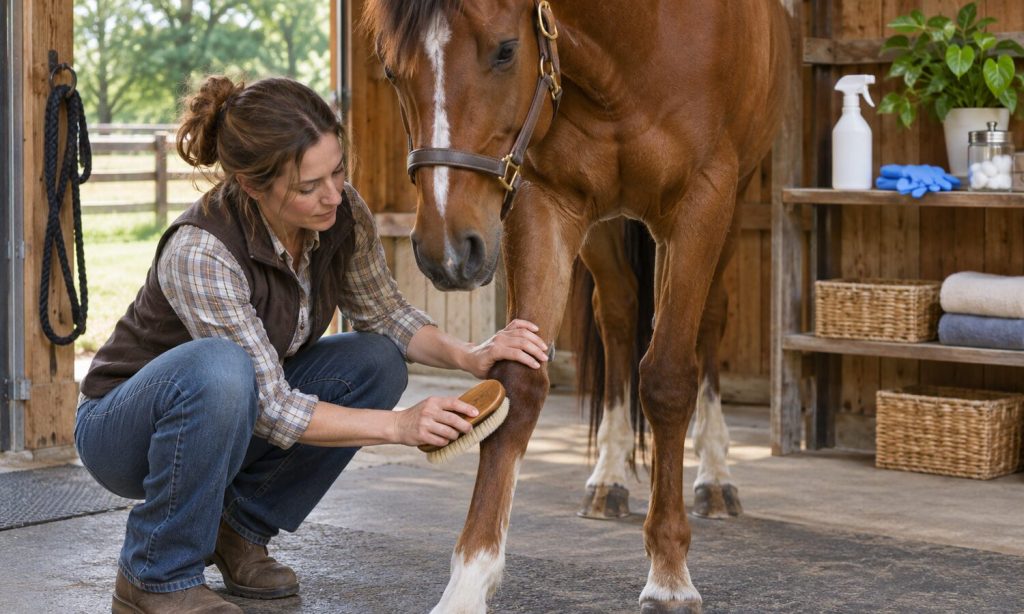
How to clean a tick treatment for horses and keep it in good condition requires an important distinction: do not wash, dilute, filter, or ‘refresh’ the treatment liquid itself. A tick-control product may be a pesticide or veterinary medicine with precise label directions. Altering its formulation can make it unsafe or ineffective. Clean only reusable application equipment when the label authorizes it, and protect the original container from heat, spills, and contamination.
Horse owners should first verify that any tick treatment for horses is intended for that species and is appropriate for the individual animal. This guide addresses storage, packaging inspections, applicator maintenance, safe disposal, and the difference between treating ticks and preventing environmental exposure. For actual dosing and application, follow the product label and your veterinarian. Never use household cleaners to modify a veterinary treatment.
Read the Product Label Before Handling Anything
A registered pesticide label specifies permitted animals or sites, application method, precautions, personal protective equipment, storage, and disposal. Veterinary medicines also have specific directions. Do not assume that two liquids with similar bottles are interchangeable. Keep the original label intact and verify concentration, formulation, expiry information, and any species or age restrictions.
How to clean a tick treatment for horses and keep it in good condition begins with knowing whether the equipment is reusable. A single-use wipe, pipette, or prefilled applicator should not be cleaned and refilled unless the manufacturer expressly permits it. If the instructions are missing or unreadable, stop using the product and contact the manufacturer or veterinarian.
Never Substitute a Household Mixture
Do not add detergent, vinegar, alcohol, water, oils, or another insecticide to a ready-to-use product. Improvised mixtures can alter the label’s intended concentration and expose the horse, handler, or environment. A formula approved for a different species may be toxic to horses or nearby animals. When uncertain about a treatment, ask the veterinarian rather than testing it directly on skin.
Inspect the Original Container Safely
Check for a secure cap, readable label, intact seal, and signs of leakage. Keep containers closed between authorized uses and store them where children, animals, and unauthorized people cannot reach them. Use the manufacturer’s specified temperature range, and avoid direct sun, extreme heat, freezing, and areas near flames when the label warns of flammability.
How to clean a tick treatment for horses and keep it in good condition does not mean scrubbing a leaking bottle. If the container is swollen, leaking, cracked, or unidentified, avoid direct contact and follow label spill and disposal directions. Keep pesticides separate from feed, forage, drinking water, medicine, and grooming tools. The EPA advises retaining pesticide labels and original containers for safety information.
Do Not Transfer to Food Containers
Never pour tick products into beverage bottles, food jars, or unlabeled sprayers. This creates a poisoning risk and can separate the liquid from critical instructions. If an approved applicator system uses a secondary container, follow the specific labeling rules and directions. For ordinary household storage, preserve the original manufacturer packaging.
Clean Reusable Equipment Only as Directed
Some reusable sprayers, measuring devices, or applicator mitts may require maintenance. Follow the manufacturer’s cleaning and personal-protection instructions for that equipment and substance. Chemical residues can harm people or animals if washed into sinks, drains, or soil. Do not assume that a rinse under a tap is an acceptable disposal method. The appropriate procedure depends on the exact product.
How to clean a tick treatment for horses and keep it in good condition may really mean keeping a reusable applicator functional. Inspect seals, nozzles, and fittings without inhaling mist or touching residue. Use protective equipment specified on the label. If the tool is damaged or cannot be cleaned safely, stop using it and ask about replacement rather than improvising repairs.
Prevent Cross-Contamination
Do not use the same unlabeled sprayer for feed additives, household cleaners, and tick treatments. Keep equipment for chemical use separate and store it securely. After handling, follow label hygiene directions and wash hands appropriately. Keep horses and other pets away from chemical preparation and cleanup areas as instructed.
Store Treatment Products Away From the Horse’s Feed
A locked or otherwise secure, ventilated storage area may be appropriate when consistent with the label. Avoid shelves above hay bales, feed bins, or water troughs where spills could contaminate supplies. Check the product periodically for packaging damage and expiry. Buy only what can be used before any stated deadline to reduce leftover chemical waste.
How to clean a tick treatment for horses and keep it in good condition also means tracking identity and age. Keep purchase information, lot numbers, and any veterinarian directions where caregivers can find them. Do not use an unknown leftover simply because it looks normal. If another person manages the stable, make sure they know which product belongs to which horse and who may handle it.
Handle Expired or Unwanted Product Correctly
Follow the exact label’s disposal instructions and local waste regulations. Never pour pesticide concentrate into drains or waterways. Do not reuse empty chemical containers for food or water. If a product must be handled as hazardous waste, contact the local disposal program. A damaged or expired container is not a reason to apply excess chemical to use it up.
Combine Treatment With Tick-Risk Management
Tick exposure can be reduced through regular horse checks, suitable vegetation management, and veterinary-approved protection for the local season. Inspect mane, tail base, chest, legs, and other areas where ticks may attach, using a calm handling routine. Tick-borne illness risk varies by geography and disease. Ask a veterinarian about removal and relevant clinical signs rather than using force or solvents.
How to clean a tick treatment for horses and keep it in good condition is only one part of parasite prevention. Our related guide on reducing tick and flea risks around a barn explains environmental measures. A tidy storage shelf cannot compensate for untreated exposure or inappropriate pesticide use.
When a Horse Needs Veterinary Attention
Contact a veterinarian for fever, unusual weakness, loss of appetite, swelling, lameness, neurological signs, or worsening skin reactions after a tick exposure. Do not assume all symptoms are caused by ticks. If a horse reacts severely after a chemical application, follow emergency label directions and contact a veterinarian promptly.
Build a Safe Caregiver Checklist
Before an authorized use, check the label, horse identity, expiration, and condition of the container. Prepare only the required equipment and protective gear. Afterward, close the original container, follow cleanup instructions, and store it safely away from feed. Record the date and product identity if the veterinarian recommends tracking treatments.
How to clean a tick treatment for horses and keep it in good condition should never become a separate home chemistry project. The safest routine is consistent label compliance, secure storage, controlled equipment handling, and an informed veterinarian. If any part of the directions is unclear, postpone use until it is clarified.
Know Which Tasks Are Not DIY
Disposing of an unidentified pesticide, repairing a pressurized dispenser, managing a significant spill, or assessing a suspected poisoning may require professional help. Keep people and animals away from exposure and follow emergency instructions. Do not mix chemicals in an attempt to neutralize them. Local safety officials or poison control services may provide additional direction.
Frequently Asked Questions
Chemical treatment care differs from ordinary grooming-tool cleaning. These questions help separate maintaining equipment from changing a regulated liquid.
For any specific tick-control formula, the label and veterinarian take precedence over a general article. Safety instructions can differ by product and concentration.
Can I rinse old tick treatment to make it usable again?
No. Do not wash or dilute the treatment liquid. If a product is expired, contaminated, or unidentified, follow its disposal instructions.
Should I clean the spray nozzle after every use?
Only as directed for that exact container and formulation. Some components are not intended to be disassembled or rinsed.
Can I pour treatment into a new unlabeled bottle?
No. Keep the original container and label. Unlabeled chemicals create serious handling and poisoning hazards.
Is a tick product safe for any animal if it says natural?
No. Check permitted species and warnings. Natural ingredients can still cause adverse reactions or harm other pets.
What if my horse develops a reaction after treatment?
Stop further exposure and contact a veterinarian promptly. Follow the product’s emergency first-aid guidance and retain the label.
Final Words
How to clean a tick treatment for horses and keep it in good condition really means maintaining safe packaging and authorized application tools. Do not alter the chemical product, reuse inappropriate containers, or dispose of leftovers casually. Protect feed and water from contamination and follow each label’s safety directions.
If you need a tick treatment for horses, discuss species suitability and local tick risks with a veterinarian first. Add daily observation and environmental prevention to the plan. Chemical stewardship protects your horse, the handler, other animals, and the surrounding environment.
Reference
Pesticide safety guidance: U.S. Environmental Protection Agency — Storing Pesticides Safely; and EPA — Secondary and Service Containers.
Horse tick-care context: University of Minnesota Extension — Preventive Horse Care; and EPA — Storage and Disposal Label Statements.









