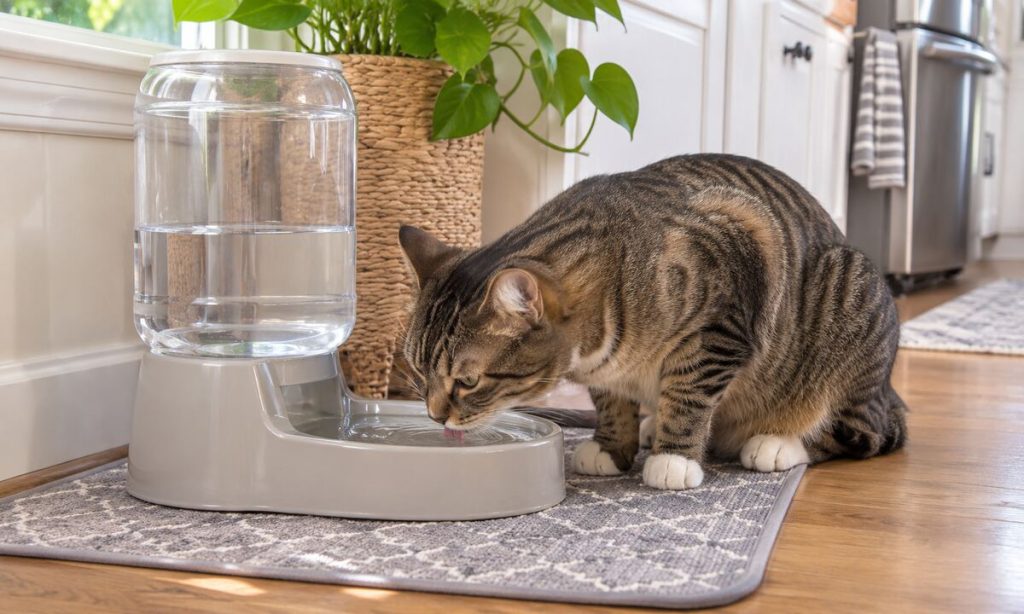
Learning how to size a water feeder for cats starts with your cat’s real routine, not a generic “one size fits all” chart. A feeder that holds too little may need constant refilling, while an oversized reservoir can tempt caregivers to leave water unchanged for too long. Capacity should make fresh water easy to provide and the feeder easy to wash. Start by considering how many cats share it, what they eat, the room temperature, and how often someone can check the bowl.
A water feeder for cats can be convenient, but its advertised capacity does not tell you how much your cat drinks. Food moisture, spills, evaporation, and other water stations all affect the level. This guide explains a practical way to estimate capacity, monitor use, and keep a feeder hygienic. It also covers when a change in drinking habits deserves a call to your veterinarian.
What feeder capacity actually tells you
Capacity is the volume a reservoir or bowl can hold. It is not a daily serving recommendation, and it does not measure a cat’s total water intake. Cats obtain water from both food and drinking. Canned food contains substantially more moisture than dry kibble, so two cats of similar size may drink different amounts from a feeder. Activity, indoor temperature, health, and personal habits also influence use. A marked reservoir can help you observe a trend, but it cannot explain the trend by itself.
Gravity feeders replenish a bowl as the water level falls; they do not keep the water sterile or fresh indefinitely. Bowls can collect saliva, food particles, hair, and dust even when the reservoir looks full. A large tank can therefore make daily checks less urgent in appearance, while cleanliness still requires regular attention. Think of capacity as a convenience buffer between refills, not permission to delay cleaning or leave a cat without supervision.
Estimate how much water your household uses
For several days, note the water level at the same time each day. Refill to a consistent mark, measure the amount added, and record spills or splashing when possible. Keep other water stations consistent during this short observation period. If several cats share one feeder, the measurement reflects the household rather than one cat. Do not restrict access to water to get a cleaner measurement. The goal is a practical estimate of refill frequency, not a clinical intake test.
Evaporation can make a shallow bowl appear to lose more water, especially in warm, dry rooms. A cat may also paw at water or carry droplets away. Wet food contributes moisture that a feeder measurement cannot capture. These factors make a precise calculation difficult in a shared home. Use a range instead: observe the smallest and largest daily drop, then choose capacity that covers ordinary use while leaving time for frequent inspection and washing.
Use the cat’s feeding pattern as context
Record whether each cat eats mostly wet food, dry food, or a combination. This helps explain why the feeder level changes, but it is not a reason to reduce access to fresh water. A shift in diet can change drinking behavior, so repeat your observations after a meaningful feeding change. Ask your veterinarian for individual advice if your cat has a health condition or a prescribed diet that affects hydration.
Choose capacity for the number of cats and refill schedule
For one cat, choose a feeder that holds enough water to avoid inconvenient mid-day refills but still allows you to replace and wash the drinking bowl regularly. If no one can check the feeder during a workday, a larger reservoir may provide a buffer; it should not replace a reliable daily check. In a multi-cat home, estimate shared use and consider separate stations. A single large feeder can be a poor fit if one cat guards it or another avoids the busy area.
Match the capacity to your actual schedule. If you can refresh the water morning and evening, a modest bowl may be easier to clean and monitor. If you need a reservoir for longer intervals, check that the bowl refills reliably and that the assembly comes apart for washing. A unit’s claimed capacity may include water stored in a tank that is awkward to empty. Consider whether you can lift, rinse, and dry every part comfortably.
Check the feeder’s shape, stability, and upkeep
Capacity only helps when a cat is willing and able to drink from the bowl. Look for a stable base, a comfortable opening, and an accessible drinking height. Place the feeder in a calm spot away from litter and heavy foot traffic. Some cats prefer water away from food; others simply need a quiet, predictable station. If your cat avoids a new setup, keep the old bowl available during the transition and observe which one the cat uses.
Check the manufacturer’s washing instructions before choosing a feeder. Removable bowls and simple reservoir shapes are often easier to scrub and dry than narrow channels or complicated seams. Inspect valves, seals, and hidden corners for residue. Wash the drinking bowl frequently and clean the reservoir on the schedule recommended for its design. If an odor, film, or slime returns quickly, clean all water-contact parts and review the routine. Our guide to common water-dish mistakes discusses placement, shape, and hygiene.
Adjust the size when household needs change
Reassess capacity when you add a cat, change from dry to wet food, move the feeder, or alter how often someone is home. A second station may be more useful than one oversized tank, particularly when cats have different routines. Keep each station clean and easy to reach. If you use a fountain instead of a gravity feeder, the same principles apply: a larger reservoir changes refill frequency, but it does not eliminate pump care or cleaning. See our water fountain maintenance guide for signs that parts need attention.
Never select capacity based on the idea that a cat can be left alone for an extended period. A feeder can clog, tip, leak, or stop replenishing the bowl. Arrange a person to check food, water, and your cat whenever you are away. Keep a backup bowl of fresh water in a separate location, especially during a transition to a new feeder. The best size supports the care routine you can reliably maintain.
When drinking changes need veterinary attention
A noticeable increase or decrease in drinking can have many causes, including a change in food or environment. It can also be an early sign of a health problem. Watch for related changes such as unusually frequent urination, changes in appetite, weight loss, vomiting, lethargy, or difficulty reaching the bowl. Do not try to diagnose a condition by measuring reservoir use alone. A veterinarian can interpret the pattern alongside an examination and the cat’s medical history.
Contact your veterinary clinic promptly if the change is sudden, persistent, or accompanied by other concerning signs. For a cat that cannot keep water down, appears weak, or seems unable to urinate, seek urgent veterinary advice. Keep notes about food, water stations, and when the behavior changed. That information is more useful than switching feeder sizes repeatedly while waiting to see whether the issue resolves.
Frequently Asked Questions
The right capacity depends on observed household use, how often the feeder can be checked, and whether one or several cats share it. These answers address common sizing and care questions.
A feeder’s volume is only one part of hydration care. Keep access to fresh water, maintain the device, and ask a veterinarian about meaningful changes in drinking.
How many days of water should a cat feeder hold?
There is no universal number. Choose a capacity that suits your observed use and refill routine, while still checking the bowl daily and cleaning it regularly.
Should wet-food cats have a smaller water feeder?
No. Wet food supplies additional moisture, but cats should still have access to fresh drinking water. Size the feeder for convenience and keep observing use.
Is a large reservoir better for multiple cats?
Not always. Multiple smaller stations may reduce crowding and allow you to monitor each area. Consider the cats’ relationships and the space available.
Can I leave a gravity feeder for several days?
A full reservoir does not ensure that the bowl stays clean or that the feeder continues working. Arrange daily care and a person to check your cat while away.
How often should I clean a cat water feeder?
Follow the manufacturer’s directions, wash the drinking bowl frequently, and clean reservoir parts often enough to prevent film or residue. Inspect seams and valves during washing.
Final Words
To size a water feeder, observe how quickly your household uses water, account for food moisture and spills, and choose capacity that fits your refill and cleaning routine. A larger reservoir may offer convenience, but daily checks and fresh water still matter. In multi-cat homes, more than one quiet station can work better than a single oversized feeder.
Revisit your setup when diet, household size, or schedule changes. If you are comparing a water feeder for cats, focus on cleanability and reliable access as much as volume. A sudden change in drinking deserves attention from your veterinarian, not just a different capacity.