
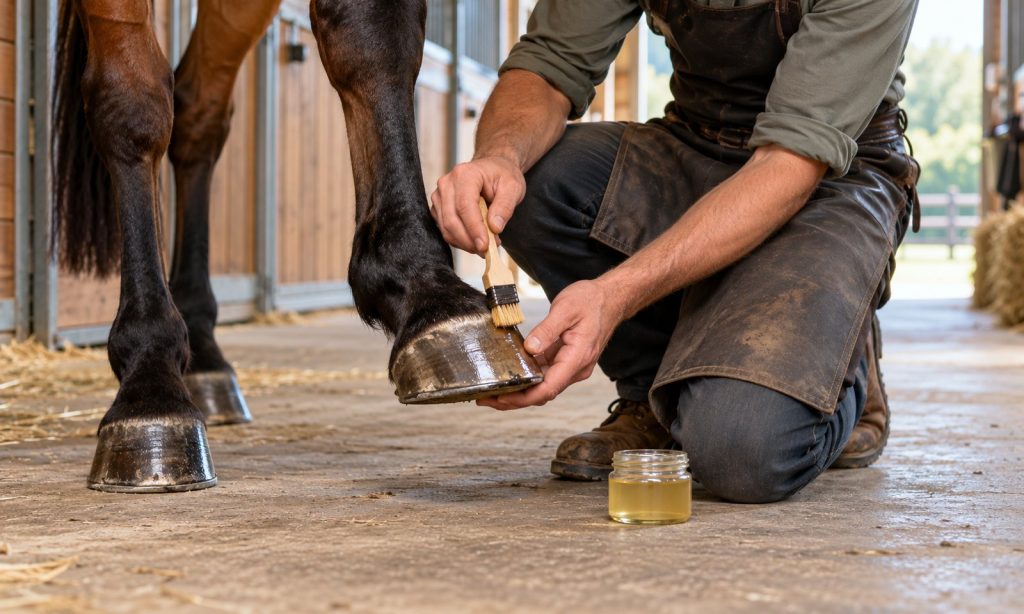
Dry-looking hooves can prompt a quick search for hoof oil, but the right choice depends on the horse, the environment, and what the product is meant to do. A glossy finish does not prove that a hoof is healthier, and oil cannot correct poor trimming, infection, or a structural problem. Before choosing, inspect the hoof, consider recent weather and footing, and ask your farrier what you are seeing. This guide explains how to compare ingredients, consistency, application, packaging, and practical use. It also covers signs that call for professional help. How to choose the right hoof oil for dry hooves starts with understanding the goal and the hoof’s condition. If you are comparing options, our hoof oil overview for dry hooves is a separate product roundup. Use oil as routine care only when it fits professional guidance.
First Identify What Looks Dry
Look at the hoof in good light after picking it out. Notice whether the wall looks dull, flaky, chipped, or split, and whether there is a change from the horse’s usual appearance. Check the sole, frog, and heel bulbs without trimming or digging into them. A cosmetic surface change is not the same as lameness or a hoof disease. What to look for in hoof oil for dry hooves should begin with an assessment, not a product claim.
Consider the horse’s routine. Recent drought, heat, hard ground, wet bedding, muddy turnout, frequent washing, and changes between wet and dry conditions can affect hoof appearance. Hoof wall and sole do not respond identically to moisture. A horse may have more than one contributing factor, including trim interval, conformation, nutrition, or workload. Keep notes about when you first noticed the change and where the horse spends time.
If you see a crack that reaches sensitive tissue, a loose shoe, swelling, discharge, heat, a puncture, or sudden lameness, contact your farrier or veterinarian. Do not coat the area and wait to see if it improves. A hoof product is not treatment for an abscess or injury. A professional can assess the cause and decide what care is appropriate. How to choose the right hoof oil for dry hooves begins after that assessment.
Know What Hoof Oil Can and Cannot Do
Hoof oils and dressings are topical products used for appearance and routine hoof care. They may add temporary sheen or create a surface barrier, depending on their formulation. Their effects vary with ingredients, application, and the horse’s surroundings. They do not replace regular trimming, sound stable management, balanced nutrition, or a farrier’s assessment.
Do not assume oil “feeds” the hoof or reverses cracks. The visible hoof wall is made of keratin and grows over time from the coronary band. Existing damage does not disappear after one application. A farrier can advise whether the hoof needs a change in trim or protection. How to choose the right hoof oil for dry hooves begins with that advice. A veterinarian should assess pain, infection, or unexplained changes.
How to choose the right hoof oil for dry hooves depends on whether a topical dressing fits the care plan. If the goal is to protect a hoof in a dry environment, the choice may differ from a product meant to add shine before an event. Ask your farrier what benefit is realistic and how often an application is appropriate. Set a modest goal and avoid unnecessary use. A clear goal helps you avoid unnecessary or excessive use.
Read the Ingredient List
Check whether the product lists its ingredients and describes how it is intended to be used. Some products use oils, waxes, or other film-forming ingredients. Others may contain fragrances or botanical additives. The word “natural” does not explain performance or safety. If the label does not identify the contents or the manufacturer, ask for more information before applying it.
Consider the horse’s sensitivity and the surfaces the product may contact. Avoid applying a dressing to skin, wounds, or irritated tissue unless a veterinarian directs you to do so. If the hoof has thrush, a crack, or another diagnosed condition, ask whether the product is compatible with the treatment plan. Do not mix topical products or cover a medicated area without professional advice.
Look for a safety label, manufacturer contact, lot number, and use directions. Check whether the product is intended for the hoof wall, sole, frog, or a specific area. The label should also state any precautions for handling and storage. Read those directions before applying. How to choose the right hoof oil for dry hooves includes checking the label’s intended use instead of inferring it from the name.
Choose a Consistency That Fits the Routine
Hoof dressings can be thin liquids, thicker oils, or waxy pastes. A thinner formula may be quick to brush on but can drip or splash. A thicker dressing may be easier to place on a specific surface, though it can collect dust. Choose a texture you can apply neatly and store without leaking. The “best” consistency is the one that suits the horse and your routine.
Think about the applicator. A built-in brush can reduce spills, while a separate brush may give more control around the hoof wall. Do not reuse a dirty brush on different horses if it may transfer debris or contamination. Clean application tools according to the product directions and keep them separate from wound-care supplies.
If you apply a dressing before turnout, consider the footing. A wet or oily surface can transfer to stall mats, concrete, or equipment. Keep the horse on a safe surface until the product settles, if the label recommends doing so. Wipe up spills to prevent slips. A small, controlled application is usually easier to manage than coating the whole hoof generously.
Consider the Horse’s Environment
Hoof condition can change with the environment. Repeated wet and dry cycles may contribute to changes in hoof quality, while persistently wet or dirty footing can soften the hoof and create other concerns. A topical dressing will not compensate for poor drainage, soiled bedding, or inconsistent farrier care. How to choose the right hoof oil for dry hooves includes reviewing the environment. Review the horse’s stall, paddock, and turnout conditions alongside the product choice.
In a dry season, ask whether a dressing or another management change fits the horse. In wet conditions, discuss whether limiting moisture exposure or using a product designed as a barrier is appropriate. A dressing intended to seal out moisture may not be suitable in every situation. For a separate discussion of wet-weather hoof protection, see our guide to hoof sealants for wet conditions.
How to choose the right hoof oil for dry hooves also depends on where the horse stands and works. Note whether the hoof looks different after a change in bedding, turnout, or weather. Share this context with your farrier. The same product can behave differently on a clean, dry hoof than on one coated in mud or manure.
Check Application and Storage Directions
Follow the product label and your farrier’s instructions. Clean the hoof first and allow it to dry if the directions call for a dry surface. Use a light, even amount unless the label directs otherwise. Avoid getting oil on the coronet, skin, or ground. Do not apply it to an unclean hoof and expect the product to replace picking and routine cleaning.
Apply the product in a well-ventilated area and use gloves if the label recommends them. Keep it away from eyes, feed, and water. Secure the lid after use and store the container at the stated temperature. Do not leave it where a horse can chew the tub or knock it over. Keep the product away from children and other animals.
Check how long the product lasts after opening and whether it separates in storage. If the smell, color, or texture changes substantially, contact the manufacturer before use. Do not use a product that has passed its expiration date or has contaminated contents. A clear lot number can help the company answer questions if there is a problem. How to choose the right hoof oil for dry hooves includes checking the expiration date.
Compare Products by Practical Details
When you compare hoof oil for dry hooves, look beyond the container size and front label. Note the ingredients, intended surface, application method, storage needs, and manufacturer information. Consider whether the product works with the horse’s current care plan. Ask the farrier to review the exact label if you are uncertain about the formula or the reason to use it.
A smaller container may be easier to finish before the product changes or expires. A wide-mouth tub can be simple to use but may expose the contents to debris if left open. A bottle with a brush can be tidy, though you should still keep the brush clean. Select packaging that fits your barn and makes the label easy to follow.
Price per ounce tells only part of the story. If a product needs frequent use or is difficult to apply, it may not fit your routine. Compare the stated coverage and serving instructions, but do not increase the frequency to use up a bottle. Ask a professional how often, if at all, the hoof needs a topical dressing.
Build a Simple Hoof-Care Routine
Pick out hooves regularly and inspect them as part of daily handling. Keep appointments with a qualified farrier and note when the next trim or shoeing visit is due. Clean, well-managed footing and a regular care schedule are more important than adding a cosmetic product. If the horse’s work, shoes, or environment changes, ask whether the routine should change too.
If the wall is brittle or prone to chipping, your farrier may consider several factors. Those could include balance, trim interval, diet, and the horse’s daily footing. Our separate overview of hoof conditioners for brittle hooves discusses a related product category, but a conditioner is not a substitute for evaluating a crack or lameness.
How to choose the right hoof oil for dry hooves is only one part of hoof care. Keep notes about appearance, weather, products, and farrier visits. If a dressing is recommended, record the date and amount so you can tell whether it changed anything. Stop and ask for advice if the hoof becomes more irritated or the horse seems uncomfortable.
When to Call a Farrier or Veterinarian
Seek professional advice if the horse becomes lame, resists having a foot picked up, or develops a sudden change in stance. Heat, swelling, discharge, a deep crack, or a foreign object in the hoof also deserve attention. Do not pull out an embedded object or try to open an abscess yourself. Call a veterinarian and follow their instructions.
The University of Minnesota Extension notes that hoof abscesses can cause sudden, severe lameness. It also describes wet, dirty environments and changes between wet and dry conditions as factors that can affect hoof quality. A suspected abscess is a veterinary issue. A topical oil cannot drain or treat an infection.
If the hoof is chronically dry or repeatedly cracks, ask the farrier and veterinarian whether the cause should be investigated. A nutrition review or exam may be appropriate. Do not start supplements, change feed, or use medicated products based only on a label claim. A professional can help decide which part of the routine needs adjustment.
Questions to Ask Before You Buy
- What change am I trying to address: appearance, surface protection, or another goal?
- Is a hoof oil suitable for this horse’s hoof and environment?
- Which hoof surfaces should receive the product, and how often?
- Does this formula conflict with any current medication or topical treatment?
- What signs should make me stop and contact a farrier or veterinarian?
Bring the product label to your farrier or veterinarian, especially if the horse has a diagnosed hoof problem. Ask for a practical routine you can repeat safely. If the professional recommends no dressing, follow that advice and focus on the underlying management issue.
Frequently Asked Questions
Does hoof oil moisturize a horse’s hoof?
Products differ, and a shiny appearance does not prove that the hoof’s internal moisture balance has changed. Ask your farrier what result is realistic for the horse and the product being considered.
Can hoof oil fix cracks?
No topical dressing can repair a structural crack or correct an underlying problem. A farrier should assess cracks, and a veterinarian should evaluate pain, infection, or sudden changes.
Should I apply hoof oil every day?
Use the product only as directed by its label and your farrier. There is no schedule that fits every horse, season, or formulation.
Can I put hoof oil on a wet hoof?
Check the product directions and ask your farrier. Some products may call for a clean, dry hoof, while others may be used differently. Do not guess if the label is unclear.
When is a dry hoof a veterinary concern?
Call a veterinarian or farrier for sudden lameness, a deep crack, heat, swelling, discharge, an embedded object, or a hoof that seems painful. Do not use oil to delay an assessment.
Final Words
How to choose the right hoof oil for dry hooves starts with identifying what you see and what the product is expected to do. Review ingredients, intended use, application, storage, and fit with the horse’s environment. Keep routine cleaning and farrier care at the center of the plan. If hoof oil for dry hooves is appropriate, use it as directed and track the result. For comparisons, our dry-hoof oil roundup can help you review options. Ask a professional about persistent dryness, cracks, pain, or sudden changes before changing care.









