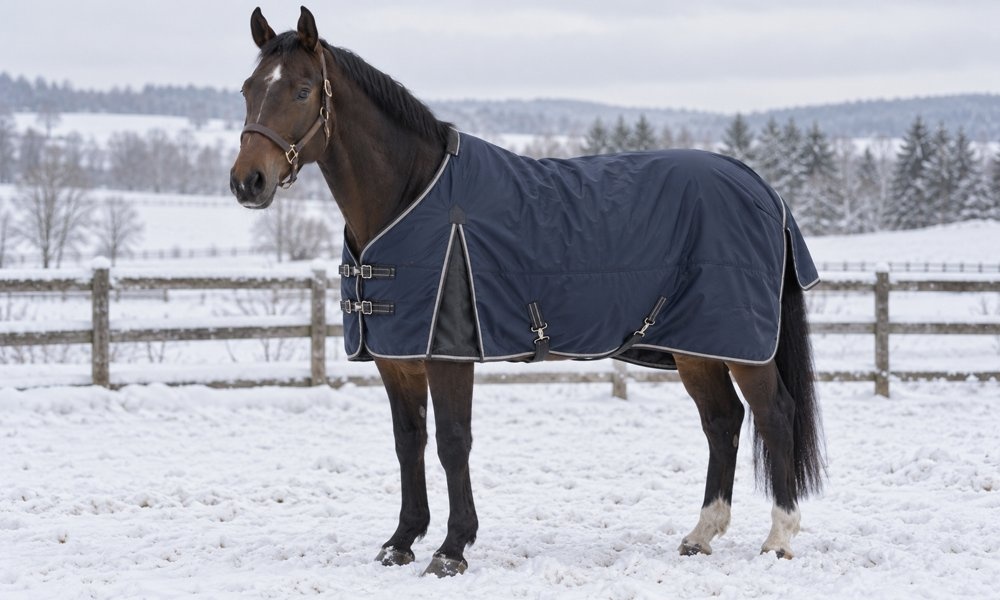
A clipped horse has less natural coat insulation, so the right winter blanket can help protect it during cold turnout. The best winter horse blanket for clipped horses balances fill weight with weather exposure, fit, and the horse’s individual condition. This list compares seven options from medium to heavy weights, including waterproof turnout designs and stable styles. Clipping alone does not determine how much warmth a horse needs; temperature, wind, rain, shelter, workload, body condition, and acclimation all matter. Check your horse regularly for sweating, shivering, dampness, or rubbing, and adjust the layering plan as conditions change. Clipped horses vary in coat left behind, body condition, shelter, and exposure to wind or rain, so use these products as options rather than a fixed temperature prescription.
Jump to buying advice | Jump to FAQs
Quick Picks
| Product | Best For | Key Advantage | Buy | Review |
|---|---|---|---|---|
| LEAFOREST 1200D Waterproof 200g Winter Turnout Blanket | clipped horses needing a mid-weight turnout layer | 1200D ripstop shell with waterproof, breathable construction | View on Amazon | Jump to Review |
| Gallopoff 1200D 200g Medium-Weight Winter Turnout | clipped horses needing 200g insulation | 200g fill with 1200D ripstop outer | View on Amazon | Jump to Review |
| Horze Nevada 200g Mid-Weight Turnout Blanket | horses needing shoulder mobility features | 200g fill with double front buckles | View on Amazon | Jump to Review |
| BARN & STABLE 600D 200g Winter Blanket | moderate winter turnout | 600D shell and 200g fill | View on Amazon | Jump to Review |
| HILASON 1200D Waterproof 300g Winter Turnout | colder turnout and added underside coverage | 1200D ripstop with 300g poly fill | View on Amazon | Jump to Review |
| 1680D 300g Waterproof Turnout Blanket | turnout where a higher-denier shell is a priority | 1680D outer with 300g fill | View on Amazon | Jump to Review |
| CHALLENGER 1200D 400g Heavyweight Turnout | colder turnout needing heavier fill | 1200D waterproof ripstop outer with 400g fill | View on Amazon | Jump to Review |
How We Chose These Picks
We compared verified product listings for construction, fit details, intended use, and available features. Where a listing did not provide a measurement or performance figure, we avoid assuming one. Product details and availability may change; check the current page before purchasing.
Best Winter Horse Blanket for Clipped Horses: 7 Picks
1. LEAFOREST 1200D Waterproof 200g Winter Turnout Blanket

What We Like
- 1200D ripstop shell with waterproof, breathable construction
- 200g medium fill is listed for cold wet turnout
- Denier and fill are stated for shell and warmth comparison
- A medium layer can be considered for clipped-horse winter turnout
What We Don’t Like
- A 200g layer may be too warm in mild weather
- Confirm the selected size before ordering
LEAFOREST 1200D Waterproof 200g Winter Turnout Blanket is a turnout blanket included for comparison in this guide. Its listing describes 1200D ripstop shell, waterproof and breathable construction; 200g medium fill, listed for cold wet turnout. These stated features help show which use may suit this option. Fill weight is a comparison point, not a temperature prescription. Wind, wet weather, shelter, clipping pattern, and the horse’s condition all affect layering. Compare this model’s stated fill and shell against the shelter and weather exposure your horse gets; those traits help shortlist winter turnout layers but do not predict an exact temperature range.
Verify the exact selected size and components on the current product listing, as marketplace details can change. Measure against the maker’s chart and check shoulder movement, wither clearance, belly fit, and leg straps. Introduce the blanket under supervision. Check for sweating, shivering, dampness, slipped straps, and rub marks, and remove it to inspect coat and skin. Reassess as temperatures and the horse’s condition change. A blanket cannot replace shelter; consult a veterinarian when the horse remains cold or has a health concern. The correct choice depends on the horse, the surroundings, and consistent checks. The correct choice depends on the horse, the surroundings, and consistent checks. The correct choice depends on the horse, the surroundings, and consistent checks. The correct choice depends on the horse, the surroundings, and consistent checks. The correct choice depends on the horse, the surroundings, and consistent checks.
My Recommendation
Choose LEAFOREST 1200D Waterproof 200g Winter Turnout Blanket when its listed construction fits the horse and the conditions you need to manage. Compare the model’s stated features with the other picks, then verify the current size, components, and care directions before purchase. Introduce it carefully and check comfort during use. If you notice rubbing, dampness, restricted movement, or an unusual response, stop and reassess the fit or routine. Check the horse again as conditions change.
2. Gallopoff 1200D 200g Medium-Weight Winter Turnout
What We Like
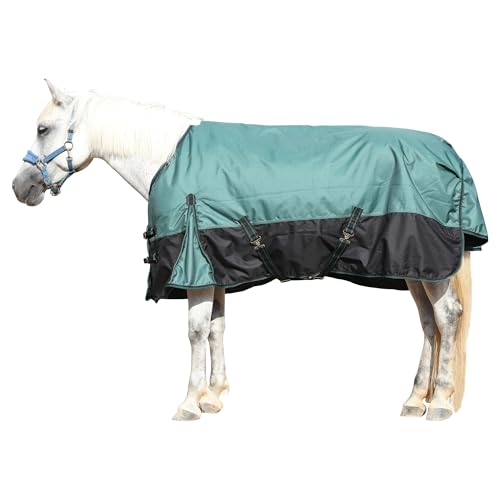
- 200g fill with 1200D ripstop outer
- Waterproof breathable shell, anti-rub lining, and tail flap are listed
- The tail flap adds listed hindquarter coverage
- Fill and shell details are specified together
What We Don’t Like
- A 200g layer may not suit every cold-weather setup
- Check fit and shell care directions
Gallopoff 1200D 200g Medium-Weight Winter Turnout is a turnout blanket included for comparison in this guide. Its listing describes 200g fill, 1200D ripstop outer; waterproof breathable shell, anti-rub lining, and tail flap per listing. These stated features help show which use may suit this option. Fill weight is a comparison point, not a temperature prescription. Wind, wet weather, shelter, clipping pattern, and the horse’s condition all affect layering. Compare this model’s stated fill and shell against the shelter and weather exposure your horse gets; those traits help shortlist winter turnout layers but do not predict an exact temperature range.
Verify the exact selected size and components on the current product listing, as marketplace details can change. Measure against the maker’s chart and check shoulder movement, wither clearance, belly fit, and leg straps. Introduce the blanket under supervision. Check for sweating, shivering, dampness, slipped straps, and rub marks, and remove it to inspect coat and skin. Reassess as temperatures and the horse’s condition change. A blanket cannot replace shelter; consult a veterinarian when the horse remains cold or has a health concern. The correct choice depends on the horse, the surroundings, and consistent checks. The correct choice depends on the horse, the surroundings, and consistent checks. The correct choice depends on the horse, the surroundings, and consistent checks. The correct choice depends on the horse, the surroundings, and consistent checks. The correct choice depends on the horse, the surroundings, and consistent checks.
My Recommendation
Choose Gallopoff 1200D 200g Medium-Weight Winter Turnout when its listed construction fits the horse and the conditions you need to manage. Compare the model’s stated features with the other picks, then verify the current size, components, and care directions before purchase. Introduce it carefully and check comfort during use. If you notice rubbing, dampness, restricted movement, or an unusual response, stop and reassess the fit or routine. Check the horse again as conditions change.
3. Horze Nevada 200g Mid-Weight Turnout Blanket

What We Like
- 200g fill with double front buckles
- Cross surcingles and elastic leg straps are listed
- Shoulder gussets are designed to support movement
- Closure and fit features are spelled out
What We Don’t Like
- Listed fill may be excessive in mild weather
- Confirm straps suit the horse’s build
Horze Nevada 200g Mid-Weight Turnout Blanket is a turnout blanket included for comparison in this guide. Its listing describes 200g fill, double front buckles; cross surcingles, shoulder gussets, and elastic leg straps. These stated features help show which use may suit this option. Fill weight is a comparison point, not a temperature prescription. Wind, wet weather, shelter, clipping pattern, and the horse’s condition all affect layering. Compare this model’s stated fill and shell against the shelter and weather exposure your horse gets; those traits help shortlist winter turnout layers but do not predict an exact temperature range.
Verify the exact selected size and components on the current product listing, as marketplace details can change. Measure against the maker’s chart and check shoulder movement, wither clearance, belly fit, and leg straps. Introduce the blanket under supervision. Check for sweating, shivering, dampness, slipped straps, and rub marks, and remove it to inspect coat and skin. Reassess as temperatures and the horse’s condition change. A blanket cannot replace shelter; consult a veterinarian when the horse remains cold or has a health concern. The correct choice depends on the horse, the surroundings, and consistent checks. The correct choice depends on the horse, the surroundings, and consistent checks. The correct choice depends on the horse, the surroundings, and consistent checks. The correct choice depends on the horse, the surroundings, and consistent checks. The correct choice depends on the horse, the surroundings, and consistent checks.
My Recommendation
Choose Horze Nevada 200g Mid-Weight Turnout Blanket when its listed construction fits the horse and the conditions you need to manage. Compare the model’s stated features with the other picks, then verify the current size, components, and care directions before purchase. Introduce it carefully and check comfort during use. If you notice rubbing, dampness, restricted movement, or an unusual response, stop and reassess the fit or routine. Check the horse again as conditions change.
4. BARN & STABLE 600D 200g Winter Blanket

What We Like
- 600D shell and 200g fill
- Waterproof and breathable claims are listed
- Mid-weight fill is clearly stated
- Shell and insulation can be compared separately
What We Don’t Like
- The 600D shell differs from higher-denier options
- Verify current waterproof care directions
BARN & STABLE 600D 200g Winter Blanket is a turnout blanket included for comparison in this guide. Its listing describes 600D shell, 200g fill; waterproof and breathable claims listed. These stated features help show which use may suit this option. Fill weight is a comparison point, not a temperature prescription. Wind, wet weather, shelter, clipping pattern, and the horse’s condition all affect layering. Compare this model’s stated fill and shell against the shelter and weather exposure your horse gets; those traits help shortlist winter turnout layers but do not predict an exact temperature range.
Verify the exact selected size and components on the current product listing, as marketplace details can change. Measure against the maker’s chart and check shoulder movement, wither clearance, belly fit, and leg straps. Introduce the blanket under supervision. Check for sweating, shivering, dampness, slipped straps, and rub marks, and remove it to inspect coat and skin. Reassess as temperatures and the horse’s condition change. A blanket cannot replace shelter; consult a veterinarian when the horse remains cold or has a health concern. The correct choice depends on the horse, the surroundings, and consistent checks. The correct choice depends on the horse, the surroundings, and consistent checks. The correct choice depends on the horse, the surroundings, and consistent checks. The correct choice depends on the horse, the surroundings, and consistent checks. The correct choice depends on the horse, the surroundings, and consistent checks.
My Recommendation
Choose BARN & STABLE 600D 200g Winter Blanket when its listed construction fits the horse and the conditions you need to manage. Compare the model’s stated features with the other picks, then verify the current size, components, and care directions before purchase. Introduce it carefully and check comfort during use. If you notice rubbing, dampness, restricted movement, or an unusual response, stop and reassess the fit or routine. Check the horse again as conditions change.
5. HILASON 1200D Waterproof 300g Winter Turnout

What We Like
- 1200D ripstop with 300g poly fill
- Belly wrap and fleece withers are listed
- Removable leg straps allow configuration changes
- Fill and coverage details are specified
What We Don’t Like
- The 300g fill may be too warm for mild conditions
- A belly wrap needs regular fit checks
HILASON 1200D Waterproof 300g Winter Turnout is a turnout blanket included for comparison in this guide. Its listing describes 1200D ripstop, 300g poly fill; belly wrap, fleece withers, removable leg straps. These stated features help show which use may suit this option. Fill weight is a comparison point, not a temperature prescription. Wind, wet weather, shelter, clipping pattern, and the horse’s condition all affect layering. Compare this model’s stated fill and shell against the shelter and weather exposure your horse gets; those traits help shortlist winter turnout layers but do not predict an exact temperature range.
Verify the exact selected size and components on the current product listing, as marketplace details can change. Measure against the maker’s chart and check shoulder movement, wither clearance, belly fit, and leg straps. Introduce the blanket under supervision. Check for sweating, shivering, dampness, slipped straps, and rub marks, and remove it to inspect coat and skin. Reassess as temperatures and the horse’s condition change. A blanket cannot replace shelter; consult a veterinarian when the horse remains cold or has a health concern. The correct choice depends on the horse, the surroundings, and consistent checks. The correct choice depends on the horse, the surroundings, and consistent checks. The correct choice depends on the horse, the surroundings, and consistent checks. The correct choice depends on the horse, the surroundings, and consistent checks. The correct choice depends on the horse, the surroundings, and consistent checks.
My Recommendation
Choose HILASON 1200D Waterproof 300g Winter Turnout when its listed construction fits the horse and the conditions you need to manage. Compare the model’s stated features with the other picks, then verify the current size, components, and care directions before purchase. Introduce it carefully and check comfort during use. If you notice rubbing, dampness, restricted movement, or an unusual response, stop and reassess the fit or routine. Check the horse again as conditions change.
6. 1680D 300g Waterproof Turnout Blanket

What We Like
- 1680D outer with 300g fill
- Medium-weight winter turnout is the listed use
- Shell denier and fill level are stated
- The listing gives a clear insulation comparison point
What We Don’t Like
- Detailed closure information is limited in the listing
- Confirm size and care directions
1680D 300g Waterproof Turnout Blanket is a turnout blanket included for comparison in this guide. Its listing describes 1680D outer and 300g warm filling listed for medium-weight winter turnout; Confirm size and fit before ordering. These stated features help show which use may suit this option. Fill weight is a comparison point, not a temperature prescription. Wind, wet weather, shelter, clipping pattern, and the horse’s condition all affect layering. Compare this model’s stated fill and shell against the shelter and weather exposure your horse gets; those traits help shortlist winter turnout layers but do not predict an exact temperature range.
Verify the exact selected size and components on the current product listing, as marketplace details can change. Measure against the maker’s chart and check shoulder movement, wither clearance, belly fit, and leg straps. Introduce the blanket under supervision. Check for sweating, shivering, dampness, slipped straps, and rub marks, and remove it to inspect coat and skin. Reassess as temperatures and the horse’s condition change. A blanket cannot replace shelter; consult a veterinarian when the horse remains cold or has a health concern. The correct choice depends on the horse, the surroundings, and consistent checks. The correct choice depends on the horse, the surroundings, and consistent checks. The correct choice depends on the horse, the surroundings, and consistent checks. The correct choice depends on the horse, the surroundings, and consistent checks. The correct choice depends on the horse, the surroundings, and consistent checks.
My Recommendation
Choose 1680D 300g Waterproof Turnout Blanket when its listed construction fits the horse and the conditions you need to manage. Compare the model’s stated features with the other picks, then verify the current size, components, and care directions before purchase. Introduce it carefully and check comfort during use. If you notice rubbing, dampness, restricted movement, or an unusual response, stop and reassess the fit or routine. Check the horse again as conditions change.
7. CHALLENGER 1200D 400g Heavyweight Turnout

What We Like
- 1200D waterproof ripstop outer with 400g fill
- Breathable lining is listed
- Cross surcingles and removable leg straps are included
- Heavyweight fill is explicit for cold-weather comparison
What We Don’t Like
- The 400g fill may be too heavy for mild winter weather
- Monitor for overheating under the layer
CHALLENGER 1200D 400g Heavyweight Turnout is a turnout blanket included for comparison in this guide. Its listing describes 1200D waterproof ripstop outer, 400g fill; breathable lining, cross surcingles, removable leg straps. These stated features help show which use may suit this option. Fill weight is a comparison point, not a temperature prescription. Wind, wet weather, shelter, clipping pattern, and the horse’s condition all affect layering. Compare this model’s stated fill and shell against the shelter and weather exposure your horse gets; those traits help shortlist winter turnout layers but do not predict an exact temperature range.
Verify the exact selected size and components on the current product listing, as marketplace details can change. Measure against the maker’s chart and check shoulder movement, wither clearance, belly fit, and leg straps. Introduce the blanket under supervision. Check for sweating, shivering, dampness, slipped straps, and rub marks, and remove it to inspect coat and skin. Reassess as temperatures and the horse’s condition change. A blanket cannot replace shelter; consult a veterinarian when the horse remains cold or has a health concern. The correct choice depends on the horse, the surroundings, and consistent checks. The correct choice depends on the horse, the surroundings, and consistent checks. The correct choice depends on the horse, the surroundings, and consistent checks. The correct choice depends on the horse, the surroundings, and consistent checks. The correct choice depends on the horse, the surroundings, and consistent checks.
My Recommendation
Choose CHALLENGER 1200D 400g Heavyweight Turnout when its listed construction fits the horse and the conditions you need to manage. Compare the model’s stated features with the other picks, then verify the current size, components, and care directions before purchase. Introduce it carefully and check comfort during use. If you notice rubbing, dampness, restricted movement, or an unusual response, stop and reassess the fit or routine. Check the horse again as conditions change.
How to Choose a Winter Horse Blanket for Clipped Horses
A clipped horse may need more protection in cold weather, but the right blanket depends on coat left behind, exposure, shelter, workload, and body condition. Compare the listed fill and shell against the actual conditions, then check fit and the horse’s comfort rather than choosing the heaviest option automatically. Before choosing, compare several fill levels with the forecast and the horse’s turnout exposure; no fill rating alone establishes a safe temperature range.
Match fill and shell to winter conditions
Start with whether the horse needs a stable layer or waterproof turnout protection. A 200g or 300g fill offers a different amount of insulation from a 400g option, but those figures do not set a universal temperature range. Wind, rain, shelter, acclimation, and the individual horse all matter. A durable shell may be useful in turnout, while breathability and care instructions also deserve attention. If your horse has a health or weight concern that affects warmth, ask your veterinarian for an individualized plan. Inspect seams, lining, front closures, belly straps, and leg straps for wear. A well-made shell still needs routine care, and waterproof performance depends on following the manufacturer’s cleaning directions.
Measure for movement and coverage
Use the manufacturer’s chart for the exact blanket and measure rather than relying on a previous brand’s size. Check chest closure placement, wither clearance, shoulder movement, belly coverage, and leg straps. Gussets may allow more shoulder reach; they still need to sit correctly on your horse. A blanket should remain centered while the horse walks and grazes, without rubbing or restricting movement. Confirm whether the selected style is intended for turnout or stable use. Keep notes on weather, blanket changes, and the horse’s comfort. Remove the layer to check the coat, and ask your veterinarian for guidance if the horse remains cold or develops a health concern.
Monitor warmth and condition
Introduce a new blanket while you can observe the horse. Check under it for dampness or excess heat and look for shivering, sweating, rub marks, or shifted straps. Remove the blanket regularly to inspect skin and coat, and adjust layers when weather changes. Keep waterproof shells clean and maintained according to the maker’s care label. A blanket does not replace shelter, dry bedding, or routine checks. undefined
FAQs
How much fill does a clipped horse need?
There is no single fill weight for every clipped horse. Consider weather, shelter, clipping pattern, coat, body condition, and workload, and ask a veterinarian if the horse has special needs.
Can a turnout blanket be used in a stable?
Check the product’s intended use and care directions. Turnout shells and stable blankets may be designed for different conditions.
How do I check blanket fit?
Use the maker’s size chart and check shoulder movement, withers, chest, belly, and straps. Recheck for rubs after wear.
Does a heavier fill always keep a clipped horse more comfortable?
No. Heavy fill may be too warm in milder conditions. Match the layer to weather, shelter, coat, and the horse’s condition.
Can a blanket replace shelter?
No. A blanket is one part of management and does not replace suitable shelter, dry bedding, or regular checks.
Final Verdict
For clipped horses, select fill and shell for the actual weather and turnout routine, then confirm the fit and care instructions for the exact model. A heavier blanket is not automatically better. Monitor the horse beneath the layer and adjust as conditions change; seek veterinary guidance if warmth or health remains a concern.
Related Reading
- How to Size a Horse Blanket
- How Cold Is Too Cold for Horses to Be Outside?
- Best Gloves for Winter Horse Riding
Affiliate disclosure: This article contains Amazon affiliate links. If you purchase through them, PetAdvisorPro may earn a commission. As an Amazon Associate I earn from qualifying purchases.