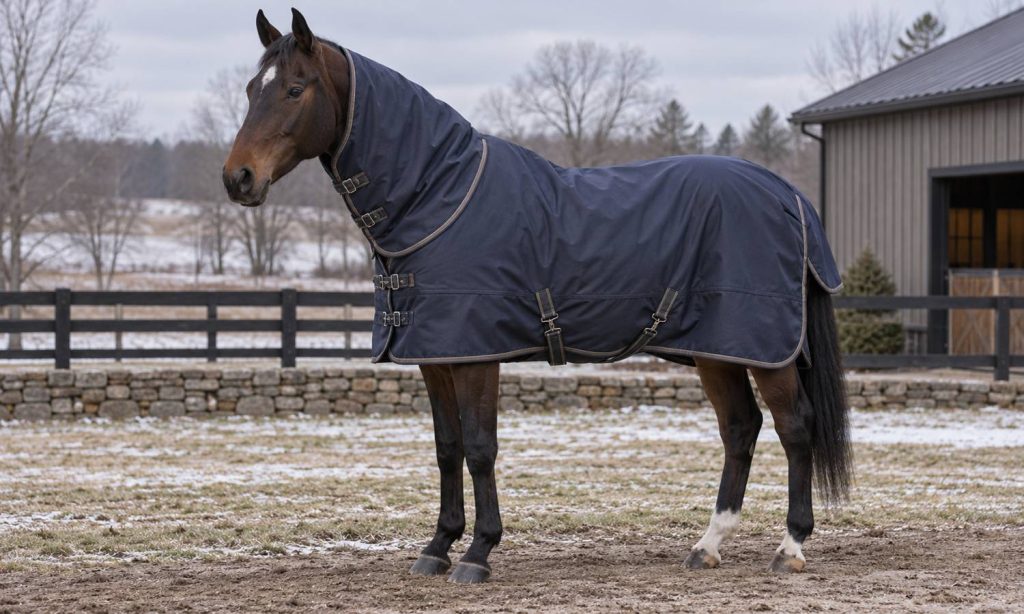
How to choose the right winter horse blanket for clipped horses begins with matching the blanket to your horse’s clip, condition, and winter exposure. There is no single fill weight or temperature that suits every clipped horse. The type of clip, remaining coat, wind, precipitation, shelter, acclimation, body condition, and work schedule all matter. Begin with the horse and environment, then compare blanket fill, waterproofing, fit, closures, and ease of daily checks. A blanket can create rubs, trap moisture, or cause sweating if the weight is wrong. This guide explains how to choose a practical layer for a clipped horse, adjust it as weather changes, and inspect the horse so warmth does not come at the expense of comfort or safety.
Consider the clip and the horse’s coat
Clipping removes hair that would otherwise trap a layer of insulating air. A full clip leaves less natural protection than a trace or partial clip, so the horse may need more coverage. The remaining coat, clip pattern, and how quickly the horse grows hair back all influence the choice. Keep a record of when and how the horse was clipped and consider whether clipping is still needed as the season progresses.
Blanketing decisions also depend on body condition, age, health, and acclimation. A thin, elderly, young, ill, or newly relocated horse may have different needs from a healthy adult accustomed to local winter. Consult an equine veterinarian if the horse has a chronic condition, poor body condition, or trouble maintaining weight. A blanket does not replace adequate feed, water, shelter, or veterinary care.
Match warmth to real conditions
Assess temperature together with wind, wet weather, shelter, coat, and turnout time. Rain or freezing rain can reduce the insulating value of hair, while strong wind increases heat loss. A sheltered stall and a windy open field are different environments even at the same thermometer reading. Avoid treating a temperature chart as a universal prescription.
Blanket fill is only one part of the system. Manufacturers use terms such as sheet, light, medium, or heavyweight differently, so compare the product’s stated fill and intended conditions. A clipped horse in persistent cold and wet may need a different combination from one in a dry, sheltered stable. Remove or change layers when weather warms to prevent sweating.
Choose turnout or stable construction
A turnout blanket needs a durable outer shell and water protection suited to exposure. Check whether it is waterproof and breathable, and what the manufacturer says about cleaning and reproofing. A stable blanket is generally intended for indoor use and may not protect against rain. Do not assume one type can substitute for the other.
Inspect the lining for smoothness and the outer fabric for tears or worn coating. Wet or damaged insulation may not perform as intended. A blanket that is too warm can cause sweating; a wet blanket can chill the horse. Keep a backup dry layer available where conditions require it, and never put a blanket on a wet horse unless a veterinarian directs otherwise.
Get fit right
Measure according to the manufacturer’s guide, usually from the center of the chest to the point specified near the tail. Brand sizing differs, and body shape matters. The blanket should cover the clipped areas needed without dragging, gaping, or restricting the shoulder. Check chest closure position, wither clearance, length, belly straps, and leg straps.
Try the blanket while the horse moves. It should allow walking, turning, grazing, and lying down without shifting excessively or pulling across the chest. Straps should be secure but not tight. Poor fit can cause rubs and sores, especially at the withers, shoulders, chest, and hindquarters. If you cannot adjust the fit correctly, choose another size or cut.
Inspect closures and safety
Look at buckles, snaps, surcingles, leg straps, tail cords, seams, and any detachable neck cover. Closures should work smoothly and lie flat. Loose straps can snag; overly tight straps can restrict movement. Follow the product’s fastening instructions and check for wear before each use. A safety release or breakaway feature may be valuable in some turnout situations, but does not remove the need to inspect fencing and fit.
Make sure a neck cover does not pull the blanket backward or interfere with grazing. Remove accessories that are unnecessary or poorly fitted. Keep blankets away from sharp fence edges and objects that could catch them. Replace a torn or badly stretched blanket rather than relying on an uncertain repair.
Check under the blanket every day
Remove the blanket daily to inspect the horse and reposition the layer. Feel the skin and coat at the chest, shoulder, withers, and under the belly for unusual warmth, dampness, or chill. Look for rubs, pressure marks, sweat, sores, or swelling. Check that the blanket itself is dry and undamaged. Daily checks help reveal a problem before it becomes a larger skin or fit issue.
Adjust the layer when weather changes, the horse’s work changes, or the coat grows back. A horse that is sweating under the blanket may need less insulation or more ventilation. A horse shivering, hunched, or persistently seeking shelter may be cold or unwell; assess the overall situation and consult a veterinarian if signs persist. Do not make adjustments based on one sign alone.
Keep the horse comfortable in winter
Provide shelter from wind and precipitation, free access to water, and appropriate forage. Horses use fiber digestion to generate heat, so nutrition and body condition are part of winter management. Blanketing cannot compensate for a poor diet or lack of shelter. Keep the horse dry before blanketing and remove a wet layer promptly so it does not remain chilled.
For a horse in regular work, clipping may help with cooling after exercise, but the clipped coat then requires a deliberate cold-weather plan. Allow the horse to cool and dry before putting on its winter blanket. Ask your veterinarian or an equine professional for guidance if the horse has unusual sweating, difficulty warming, or other health concerns.
Frequently Asked Questions
Do clipped horses always need a winter blanket?
Clipping removes insulation, so clipped horses often need added protection, especially in cold or wet conditions. The amount depends on clip, weather, shelter, and the horse.
What blanket weight does a clipped horse need?
There is no universal weight. Compare fill and intended conditions, and adjust based on weather and daily checks under the blanket.
Can I blanket a wet clipped horse?
Do not trap moisture under a blanket. Dry the horse first and follow veterinary guidance if a specific situation requires different care.
How often should I remove a winter blanket?
Remove it at least daily to inspect the horse, check fit and skin, and confirm the blanket is dry and in good condition.
What if my horse sweats under its blanket?
Remove or reduce layers and allow the horse to dry. Reassess the blanket weight and contact a veterinarian if the horse seems unwell.
Final Words
The right winter horse blanket for clipped horses reflects how much coat remains, the horse’s condition, exposure, and weather—not a fixed temperature alone. Choose a suitable turnout or stable design, confirm fit and secure closures, and remove the blanket daily to check warmth, dryness, and skin. Adjust promptly as conditions change. A clipped horse needs a thoughtful winter routine that includes shelter, forage, water, and regular observation.