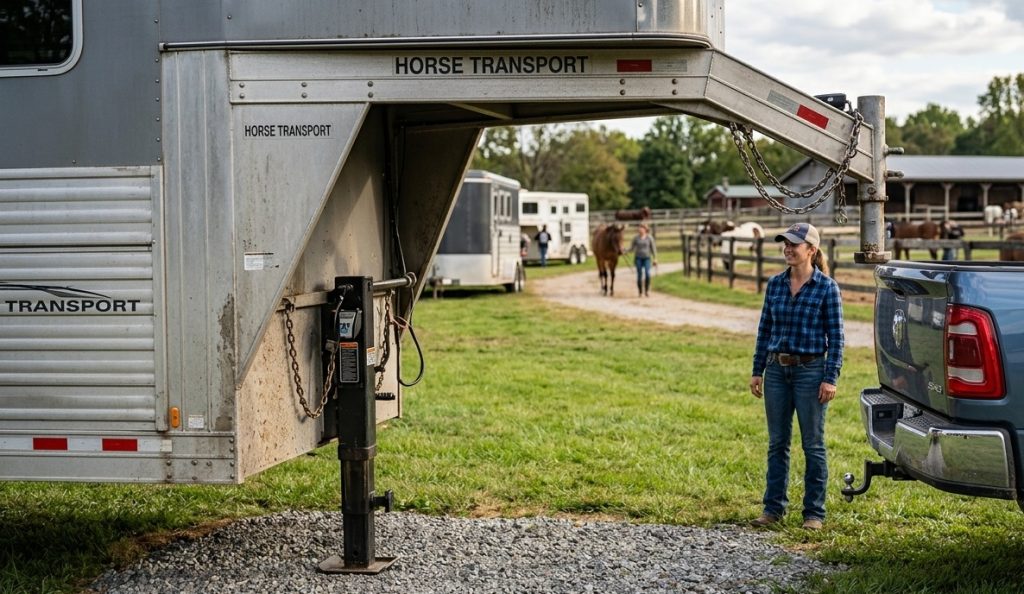
An electric landing jack can make hitching and unhitching a gooseneck horse trailer easier, but safe operation depends on the trailer’s design, the jack rating, and the ground beneath it. Before choosing an electric jack for a gooseneck horse trailer, confirm the equipment is compatible with your trailer and follow the manufacturer’s manual. A jack supports a substantial load, and an uneven surface or incorrect sequence can cause the trailer to shift or tip. This guide explains what to inspect, how to prepare the trailer, and which habits reduce risk while operating the jack. Treat the instructions for your specific trailer and jack as authoritative; control locations and operating steps vary by model.
Know what your jack is designed to do
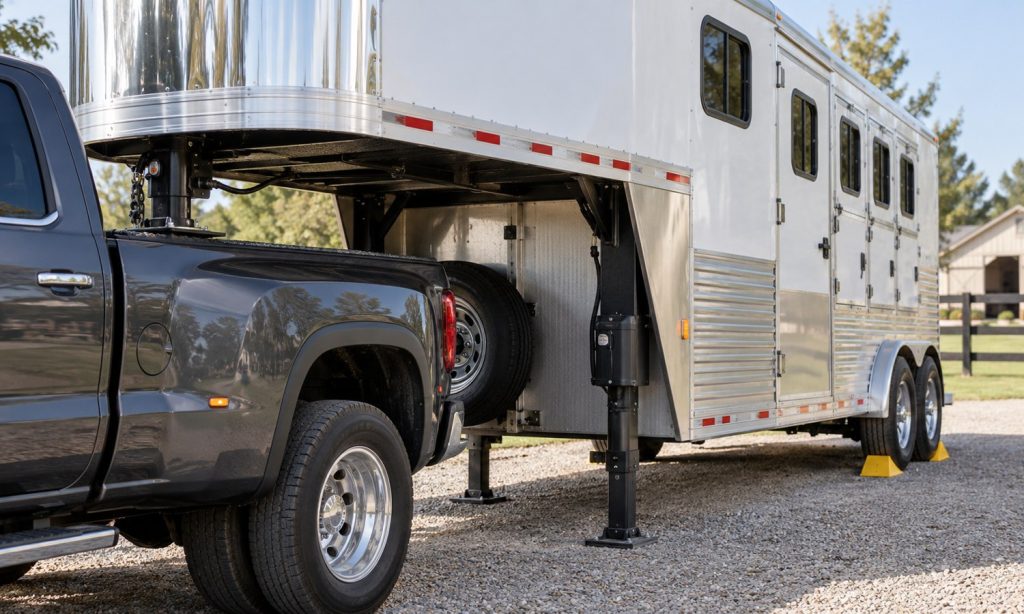
Gooseneck trailers may use one electric jack, dual electric landing gear, or an electric-over-hydraulic system. The system’s capacity, wiring, switches, and extension limits differ. Read the trailer owner’s manual and the jack manufacturer’s instructions before first use, and keep the manuals accessible. Check the rated capacity and compatibility with the trailer’s loaded and tongue weight requirements; do not estimate capacity from appearance.
A jack is meant to raise or lower the front of the trailer during coupling or parking as specified by its manufacturer. It is not a substitute for properly coupled support, wheel chocks, or safety stands when maintenance is required. Never go beneath a trailer supported only by a jack. If a jack is damaged, moves unevenly, or makes unusual noises, stop and contact the dealer or qualified service technician.
Prepare the trailer and work area
- Choose firm, level ground. Avoid soft soil, steep slopes, potholes, and surfaces that may settle under load. If ground conditions are unsafe, relocate the trailer rather than placing boards or improvised supports without manufacturer guidance.
- Control trailer movement. Park the tow vehicle and trailer according to the manual, set the tow vehicle parking brake, and chock the trailer wheels on both sides as appropriate for the slope and procedure. Chocks help reduce rolling; they do not make an unstable location safe.
- Keep people and animals clear. Do not let anyone stand beneath the gooseneck or between the truck and trailer during operation. Keep horses away from the work zone and secure loose equipment.
- Inspect the system. Look for bent legs, damaged footplates, loose fasteners, frayed or pinched wiring, corrosion, fluid leaks on hydraulic systems, or switches that stick. Do not operate a visibly damaged jack.
- Check power and controls. Use the power source and control procedure specified in the manual. Keep cables clear of moving parts and do not bypass a fuse, switch, interlock, or other safety feature.
Operating the jack during uncoupling
Begin with the trailer and tow vehicle positioned and secured as described by the trailer manufacturer. If the horse is inside, consider the trailer’s movement and the horse’s comfort; avoid sudden motion and keep the animal secured according to the trailer’s instructions. Follow the exact order in the owner’s manual, because some systems require paired controls or a particular setup.
Extend the landing gear only as directed, watching the contact points and the trailer as it moves. On dual-leg systems, the manufacturer may require both legs to support the trailer evenly. Do not assume a single leg can support the load if one side fails to extend. Stop if a footplate sinks, the trailer twists, a leg binds, or the structure shifts. Do not put hands or feet beneath a moving leg or footplate.
Once the trailer is supported as specified, release the coupler using the manual’s steps and carefully move the tow vehicle clear. Avoid pulling against a coupler that is still locked or using the jack to force a stuck connection. If the trailer does not separate smoothly, stop and confirm the coupling components are properly released rather than applying extra force.
Reconnecting and retracting
Before backing under the gooseneck, confirm the trailer is at the correct height and the tow vehicle is aligned. Keep bystanders clear and use a spotter only if that person can stand in a safe, visible position. Never allow someone to stand between the truck and trailer where they could be trapped. Follow the coupler manufacturer’s guidance to lower the gooseneck onto the hitch ball and verify the latch and safety components are fully engaged.
After coupling, confirm the connection visually and by the prescribed check before retracting the landing gear. Retract each leg completely as directed and verify it is secured for travel. Stow the electrical control, remove any key if the system uses one, and check that wiring or footplates cannot contact the road. Do not tow with landing gear partly extended or unsecured.
Care and troubleshooting
Keep the jack clean and inspect it periodically, especially before a trip or after exposure to mud, water, or road salt. Follow the manual for lubrication, electrical checks, and storage. Do not spray water into switches or motors unless the manufacturer permits it. If power is lost, use an emergency/manual override only if your manual describes that procedure and you can do it safely.
Stop using a system that operates unevenly, stalls under load, overheats, trips a breaker repeatedly, or shows structural damage. Do not hold a switch down in an attempt to force movement. Contact the trailer or jack manufacturer, dealer, or qualified technician. If the trailer is unstable or leaning, keep people clear and get professional assistance rather than trying to reposition the jack under load.
For more context when comparing equipment, see the guide to an electric jack for a gooseneck horse trailer. Product ratings and features do not replace a proper capacity match or the instructions supplied with your specific trailer.
Frequently Asked Questions
Can I operate an electric jack while the horse is in the trailer?
Use the trailer and jack manufacturer’s instructions and consider the animal’s safety and comfort. Secure the horse as directed, keep people clear, and avoid sudden movement. If the trailer shifts or the horse becomes distressed, stop.
Do I need to chock the trailer before using the jack?
Follow the owner’s manual, but wheel chocks are a key part of preventing trailer movement during coupling or uncoupling. Chock placement depends on the site and procedure; never rely on the jack alone to prevent rolling.
Can one jack leg support a dual-leg system?
Do not assume it can. Follow the system’s manual, which may require both legs to contact the ground and support the trailer evenly. Stop if one side fails to operate correctly.
Can I crawl underneath a trailer held up by its electric jack?
No. Never work under a trailer supported only by a jack. Use manufacturer-approved support equipment and safe procedures, or have a qualified technician perform the work.
What if the jack stops working while extended?
Keep people clear and consult the manual for an approved emergency procedure. Do not bypass electrical protections or improvise a repair under a loaded trailer; contact qualified service if the trailer cannot be stabilized safely.
Final Words
Safe jack use starts with knowing the exact system, choosing stable ground, controlling trailer movement, and following the manufacturer’s sequence for coupling and uncoupling. Watch the landing gear and trailer throughout movement, keep people clear, and stop when anything binds, shifts, or appears damaged. If you are evaluating an electric jack for a gooseneck horse trailer, verify capacity and compatibility for your trailer rather than relying on a generic rating. Never get under a trailer supported by a jack alone, and use qualified service when the system needs repair.