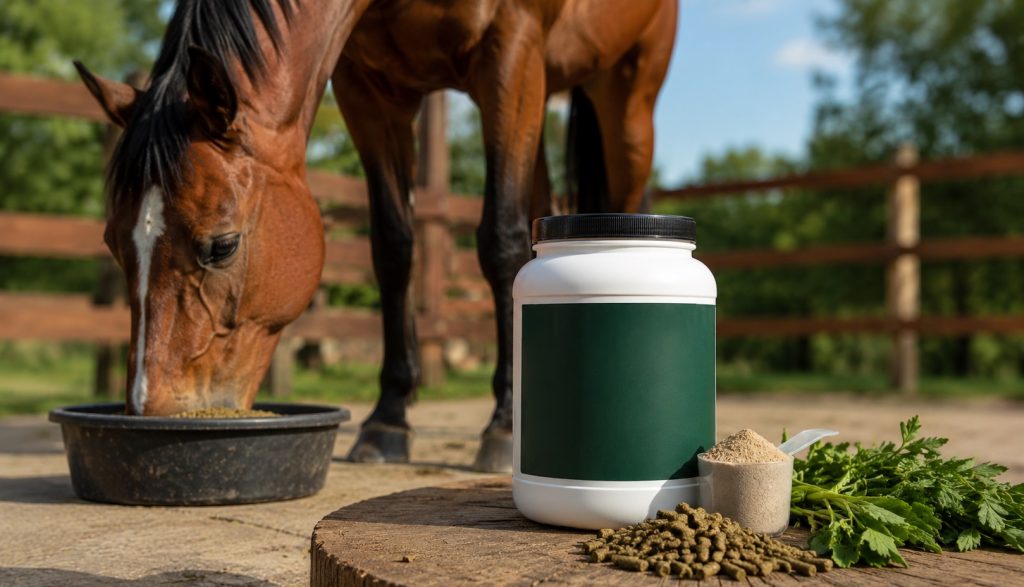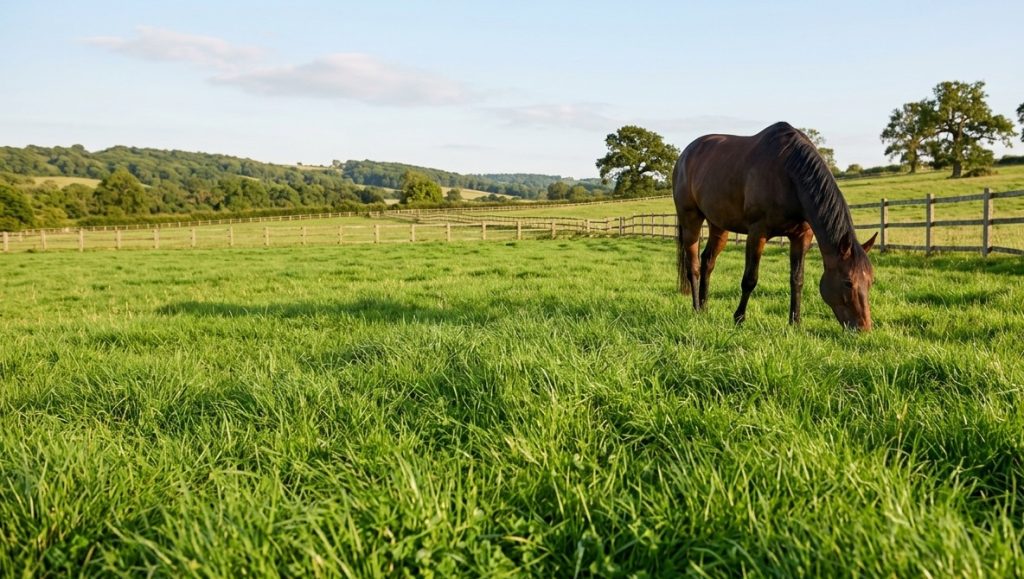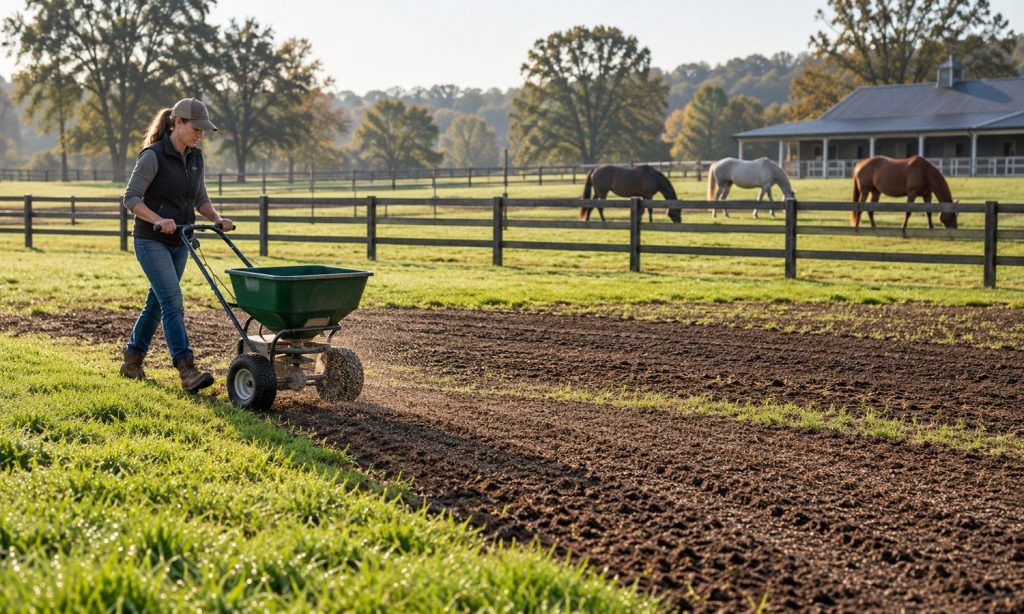
Reseeding can improve a thin horse pasture, but the seed is only one part of the job. Soil condition, timing, seed-to-soil contact, grazing pressure, and rest after planting all affect whether new grass establishes. Before selecting grass seed for a horse pasture, identify which forage species suit your climate, soil, drainage, and horses’ needs. Keep horses off freshly seeded ground while seedlings take root, and follow local Extension and product guidance for grazing readiness. This guide outlines preparation, planting, and aftercare steps that help protect both the pasture and the horses. For a pasture with toxic weeds, drainage problems, or horses with metabolic concerns, ask an Extension educator or equine professional to help plan the renovation.
Decide whether reseeding is needed
Walk the pasture and note bare areas, weeds, thin stands, mud, compaction, and places where horses repeatedly graze or travel. Identify desirable grasses and legumes before deciding to reseed; a thin-looking pasture may recover with better rotation, mowing, or soil fertility management. If the stand is dominated by undesirable or toxic plants, a broader renovation plan may be needed.
Take a soil test before adding lime or fertilizer. The test helps identify pH and nutrient needs, and overapplying amendments can waste money or create imbalances. Use recommendations for the pasture’s location and intended forage. If horses graze the field, check that any fertilizer, herbicide, or other treatment is suitable for the site and follow all label restrictions for people, animals, and reseeding intervals.
Consider what the pasture is expected to provide. Some fields are mainly exercise areas, while others supply meaningful forage. Horse number, acreage, soil type, rainfall, and management influence whether the pasture can meet nutritional needs. Keep hay available when grass is insufficient rather than forcing horses to graze seedlings or overgrazed ground.
Choose appropriate seed
Select species and varieties adapted to your region, soil, moisture, and use. A local Extension forage guide or pasture specialist can help compare grasses and legumes. Avoid choosing a mix only because it contains many species; some may not persist or may be poorly suited to your conditions. Check seed labels for species, variety, purity, germination, and weed seed information, and use reputable seed sources.
Horse-specific concerns matter. Some forage varieties may need special consideration for endophytes, sugar content, or the horse’s metabolic health. Ask an equine veterinarian or Extension educator if a horse has a history of laminitis, insulin dysregulation, or other dietary restrictions. Do not assume a generic livestock mix is appropriate for every horse pasture.
Store seed dry and use it within the supplier’s recommended period. Keep bags away from horses and feed, and prevent rodents or moisture from damaging the seed. Use the seeding rate and depth recommended for the species and planting method; small seeds can fail when buried too deeply.
Prepare the pasture and seedbed
Choose a planting window that gives seedlings favorable temperatures and enough moisture while reducing weed competition. Timing varies by region and species. Penn State Extension’s pasture-seeding timeline explains regional considerations; local guidance is important because spring and fall conditions differ across the country.
Reduce competition from existing vegetation before overseeding. Extension recommendations may include close grazing or mowing, but keep horses out while equipment is used and do not leave them on a field so short that they damage the soil or plants. For major renovation, prepare the soil according to a plan that protects drainage and avoids creating compaction.
Good seed-to-soil contact is essential. Broadcasting onto dense, undisturbed grass can leave seed on top where it dries, washes away, or becomes bird food. Depending on the pasture and equipment, a no-till drill, light harrowing, or other preparation may help place seed correctly. Confirm planting depth with the seed supplier or Extension guidance, and avoid disturbing the base soil more than needed.
Keep horses off new seedlings
Rest is often the hardest part of reseeding on a horse property, but turning horses back in too soon can pull out seedlings and compact wet soil. Arrange another turnout area or reseed one section at a time so horses have a safe place to go. Penn State Extension notes that pasture rest can be difficult for horse farms and recommends planning the renovation around available paddocks.
Do not use a calendar date alone to decide when to graze. Seedling roots need to establish, and timing depends on species, growth, weather, soil, and grazing pressure. Follow regional guidance and evaluate the stand before returning horses. If the seedlings pull out easily, the field is not ready.
Once the pasture is established, manage grazing to protect regrowth. Avoid repeated close grazing; rotate horses or limit access as needed, and provide hay when pasture is short. Understocked or overstocked conditions, manure concentration, and traffic patterns also affect pasture persistence.
Monitor establishment and adjust
Check the seeded area after rain and during dry spells. Look for washouts, bare patches, weed competition, and uneven emergence. If establishment is poor, determine why before adding more seed; the issue may be soil acidity, inadequate seed contact, moisture, depth, or grazing damage. Keep records of seed mix, planting date, soil test, amendments, and weather to guide future decisions.
Remove or control weeds only with methods appropriate for a horse pasture. If using herbicides, read the product label carefully and follow all grazing and reseeding restrictions. Some treatments require a waiting interval or can damage desirable forage. Ask a local Extension educator when plant identification or safe re-entry timing is unclear.
For a product overview, see our guide to grass seed for a horse pasture. Use product information alongside local planting recommendations and a soil test; no bag can substitute for a pasture plan.
Frequently Asked Questions
When can horses return to a newly seeded pasture?
Wait until seedlings are well rooted and the stand can tolerate grazing. Read local Extension guidance and check that plants do not pull out easily; timing varies by species, weather, and soil.
Can I overseed without preparing the soil?
Seed needs contact with soil to establish. Broadcasting onto dense vegetation may have poor results. A suitable method could include a drill or light surface preparation, depending on the pasture.
Should I add fertilizer when planting grass seed?
Use a soil test and regional recommendations to determine whether amendments are needed. Do not apply fertilizer or lime by guesswork.
Can I use a general livestock seed mix for horses?
Not automatically. Species, varieties, endophytes, sugar considerations, and regional adaptation may matter. Check the label and ask an equine or forage professional when a horse has special needs.
What if the new grass grows unevenly?
Look for differences in seed contact, soil, drainage, moisture, or grazing damage. Identify the cause before reseeding so the same problem does not recur.
Final Words
Use a soil test, regional forage recommendations, and a realistic rest plan before planting. Choose seed suited to the field and horses, create good seed-to-soil contact, protect seedlings from grazing and traffic, and verify establishment before turnout. If you are evaluating grass seed for a horse pasture, compare its species and label with local guidance rather than selecting by marketing alone. Pasture renovation works best when planting and long-term grazing management are planned together.