Fly sprays differ in active ingredients, intended use, directions, and precautions. A product that is safe for one horse or setting may not be right for another, so start with the label rather than a familiar brand name. Before applying a fly spray for horses, confirm it is labeled for use on horses, check where and how it may be applied, and note restrictions around eyes, feed, water, tack, or people. Use only the amount and frequency directed. This guide covers preparation, application, and storage practices that help reduce exposure for horses and handlers. If the horse has sensitive skin, a history of reactions, or a medical condition, ask a veterinarian before trying a new product.
Read the label and identify the product type
Many on-horse fly sprays are pesticides or repellents regulated with specific instructions. Read the full label, including active ingredients, target insects, application sites, frequency, protective equipment, first aid, and storage. Follow the label exactly; directions vary, and a general internet tip cannot replace the product’s approved use instructions.
Check whether the product is intended for direct application to the horse, application to a cloth, or use on equipment or premises. Do not use a barn spray on the horse unless the label explicitly permits it. Do not mix products, add essential oils, or dilute a ready-to-use formula unless the manufacturer directs it. Avoid using an expired or unlabeled product.
Consider the horse’s age, skin condition, medications, competition status, and history of sensitivity. If a product contains an ingredient that concerns you, ask a veterinarian to review the label. Competition rules may also restrict certain substances or require documentation.
Prepare a safe application area
Choose a well-ventilated area away from feed, hay, water, people, and open flames. Keep other horses and animals out of the spray path. Secure the horse calmly and use appropriate protective equipment listed on the label. Avoid spraying in windy conditions, since mist can drift into eyes, lungs, feed, or nearby people.
Shake the container only if the label instructs you to do so. Check the nozzle and container for leaks or damage. If a product needs dilution or mixing, measure it exactly and use the specified equipment. Never use food containers for mixing or storage.
Before broad application, follow the product label’s instructions for testing or sensitive areas. Do not assume an informal “patch test” is suitable for every pesticide; some labels have specific first-use directions. If a reaction or irritation occurs, stop using the product and follow the label’s first-aid instructions, contacting a veterinarian when needed.
Apply without exposing the face
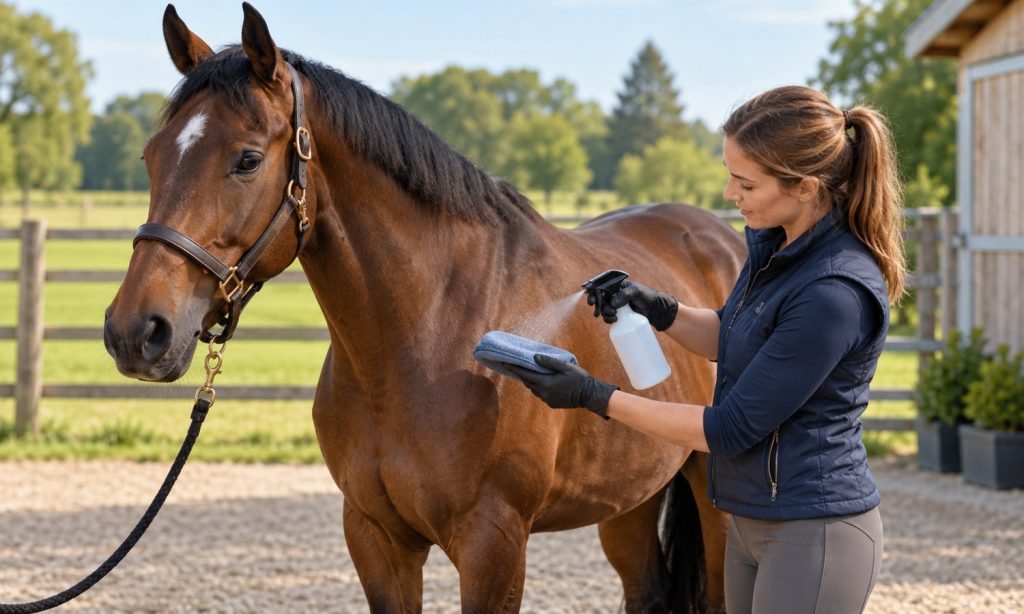
Apply only to the areas and at the distance or method specified by the label. Protect the horse’s eyes, nostrils, mouth, and any cuts or irritated skin unless the label specifically allows use there. Never spray directly into the horse’s face. If the label permits application near the head, it may direct you to spray onto a cloth or sponge first and carefully wipe the allowed area while keeping the product away from eyes and mucous membranes.
Use a light, even application rather than soaking the coat. Some product labels advise against wetting the skin or specify a maximum amount. Keep the horse still, avoid inhaling mist, and do not spray under a blanket or tack unless the product label allows it. Let the coat dry before saddling or turning the horse out if required by the directions.
Wash your hands after handling the product, even if you wore gloves. Do not allow the horse to lick treated areas or another horse’s coat before the product dries if the label warns against it. Keep children and pets away during application and until the label’s re-entry precautions are met.
Check fit with the horse and environment
Observe the horse after use. Watch for rubbing, agitation, coughing, tearing, skin redness, swelling, or other unusual signs. If the horse shows a reaction, stop the product and follow the label’s first-aid directions; call a veterinarian for significant or persistent symptoms. Keep the product container so the active ingredients and lot information are available.
Reapply only at the interval stated on the label. More frequent use can increase exposure and may not improve protection. Sweat, rain, bathing, and activity can affect duration, but do not reapply early unless the label allows it. For longer outings, plan the timing according to the product directions and use other suitable fly barriers such as masks or sheets where appropriate.
Protect the handler too. Wear gloves or other protective clothing if directed, avoid breathing spray, and wash exposed skin as the label says. Keep treated animals away from food-preparation surfaces and prevent spray drift toward people or neighboring animals.
Keep a copy or photo of the current label in the tack room so anyone applying the product can check the same directions. If multiple horses are treated, mark which horse received the product and when. This simple record can prevent accidental repeat applications and helps the veterinarian review possible exposure if a concern arises later.
\n
Store and dispose of products carefully
Close the container after use and store it in its original labeled packaging, locked away from children, feed, water, tack, and animals. Follow temperature and sunlight instructions. Do not leave a can or bottle in a hot vehicle, where pressure or product quality may be affected.
Dispose of leftover product, empty containers, and contaminated cloths according to label and local hazardous-waste instructions. Do not pour pesticide into drains, ditches, water troughs, or onto the ground. If a spill occurs, use the label’s spill cleanup guidance and prevent horses from contacting the area until it is safe.
For help comparing product types, review our overview of a fly spray for horses. Product selection still needs to match the label, the horse, and the setting where it will be used.
Frequently Asked Questions
Can I spray fly spray directly on a horse’s face?
No. Avoid spraying the face. Follow the product label for any permitted application near the head, which may require using a cloth or sponge while protecting eyes and nostrils.
Can I use a barn fly spray on my horse?
Only if the label specifically permits application to horses. Products intended for premises may have different ingredients and directions.
How often should I reapply horse fly spray?
Follow the label’s reapplication interval. Do not apply more often than directed, even after sweating or rain, unless the label allows it.
What if my horse reacts to fly spray?
Stop using it and follow label first-aid directions. Contact a veterinarian for significant, worsening, or persistent symptoms, and keep the product label available.
Can I mix fly spray with another product?
No, unless the label specifically directs a combination. Mixing can change exposure and effectiveness or cause irritation.
Final Words
Choose a horse-labeled product, read the entire label, prepare a ventilated area, and apply only as directed while protecting the horse’s face, feed, water, and skin. Watch for a reaction, respect reapplication intervals, and store or dispose of the product safely. If you are comparing a fly spray for horses, match the active ingredients and directions to your horse’s needs and ask a veterinarian when a sensitivity or health condition is involved.