A horse can look settled in a trailer and still need a careful check at the next safe stop. Monitoring during transport means watching the horse, the trailer, and the travel conditions together. A camera can help you notice posture or movement while you drive, but it cannot show every problem or replace a hands-on check. If you are considering a camera for inside a horse trailer, plan how a passenger will use it safely and what signs will make you stop. Before leaving, check the forecast, route, ventilation, footing, and emergency options. This guide explains what to observe, how to make a safe stop, and when a horse or trailer needs immediate help. A clear baseline for the horse and equipment makes it easier to recognize when conditions have changed.
Plan monitoring before the trailer moves
Start with the horse’s normal travel behavior and health. Ask your veterinarian whether the horse is fit for the trip, especially if it has a recent illness, injury, breathing problem, pregnancy, or difficulty loading. A horse that is sick, injured, or unable to stand safely may need a different plan or should not travel until assessed.
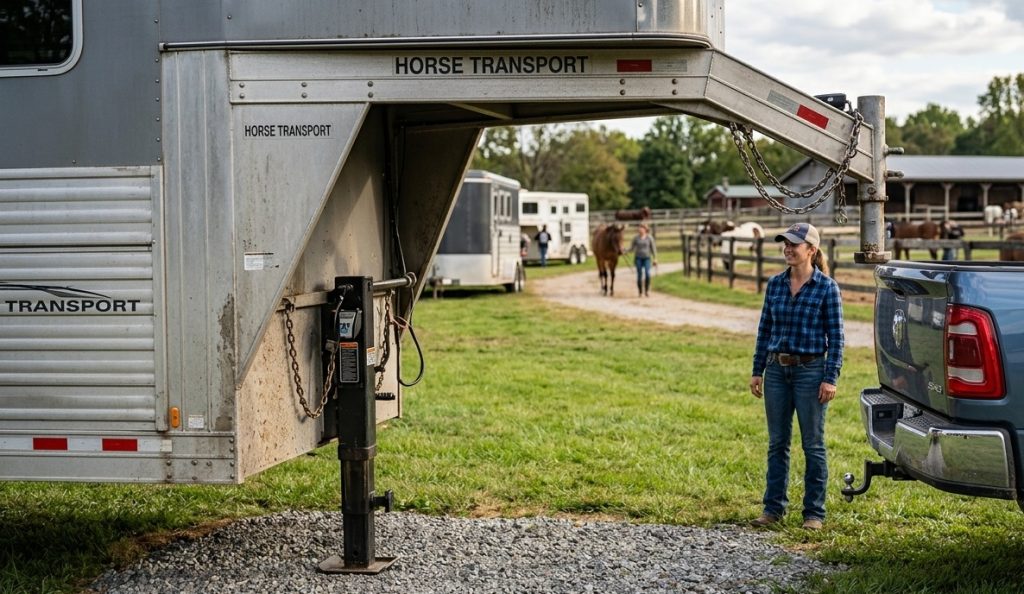
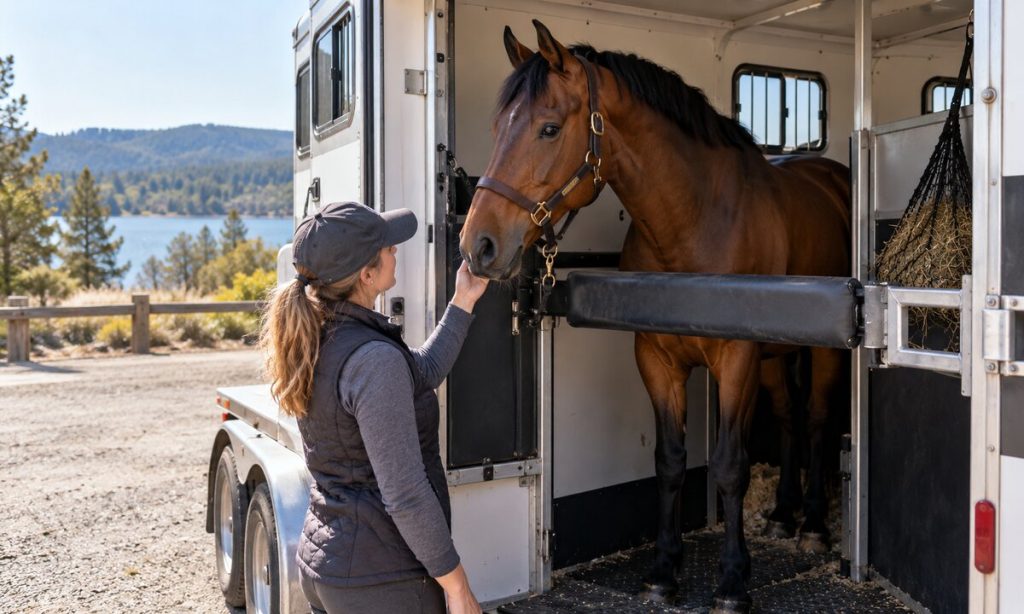
Check the tow vehicle and trailer before loading. Confirm lights, brakes, tires, floor, partitions, latches, ramp, and ventilation are in working order. Remove sharp edges and loose items. Ensure the horse has enough room to balance without being able to turn or become trapped. Use a secure, well-fitting head restraint and travel equipment that the horse is accustomed to, following professional advice.
Look at the weather across the whole route, not only at departure. Heat, cold, wind, traffic delays, and road closures can change the plan. Make sure vents are open for air exchange and avoid overcrowding. Carry water the horse will drink, hay if appropriate, a first-aid kit, emergency contact numbers, and roadside equipment. Decide in advance where safe stopping areas are located. Check that your route includes places where a trailer can park level and away from traffic. Tell the receiving facility when you expect to arrive, and keep an alternate destination in mind if weather or a mechanical issue delays the trip.
What to watch while the trailer is moving
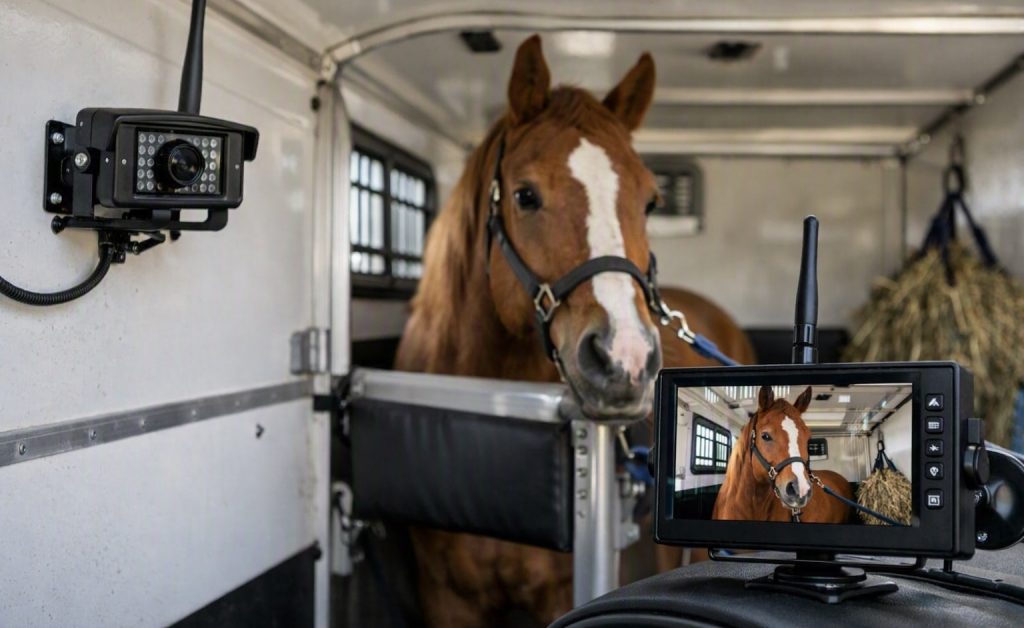
If another adult is traveling with you, that person can observe the horse or use a camera while you drive. The driver should not watch a screen while the vehicle is moving. A camera can show whether a horse remains upright, shifts position, or appears unusually agitated, but camera angles may hide legs, breathing, or a fallen horse. Treat it as an aid, not a substitute for stopping safely to inspect.
Watch for repeated scrambling, violent kicking, persistent leaning, unusual stillness, or a horse that appears unable to stay balanced. Changes in posture can reflect road movement, fatigue, fear, pain, poor footing, or a trailer problem. Do not assume one brief shift means an emergency; look for repeated or worsening behavior and consider the route and conditions.
Monitor conditions that affect ventilation and comfort. A trailer may become hot, dusty, or poorly ventilated even when the outside weather seems mild. Observe sweating, breathing effort, coughing, head position, and how quickly the horse settles when parked. A horse that is drenched in sweat, breathing hard at rest, repeatedly striking, or unable to stand steadily needs prompt attention.
Make stops in a safe place
There is no single stop interval that fits every horse and route. The needed schedule depends on trip length, weather, horse health, trailer design, road conditions, and how the horse is coping. Public rider accounts differ on when to stop and whether to unload. Those are personal experiences, not a universal travel rule. Ask your veterinarian or an experienced equine transport professional to help plan for your horse.
Choose a legal, level, well-lit place away from moving traffic. Secure the tow vehicle and trailer before approaching the horse. Never open a ramp or unload at the roadside unless an immediate emergency leaves no safer option. A frightened or loose horse near traffic can be in greater danger than one kept safely contained while help is arranged.
At a safe stop, check that the horse is standing, responsive, and breathing comfortably. Look for fresh injuries, unusual swelling, bleeding, a slipped partition, damaged tie, pooled water, excessive sweat, or signs of panic. Check airflow, temperature, floor, bedding, and trailer doors. Offer water and hay as appropriate for the horse and journey. Follow your veterinarian’s advice about unloading; unloading during an ordinary roadside stop may create new risks.
Keep a simple log of departure time, stops, weather, water offered, horse behavior, and any concerns. If a passenger uses a camera, record notable changes rather than trying to interpret every movement. This helps you share a clear timeline with a veterinarian or transport professional if the trip changes.
When to stop the trip and seek help
Stop at the nearest safe location if the horse is repeatedly falling or scrambling, cannot remain upright, is injured, has severe breathing effort, becomes weak or unresponsive, or shows persistent distress. Call a veterinarian for advice. If a horse is down, trapped, bleeding heavily, or having trouble breathing, treat the situation as urgent and contact emergency veterinary help.
Stop for a mechanical or environmental issue that affects horse safety. Examples include a damaged tire, brake failure, a hot trailer, blocked ventilation, a failed fan during hot weather, a shifting partition, or a compromised floor. Move to a safe area before inspecting the vehicle. Do not continue because the destination seems close if the trailer is not safe.
If traffic, weather, or fatigue makes continued driving unsafe, stop somewhere appropriate and revise the plan. Protect the horse and people first. Contact roadside support, the receiving facility, or a veterinarian as needed. A delay is preferable to driving with a worsening horse or unsafe trailer.
Frequently Asked Questions
Can a trailer camera tell me whether my horse is okay?
It can help you notice movement and posture, but it cannot reliably assess every injury, breathing change, or trailer condition. Use it only as an aid.
How often should I stop to check a horse?
Ask your veterinarian or transport professional to plan stops for the horse and route. A fixed interval from another rider may not fit your trip.
Should I unload my horse at every rest stop?
Not automatically. Unloading may create risks. Choose safe locations and follow the horse-specific plan you made with a veterinarian or experienced professional.
What signs mean I should stop right away?
Repeated scrambling, inability to stand, injury, severe breathing effort, weakness, collapse, or persistent panic warrants a safe stop and prompt help.
What should I check before setting off again?
Confirm the horse is stable and comfortable, airflow is adequate, the floor and partitions are secure, and the vehicle and trailer are safe to move.
Final Words
Plan your stops around the horse, route, weather, and trailer rather than relying on a single interval. Use a passenger or camera to observe during travel, then check the horse in a safe place. Stop and seek help for injury, repeated loss of balance, severe breathing effort, distress that does not settle, or a trailer problem. A camera for inside a horse trailer may give useful visibility, but careful preparation and safe hands-on checks remain essential. If the horse’s condition or the trailer changes, revise the plan before continuing.